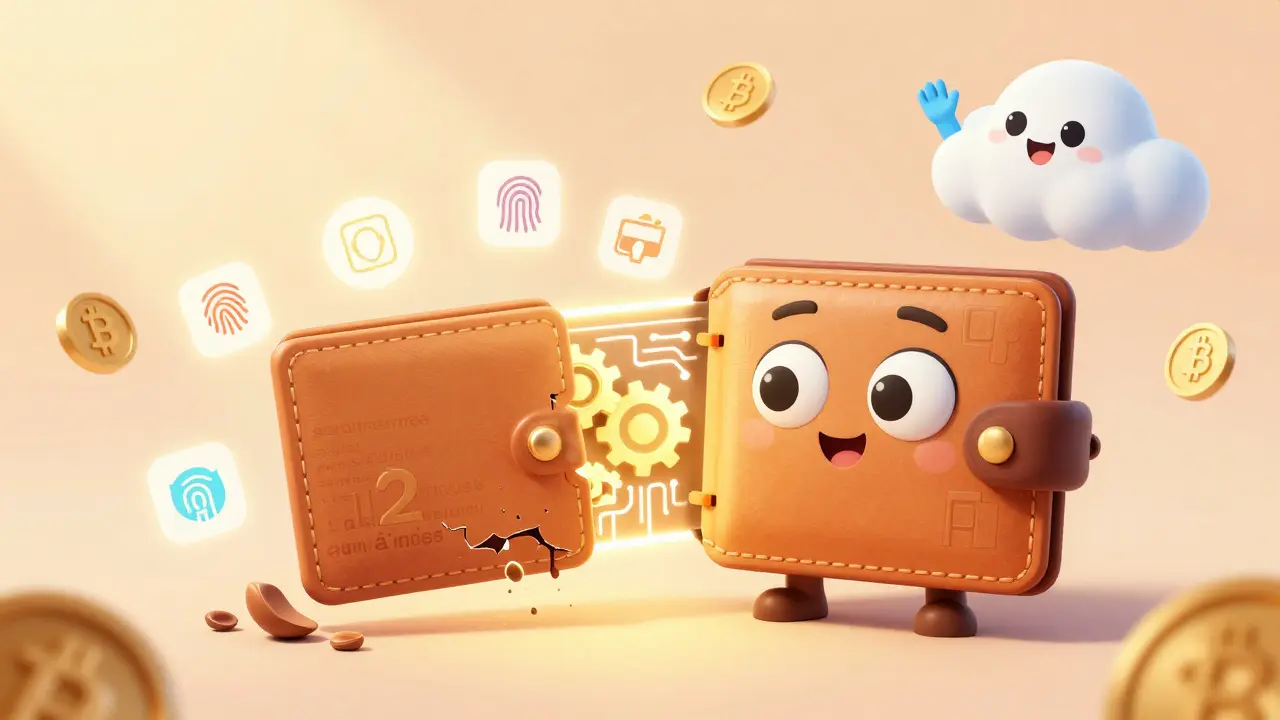
Imagine sending crypto without needing a private key. No seed phrases. No panic if you lose your phone. No gas fees to pay upfront. That’s what account abstraction does - and it’s already changing how people use blockchain.
Right now, most crypto wallets - like MetaMask or Trust Wallet - work the same way your old email account worked: you need one password (a private key) to log in. If you lose it, you lose everything. If someone steals it, they own your money. There’s no recovery. No second opinion. No way to say, "Wait, let me check with my spouse first."
Account abstraction fixes that. It turns your wallet from a simple keyholder into a smart, programmable account. Think of it like upgrading from a basic lock on your front door to a smart lock that lets you set rules: "Only let my partner open it between 9 AM and 5 PM," or "Let the dog walker in for 10 minutes on Tuesdays."
How Traditional Wallets Work (And Why They’re Broken)
Every blockchain wallet today starts with an externally owned account (EOA). This is just a public address tied to a private key. That’s it. No logic. No rules. No flexibility.
Here’s what that means in real life:
- You need ETH to pay gas fees - even if you’re trying to buy a token that costs $5.
- If you forget your private key, your $10,000 is gone forever.
- You can’t batch transactions. Need to swap, stake, and claim rewards? Three separate clicks. Three separate gas fees.
- You can’t use biometrics. No Face ID. No fingerprint. Just a 12-word phrase you hope you wrote down somewhere.
These aren’t minor inconveniences. They’re roadblocks that keep millions of people out of crypto. You don’t need to be a hacker to understand why this feels broken.
What Is Account Abstraction? The Simple Version
Account abstraction means your wallet is no longer just a key. It’s a smart contract - a piece of code that can make decisions.
On Ethereum, this is built on ERC-4337, a standard released in 2023. It doesn’t change the blockchain itself. Instead, it adds a new layer on top that lets smart contracts act like wallets.
Instead of sending a regular transaction from your EOA, you send a UserOperation. This is a special data package that includes:
- Which wallet is acting (the sender)
- What action to take (swap, send, approve)
- Who pays for gas (you, or someone else)
- How to verify you’re the owner (signature, biometrics, multi-signature)
This UserOperation gets picked up by a bundler - a server that collects dozens of these operations and sends them to a single Entry Point contract. That contract checks: "Is this user allowed to do this?" Then it runs your wallet’s code to decide what happens next.
It sounds complex. But to you, the user? It feels like using Apple Pay.
Three Game-Changing Features
Account abstraction unlocks three big improvements that traditional wallets can’t match.
1. Social Recovery - No More Lost Seed Phrases
What if you could recover your wallet using people you trust?
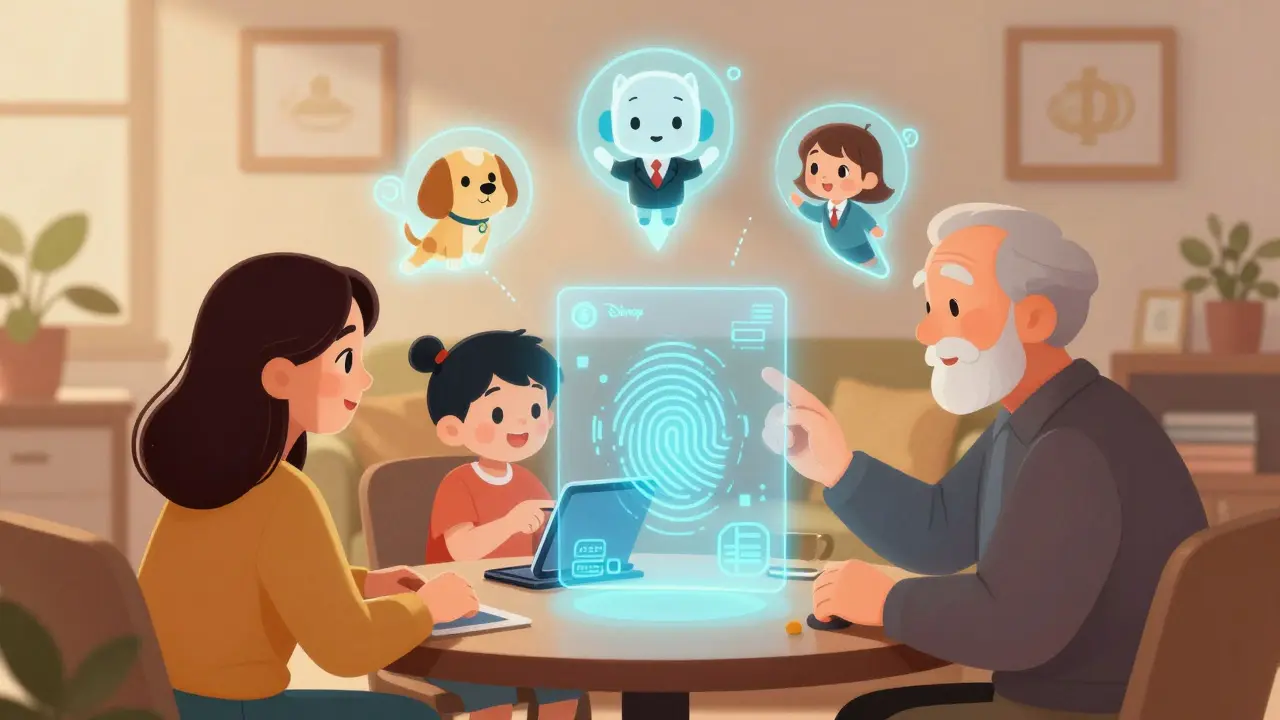
With account abstraction, you can set up guardians - friends, family, or even a lawyer. If you lose access, 3 out of 5 guardians can approve a recovery. No seed phrase needed. No crying in front of a computer.
Wallets like Argent already use this. One user in London lost his phone. He texted his sister and his brother-in-law. Two approvals later, he was back in his wallet. No downtime. No loss.
2. Gasless Transactions - Pay With Your Credit Card, Not ETH
Most people won’t buy NFTs if they need to buy ETH first just to pay gas. That’s a huge barrier.
Account abstraction fixes this with paymasters. These are third parties - apps, brands, or even your employer - who pay your gas fees. You sign the transaction. They cover the cost.
Imagine logging into a game and minting an NFT skin without spending a cent. Or buying a coffee with crypto and the café pays the gas. That’s not science fiction. It’s live on Safe (Gnosis Safe) and Thirdweb right now.
3. Multi-Signature & Business Rules
Companies don’t trust one person with all the keys. That’s why they have CFOs, controllers, and approval workflows.
Account abstraction lets you build those rules into your wallet. For example:
- Any transaction over $5,000 needs two signatures.
- Payments to new addresses require 24-hour cooling-off.
- Only allow transfers during business hours.
DAOs and crypto funds are using this to prevent hacks and insider theft. One DeFi project in Berlin reduced unauthorized transfers by 92% after switching to a smart contract wallet with these rules.

How Solana Does It Differently
While Ethereum added account abstraction as a new layer, Solana built it in from day one.
On Solana, every account - whether it holds tokens or runs code - is flexible. There’s no hard line between "wallet" and "smart contract." You can turn any account into a programmable wallet just by uploading code to it.
This means Solana users get smart wallet features without extra steps. No bundlers. No Entry Point contracts. Just native flexibility.
But Ethereum’s approach has an advantage: it works with existing wallets and apps. You don’t need to rebuild everything. You just upgrade the wallet part.
Who’s Using This Right Now?
Account abstraction isn’t just theory. It’s live and growing.
- Argent Wallet: Used by over 500,000 people. Built-in social recovery and gasless swaps.
- Safe (Gnosis Safe): The go-to wallet for DAOs and institutions. Now supports ERC-4337.
- Thirdweb: Lets developers add smart wallets to their apps in under 10 lines of code.
- Stackup and Biconomy: Provide the backend infrastructure (bundlers and paymasters) that make it all work.
Even Coinbase now lists account abstraction as a key feature in its glossary, calling it a "major step toward mainstream adoption."
What This Means for You
If you’re a regular crypto user:
- You’ll stop worrying about losing your seed phrase.
- You’ll be able to use apps without buying ETH first.
- You’ll get biometric login - Face ID, fingerprint - just like your bank app.
If you’re a developer:
- You can now build apps where users don’t need to understand gas fees.
- You can sponsor transactions to attract new users.
- You can create custom security rules for enterprise clients.
And if you’re just curious?
Account abstraction is the quiet revolution that makes crypto feel less like a lab experiment and more like something you use every day.
Is It Perfect Yet?
No. There are still challenges.
- Bundlers aren’t as fast as regular transactions - yet.
- Not all wallets support it. MetaMask doesn’t natively work with ERC-4337.
- Some apps still assume every wallet is an EOA.
But the industry is moving fast. Wallets are updating. Developers are building tools. Paymaster networks are scaling.
By 2026, most new crypto wallets will be smart contract wallets. The old key-based ones? They’ll be like dial-up internet - still around, but only for nostalgia.
Final Thought: It’s Not About Tech. It’s About Trust.
People don’t avoid crypto because they don’t understand it. They avoid it because they’re scared.
Account abstraction doesn’t make blockchain more complex. It makes it more human.
It gives you back control - without the burden. It lets you recover. It lets you say no. It lets you pay with your credit card, not your private key.
This isn’t just an upgrade. It’s the first time crypto feels like it’s built for people - not just programmers.
Is account abstraction the same as smart contract wallets?
Yes. Account abstraction is the technical term for using smart contracts as your wallet. A smart contract wallet is the actual wallet you use - it’s just programmed to behave like a regular account. So they’re two ways of saying the same thing.
Do I need to buy ETH to use account abstraction?
Not necessarily. With paymasters, someone else - like the app you’re using - can pay your gas fees. You can sign a transaction and send crypto without owning any ETH. Many new wallets already offer this as a default feature.
Can I still use MetaMask with account abstraction?
Not directly. MetaMask is built for traditional externally owned accounts (EOAs). But many apps that support account abstraction let you connect both types. So you can use MetaMask to access your old wallet, and a smart contract wallet like Argent or Safe for new interactions.
Is account abstraction only for Ethereum?
No. Ethereum uses ERC-4337 to add it as a layer. But Solana has had account abstraction built into its core since 2020. Other chains like Starknet and Polygon are also adopting it. The idea isn’t limited to one blockchain - it’s a better way to design wallets.
Will account abstraction make crypto more secure?
Yes - if used right. It removes the single point of failure (the private key) and adds layers like multi-signature, social recovery, and biometrics. But bad code in your smart wallet can still be hacked. That’s why using trusted wallets like Argent or Safe matters more than ever.
Can I switch my current wallet to an account abstraction wallet?
You can’t convert your old wallet directly. But you can move your funds into a new smart contract wallet. Most platforms like Safe and Argent let you import your existing address and transfer assets over. Just make sure you keep your old key safe until the transfer is complete.



Janet Combs
so like... my phone dies and i lose my crypto? nah, i just text my mom and boom, back in. this is wild.
Craig Fraser
Account abstraction? More like account complication. Now i need to trust three people just to send 0.1 ETH? I'll stick with my 12-word phrase thanks.
Sybille Wernheim
OMG this is the future!! 🥹 I’ve been waiting for crypto to feel like Apple Pay my whole life. No more panic attacks over lost seed phrases. Someone please make this mandatory!!
Dan Dellechiaie
Let me guess - you’re one of those people who thinks ‘gasless’ means free magic. Nah. Someone’s paying. Usually it’s you, in the form of data harvesting or forced ads. This isn’t innovation, it’s rent-seeking dressed up as UX.
Sarah Glaser
The real revolution isn’t in the code - it’s in the psychology. We’ve been treating users like engineers. Account abstraction treats them like humans. That’s the quiet, profound shift.
Radha Reddy
India needs this badly. So many people lost money because they didn’t write down their phrases. Social recovery could save lives here. Not just wallets - trust.
Shubham Singh
ERC-4337? Cute. Solana’s had this since 2020. You people are still arguing about bundlers while the real innovation is already live. This isn’t progress - it’s lag.
Charles Freitas
Oh wow, so now I need to trust a ‘paymaster’? Next you’ll tell me I should let Coinbase hold my keys too. Oh wait - they already do. This isn’t freedom. It’s corporate onboarding with extra steps.
Brian Martitsch
Smart wallet = dumb user. 🤡
vaibhav pushilkar
For devs: Thirdweb’s SDK makes this 10x easier than you think. Just import, set paymaster, done. No need to overcomplicate. Start small - sponsor one gas fee for your users. Watch conversion spike.
SHEFFIN ANTONY
Everyone’s acting like this is new. It’s not. We had multisig wallets in 2017. We had social recovery in 2019. Now it’s ‘revolutionary’? The crypto media is a broken record with a hype filter.
Vyas Koduvayur
Let’s be real - this is just a fancy way to make wallets more centralized. Paymasters? Bundlers? Entry points? You’re replacing one single point of failure with five new ones. And guess who controls them? The same VC-backed entities that already run the ecosystem. This isn’t decentralization - it’s rebranding.
Also, biometrics on-chain? That’s a privacy nightmare. Your fingerprint isn’t encrypted like a private key. It’s raw data. Once leaked, it’s permanent. No revocation. No reset. You think that’s safer? You’re delusional.
And don’t get me started on ‘social recovery.’ You want your cousin to approve your $10k transfer? Good luck when he gets drunk at Thanksgiving and says yes. This isn’t security - it’s emotional blackmail with smart contracts.
Meanwhile, Solana’s native model works without any of this theater. No bundlers. No middlemen. Just code. Simple. Fast. Decentralized. The rest is just crypto bros trying to sell you a luxury sedan when you asked for a bicycle.
Don’t mistake complexity for progress. And don’t mistake convenience for safety. You’re trading control for comfort - and history always punishes that trade.
Jake Mepham
Just tried Argent with social recovery - set up my sister and my best friend as guardians. Lost my phone last week, recovered in 12 minutes. No panic. No crying. No seed phrase. This isn’t the future - it’s the present. Everyone still using MetaMask like it’s 2018? You’re not just behind. You’re vulnerable.
Sheila Ayu
Wait-so you’re saying I can use Face ID… to send crypto?!! That’s… that’s amazing!! But… what if someone steals my face?!! 😱😱😱
Grace Simmons
Why are Americans so obsessed with making everything ‘like Apple Pay’? Crypto is supposed to be decentralized. Not a branded consumer product. This is commodification, not innovation.
Helen Pieracacos
So… if I use this ‘smart wallet’… am I still the owner? Or just a tenant with a fancy keycard?
Dustin Bright
imagine not needing to buy eth just to buy an nft… i cried. 🥲
Melissa Black
The architectural elegance of ERC-4337 lies in its non-invasive layering. It preserves composability while introducing account logic without forking the base layer. This is not UX enhancement-it’s protocol evolution.
Naman Modi
lol everyone acting like this is new. I’ve been using Gnosis Safe since 2021. This is just marketing.
Rishav Ranjan
Too much tech. Too many words. Just tell me if it’s safe.
Steve B
Account abstraction is the neoliberal solution to a problem created by the crypto community itself. We abandoned user safety for decentralization purity. Now we’re patching it with corporate-friendly middleware. This is not liberation-it’s capitulation.
Sophia Wade
It’s beautiful, really - turning wallets into living contracts that adapt to human needs, not the other way around. Like giving a key that remembers your habits, your boundaries, your fears. Crypto finally learning to love us back.
Rebecca F
Everyone’s excited about this but no one’s talking about how this makes wallets easier to hack via smart contract exploits. You traded a simple key for a complex codebase. That’s not progress. That’s a suicide pact with DeFi.
Ashley Lewis
Account abstraction? More like account abstraction from reality. If you need a 10-step guide to send ETH, you’re not ready for crypto.
Cathy Bounchareune
Think of it like this: your old wallet is a locked diary with one key. If you lose it, your secrets die. Account abstraction? It’s a diary with a voice-activated lock, a backup librarian you trust, and a rule that says, ‘No entries after midnight unless both parents say yes.’ Suddenly, it’s not just secure - it’s thoughtful. Like a gift from someone who actually gets you.
I used to roll my eyes at crypto. Too many passwords. Too much fear. But when my mom used Argent to send me $20 for coffee after I lost my phone - and she didn’t need to know what a private key was - I cried. Not because I got money. Because for the first time, crypto didn’t feel like a secret club for tech bros. It felt like family.
This isn’t about gas fees or bundlers. It’s about letting people who aren’t hackers live in this world. And honestly? That’s the most revolutionary thing I’ve seen in years.
Yeah, it’s not perfect. Bundlers are slow. Not all apps support it. But the direction? Pure poetry. We’re not just upgrading wallets. We’re upgrading humanity’s relationship with ownership.
And if you’re still clinging to your 12-word phrase like it’s holy scripture? That’s okay. But don’t tell others they’re wrong for wanting to breathe. Some of us just want to use tech without panic.
This isn’t the end of crypto. It’s the beginning of its soul.