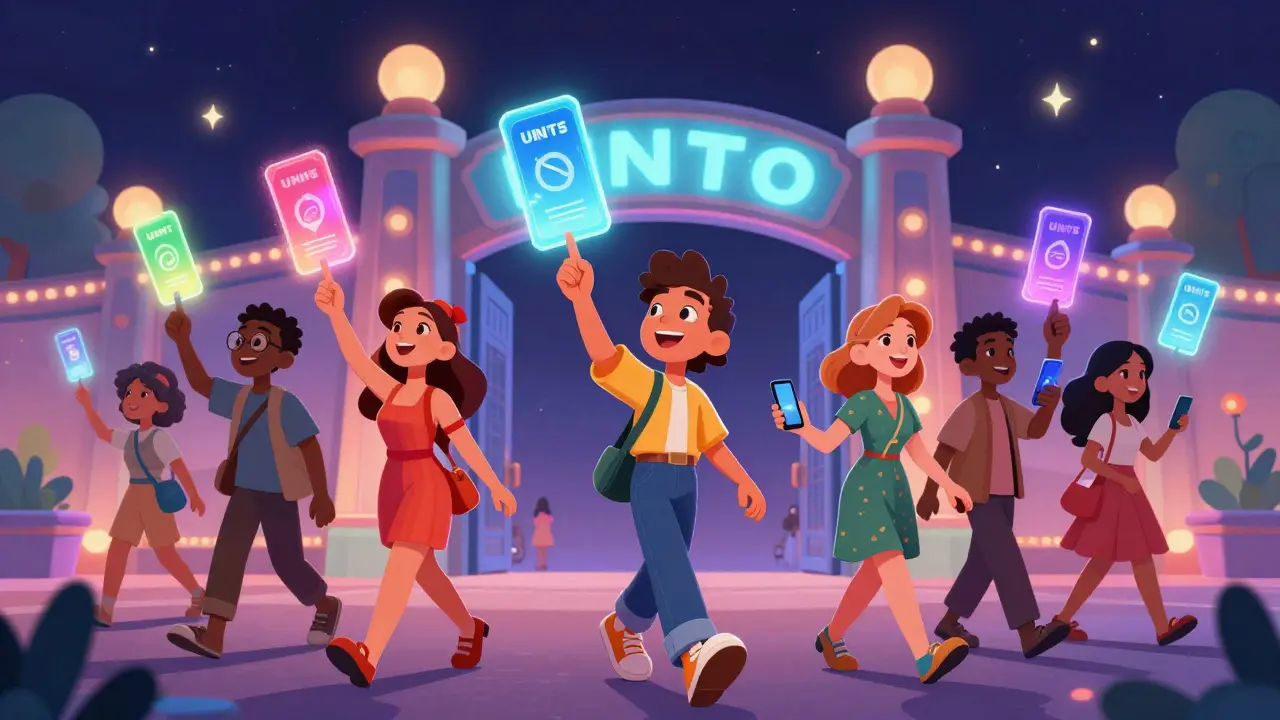
Imagine showing up to a music festival, walking past the long lines, and getting in with a quick scan of your phone-no paper tickets, no fake passes, no scalpers. That’s not science fiction. It’s happening now, thanks to NFT tickets.
For years, event organizers have battled counterfeit tickets, ticket bots that snap up hundreds of seats in seconds, and angry fans stuck in hour-long queues. Traditional e-tickets, even the ones with barcodes, are easy to copy. NFT tickets change that. They’re not just digital copies of a ticket-they’re unique, blockchain-verified assets that prove you own the right to enter. And once you hold one, it’s tied to your digital wallet, making it impossible to forge or resell without the original owner’s permission.
How NFT Tickets Work
An NFT ticket is a non-fungible token stored on a blockchain-usually Ethereum or Polygon. Each one is unique, like a digital fingerprint. When you buy a ticket, you’re not downloading a PDF. You’re receiving a token with embedded data: event name, date, seat number, and a digital signature that links back to the original issuer.
This token lives in your crypto wallet-like MetaMask or Coinbase Wallet. At the venue, a scanner reads the token’s blockchain record. No internet? No problem. Systems like Incode’s use edge computing to verify tickets offline, checking the digital signature against a local copy of the blockchain. The whole process takes under two seconds, compared to 5+ seconds for barcode scanners.
Behind the scenes, smart contracts do the heavy lifting. These are self-executing codes that trigger actions when conditions are met. For example, if someone tries to resell your ticket, the contract can automatically send 12% of the resale price back to the artist or event organizer. That’s something no Ticketmaster system can do.
Why NFT Tickets Beat Traditional Ones
Let’s compare. A traditional e-ticket can be screenshotted, printed, or sold on StubHub for triple the price. NFT tickets? They can’t be duplicated. Every transfer is recorded on the blockchain. If someone tries to sell a fake ticket, the system instantly flags it as invalid because the token doesn’t exist on the ledger.
Statista estimated that counterfeit tickets cost the global entertainment industry $10 billion a year. NFT ticketing cuts that number close to zero. Oveit’s 2023 case studies show a fraud rate of just 0.02%-down from 8-12% with traditional e-tickets.
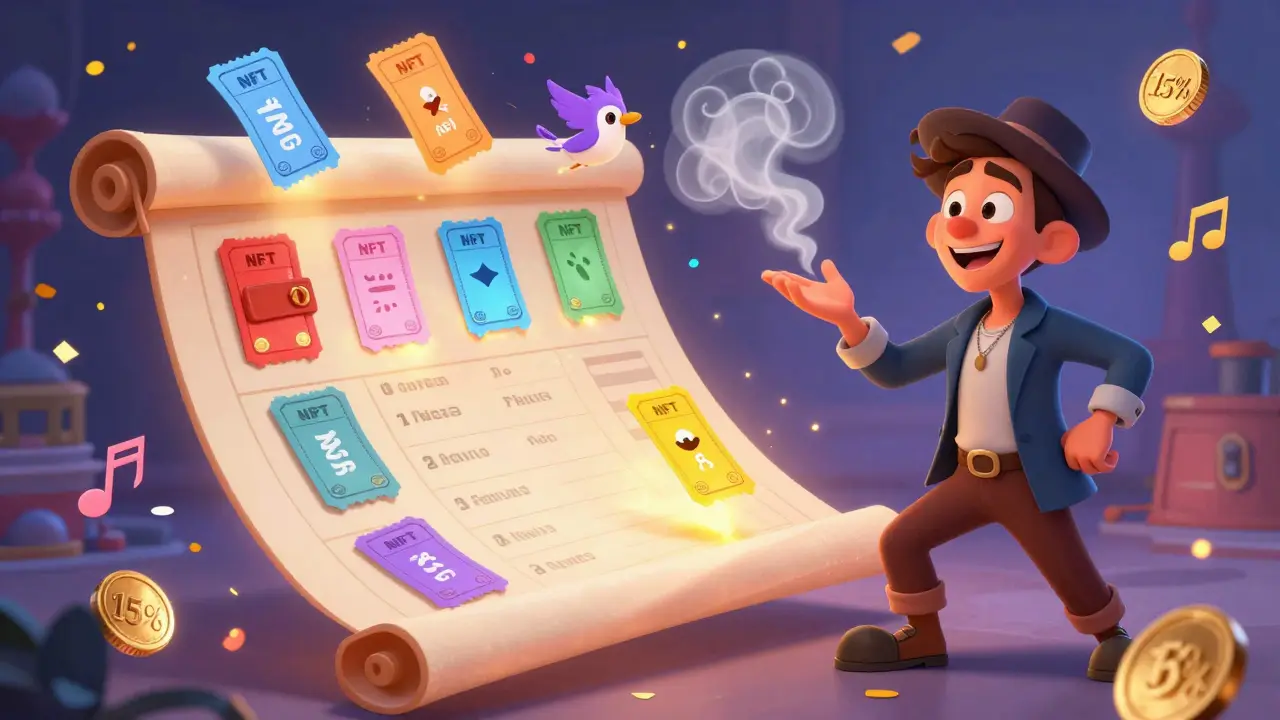
Scalping is another big win. On secondary markets, tickets for Coachella or Tomorrowland often sell for 300% more than face value. With NFT tickets, organizers can program resale rules directly into the token. You can cap resale prices, require approval from the event, or even block resale entirely. Coachella’s 2023 NFT rollout let fans resell tickets only at face value-and gave 15% of resale proceeds to the artists. Attendee satisfaction jumped 22% compared to regular ticket holders.
And it’s not just about access. NFT tickets can unlock extra perks. At Web3 conferences, your ticket might give you access to exclusive Discord channels, digital swag bags, or even virtual meetups after the event. One attendee told me they got a free NFT artwork just for showing up-something they still have in their wallet.
Who’s Using NFT Tickets Right Now
It’s not just startups. Big names are testing this tech. The Ethereum Community Conference used NFT tickets in 2022 and saw 87% of attendees say entry was faster. Decentraland’s virtual events saw users spending 35% more time inside the venue because their NFT ticket unlocked interactive zones.
Music festivals lead the charge-42% of all NFT ticketing deployments are for live music. Esports events follow at 28%, and exclusive tech conferences at 18%. Even Fortune 500 companies are experimenting. By late 2023, 27% had used NFT tickets for internal all-hands meetings or product launches.
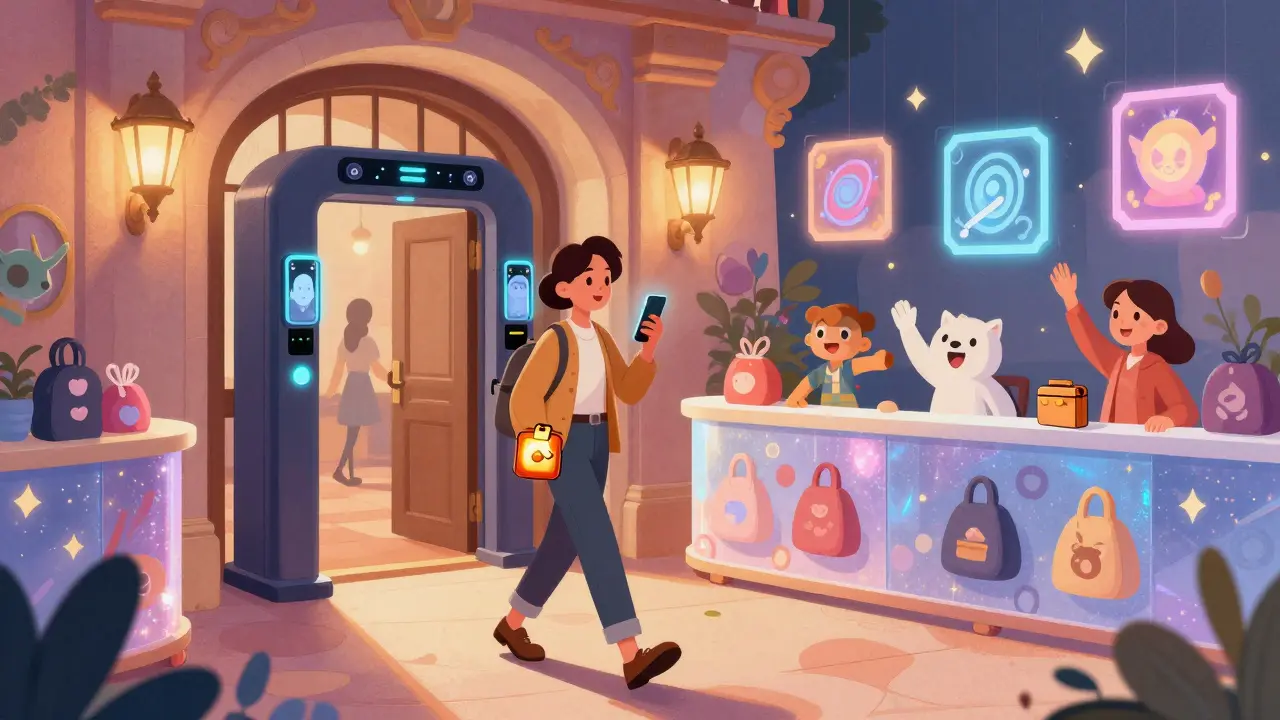
Platforms like Oveit, Incode, and YellowHeart are building full ecosystems. Oveit lets you buy NFT tickets and then use them to pay for food, merch, or VIP upgrades-all from the same wallet. Incode adds facial recognition: your face + your NFT = instant entry. No phone needed. Just walk through the gate.
The Downsides-And How to Handle Them
NFT tickets aren’t perfect. The biggest hurdle? You need a crypto wallet. If you’ve never used Ethereum or MetaMask before, setting one up can feel like learning a new language. Reddit threads from r/NFTTickets show 43% of complaints are about wallet setup. That’s a real barrier for older attendees or people who aren’t tech-savvy.
Transaction fees are another issue. Minting a ticket on Ethereum used to cost $10-$15. Now, with Polygon, it’s under $0.50. Most platforms absorb the cost or bundle it into the ticket price. But if you’re running a $20 local concert, adding $1 in fees might turn people away.
Then there’s the environmental concern. Early Ethereum used a lot of energy. But Polygon, which now powers 45% of new NFT ticketing projects, uses 99.7% less energy than old Ethereum. That’s less than a Google search per ticket.
And if the venue’s scanners don’t work right? In 2022, a small festival denied 15% of ticket holders entry because their hardware couldn’t handle the blockchain load. That’s why smart organizers start small-test NFT tickets for VIPs first, then expand to general admission.
What You Need to Implement NFT Tickets
If you’re an event planner thinking about switching, here’s what you need:
- Blockchain choice: Ethereum is secure but pricey. Polygon is cheaper and faster-used by 68% of new implementations.
- Smart contract developer: You need someone who knows Solidity to code the ticket rules (resale limits, royalties, etc.).
- Wallet integration: Make sure your ticketing platform works with MetaMask, Coinbase Wallet, or Phantom.
- Scanners or apps: You can use handheld devices ($300-$500 each) or let attendees scan their own tickets via a venue app.
- Staff training: Your team needs to know how to troubleshoot wallet issues. A 40-hour training course is typical.
Most platforms offer templates and support. OpenSea’s guide has a 4.2/5 rating from over 100 users. The Ethereum Ticketing Working Group has 450+ active members sharing code and best practices.
What’s Next for NFT Ticketing
The next wave is even bigger. In 2024, YellowHeart is launching AI that detects fraud before a ticket is even sold. ConsenSys is working on cross-chain tickets-so your NFT from Ethereum can be used on Polygon without conversion.
The biggest shift? NFT tickets are becoming event passports. At Web3 conferences, your ticket doesn’t just get you in-it connects you to other attendees, logs your session attendance for LinkedIn, and unlocks sponsor rewards. One user told me their NFT ticket gave them a free consulting call with a sponsor just for attending a panel.
By 2026, Gartner predicts 30% of major festivals and sports events will use blockchain tickets. Deloitte says it’s not a trend-it’s a fix. Traditional systems can’t solve ownership, fraud, or resale. NFT tickets can.
It’s not about replacing every ticket ever printed. It’s about giving high-value events-the ones where trust matters-the tools they need to protect fans, artists, and organizers. And for those who’ve been burned by scalpers or fake tickets? It’s finally a way out.
Can I use an NFT ticket without a crypto wallet?
No, you need a digital wallet like MetaMask or Coinbase Wallet to hold and show your NFT ticket. Some platforms let you sign up with an email and then auto-create a wallet for you, but you’ll still need to access it on your phone to enter the event.
Are NFT tickets more expensive than regular tickets?
The ticket price itself is usually the same. But there may be a small blockchain fee-often $0.50 to $2-added at checkout. Most event organizers cover this cost so attendees don’t see it. On Polygon-based systems, fees are so low they’re practically free.
Can I resell my NFT ticket?
It depends on how the ticket was programmed. Some NFT tickets allow resale, but with rules-like a price cap or a royalty paid to the artist. Others are set as ‘soulbound,’ meaning they can’t be sold or transferred at all. Always check the ticket’s terms before buying.
What happens if I lose my phone with the NFT ticket?
If you have your wallet’s recovery phrase (a 12- or 24-word backup), you can restore your wallet on a new device. Your NFT ticket will still be there. If you don’t have the recovery phrase, you lose access-just like losing physical cash. That’s why wallet security is critical.
Are NFT tickets better for small events?
For small, low-cost events, the overhead might not be worth it. NFT ticketing shines at high-value events where fraud, scalping, or VIP access are concerns. For a $15 local gig, a simple QR code still works fine. But if you’re running a premium experience-like a workshop with limited spots or exclusive content-NFT tickets add real value.
Do I need internet to enter with an NFT ticket?
Not always. Systems like Incode’s use offline verification-your phone checks the ticket’s signature against a local copy of the blockchain data. As long as your phone has the ticket loaded, you can enter even without Wi-Fi or cellular signal.
Can I use the same NFT ticket for multiple events?
Usually not. Each NFT ticket is tied to one specific event, date, and venue. But some platforms are testing reusable ‘event passports’-NFTs that store your attendance history and unlock perks across different events. These are still rare but growing in Web3 conferences.

Josh V
This is the future and you know it no more scalpers no more fakes just pure access with zero hassle
Michael Jones
The technical implementation of NFT tickets is remarkably sound. Blockchain-based verification eliminates duplication at the protocol level, and smart contracts enforce resale restrictions with cryptographic precision. The reduction in fraud rates-from 8–12% to 0.02%-is not merely impressive; it is transformative for event integrity.
Hannah Campbell
Oh great another thing only tech bros can use meanwhile my grandma still thinks crypto is a type of coffee
myrna stovel
I appreciate how this technology can empower artists directly through automated royalties. It’s a quiet revolution in how creative work is valued. For smaller creators, this means sustainability without middlemen taking 30%.
Anthony Ventresque
I wonder if this could eventually integrate with public transit passes or ID systems. Imagine your event ticket also serving as your metro ride for the day-seamless, secure, and tied to your identity. That’s the next logical step.
Andre Suico
While the benefits are clear, the onboarding barrier remains substantial. A significant portion of the population lacks familiarity with digital wallets, recovery phrases, or blockchain fundamentals. Until user interfaces become as intuitive as Apple Pay, adoption will remain limited to early adopters.
Callan Burdett
This is actually kind of wild. I went to a festival last year and got a free digital artwork just for showing up. Now I’ve got it in my wallet like a trophy. I didn’t even know I wanted that until I got it. That’s magic.
Dustin Secrest
There’s a philosophical dimension here that’s often overlooked. Ownership is no longer about possession of a physical object, but about cryptographic proof of identity and intent. The NFT ticket doesn’t grant access-it confirms that you, as a unique agent, have entered into a social contract with the event. This reshapes the very nature of participation.
Pramod Sharma
In India, we still use paper tickets for local events. But for big concerts, this could solve so many problems. The cost is low on Polygon. Why not start with VIPs and scale up?
Nishakar Rath
So you want me to trust a blockchain instead of a guy with a clipboard and a stamp? Cool story bro
Christina Shrader
I like that this reduces fraud without creating more bureaucracy. The system works silently in the background. No extra steps. Just walk in. That’s the kind of innovation that doesn’t shout but still changes everything.
Jason Zhang
It’s cool until your phone dies and you don’t have your recovery phrase. Then you’re just another guy standing outside while everyone else walks in. This tech assumes everyone is tech literate and prepared. Reality isn’t like that.
Stephen Gaskell
America invented the internet. We’re not falling behind on this. If you can’t use a wallet you shouldn’t be at a tech event anyway.
Ashlea Zirk
The environmental impact of early blockchain systems was concerning. However, the shift to proof-of-stake networks such as Polygon has reduced energy consumption by approximately 99.7% per transaction. This renders previous criticisms largely obsolete. The ecological footprint of an NFT ticket is now less than that of a single Google search.
Hannah Campbell
So now I need a crypto wallet to go to a concert? Next they’ll ask me to mine bitcoin just to get in the bathroom
Chris O'Carroll
They say NFT tickets are the future but I still remember when they said holograms would replace all tickets. And then QR codes. And now this? It’s just the same thing with more buzzwords.