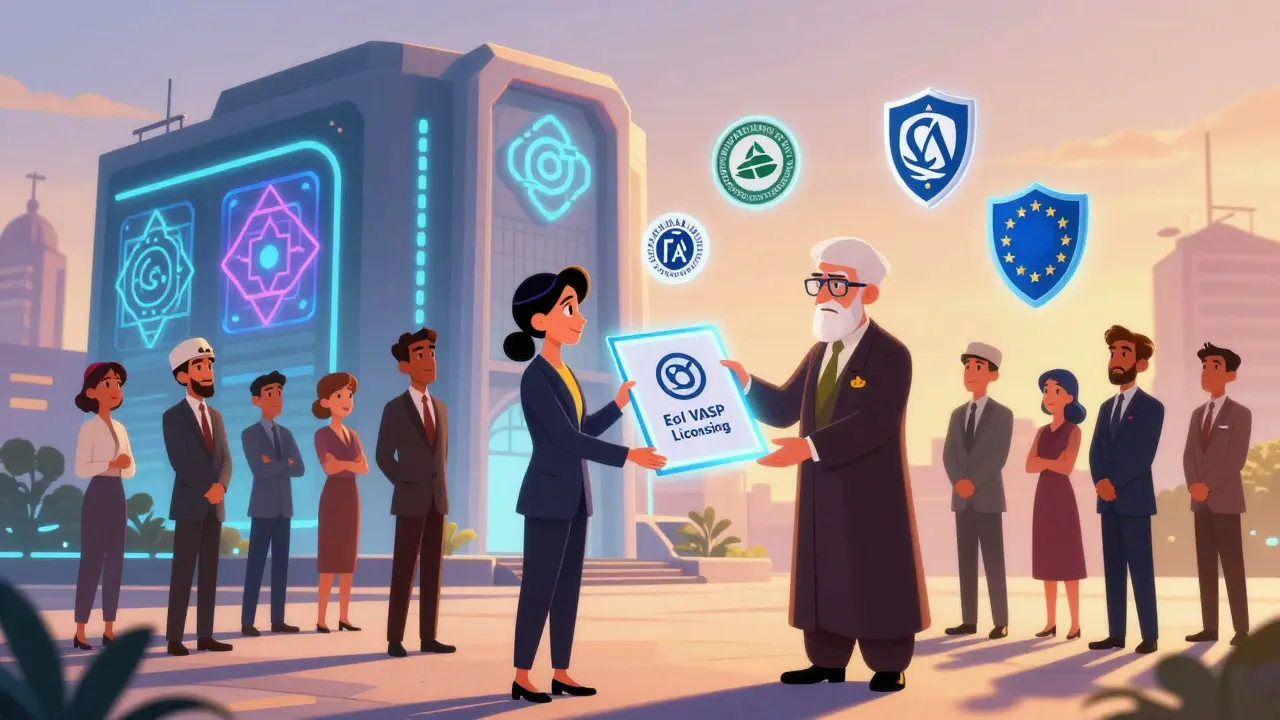
When Pakistan launched its new crypto licensing system in July 2025, it didn’t just change the rules - it rewrote the entire playbook. For years, crypto was a legal gray zone: banned by the central bank but quietly used by millions. Now, the Pakistan Virtual Asset Regulatory Authority (an independent federal regulator created under the Virtual Assets Ordinance 2025 to oversee all virtual asset service providers in Pakistan) is the only game in town. But getting a license? It’s not easy. And it’s not for everyone.
Who Can Even Apply?
Acceptable foreign regulators include:
- U.S. Securities and Exchange Commission (SEC)
- UK Financial Conduct Authority (FCA)
- European Union’s VASP framework
- United Arab Emirates’ Virtual Assets Regulatory Authority (VARA)
- Monetary Authority of Singapore (MAS)
If you’re licensed in one of these jurisdictions, you’re on the shortlist. If you’re not? You can’t apply. No exceptions. This isn’t about protecting local businesses - it’s about filtering out bad actors. Pakistan’s history with money laundering led the Financial Action Task Force (FATF) to flag it years ago. Now, PVARA is using international credibility as a shield.
What You Need to Submit
Submitting an Expression of Interest (EoI) isn’t filling out a form. It’s preparing a dossier. PVARA expects full transparency. Your application must include:
- Complete company profile: history, ownership structure, board members
- Copies of all existing licenses with issuing authorities and dates
- Detailed breakdown of services: trading, custody, payments, staking, tokenization
- Technology stack: cybersecurity protocols, encryption standards, cold storage details
- Assets under management (AUM) and annual revenue figures
- Proven AML/CFT and KYC compliance history - with audit trails
- A clear Pakistan-specific operating model: how you’ll serve local users, handle local currency conversions, comply with tax reporting
All documents must be submitted as a single PDF. The email subject line? Exactly this: 'EoI VASP Licensing' followed by your company name. Miss the format? Your application gets rejected before anyone even reads it.
The Three-Month Wait
Don’t expect quick results. PVARA doesn’t review applications in batches. It evaluates them one by one, on a rolling basis. But even the fastest applicants face a minimum three-month wait before a decision.
Why so long? Because PVARA is doing deep due diligence. They’re checking if your KYC system can handle Pakistani ID documents. They’re verifying if your cold storage meets local data residency rules. They’re confirming your AML team has experience with Pakistan’s unique financial flows - like remittances from the Gulf.
This isn’t bureaucracy for the sake of it. It’s about avoiding repeat mistakes. In 2023, Pakistan’s banking system was flooded with illicit crypto funds. Now, every applicant is held to FATF standards. No shortcuts.
The Shariah-Compliant Edge
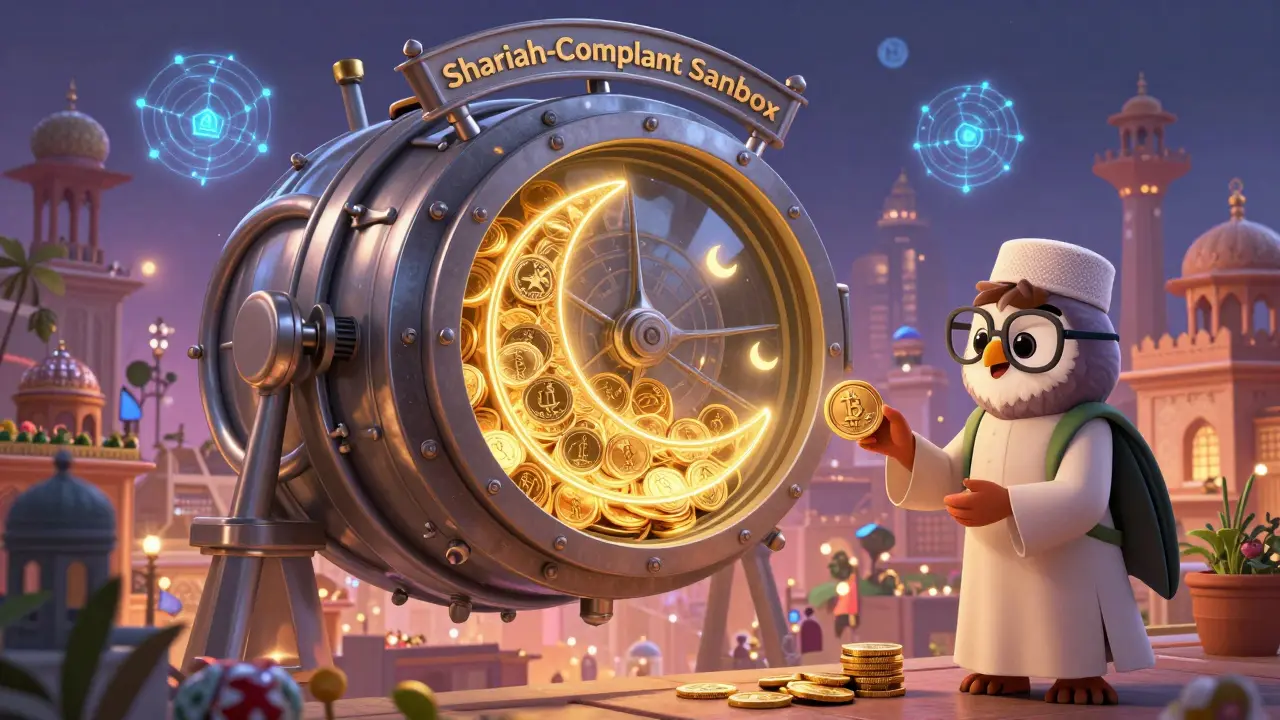
Pakistan isn’t just trying to attract global exchanges. It’s trying to become the hub for Islamic fintech. That’s why PVARA created regulatory sandboxes specifically for Shariah-compliant crypto products.
Think of it like this: if you’re building a crypto savings account that earns returns without interest (because interest is haram), PVARA will help you test it safely - with real users, real money, and real oversight. No other country in South Asia has done this.
Companies offering halal staking, tokenized zakat platforms, or Shariah-screened trading pairs are getting priority review. It’s not just about religion - it’s about market size. Over 96% of Pakistan’s population is Muslim. That’s a billion-dollar opportunity if done right.
The Contradiction Nobody Talks About
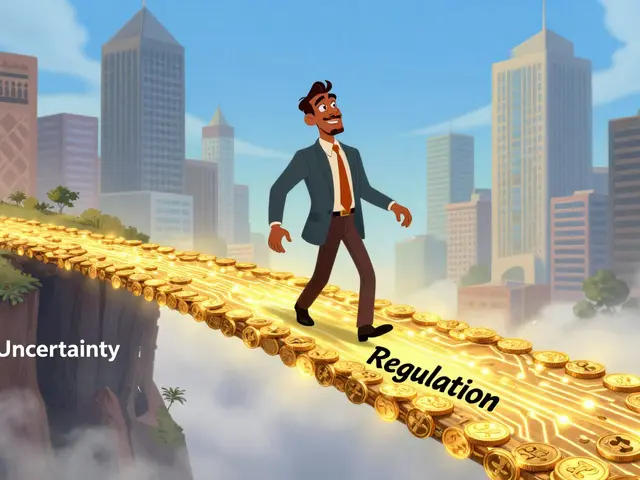
Here’s the messy part: PVARA says crypto is legal. The State Bank of Pakistan (SBP) says it’s not.
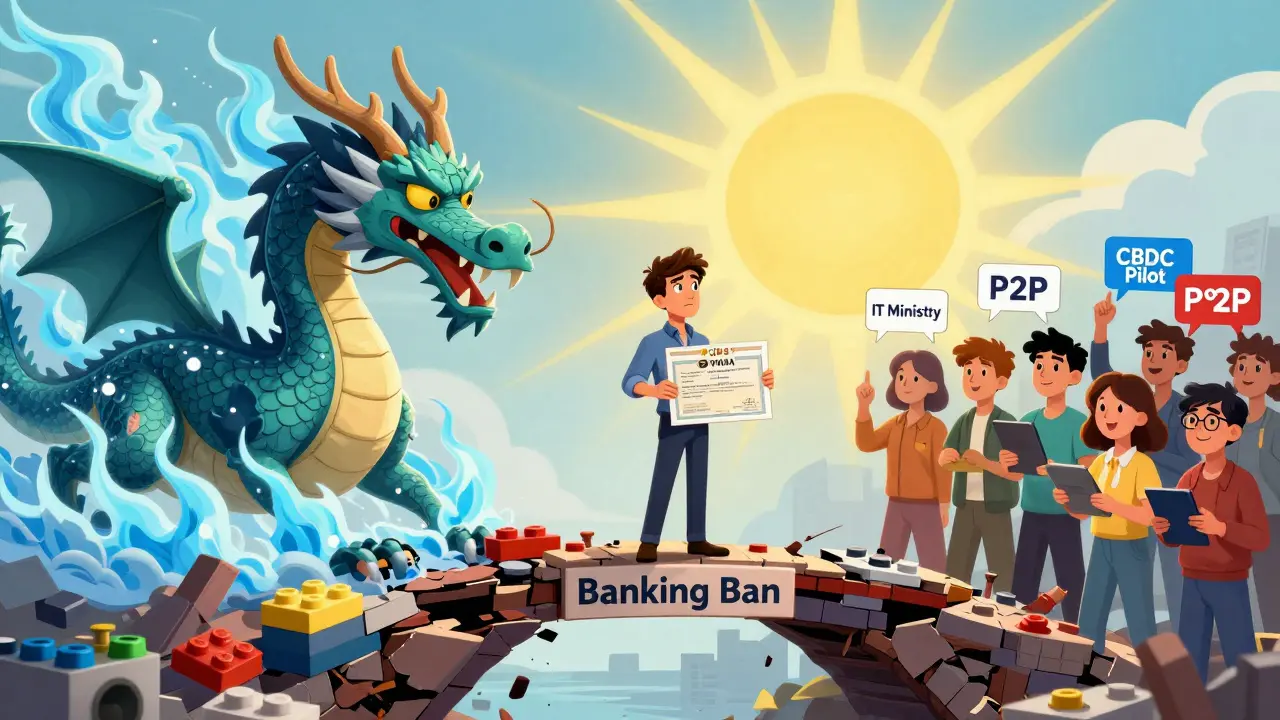
While PVARA issues licenses and encourages exchanges to operate, the SBP still bans banks from dealing with crypto businesses. No bank accounts. No fiat on-ramps. No direct transfers. That means even if you get licensed, you can’t legally move Pakistani rupees in or out of your exchange.
Users are stuck. They can’t deposit PKR through banks. So they use peer-to-peer (P2P) apps, crypto-to-crypto swaps, or third-party payment processors - all operating in legal limbo. This contradiction creates risk. A licensed exchange could be shut down tomorrow if the SBP cracks down.
Analysts call it a paradox. The government wants to attract investment and innovation - but won’t let the financial system support it. Until this gap closes, the licensing system feels more like a symbol than a solution.
What’s Next? Mining, CBDCs, and Political Shifts
Behind the scenes, things are shifting fast. In early 2025, the Pakistan Crypto Council announced plans to build a 2,000 MW Bitcoin mining facility using subsidized power. The idea? Turn energy waste into digital gold.
The IMF immediately pushed back. Subsidized electricity for mining? That’s a fiscal disaster waiting to happen. The plan stalled. No official update since.
Meanwhile, the Senate is moving to shift control of crypto policy from the Ministry of Finance to the Ministry of Information Technology. Why? Because digital assets aren’t about money - they’re about tech infrastructure. That change could mean faster decisions, clearer rules, and less red tape.
And then there’s the Central Bank Digital Currency (CBDC) pilot. The SBP is quietly testing its own digital rupee. If that launches, it could either compete with crypto - or work alongside it. No one knows yet.
Is It Worth It?
For big global exchanges? Maybe. If you’ve got the resources, the compliance team, and the patience, Pakistan offers a massive untapped market. Over 10 million people use crypto here - mostly for remittances and savings. And with inflation at 30%, crypto isn’t a trend. It’s a lifeline.
For small players? Probably not. The cost of compliance, the legal uncertainty, and the banking blockade make it hard to turn a profit. Most startups are waiting to see if the SBP changes its stance.
One thing’s clear: Pakistan isn’t shutting crypto down anymore. It’s trying to control it. And if it gets this right, it could become the most important crypto market in South Asia.
Can I apply for a Pakistani crypto license if I’m not licensed in the US, UK, EU, UAE, or Singapore?
No. PVARA only accepts applications from companies already licensed by one of these five regulators: SEC, FCA, EU VASP, VARA, or MAS. There are no exceptions. If you don’t have one of these licenses, you cannot apply.
How long does the entire licensing process take?
The minimum timeline is three months from submission to approval. PVARA reviews applications on a rolling basis, so there’s no fixed batch cycle. Some applicants may wait longer depending on the complexity of their business model or if additional documentation is requested.
Can I use Pakistani banks to deposit or withdraw fiat currency after getting licensed?
No. The State Bank of Pakistan still prohibits banks from providing services to crypto businesses. Even licensed exchanges cannot open bank accounts or process PKR deposits. Users must rely on P2P platforms or third-party payment processors, which operate outside the formal banking system.
Does PVARA allow Shariah-compliant crypto products?
Yes. PVARA has created regulatory sandboxes specifically for Shariah-compliant services like halal staking, tokenized zakat, and interest-free trading platforms. These applications receive priority review and are designed to serve Pakistan’s 96% Muslim population.
What happens if my application is rejected?
PVARA does not publicly disclose rejection reasons. However, applicants are typically given feedback if they request it. You can reapply after fixing the issues, but you must submit a completely new EoI with updated documentation. There is no appeals process.
Are Bitcoin mining operations allowed under the new licensing rules?
Mining is not covered under the current VASP licensing framework. While the Pakistan Crypto Council proposed a 2,000 MW mining initiative in early 2025, the plan was met with strong opposition from the IMF and remains unapproved. No licenses for mining operations have been issued as of March 2026.
Is crypto legal tender in Pakistan?
No. Cryptocurrency is not recognized as legal tender in Pakistan. The State Bank of Pakistan continues to state that digital assets are not currency and cannot be used for official payments. PVARA regulates crypto as a virtual asset - not money.




Cerissa Kimball
The licensing bar is insane but honestly necessary after what happened with the money laundering scandals
Having to prove youve been vetted by the SEC or FCA first is the only way to stop sketchy operators from sliding in
Ive seen too many crypto firms with offshore shells try to pivot to emerging markets like this
Its not about being elitist its about survival
Jeffrey Dean
So we're just going to hand Pakistan our best regulators as gatekeepers?
Next thing you know they'll require you to have a license from the Vatican to operate a DeFi protocol
Its not about credibility its about control disguised as compliance
Julie Potter
THIS IS THE MOST DRAMATIC THING IVE READ ALL YEAR
Shariah-compliant staking??
Im not even kidding the fact that they created a sandbox for halal crypto is wild
Im going to start a YouTube series on this
Imagine a crypto savings account that doesnt violate your faith
ITS A REVOLUTION
Olivia Parsons
I like how they focused on real AML history instead of just copying EU rules
Too many countries treat compliance like a checkbox
PVARA is actually asking how your system handles Gulf remittances
Thats smart
Thats local
Nick Greening
Oh so now the US and UK are the only ones who get to be crypto cops?
What about Japan? Switzerland? Canada?
And why does Singapore get a pass but not Hong Kong?
This isnt about safety its about western hegemony wrapped in a compliance bow
Issack Vaid
The contradiction between PVARA and SBP is not a flaw
Its a feature
Theyre deliberately creating a gray zone so they can claim theyre open to innovation while maintaining deniability
Classic statecraft
And frankly brilliant
Shawn Warren
This is the kind of bold regulation the world needs
Stop chasing every trend
Build real guardrails
Require proof of global compliance before you even let someone in the door
Too many countries are too scared to be strict
Pakistan is not
Jackson Dambz
Three months to review one application?
Thats not diligence thats incompetence
Theyre probably just sitting on applications waiting for bribes
And dont even get me started on the mining proposal
2000MW on subsidized power?
Thats just state-sponsored energy theft
Jesse VanDerPol
I wonder how many of the 10 million crypto users in Pakistan even know about this licensing system
Most of them are just using P2P apps
And theyre fine with it
Maybe the real story isnt the license
Its the underground economy that already exists
jonathan swift
IM SO GLAD I SAW THIS BEFORE IT WAS TOO LATE
THEYRE USING THIS TO TRACK EVERY SINGLE TRANSACTION
AND THE CBDC IS THE BACKDOOR
THEY WANT TO CONTROL YOUR MONEY
AND THEN THEYLL SAY YOU WERE A BAD PERSON FOR USING CRYPTO
THEYRE USING ISLAM TO MAKE IT SEEM GOOD BUT ITS A SURVEILLANCE TRAP
:warning::warning::warning:
Datta Yadav
You call this regulation? This is colonialism with a blockchain logo
Only companies licensed in the West get to play?
Thats not innovation thats gatekeeping
And dont even get me started on the Shariah sandbox
Its not about faith its about optics
Theyre trying to sell a Muslim-friendly crypto brand to the global market
While the average Pakistani still cant buy BTC without risking their bank account
Its performative compliance at its finest
Lydia Meier
The fact that they reject applications for minor formatting errors is ridiculous
Who even wrote these guidelines?
Its not about security its about bureaucracy for bureaucracys sake
And the whole thing feels like a PR stunt
Theyre not ready for this
Austin King
This is actually one of the most thoughtful crypto frameworks Ive seen
Yes its strict
But its not arbitrary
Theyre building on real problems not hype
And the Shariah sandbox? Thats genius
Not because its religious
But because its market-driven
Bryanna Barnett
I mean if you dont have an FCA license you just dont belong here
Its that simple
Like if you cant afford a Tesla you dont get to drive on the Autobahn
Its not elitist its just reality
And the fact that they care about halal crypto? I respect that
Thats next level branding
Rachel Rowland
To anyone thinking of applying: dont give up
Yes its hard
Yes its slow
But if youve got the compliance infrastructure already
Youre not starting from zero
Youre just translating it
And this market is huge
10 million users
30% inflation
People need this
And you can be the one who delivers it
Bonnie Jenkins-Hodges
Why should we let a Muslim country dictate crypto rules?
They banned interest and now they want to ban real finance?
This is just Sharia law with a blockchain sticker
And dont even get me started on the mining thing
Subsidized power for crypto?
Thats just stealing from the poor
USA first
Melissa Ritz
I read this whole thing and I still dont get why anyone would bother
Three months to get rejected?
Bank accounts still blocked?
And you have to submit a single PDF with the exact subject line?
Thats not regulation thats performance art
And the Shariah sandbox?
Thats just a marketing gimmick for Western investors
Basil Bacor
This is the most british thing Ive ever seen
Theyre using UK regulation as a filter
Like if you passed the FCA test youre good
But if youre from India or Nigeria you cant even try?
Its not about safety
Its about keeping the Global South out
Emily Pegg
I just dont understand why theyre so obsessed with control
People are using crypto because banks failed them
Now theyre making it harder to use?
Its like locking the door after the house is already on fire
And the Shariah thing?
Its cute
But it wont fix the real problem
People need access
Ethan Grace
The real irony is that Pakistan is trying to become the Islamic fintech hub
While the entire system depends on Western regulators to validate them
Its like a king demanding loyalty from his subjects
But only accepting nobles from other kingdoms
Its not sovereignty
Its dependency
Jamie Hoyle
This is the most toxic regulatory framework Ive seen in years
Theyre not filtering bad actors
Theyre filtering out everyone who isnt already rich and western
And the mining proposal? Abandoned because the IMF said no?
Of course
Because the IMF cares more about Pakistan's budget deficit than its people's financial freedom
This isnt innovation
Its a puppet show
Brian T
I think the real story here is that Pakistan is trying to outmaneuver the IMF
By creating a crypto framework that looks like compliance
But actually lets them bypass the SBPs restrictions
Theyre using PVARA as a shield
And the Shariah angle? Thats the distraction
Its not about faith
Its about leverage
Nash Tree Service
The fact that theyre reviewing applications one at a time is absurd
Thats not thoroughness
Thats inefficiency
And the lack of an appeals process?
That’s not governance
Thats authoritarianism
Theyre not building a system
Theyre building a fortress
And the people inside it are already locked out
Issack Vaid
I appreciate the attempt at structure
But you cant build a financial system on a single PDF with a subject line requirement
That’s not regulation
Thats a glitch in the matrix
And the fact that theyre still blocking bank access?
Then why bother with the license at all?
Its like giving someone a driver’s license but banning roads