
Imagine having a war chest with millions of dollars in assets, but no single person has the key to the vault. Now, imagine that every single person who owns a piece of the organization gets to vote on how to spend that money. That is the reality of DAO Treasury Management is the process by which decentralized autonomous organizations handle, allocate, and utilize their financial resources to support their mission and objectives. Unlike a traditional company where a CFO makes the calls behind closed doors, a DAO puts its bank account on the blockchain for the whole world to see.
For many projects, the treasury is the heartbeat of the operation. It pays the developers, funds marketing campaigns, and provides the runway for long-term growth. But this open-access model creates a paradox: how do you maintain the speed of a startup while ensuring a thousand different token holders agree on every single payment? If you get it right, you build an unstoppable, community-led powerhouse. If you get it wrong, a single smart contract bug or a bad vote can wipe out your entire budget overnight.
The Core Pillars of a Decentralized Treasury
Managing money in a DAO isn't just about hoarding tokens; it is about strategic survival. Since there is no central authority, the process relies on a few critical operational areas to keep the wheels turning.
- Budget Allocation: This is the strategic map of where the money goes. Instead of a yearly corporate budget, DAOs often use rolling allocations or milestone-based funding to ensure funds are used efficiently and align with the community's goals.
- Governance Mechanisms: These are the rules of the game. Governance is the system of proposals and voting that decides if a project gets funded. It ensures that the people with skin in the game (the token holders) are the ones steering the ship.
- Risk Management: In the volatile world of crypto, your treasury can lose 50% of its value in a week if you only hold one asset. Risk management involves identifying market volatility, protocol failures, and regulatory shifts before they become catastrophes.
- Performance Reporting: Because everything is on-chain, transparency is a given, but clarity is not. Regular reports translate raw blockchain data into readable metrics so the community knows exactly how their resources are performing.
Security First: Protecting the Vault
In a decentralized setup, a "lost password" isn't just a nuisance-it can be the end of the organization. To prevent this, DAOs move away from single-point-of-failure systems. The gold standard for this is the Multi-signature Wallet (or Multi-sig), a digital wallet that requires two or more private keys to authorize a transaction before it can be executed on the blockchain. If one person's laptop is hacked, the funds remain safe because the attacker can't produce the other required signatures.
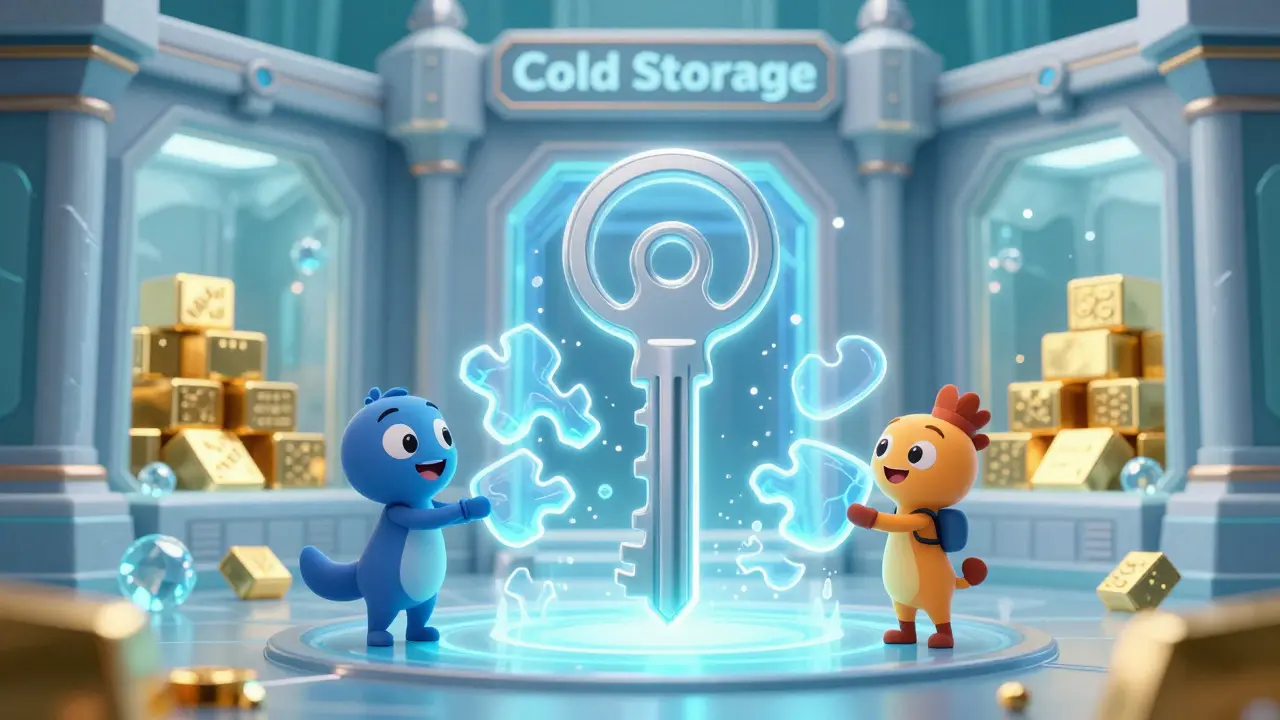
Beyond the wallet, professional DAOs employ a layered defense strategy. This usually includes Cold Storage, where a large portion of the treasury is kept offline in hardware wallets, away from any internet connection. They also treat Smart Contract Audits as a non-negotiable cost of doing business. Having a third-party security firm stress-test the code prevents the kind of "drain" events that have plagued early decentralized projects.
DAO vs. Traditional Finance: What Actually Changes?
If you've ever worked in a corporate finance department, the DAO model will feel like a total inversion of power. In a traditional company, financial authority is vertical. The board approves a budget, the CFO manages it, and the employees spend it. In a DAO, that structure is flattened.
| Feature | Traditional Corporation | DAO Treasury |
|---|---|---|
| Authority | Centralized (CFO/Board) | Decentralized (Token Holders) |
| Transparency | Private/Quarterly Audits | Real-time/On-chain Publicly |
| Execution | Banking Rails/Manual Approval | Smart Contracts/Code-based |
| Decision Speed | Fast (Top-down) | Slower (Voting period) |
| Asset Custody | Bank Accounts/Custodians | Multi-sig Wallets/Cold Storage |
This shift creates a massive increase in accountability. You can't "cook the books" when every transaction is timestamped and visible to every member of the community. However, this transparency can be a double-edged sword, as competitors can see exactly how much runway a project has left and how they are spending their money.
Strategies for Long-Term Sustainability
Many DAOs make the mistake of holding 100% of their treasury in their own native token. While this shows confidence in the project, it's a financial suicide mission during a bear market. If the token price drops 90%, the DAO can no longer pay its developers, and the project dies. This is why diversification is the most important rule of survival.
Sustainable treasuries typically follow a "tiered" asset strategy:
- Liquidity Tier: Stablecoins (like USDC or DAI) used for immediate operational costs, such as monthly payroll and server fees.
- Reserve Tier: High-liquidity assets like ETH or BTC that provide a hedge against the DAO's own token volatility.
- Growth Tier: The DAO's native token, which is used for incentives and long-term ecosystem growth.
By spreading holdings across these categories, a DAO ensures that even if its native token crashes, it still has enough "dry powder" in stablecoins to keep the lights on for six to twelve months. This level of financial planning is what separates a flash-in-the-pan project from a lasting institution.

Common Pitfalls and How to Avoid Them
The road to decentralized finance is littered with the ghosts of failed treasuries. Most of these failures stem from three specific mistakes: governance fatigue, lack of diversification, and over-reliance on a few "trusted" signers.
Governance fatigue happens when a DAO asks its members to vote on every tiny expense. If you have to vote on a $50 software subscription, people will stop voting. To fix this, successful DAOs use sub-DAOs or working groups. They allocate a lump sum to a specific team (e.g., the Marketing Team) and give them the autonomy to spend that budget within certain limits, reporting back to the main treasury every month.
Another common trap is the "trust circle." A DAO might start with a 3-of-5 multi-sig managed by the founders. As the project grows, they fail to rotate those keys or add new community members. This creates a centralized bottleneck that contradicts the very purpose of the DAO. Regularly rotating signers and increasing the number of required approvals as the treasury grows is essential for maintaining true decentralization.
What is the biggest risk in DAO treasury management?
The biggest risk is usually a combination of smart contract vulnerability and asset concentration. If a treasury only holds its own native token and that token's price collapses, the organization loses its ability to operate. Similarly, a bug in the treasury's controlling smart contract can lead to an immediate total loss of funds.
How do DAOs pay their contributors?
Most DAOs use a combination of native tokens and stablecoins. Payments are typically triggered by a community vote or a pre-approved budget allocation. Many use platforms that automate streaming payments, where contributors receive their pay second-by-second rather than in a monthly lump sum.
Is a multi-sig wallet enough to keep a treasury safe?
It is a great start, but not enough on its own. A robust strategy also requires cold storage for the majority of funds, regular audits of any smart contracts used for automation, and a diversified portfolio of assets to protect against market crashes.
Can a DAO treasury be managed by AI?
Some DAOs are experimenting with algorithmic treasury management to automate diversification and hedging. However, the final approval for major expenditures almost always remains with the human token holders to ensure the funds are being used for the organization's actual mission.
What happens if a DAO treasury is hacked?
Recovery is difficult because blockchain transactions are irreversible. DAOs usually rely on insurance funds, community fundraising, or "slashing" (penalizing) the parties responsible if the hack was due to negligence. This is why rigorous audits and cold storage are critical preventatives.
Next Steps for DAO Treasuries
If you are currently managing a treasury, your first move should be a risk audit. Check your asset concentration: are you too heavy on your own token? If so, start a diversification plan. Next, review your signature thresholds. If the same three people are signing every transaction, you aren't a DAO; you're a traditional company using a blockchain. Expand your multi-sig to include trusted community members to increase resilience.
For those just starting, focus on the governance framework first. Define exactly how a proposal is made, who can vote, and what the quorum is before you ever deposit a single token. It is much easier to change the rules when the vault is empty than when it's full of millions of dollars and everyone is fighting over the keys.






Iestyn Lloyd
Multi-sigs are definitely the baseline, but people often overlook the social layer of security. Proper key rotation and a clear set of emergency procedures for 'lost' keys are just as vital as the code itself.
Michael Repak
This is such a great breakdown!!! I really appreciate how it emphasizes diversification... it's a lifesaver for new projects!!!
Emily A
The mention of 'governance fatigue' is accurate, although the solution of sub-DAOs merely displaces the centralization problem to a smaller group of individuals. One must wonder if true decentralization is even compatible with operational efficiency.
April D Thompson
Omg, the irony of a 'decentralized' vault that still relies on a tiny circle of trust is just wild! It's like we're trying to build a new world but we're still terrified to let go of the old power dynamics. We need to embrace the chaos of true community ownership, even if it's messy and slow, because that's where the real growth happens! Let's stop playing safe and actually trust the collective mind!
debra hoskins
Diversification is just fancy talk for hedging your bets because you're scared. Most of these 'sustainable' treasuries are just bureaucratic nightmares in disguise.
Felix Eduardo Velasquez
The philosophical tension here lies in the trade-off between trustlessness and agility. By removing the single point of failure, we inherently introduce a latency in decision-making that can be fatal in high-volatility markets. The goal shouldn't be the total removal of trust, but the distribution of it across a wide enough base that no single bad actor can sink the ship.
Pramendra Singh
It is very hopeful to see more projects adopting stablecoin reserves to protect their workers. Such a move ensures that the people doing the hard work are taken care of regardless of market swings.
Chloe Fletcher
Love the tiered asset strategy! 🚀 It really helps to visualize the risk levels. If you're still holding 100% in your own token, you're basically gambling with your team's payroll! 😱 Keep those stablecoins ready! 💰
Kara Spadone
Imagine thinking a multi-sig is a 'gold standard' in 2024. 🙄 It's cute that people still believe these basic walls can keep out a determined attacker. 💅
Lloyd I
Totally agree with the point on sub-DAOs! It gives people a chance to lead and take ownership of specific goals without clogging up the main voting pipeline. It's a win-win for everyone involved!
Amanda Macy
The inherent paradox of the DAO is that transparency often invites predatory behavior from competitors. Knowing the exact runway of a project allows others to time their attacks or market maneuvers perfectly.
Rachel S
The sheer tragedy of a treasury hack is a recurring theme in this space, and it is truly devastating when a community's hard-earned funds vanish in a blink. 😭 One must maintain a rigorous standard of cold storage to avoid such heartache! ✨
Jan Conrad
The mention of streaming payments is interesting. Using protocols like Sablier or similar tools significantly reduces the risk of a contributor disappearing with a huge lump sum and helps the DAO maintain a tighter grip on its burn rate.