If you've been searching for Grow crypto coin, you've probably noticed something strange: there isn't just one "Grow" coin. Depending on where you look, you'll find one project trying to save the organic farming industry and another acting as a powerhouse for AI model training. It's a classic case of crypto naming overlap, and if you aren't careful, you might buy into a project that does the exact opposite of what you intended.
The core problem here is market fragmentation. We have two distinct entities using the GROW ticker. One is focused on the physical world-specifically the food supply chain-and the other is a digital-first governance tool for a Web3 platform. To understand if either is a good fit for your portfolio, you need to look past the name and dive into the actual utility of these tokens.
The AgTech Vision: Grow as a Sustainable Food Solution
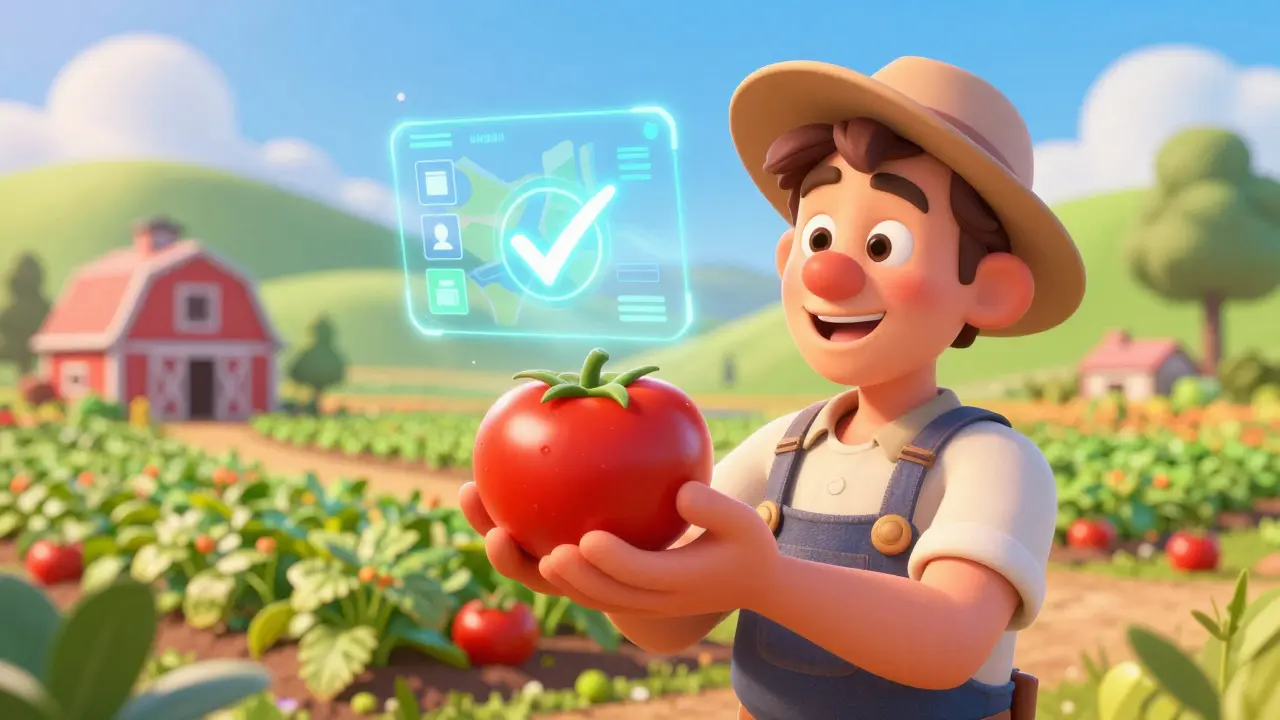
Grow is an AgTech blockchain-based ecosystem designed to dismantle the centralized, corporate-dominated nature of the global food supply chain. Essentially, it's a tool for a "food renaissance." Instead of a few giant corporations controlling where your lettuce comes from, this project uses a shared ledger to connect local farmers directly with distributors and shoppers.
The real value here is radical transparency. Imagine scanning a QR code on a tomato and seeing the exact farm it came from, when it was harvested, and how it was transported. By using blockchain, the project ensures that "organic" isn't just a marketing label but a verified fact on the chain. This helps small-scale producers get fairer prices because they can prove the quality and origin of their goods without needing a middleman to vouch for them.
From a technical side, this version of Grow aims to increase rural vitality. When farmers have direct market access, their incomes rise, and the incentive to use sustainable, planet-friendly farming methods increases. It's less about "trading the pump" and more about building a resilient infrastructure for how we eat.
The Tech Play: Grow Token in the Triathon Ecosystem
Now, let's switch gears. There is another Grow Token (GROW) which is a governance token within the Triathon ecosystem, a Web3 platform focusing on artificial intelligence (AI) model training and application security. This isn't about farming crops; it's about farming data and computational power.
In this ecosystem, GROW acts as the steering wheel. If you hold the token, you get a vote on how the platform evolves, how funding is allocated, and how the AI models are trained. It's a community-driven approach where the people providing the computing power are the ones who actually own the network. If you contribute your hardware to train a secure AI model, you're rewarded with tokens, creating a loop where utility and ownership are linked.
An interesting overlap happens within the ValleyDAO ecosystem. Here, Grow Token allows users to stake stable coins to earn a yield (APY) while simultaneously bringing transparency to livestock and crop supply chains. It's where the AI-driven tech side meets the agricultural side, showing that these two projects-while distinct-are often orbiting the same goal: decentralizing the way we track resources.
Comparing the Two Grow Projects
Because the names are so similar, it's easy to get confused. Here is a breakdown of how these two versions of GROW actually differ in terms of purpose and structure.
| Feature | Grow (Agricultural) | Grow Token (Triathon) |
|---|---|---|
| Primary Goal | Sustainable food supply chains | AI training & Web3 security |
| Core Utility | Traceability & Farmer income | Governance & Voting rights |
| Technical Focus | Supply chain provenance | Dual-token model (GROW/GEON) |
| Key Asset | Organic produce verification | Computational power rewards |
| Market Cap (Approx) | ~$22.47M | Varies by exchange |

Technical Architecture and the Dual Token Model
If you're looking at the tech under the hood, the Triathon-based GROW uses a hybrid system. It doesn't just rely on its own chain; it leverages the Ethereum Network to ensure that the system is secure and can scale. This means it can interact with other decentralized finance (DeFi) tools more easily.
They also use a "dual token" economic model. While GROW handles the governance (the voting and the rules), another token called GEON handles the utility (the actual spending and usage). This is a smart move because it prevents the price of the governance token from swinging wildly every time someone wants to pay for a service on the platform. It separates the "ownership" of the network from the "cost" of using it.
The network is kept honest by a community of node owners. Instead of one company owning the servers in a giant warehouse, the infrastructure is distributed. This makes the network harder to shut down and more transparent, which is exactly what you want when you're dealing with AI security and food safety.
Market Performance and Red Flags
Here is where things get a bit messy. If you check the price of GROW on three different exchanges, you might see three different numbers. For example, one exchange might list it at $0.04, while another says $0.001. This is a major red flag called "market fragmentation."
When prices vary wildly between platforms, it usually means there isn't enough liquidity. In simple terms: there aren't enough buyers and sellers moving the coin around, so the price gets "stuck" at different levels on different exchanges. You also have to be aware of the volatility. Some versions of the coin have dropped over 90% from their all-time highs. For instance, the agricultural project hit a peak in July 2024 and has since seen a massive correction.
If you're thinking about investing, don't just look at the current price. Look at the 24-hour trading volume. If the market cap is millions of dollars but the daily trading volume is only a few hundred dollars, you might find it very difficult to sell your coins once you've bought them.
Real-World Use Cases: How It Actually Works
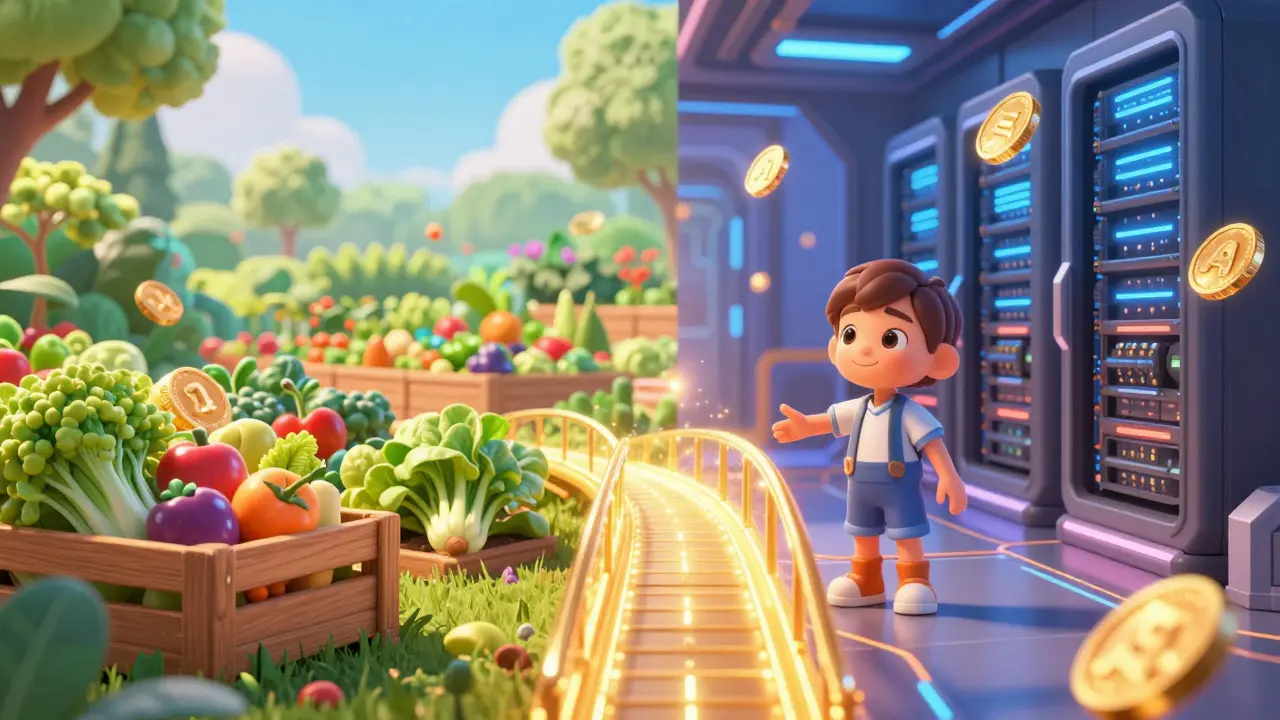
To make this concrete, let's look at how these tokens are used in the real world. For the agricultural project, a local organic farmer in the UK could use the blockchain to log every step of their cabbage production. From the seed variety to the date of harvest, everything is timestamped. A retailer in London can then verify this data, allowing them to sell the cabbage at a premium price because the "organic" claim is backed by an immutable record.
On the Triathon side, imagine you have a powerful gaming PC. You could lend your unused GPU power to help train a new AI model. In exchange, the system automatically sends you GROW tokens. You then use those tokens to vote on whether the project should expand into new AI security features or focus on improving the current ones. You've gone from being a passive user to a part-owner of the AI infrastructure.
Is Grow (GROW) the same as the Triathon token?
Yes and no. While they share the same ticker (GROW), there are two different projects. One is an AgTech project focused on food supply chains, and the other is the governance token for the Triathon AI ecosystem. Always check the contract address before buying.
Why are the prices different on different exchanges?
This is usually due to low liquidity and market fragmentation. When there aren't enough trades happening, the price on one exchange doesn't automatically sync with another, leading to the wide gaps you see between platforms like Bybit and Coinbase.
What is the dual token model in Triathon?
The dual token model uses GROW for governance (voting and decision-making) and GEON for utility (paying for services). This helps stabilize the ecosystem by separating the token used for project growth from the one used for daily operations.
Can I actually track food with the Grow blockchain?
Yes, that is the primary goal of the AgTech project. By using a shared ledger, farmers, distributors, and retailers can log the journey of produce, providing consumers with verifiable proof of origin and sustainability.
Is GROW a safe investment?
All cryptocurrency investments carry risk, but GROW specifically shows high volatility and potential liquidity issues. The significant drop from all-time highs and the pricing discrepancies across exchanges suggest it is a high-risk asset.
What to do next
If you're interested in the AgTech side, your next step should be researching the actual partnerships the project has with farmers and distributors. A blockchain is useless without real-world adoption, so look for a list of active farms using the tech.
If you're leaning toward the AI and governance side, check out the Triathon documentation. Look into how the GEON token works alongside GROW, and see if you have the hardware requirements to participate in AI model training. Regardless of which path you choose, double-check the contract address on a block explorer to ensure you're buying the specific version of GROW you actually want.

Yuhan Mo
The market fragmentation here is a total nightmare for liquidity providers. Using a dual-token model for governance and utility is a standard move to mitigate volatility, but it doesn't solve the ticker collision issue. Pretty rough for the UX when you have two projects fighting for the same string of letters.
Michelle Stanish
Not interested.
Shantal Sanjur
Oh sure, because "decentralizing the food supply" is totally just a cover for tracking every single movement we make. They want to know exactly which cabbage you ate and when. It's just another layer of the surveillance state wrapped in a green "organic" bow. How convenient that the AI side is also "securing" the data. Wake up people, this is literally a blueprint for total control under the guise of sustainability.
Joshua Salwen
I CANT BELIEVE PEOPLE ACTUALLY FALL FOR THIS!! Like, why would any sane person invest in something where the price is different on every single exchange?? its a joke!! totaly a scam and anyone who thinks otherwise is just delusional!! i've seen this pattern a thousand times and it always ends in a rug pull!!
Adedamola Oyebo
Check the contract addresses first!!! Always!!! Use an explorer to verify the minting logic and liquidity locks before jumping in!!
Sandeep Bhoir
Wow, a project that solves the "organic" label problem. Because we all know labels are the biggest hurdle in global agriculture and not, you know, actual logistics and poverty. Truly revolutionary.
Jeff Barlett
Actually, the AgTech side is way more likely to fail because it relies on physical adoption. AI tokens can just live in the cloud and pump on hype. The real-world stuff is a slog and usually dies before it hits scale.
Evan Iacoboni
This is a disaster waiting to happen. If the liquidity is this bad, the slippage on any decent-sized trade will kill you. How can a project even exist with this much pricing disparity across exchanges without some kind of arbitrage closing the gap instantly?
Tracy Sperandio
Let's bring some actual energy into this! Imagine the vibrancy of a world where farmers are finally liberated from corporate shackles by this tech! It's a dazzling prospect for the planet! We need to push for this kind of transparency with every fiber of our being to ensure a lush, green future for everyone!
Prachi Bhadarge
Imagine thinking a QR code on a tomato is
Prachi Bhadarge
Imagine thinking a QR code on a tomato is a "technological breakthrough." It's literally just a database entry. But hey, if it makes the token go up, who cares about the actual utility, right?
Trudy Morse
Truth is relative. The token isn't just a tool; it's a representation of value shift. Either way, you're just betting on a name.
Sean Mitchell
The sheer audacity of listing a coin that has dropped 90% as a "guide" is just breathtaking. I can't even bring myself to care about the tech when the chart looks like a cliff dive. Pure tragedy.
Robert Preston
For those who are new to this, please remember that high volatility is common in small-cap tokens. If you're looking at the AgTech side, prioritize checking their actual partner list as suggested. It's the only way to see if there's real-world traction.
Thomas Jewett
Typical of these globalist projects to try and control our food supply with some fancy foreign-sounding blockchain tech. We should be supporting American farmers with American systems, not some digital ledger that can be wiped by a server in another country!! This is how we lose our sovereignty, one "organic" cabbage at a time!!
Luke George
The AI training part is obviously a front for something else. Who needs "distributed" hardware for AI when the big players already have the clusters? They're just harvesting our GPU data to feed the beast.
Anna Grealis
is this even real... the prices are all over the place. laukly i didnt buy any. probly a honey pot anyway.
Adam Mann
I truly believe that if we all work together, we can find the right projects that actually help the world! Whether it's helping a small farmer in a distant land or building a smarter AI, the potential for good is just so huge. Let's keep learning and supporting each other as we navigate this wild crypto space together, and maybe we can all find a way to make a positive impact on the globe!
Kevin Lư
Yo, just keep it simple. Buy the one that looks like it'll pump. Who cares about the cabbage? Just ride the wave and get out before the crash, lol.
Karen Mogollon Gutierrez
The sheer incompetence of having two identical tickers is an absolute travesty of the highest order! One simply cannot abide such a lack of professional rigor in the digital asset space! It is a chaotic nightmare that leaves the investor in a state of utter bewilderment and distress! How can one be expected to maintain a sophisticated portfolio when the very nomenclature of the assets is in such total disarray! Truly, the level of disorganization is nothing short of scandalous and an affront to all who seek order in their investments!