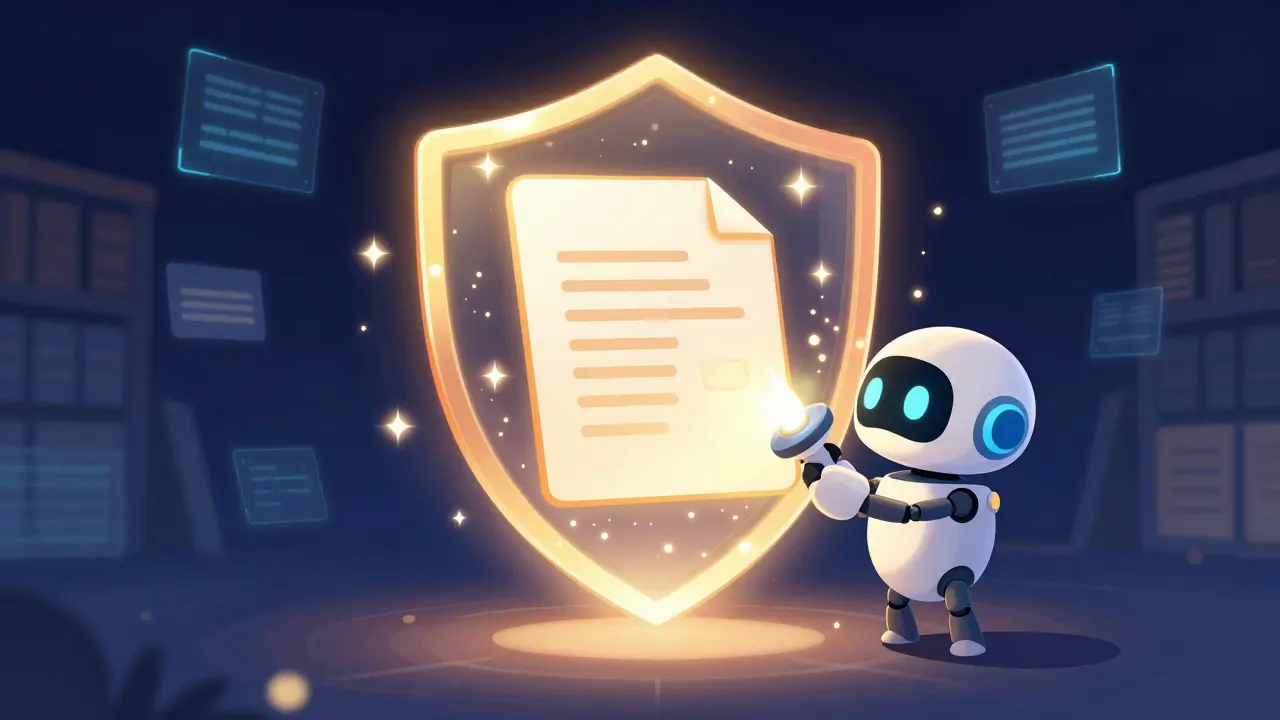
Ever wondered how you can actually prove a PDF or a digital certificate hasn't been tweaked by someone with a basic editing tool? In a world where digital forgery is becoming scarily easy, the stakes for businesses and universities are higher than ever. That's where VIDT DAO is a blockchain-based ecosystem designed to certify and secure digital assets through advanced document authentication technology. Unlike typical coins used for payments, VIDT focuses on the "truth" of a file, ensuring that what you're looking at is the original, untampered version.
The Core Mission of VIDT DAO
The main goal here is simple: stop fraud and errors from stalling digital innovation. When a company sends an invoice or a school issues a diploma, they need a way to guarantee that document remains authentic as it moves across the web. VIDT DAO uses a Decentralized Autonomous Organization (DAO) structure, meaning the project isn't run by a single CEO in a corporate office. Instead, governance is spread across token holders and the community, making the development process transparent and collective.
How the Tech Actually Works
You don't need to be a coder to understand the magic behind the VIDT crypto coin ecosystem. The platform uses something called blockchain-based fingerprinting. Think of it like a digital DNA test for your files. When a document is uploaded, the system creates a unique digital fingerprint (a hash) and stores it securely on the blockchain.
If even one comma or pixel is changed in that file, the fingerprint changes completely. This makes it impossible to sneak in unauthorized edits without being caught. The speed is impressive, too. You can verify a file in about 5 seconds using a simple drag-and-drop terminal or by integrating the V-ID API into an existing business workflow. This means a company can automatically check thousands of documents for authenticity without manual oversight.
Real-World Use Cases and Partnerships
Technology is only useful if people actually use it. VIDT DAO has already moved past the theoretical phase by partnering with established names. For example, Nyenrode University and AmSpec use the platform to secure certificates and invoices. Even IBM has been involved, showing that the system can handle enterprise-level security needs.
Consider these common scenarios where this tech is a lifesaver:
- Academic Credentials: A university issues a digital diploma; an employer verifies it instantly via the blockchain to ensure it isn't a fake.
- Legal Contracts: Ensuring a signed agreement hasn't been altered after the digital signature was applied.
- Corporate Invoicing: Preventing "man-in-the-middle" attacks where a fraudster changes the bank account details on a PDF invoice.
Comparing VIDT to Other Crypto Assets
It's easy to lump all cryptocurrencies together, but VIDT is fundamentally different from a coin like Bitcoin or Ethereum. While those often act as a store of value or a platform for apps, VIDT is a specialized tool for document integrity.
| Feature | VIDT DAO | Standard Payment Coins |
|---|---|---|
| Primary Purpose | Document Authentication | Medium of Exchange / Value Store |
| Core Utility | Digital Fingerprinting | Transfer of Funds |
| Governance | DAO (Community-led) | Varies (Often founder-led or decentralized) |
| Target User | Enterprises & Institutions | General Public / Investors |
Trading and Market Realities
If you're looking at the VIDT token from an investment perspective, you need to be aware of the volatility. Market data on VIDT can be confusing because different tracking platforms often show wildly different numbers. Some sources have listed prices around $0.023, while others show a fraction of a cent, such as $0.0004.
This discrepancy usually happens because the coin might be traded on smaller, niche exchanges rather than the giants like Crypto.com or Coinbase. In fact, some major platforms list the coin for tracking but don't actually allow you to trade it. With a 24-hour trading volume sometimes as low as $250, liquidity is a major concern. This means buying or selling large amounts of the token could swing the price aggressively.
Potential Pitfalls and Risks
Investing in a low-cap project like this is a high-risk move. Because the trading volume is relatively low, you might find it difficult to sell your tokens quickly (this is called liquidity risk). Additionally, the conflicting price data across platforms suggests that the market for VIDT is still very fragmented.
Furthermore, while the tech is sound, the success of the token depends entirely on the adoption of the verification service. If more universities and corporations don't sign up for the fingerprinting service, the utility of the token remains limited. Always check primary exchange data rather than relying on a single price aggregator.
Summary Checklist for Potential Users
If you are considering using or buying VIDT, keep these points in mind:
- Check the API: If you're a dev, look into the V-ID API to see if it fits your tech stack.
- Verify the Exchange: Ensure the exchange you use actually has enough volume to support your trade.
- Understand the DAO: Research the current governance proposals to see where the project is heading.
- Avoid FOMO: Don't buy based on a single price spike; look at the 52-week range to understand the volatility.
What is the main use of the VIDT token?
The VIDT token powers the VIDT DAO ecosystem, which focuses on certifying and authenticating digital documents. Instead of being used for simple payments, it supports a system that creates digital fingerprints of files on the blockchain to prevent fraud and unauthorized editing.
How fast is the document verification process?
Verification is very quick, typically taking about 5 seconds. Users can either use a drag-and-drop terminal or integrate the V-ID API for a more seamless business experience.
Is VIDT DAO available on major exchanges?
It is available on some exchanges, but not all. For instance, while some platforms track its price, they may not allow direct trading. It is generally considered a lower-capitalization asset with limited liquidity compared to major coins.
What happens if a document is edited after being certified by VIDT?
If a digital file is altered, its unique digital fingerprint changes. When the file is run through the VIDT verification system, the new fingerprint will not match the original one stored on the blockchain, immediately flagging the document as tampered with.
Who is using VIDT DAO currently?
The platform has established partnerships with institutions like Nyenrode University, AmSpec, and IBM to secure high-integrity documents such as diplomas and corporate invoices.




Robert Smith
Looks cool 🚀
Felix Eduardo Velasquez
The concept of using a hash as a digital fingerprint is a standard application of cryptographic primitives, but the actual utility here is in the layer of trust it provides for non-technical users. By moving the verification process to a DAO, they are attempting to remove the single point of failure inherent in centralized certification authorities. This is a necessary evolution for digital credentials, although the real challenge remains the widespread adoption by legacy institutions that are resistant to blockchain integration. We are essentially moving from a system of 'trust the institution' to 'trust the math,' which is a profound shift in how we perceive authority and authenticity in the digital age.
Emily A
The discrepancy in price data mentioned in the post is a glaring red flag. It is practically amateur hour when a project's market capitalization is so fragmented that different aggregators show a price difference of several orders of magnitude. This typically indicates a complete lack of liquidity or, more likely, that the token is traded on obscure exchanges with no real volume. One must wonder why anyone would consider this a viable investment when the fundamentals of market transparency are absent. It is simply not a professional setup.
Lloyd I
I love how this could actually help students get their degrees verified without all the back-and-forth emails with the registrar! Imagine how much time that saves everyone. It's a great way to use blockchain for something that actually matters in the real world. Definitely an exciting direction for tech to go in!
Livvy Cooper
Just another crypto coin trying to sound fancy with words like 'DAO' and 'fingerprinting' to hide the fact that it's basically useless.
Iestyn Lloyd
I think the mention of IBM and Nyenrode University adds a fair bit of credibility to the technical side of things. It is quite common for enterprise-grade solutions to start in these smaller, controlled environments before scaling up. The focus on B2B use cases rather than retail speculation is generally a healthier sign for a project's long-term viability.
April D Thompson
Oh my goodness, the absolute chaos of digital forgery is just terrifying! I can't even imagine the sheer panic of a company finding out their invoice was swapped by some hacker in the middle of the night. This is like a digital shield for our souls! We are witnessing a total revolution in how truth is managed on the internet, and it's just so wild to think about where we'll be in ten years!
Kara Spadone
It's all about the energy of the ecosystem, really. If the community doesn't vibe with the DAO, the tech is just cold code 🙄.
Arun Prabhu
What a quaint little attempt at innovation. The prose is dreadfully simplistic, and the premise is mere window dressing for another low-liquidity trap. One can almost smell the desperation for adoption from here. Truly a pedestrian effort in the grand scheme of decentralized finance.
Jehan ZA
The technical specifications regarding the five-second verification time are quite impressive. I appreciate the structured approach to document security presented here.
Pramendra Singh
It is really heartening to see technology being used to prevent fraud in education. I hope more institutions join in so that every student can have their hard work protected!
Gabby Puche
Totally agree with the point about not falling for FOMO! 🌟 It's so easy to get swept up in the hype, but checking those 52-week ranges is such a pro move. Keep it steady everyone! ✨
Lynne Teperman
such a wild trip thinking about digital dna for files... really paints a vivid picture of the future web