Have you ever wondered if that rare in-game skin or digital item actually belongs to you? For years, gamers have bought items only to lose them when servers shut down or accounts get banned. VCGamers is a social commerce platform built on blockchain technology that allows gamers to own, trade, and monetize digital assets like NFTs and game accounts. The native currency of this ecosystem is the VCG token, which acts as the fuel for these transactions. But is it just another hype-driven gaming coin, or does it offer real utility? Let’s break down what VCGamers is, how the VCG token works, and whether it deserves a spot in your portfolio.
The Core Concept: Social Commerce for Gamers
To understand the VCG token, you first need to understand the platform it powers. VCGamers isn’t just a wallet; it’s a marketplace. Think of it as a hybrid between a social network, an e-commerce site, and a gaming hub. Launched in 2022, the project aims to solve a specific pain point: the lack of true ownership in traditional gaming.
In standard online games, developers control everything. If they want to delete your character or ban your account, they can. VCGamers flips this script by using blockchain technology. It creates a game-agnostic and platform-agnostic environment. This means it doesn’t matter which game you play-as long as it integrates with VCGamers-you can use the same infrastructure to trade items, connect with other players, and manage your assets.
The platform targets a broad audience, including:
- Gamers who want to sell their high-level accounts or rare items.
- Content Creators and artists looking to monetize digital art or guides.
- Esports Teams seeking new revenue streams through fan engagement.
- Game Developers wanting access to an existing community without building a marketplace from scratch.
The key here is interoperability. By being "platform-agnostic," VCGamers tries to remove the friction usually found when moving assets between different gaming ecosystems. However, the success of this model depends entirely on adoption-how many actual games choose to integrate with it.
Tokenomics: Supply, Distribution, and Discrepancies
When evaluating any cryptocurrency, the numbers tell half the story. The VCG token has seen some confusion regarding its supply metrics across different data providers, which is common for smaller projects but requires careful attention.
| Metric | LBank / Bybit Report | KuCoin Tracker |
|---|---|---|
| Circulating Supply | 99,000,000 - 100,000,000 VCG | 99,998,911 VCG |
| Maximum Supply | 100,000,000 VCG | 110,000,000 VCG |
| Market Cap Range | $638k - $854k USD | $823k USD |
Most sources agree that the effective circulating supply hovers around 99 to 100 million tokens. The discrepancy in maximum supply (100M vs 110M) suggests either a planned inflationary event or inconsistent reporting by exchanges. As an investor, you should assume the higher number (110M) for risk assessment, as this represents the worst-case dilution scenario.
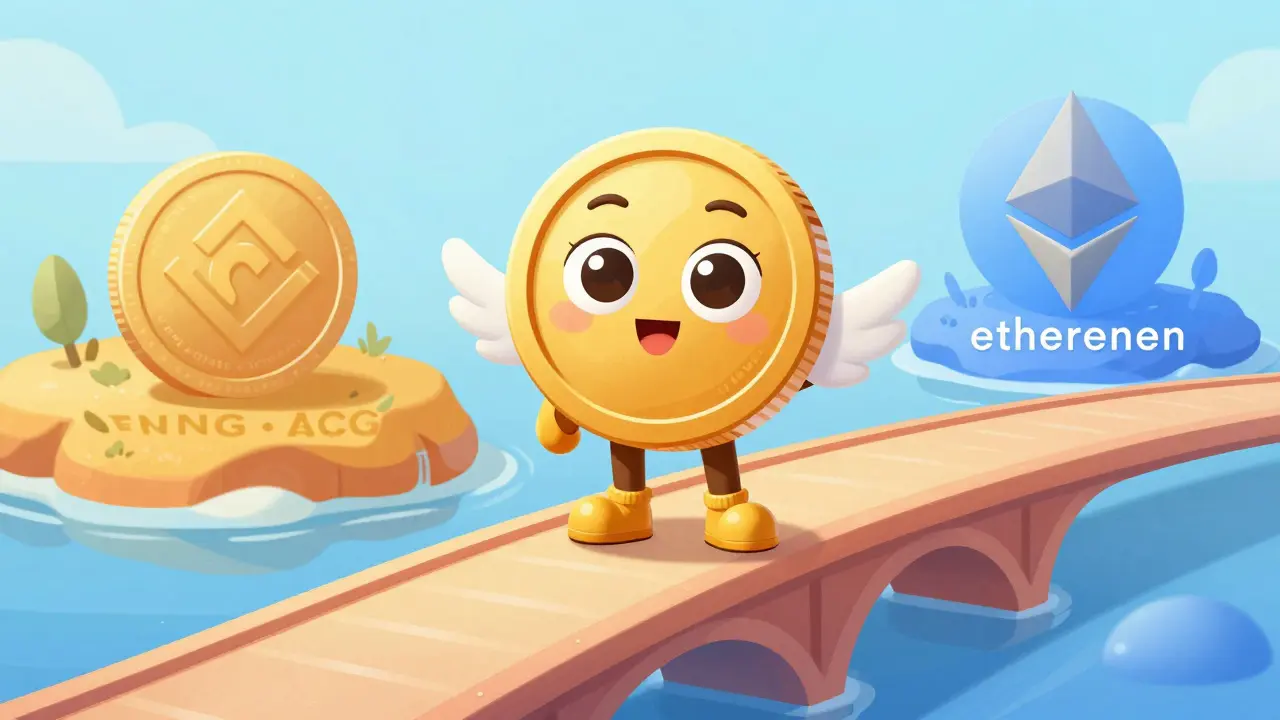
The token operates primarily on the Binance Smart Chain (BSC), also known as BNB Chain. This choice is strategic. BSC offers low transaction fees and fast confirmation times, which are essential for micro-transactions typical in gaming marketplaces. However, the whitepaper also claims cross-chain compatibility with Ethereum, Solana, and Polygon. While this sounds impressive, users should verify if these bridges are fully functional or still in development phases.
Price Performance and Market Reality
Let’s talk about the elephant in the room: price volatility. VCG is classified as a micro-cap altcoin, ranking around #4172 globally. This places it far outside the safety net of major cryptocurrencies like Bitcoin or Ethereum.
Historical data shows a harsh reality for early investors. The all-time high (ATH) for VCG was approximately $0.192. Recent snapshots from mid-2025 show trading prices between $0.006 and $0.0085. That is a decline of over 95% from its peak. Such drawdowns are not uncommon in the gaming and NFT sectors post-2021, but they highlight the speculative nature of the asset.
Current liquidity is thin. On days with moderate activity, 24-hour trading volume sits around $10,000 to $15,000. Low volume means two things:
- You might struggle to sell large amounts of VCG without crashing the price (slippage).
- The price can be manipulated more easily by large holders (whales).
Some prediction models suggest a modest recovery to $0.0067 by 2027, but these are algorithmic guesses based on historical patterns, not fundamental growth drivers. Always treat such projections with skepticism.
Utility: What Can You Actually Do With VCG?
A token without utility is just a meme. VCG attempts to ground itself in practical use cases within the VCGamers ecosystem. Here is how the token functions:
- Medium of Exchange: You use VCG to buy and sell digital goods. This includes in-game items, NFTs, and even entire game accounts. In regions like Indonesia, where secondary trading of game accounts is popular, this utility is particularly relevant.
- NFT Marketplace Fees: Listing or purchasing non-fungible tokens on the platform likely requires VCG, creating constant demand for the token among active traders.
- Staking Rewards: Holders can stake their VCG tokens. While specific yield percentages vary and aren't always publicly detailed in short summaries, staking generally rewards users for locking up their assets, reducing circulating supply and potentially stabilizing price.
- Community Governance: Although details are sparse, most utility tokens eventually introduce voting rights. This could allow holders to vote on which new games get integrated into the platform.
The "real-world" test for VCG is simple: Are people actually using it to buy skins and accounts? Or is it mostly traded by speculators betting on price movements? Currently, the latter seems more dominant, given the low daily active user metrics available publicly.
How to Buy and Store VCG Safely
If you decide to proceed, here is the practical path. VCG is not listed on every major exchange. It is currently tradable on platforms like LBank and Bybit. KuCoin tracks the price but has not officially listed it for direct trading as of mid-2025.
Step-by-Step Acquisition:
- Create an account on LBank or Bybit and complete KYC verification.
- Deposit fiat currency (USD, EUR) or a major crypto (USDT, BTC).
- Search for the VCG trading pair (e.g., VCG/USDT).
- Execute a limit order to avoid slippage due to low liquidity.
Storage Warning: Since VCG is natively on BSC, ensure your wallet supports BEP-20 tokens. Trust Wallet or MetaMask (configured for BNB Chain) are standard choices. Never share your seed phrase. Also, double-check the contract address before withdrawing. Scammers often create fake tokens with similar names. The official smart contract code is hosted on GitHub under vcgamers/smartcontract; compare addresses there before sending funds.
Risks and Red Flags
Before investing, consider these critical risks:
- Technical Discrepancies: Some sources claim VCG operates on Ethereum, while the whitepaper says BSC. This confusion can lead to lost funds if you send tokens to the wrong network.
- Adoption Uncertainty: The platform promises to be "game-agnostic," but no major AAA titles have announced deep integration yet. Without big games, the user base remains niche.
- Regulatory Scrutiny: Trading game accounts and virtual currencies exists in a legal gray area in many countries. Changes in regulations could impact the platform's operations.
- Volatility: A 95% drop from ATH indicates high risk. Only invest what you can afford to lose completely.
Is VCGamers a scam?
There is no definitive evidence labeling VCGamers as a outright scam. It has a functioning website, a whitepaper, and listings on reputable exchanges like LBank and Bybit. However, the extreme price drop and lack of major game integrations raise concerns about its long-term viability. Always do your own research (DYOR).
Which blockchain does VCG run on?
The primary deployment is on Binance Smart Chain (BSC/BNB Chain). The project claims cross-chain compatibility with Ethereum, Solana, and Polygon, but BSC is the main network for transactions and wallet storage.
What is the maximum supply of VCG?
Data varies by source. Most exchanges report a max supply of 100 million VCG, while some trackers list it at 110 million. Assume 110 million for conservative financial planning.
Can I buy VCG on Coinbase or Binance?
As of mid-2025, VCG is not listed on top-tier exchanges like Coinbase or Binance.com. It is available on smaller centralized exchanges like LBank and Bybit.
What is the utility of the VCG token?
VCG is used to pay for transactions on the VCGamers marketplace, including buying/selling game accounts, NFTs, and in-game items. It may also be used for staking rewards and future governance votes.

stalin brian
so i was readin this and its like wow another gaming coin tryna save the world but u know what? the part about ownin ur skins actually makes sense cause ive lost so much cash on steam games that shut down servers lol. just wish they had big games onboard already instead of promisin it for years.
kamal ifrani
absolute garbage project. look at the chart. down 95%. why are people still talking about this trash? typical scammy vibes with the supply discrepancies. if you buy this you are donating to whales who will dump on your head. wake up sheeple. nobody cares about 'utility' when the price is bleeding out daily. stay away from this dumpster fire.
saradee dee
oh my gosh i feel so conflicted about this one because on one hand the idea of owning digital items is really exciting and empowering for gamers everywhere but then i see the price drop and my heart sinks completely. it is such a shame that good ideas often get buried under bad execution or market conditions. maybe we should give them more time to grow?
Craig Swanson
you guys need to stop being so negative and start looking at the fundamentals here. yes the price is down but that is normal for early stage projects. the technology is solid. the team is working hard. if you want real alpha listen to me now: cross-chain compatibility is key. once they integrate with solana properly this thing could moon. stop crying about past losses and focus on future potential.
Bill Gunn
hey folks! 👋 just wanted to add some value here. i dug into their github repo and the smart contracts look pretty clean. no obvious backdoors. also the staking rewards are decent if you can hold through the volatility. remember to use a hardware wallet though! 🔐 dont keep these gems on an exchange. happy hodling everyone! 🚀
Dana Rapoport
i have been thinking deeply about the concept of digital ownership. it raises interesting philosophical questions about what it means to possess something in a virtual space. if the server shuts down does the nft still exist? yes technically on the blockchain but what is its value without the game engine rendering it? these are complex issues that vgamers tries to address but perhaps not fully solved yet.
Hadleigh Edwards
look i understand the skepticism and i respect every single person who has lost money on crypto ventures in the past few years because it is indeed a rough ride and the emotional toll can be quite significant but we must remember that innovation often comes with high risk and those who dare to dream big and invest in emerging technologies before they become mainstream are the ones who ultimately shape the future of our digital economy and society as a whole so let us remain optimistic and supportive of new initiatives.
mark valmart
honestly i just want to play my games and not worry about wallets and seeds. sounds like too much hassle for me. maybe when it gets easier i might check it out but right now im sticking to traditional gaming platforms where i dont have to manage keys.
Diana Morris
stop wasting time reading articles about dead coins. buy btc or go home. this is noise. pure noise. waste of bandwidth. move on.
Dianne Wright
everyone keeps saying utility utility utility but show me the volume. zero volume means zero utility. just another rug pull waiting to happen. i bet the devs are already planning their exit strategy while you guys argue about philosophy. pathetic really. do your own research or stay broke.
trisya hazriyana
the tokenomics are a mess. max supply discrepancy? red flag. governance voting rights mentioned but no details? green flag for deception. typical web2 company trying to slap a blockchain label on it. sarcastic laugh. enjoy the bag holders.
Debbie Lewis
i just sit back and watch these threads unfold. always fascinating to see the range of emotions from hope to despair. personally i think its too risky for me but i appreciate the discussion. lets keep it civil folks.
Eric Grosso
wow thats alot of info to process. i am kinda confused bout the bsc vs eth thing tho. if i send funds to wrong chain do i lose everything? seems scary. maybe ill wait till its clearer before diving in.
Edith Mair
let's cut through the noise. the liquidity is thin. the volume is low. the price action is weak. unless you are a professional trader who understands order book dynamics and slippage risks you should avoid this asset entirely. it is not a matter of opinion it is a matter of basic financial literacy. protect your capital.
Sam Dashti
i find the whole ecosystem intriguing like a colorful puzzle box waiting to be opened. the idea of interoperability between games is beautiful in theory. imagine trading a skin from valorant for an item in cs2 seamlessly. that would be magic. hopefully they can make that dream a reality soon because the tech stack seems promising enough to support such dreams.