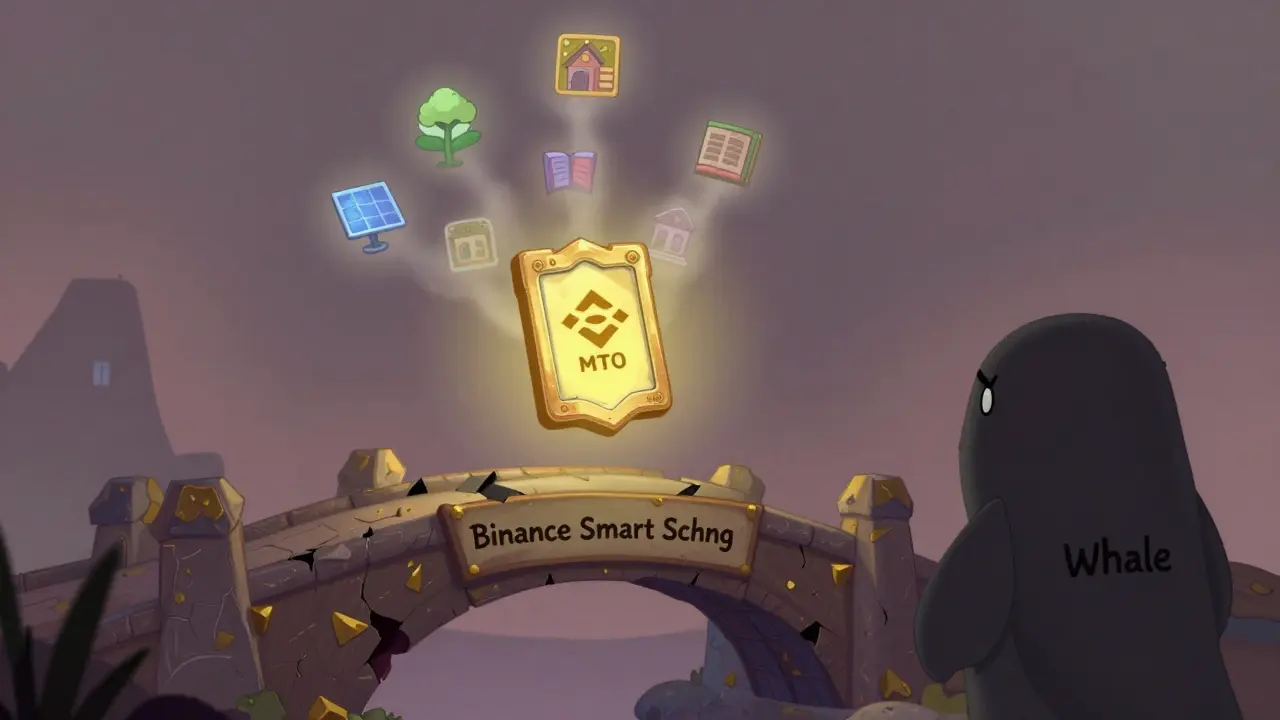
MagnetGold (MTG) isn't just another cryptocurrency. It was built with a clear goal: to fund real-world projects, not just speculate on price swings. Unlike Bitcoin or Ethereum, MTG doesn't aim to be money. It wants to be a tool for development - backing startups, green energy, organic farming, e-commerce, crypto education, real estate, and even its own exchange. That’s ambitious. But here’s the harsh truth: as of February 2026, the market doesn’t seem to believe in it.
How MagnetGold (MTG) Actually Works
MagnetGold runs on the Binance Smart Chain as a BEP-20 token. That means it uses the same blockchain infrastructure as hundreds of other altcoins. It’s not a standalone network. It doesn’t have its own miners or validators. It piggybacks on BSC’s speed and low fees. The total supply is fixed at 700 million MTG tokens. That’s a lot. But here’s the twist: no single wallet can hold more than 1% of that supply. That’s 7 million MTG max per wallet. This rule was designed to stop whales from controlling the market - a common problem in crypto where a few big players can crash or pump a coin at will.Every time someone sells MTG, 4% of the transaction value gets redistributed to all other holders. Think of it like a dividend. If you hold MTG, you get paid a tiny amount every time someone trades it away. It sounds fair, but it only works if people are actively trading. And right now, they’re not.
The Price Crash Nobody Saw Coming
MagnetGold hit its peak in late 2023 or early 2024, hitting $1.19. That’s over 50 times what it’s worth today. As of February 2026, MTG trades around $0.018 to $0.022. That’s a 98% drop. If you bought at the top, you’ve lost nearly all your money.Trading volume tells the real story. On Binance, daily trades barely hit $50. On CoinGecko, the global average is around $446. For a token with 700 million in supply, that’s a ghost town. Imagine trying to sell 10,000 MTG and only finding one buyer willing to pay $0.02. You’d have to wait days. Or worse - your sale would crash the price.
And here’s the weirdest part: Coinbase says the circulating supply is 0 MTG. Other platforms show trading activity. How? Either the data is broken, or most tokens are locked in wallets that aren’t moving. Maybe they’re held by the team. Maybe they’re in a vesting contract. No one’s saying. That lack of transparency is a major red flag.
What MagnetGold Claims to Do (And What It Doesn’t)
The MagnetGold whitepaper lists seven areas it wants to support:- Startup funding
- Green energy projects
- Organic agriculture
- E-commerce innovation
- Crypto education
- Real estate investment
- A dedicated cryptocurrency exchange
That’s not a bad list. But where are the results? Has MTG funded a single solar farm? Paid a developer to build a farming app? Launched its own exchange? There’s zero public proof. No press releases. No case studies. No blockchain explorers showing transfers to real-world entities. Just promises.
Compare that to projects like Chainlink or Polygon. They have clear use cases, live integrations, and public dashboards showing how their tokens are used. MagnetGold has a website - mtggold.com - and a whitepaper. That’s it.
Where You Can Trade MTG (And Why It Matters)
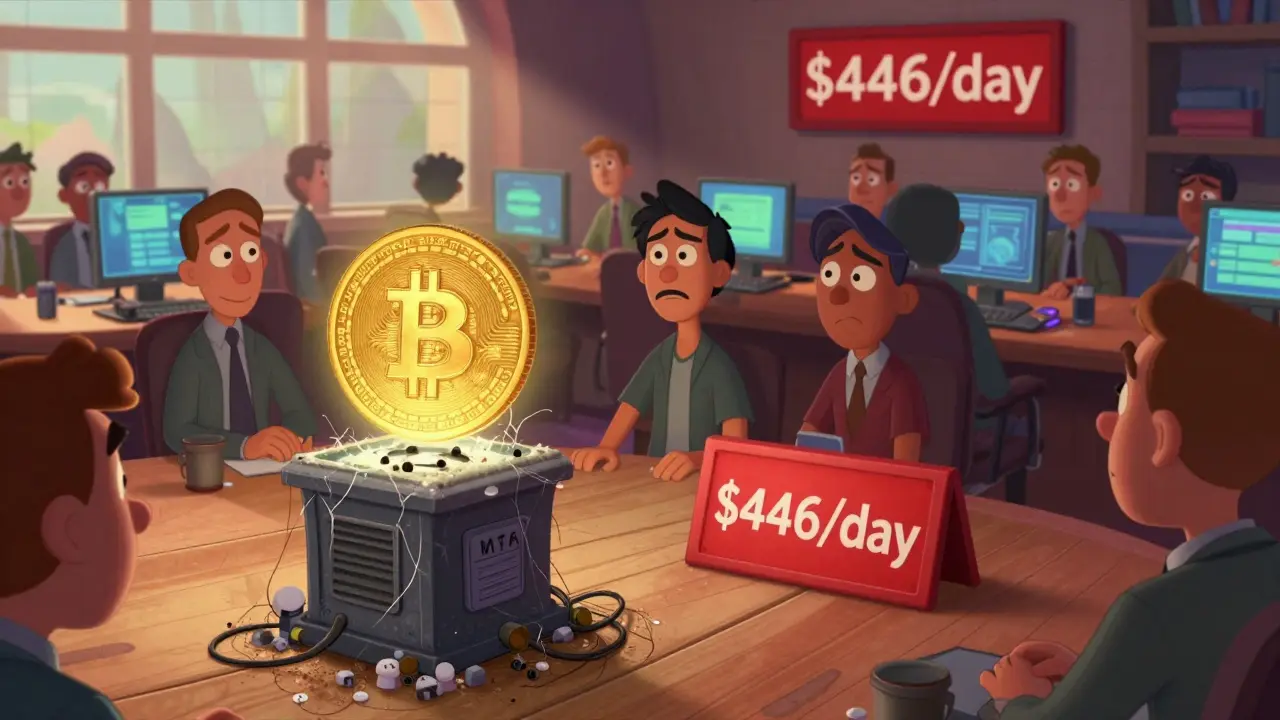
You can buy MagnetGold on Binance and Crypto.com. You can also add it to MetaMask using this contract address: 0x68d10dfe87a838d63bbef6c9a0d0b44beb799dc1. But here’s the catch: if you buy MTG, you’re buying into a market with almost no liquidity. Selling it later might be impossible without dragging the price down. That’s not a bug - it’s a feature of low-volume tokens.Most traders avoid coins with daily volume under $1 million. MTG hovers around $500. That’s not a market. It’s a garage sale.
Why the Market Cap is $0.00
Market cap = price × circulating supply. If one platform says the price is $0.02 and another says the supply is 0, the math breaks. That’s why Coinbase reports a $0.00 market cap. It’s not that MTG has no value. It’s that the data is inconsistent. Either:- Most tokens are locked and not counted as circulating,
- Exchanges aren’t syncing properly,
- Or the project isn’t disclosing how tokens are distributed.
This kind of confusion scares serious investors. If you can’t trust the numbers, you can’t trust the project.

The Bigger Picture: Is MagnetGold a Scam?
No one’s proven it’s a scam. But it ticks every box for a high-risk, low-transparency project:- Massive price drop with no clear reason
- Minimal trading volume
- No public team names or background
- No proof of real-world use
- Conflicting or missing supply data
It’s not a rug pull - yet. But it’s teetering on the edge. Many coins die this way: they launch with hype, then vanish when the team stops updating the website or responding to community questions.
There’s no evidence of fraud. But there’s also no evidence of progress. And in crypto, absence of progress is the same as failure.
What Should You Do?
If you already own MTG: don’t panic-sell. But don’t expect a rebound. This isn’t a long-term hold. Treat it like a lottery ticket - something you bought for fun, not investment.If you’re thinking of buying: ask yourself why. Is it because you believe in its mission? Or because you saw a price pump on a TikTok video? If it’s the latter, walk away. The odds are stacked against you.
There’s no expert prediction that says MTG will recover. Even the most optimistic analysts say it’s too early to tell. And with no team, no audits, and no real usage - “too early” might mean “never.”
Final Thoughts
MagnetGold (MTG) had a good idea: use crypto to fund global development. But ideas don’t move markets. Execution does. And right now, MTG has none. The technology is sound - BEP-20, token redistribution, anti-whale rules. But without transparency, activity, or proof, it’s just code on a blockchain. And code without users is just a digital ghost.Is MagnetGold (MTG) a real cryptocurrency?
Yes, MagnetGold is a real BEP-20 token on the Binance Smart Chain. It has a contract address, a fixed supply, and trades on exchanges like Binance and Crypto.com. But being "real" doesn’t mean it’s functional or valuable. Many legitimate tokens fail because they lack adoption, team credibility, or clear use cases - and MTG fits that pattern.
Can I earn passive income by holding MTG?
Technically, yes. 4% of every sell transaction is redistributed to all holders. But this only works if people are selling. With daily trading volume under $500, the amount you’d earn is pennies - maybe a few cents per month if you hold thousands of tokens. It’s not enough to cover gas fees, let alone be a reliable income stream.
Why is the market cap listed as $0.00?
Because exchanges can’t agree on the circulating supply. Coinbase says it’s zero. Others show trading activity. This mismatch means either the data is outdated, tokens are locked with no public disclosure, or the project isn’t reporting accurate numbers. Either way, it’s a red flag for any serious investor.
Has MagnetGold funded any real projects yet?
There is no public record of MTG funding any startup, farm, energy project, or exchange. The whitepaper lists seven goals, but there’s zero evidence of progress. No press releases, no blockchain transaction logs showing transfers to real organizations, no team updates. Without proof, these goals remain theoretical.
Should I invest in MagnetGold in 2026?
No - not if you’re looking for returns. The token has lost 98% of its value, trades with almost no volume, and has no clear path forward. If you already hold it, you might wait to see if the team ever releases updates. But if you’re thinking of buying now, you’re gambling on a dead project. There’s no data to support a recovery. Treat it as a curiosity, not an investment.
Where can I find the official MagnetGold whitepaper?
The official whitepaper, titled MTGGOLD-WHITEPAPER.pdf, is available on the project’s website at mtggold.com. It outlines the token’s technical design and its seven development goals. However, the whitepaper doesn’t include team details, audit reports, or timelines - all of which are standard for credible crypto projects.



Alex Williams
MTG's redistribution model is actually clever on paper - 4% of every sell goes to holders. But liquidity is the killer here. You can't have a sustainable dividend system when daily volume is under $500. It's like offering free pizza to people who show up to an empty restaurant. The math works, but the ecosystem doesn't. This isn't a scam, it's a corpse with a whitepaper.
Beth Erickson
US crypto regs are why this thing died. No team no audit no transparency = automatic ban. Why are we even talking about this?
Lisa Parker
I bought MTG at $0.80. I cried for three days. Now I just stare at my wallet like it’s a ghost. It’s not even worth selling. I’m holding it like a memorial.
Scott McCrossan
Let me guess - the team’s in the Bahamas. No names, no faces, no audits. Just a website with a gradient background and a whitepaper that sounds like a TED Talk written by a bot. This isn’t crypto. It’s performance art for gullible investors.
Rajib Hossaim
While the lack of transparency is concerning, we must also consider that many legitimate projects begin with minimal visibility. Perhaps MTG is in stealth mode, building quietly. The absence of evidence is not evidence of absence. We should remain open to the possibility of delayed execution.
Ian Plunkett
This isn't a coin. It's a digital tombstone. 700 million tokens. $500 volume. Coinbase says supply is zero. The whole thing feels like someone ran a stress test on gullibility. I almost admire the audacity. Almost.
Aileen Rothstein
I get why people write MTG off. But look - the tech is solid. BEP-20, anti-whale cap, redistribution. Those aren't random features. Someone put real thought into this. Maybe the team got hit by a bus. Maybe they’re rebuilding. We don’t know. But writing it off as dead? That’s the same mindset that missed Dogecoin in 2014.
Jenn Estes
If you bought MTG hoping to get rich, you were never meant to be here. This isn’t a portfolio. It’s a graveyard for people who think blockchain = magic. The 4% redistribution? Cute. But you’re not earning income. You’re paying gas fees to watch your wallet shrink.
Charrie VanVleet
Hey, I know it looks grim - but I’ve seen projects come back from worse. No team doesn’t mean no future. Maybe the devs are working under pseudonyms. Maybe they’re building something big. I still hold. Not because I think it’ll go to $1 again. But because I believe in the idea. Sometimes you have to hold space for hope.
Sasha Wynnters
MTG is the crypto equivalent of a jazz solo in a silent room. Beautiful theory. No one’s listening. The redistribution mechanic? That’s the saxophone. The 700M supply? That’s the echo. And the $0.02 price? The silence after the last note fades. It’s not dead - it’s just waiting for someone to finally turn the lights on.
Avantika Mann
I’m from India and I’ve been watching this for months. The idea of funding organic farms and crypto education? That’s beautiful. I don’t care if the price is low. I care if the mission is real. Maybe the team just needs time. Or maybe they need more people like us to believe. I’m not selling. I’m waiting.
Angela Henderson
I read the whole thing. I don’t even know what to say. I mean, I bought like 20k MTG because my cousin said it was going to 10 bucks. Now I just open the app every morning and sigh. I’m not mad. Just… tired. Like I left my phone charging for 12 hours and it only got to 3%. That’s MTG. It’s alive. But barely.
Sarah Shergold
Lmao this coin is a meme now. Even the contract address looks like it was copy pasted from a spam bot. Who even made this? Some guy in a basement with a can of Red Bull and a dream? I’m not even mad. I’m impressed.
Ruby Ababio-Fernandez
I own MTG. I don’t care anymore.