
Decred isn't just another cryptocurrency. It was built by Bitcoin developers who saw a problem: too much power in the hands of miners and developers, with no real way for everyday holders to shape the future of the network. Launched in February 2016, Decred (DCR) answers that with a system where every coinholder has a voice - and a financial incentive to use it.
How Decred Works: The Hybrid Consensus That Changes Everything
Most cryptocurrencies pick one path: Proof-of-Work (like Bitcoin) or Proof-of-Stake (like Ethereum). Decred does both. It’s called hybrid Proof-of-Work and Proof-of-Stake - or Proof-of-Activity. This isn’t just a buzzword. It’s a security upgrade. Here’s how it works: miners solve complex math problems using BLAKE-256 hashing (the same algorithm used in some high-performance systems) to add new blocks. But here’s the twist - 30% of each block reward goes to stakers. Anyone who holds DCR can buy a ticket for $5 worth of DCR (at current prices), and then wait to be randomly selected to vote on whether that block is valid. If you’re chosen, you earn a share of the reward. If you’re not, your ticket expires and you get your DCR back. This dual-layer system means an attacker would need to control both the mining power and enough staked coins to override the network. That’s far harder - and more expensive - than attacking Bitcoin, where only mining power matters. Since its launch, Decred has never been successfully 51% attacked.Decred’s Secret Weapon: A Self-Funded Treasury
Most crypto projects rely on venture capital, ICOs, or donations to pay developers. Decred doesn’t. Every block reward includes 10% that goes straight into the Decred treasury. That’s about 100 DCR per block (as of 2026), which adds up to roughly $30,000-$50,000 daily depending on price. This money isn’t controlled by a CEO or foundation. It’s controlled by voters. Developers, marketers, and contractors submit proposals on Politeia - Decred’s open, blockchain-based governance platform. Anyone can view, comment on, and vote on these proposals. To vote, you need to hold and stake DCR. Proposals that get enough yes votes get funded. No votes? They die. No middlemen. No corporate sponsors. Just the community deciding what gets built. This model has kept Decred moving forward even during bear markets. While other projects froze development when prices dropped, Decred kept paying its team, launching new features, and improving its software.Politeia: The First Real DAO in Crypto
Politeia, launched in 2018, is where Decred’s governance comes alive. It’s not a simple poll. It’s a full proposal system with deadlines, discussion threads, signature verification, and on-chain voting. Want to propose a new wallet? Submit it. Want to hire a translator to localize the website? Submit it. Want to fund a research paper on quantum-resistant cryptography? Submit it. Every proposal must be signed with a DCR address, and every vote is tied to staked coins. The more DCR you stake, the more voting power you have - but you can’t buy more votes by hoarding. You still need to actively participate by buying tickets. This isn’t theoretical. Over 300 proposals have been submitted. Dozens have been approved and funded. One funded project built Decred’s decentralized exchange. Another paid for a security audit of its codebase. A third paid for a mobile app redesign. All of it happened because stakeholders voted for it.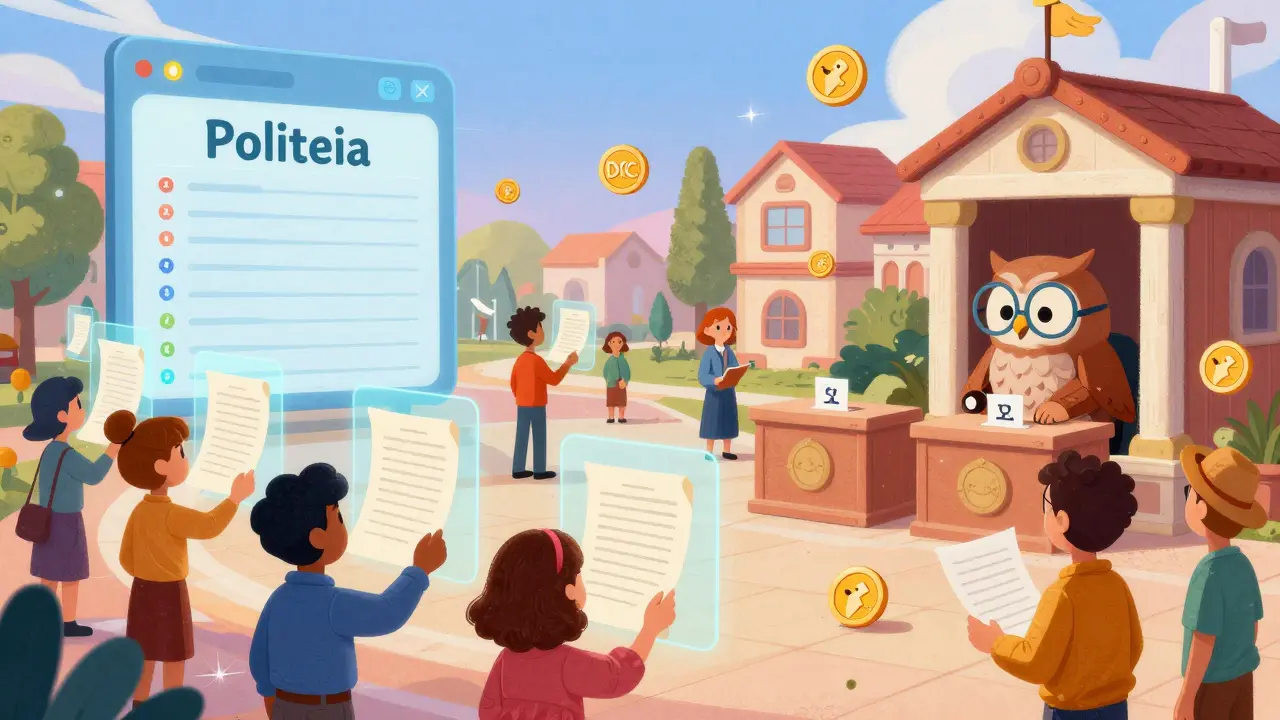
Decred’s Decentralized Exchange and Atomic Swaps
Decred doesn’t just talk about decentralization - it builds it. In 2017, the team executed the first-ever atomic swap between Decred and Litecoin. No exchange. No KYC. No trusted third party. Just two wallets talking directly. Today, Decred runs its own decentralized exchange (DEX) built into its wallet. You can swap DCR for Bitcoin, Litecoin, or other supported coins directly from your wallet. The trade happens peer-to-peer using atomic swap technology. If one side doesn’t fulfill the deal, the funds return to the original owner. No one can steal your coins during the swap. This isn’t a side project. It’s funded by the treasury. It’s open-source. And it’s live. You can use it right now.Why Decred’s Supply Model Matters
Decred has a fixed supply of 21 million coins - same as Bitcoin. But unlike Bitcoin, where miners get 100% of the block reward, Decred splits it three ways:- 60% to miners (Proof-of-Work)
- 30% to voters (Proof-of-Stake)
- 10% to the treasury
Privacy, Transparency, and Security
Decred doesn’t force privacy on you - but it gives you the tools. You can use it like Bitcoin: fully transparent, every transaction visible on the blockchain. Or you can use its optional privacy features to hide transaction amounts and addresses. The privacy layer doesn’t break auditability - you can still verify total supply and block history. The network also supports post-quantum cryptography research. While most coins are waiting for quantum computers to become a threat, Decred is already testing algorithms that could resist them. This isn’t marketing. It’s funded by the treasury and actively being developed.
How Decred Compares to Bitcoin and Ethereum
| Feature | Decred (DCR) | Bitcoin (BTC) | Ethereum (ETH) |
|---|---|---|---|
| Consensus | Hybrid PoW + PoS | PoW only | PoS only |
| Governance | On-chain voting by stakeholders | Informal, developer-led | Foundation-led with community input |
| Development Funding | 10% block reward treasury | Voluntary donations | Foundation grants and VC funding |
| Block Time | 5 minutes | 10 minutes | 12 seconds |
| Max Supply | 21 million | 21 million | No hard cap |
| Decentralized Exchange | Yes, built-in | No | Third-party only |
Who Should Care About Decred?
If you’re a Bitcoin believer who’s frustrated by slow upgrades and miner dominance, Decred gives you power without leaving Bitcoin’s core principles. If you’re tired of crypto projects that vanish when the price drops, Decred’s treasury keeps it running. If you want to earn passive income just by holding crypto - without selling - staking DCR gives you real rewards. And if you believe crypto should be governed by its users, not by venture capitalists or developer elites - Decred is the only project that’s proven it works at scale.Where to Get Decred and How to Stake
You can buy DCR on major exchanges like Binance, Kraken, and KuCoin. Or trade for it directly using the built-in DEX in the Decred wallet. To stake:- Download the official Decred wallet (Windows, macOS, Linux, or mobile).
- Buy DCR and send it to your wallet.
- Use the “Buy Ticket” feature to lock up 5 DCR (minimum).
- Wait to be randomly selected to vote. This usually takes 1-30 days.
- When you vote, you earn your share of the block reward - typically 1-2% annual return.
- Your ticket expires after 144 days if not selected. You get your DCR back.
Is Decred a good investment?
Decred isn’t designed as a speculative asset. It’s built as a sustainable, community-run currency. Its value comes from utility - governance, staking rewards, and a functioning DEX. If you believe in decentralized decision-making and long-term network resilience, Decred has real value. If you’re looking for quick gains, you’ll likely be disappointed. Its price moves slowly, but its ecosystem keeps growing.
Can I mine Decred with my GPU?
Yes, but it’s not profitable for most home miners. Decred uses BLAKE-256, which is ASIC-resistant, meaning GPUs can compete. However, mining pools dominate the network. The real financial upside isn’t mining - it’s staking. Buying tickets and voting gives you a steadier, lower-risk return than mining.
How is Decred different from other PoS coins?
Most PoS coins let you stake by just holding coins. Decred requires you to buy tickets, lock them up, and actively vote. This creates a more secure and engaged stakeholder base. It also prevents large holders from dominating votes - because voting power is tied to active participation, not just wallet balance.
Is Decred anonymous?
No, but it offers optional privacy. Transactions are public by default, like Bitcoin. But you can enable privacy mode to hide amounts and addresses. Even with privacy enabled, the total supply remains auditable. It’s a balance - you get control over your privacy without sacrificing network transparency.
What happens if no one votes on a proposal?
The proposal fails. Decred’s governance only moves forward with active participation. There’s no quorum threshold - but if less than 30% of eligible voters approve a proposal, it’s rejected. This ensures only widely supported changes are made. It’s not perfect, but it’s the most transparent governance system in crypto.





steven sun
dude decr is the real deal. i bought tickets for 5 dcr and now i get paid just for holding. no bs mining rigs or gpu farms. just chill and earn. 🚀
David Zinger
this is just bitcoin with extra steps and a woke governance cult 🤡 why do we need voting on every damn update? miners know what theyre doing stop overengineering
Chidimma Catherine
i come from nigeria and i can tell you this is the first crypto i actually trust. no one is holding the keys for me. i vote. i earn. i sleep well. thank you decred team 💪
Taylor Mills
stake rewards are nice but the dcr price has been flat for 2 years. if you want returns go buy solana. this is a charity project with a blockchain
Roshmi Chatterjee
i tried buying tickets but the wallet kept crashing on my old laptop. anyone know a good lightweight client? i dont wanna run a full node
Deepu Verma
dont let haters scare you. decred is building the future quietly. no hype. no influencers. just code and votes. i started with 10 dcr and now i help translate docs for the community. its beautiful
MICHELLE REICHARD
this is the most overrated project in crypto. the treasury is just a slush fund for insiders. politeia proposals are dominated by core devs with sock puppets. i’ve seen it
Abdulahi Oluwasegun Fagbayi
i like how it just works. no drama. no screaming on twitter. i buy tickets, i wait, i get paid. if you overthink it you miss the point. simple is powerful
katie gibson
ok but why is the dcr logo so ugly? like a glitchy toaster? and why does the wallet look like it was made in 2014? aesthetics matter people
Matthew Kelly
i’ve been staking since 2018. never missed a vote. never lost a ticket. the dex works flawlessly. if you want real decentralization this is it. 🙌
Dave Ellender
the hybrid model is genius. you get the security of pow and the economic alignment of pos. no other coin does this. bitcoin is a relic. ethereum is a corporation. decred is a democracy
Adam Fularz
this is a textbook example of crypto elitism. only the rich can afford to buy tickets. 5 dcr is $200. thats not accessibility thats gatekeeping
Linda Prehn
i dont care about governance. i just want to make money. why would i waste time voting when i could be trading memecoins? this is like doing homework for crypto
Adam Lewkovitz
usa first. why should i support some foreign crypto project when we have american coins like btc? this feels like globalist crypto propaganda
Clark Dilworth
the atomic swap implementation is criminally underappreciated. this is the first time a crypto project shipped real interoperability without relying on centralized bridges. genius
Brenda Platt
you guys are underestimating how revolutionary this is. imagine if your bank let you vote on how your money was invested. this is financial sovereignty. you’re not just holding crypto-you’re building a society
Barbara Rousseau-Osborn
you think this is decentralized? the core team controls the treasury allocation. the proposals are curated. the voting is weighted. this is plutocracy with a blockchain veneer
Mark Estareja
the hybrid consensus model is a cryptographic breakthrough. the blake256 mining + ticket-based voting creates a Nash equilibrium where no single actor can dominate. the game theory here is elegant. the attack surface is minimized. this isn’t just innovation-it’s a paradigm shift.
Athena Mantle
i love how decred makes you feel like you’re part of something sacred. like you’re not just buying a coin-you’re joining a monastery of digital democracy. 🙏✨
Nathan Drake
if a system requires constant participation to function, is it really decentralized? or just exhausting? maybe the real innovation is not in the tech-but in the quiet realization that most people don’t want to vote on everything.
Melissa Contreras López
to anyone thinking of trying this-just start small. buy one ticket. see how it feels. you’ll be surprised how empowering it is to have a say. this isn’t about getting rich-it’s about getting involved. you’ve got nothing to lose and a whole new way to think about money to gain 💛
carol johnson
decred is the only project that actually respects its users. not like ethereum where you pay $50 in gas to vote on a meme coin. here your coins vote for you. it’s like having a seat at the table instead of being stuck in the lobby.