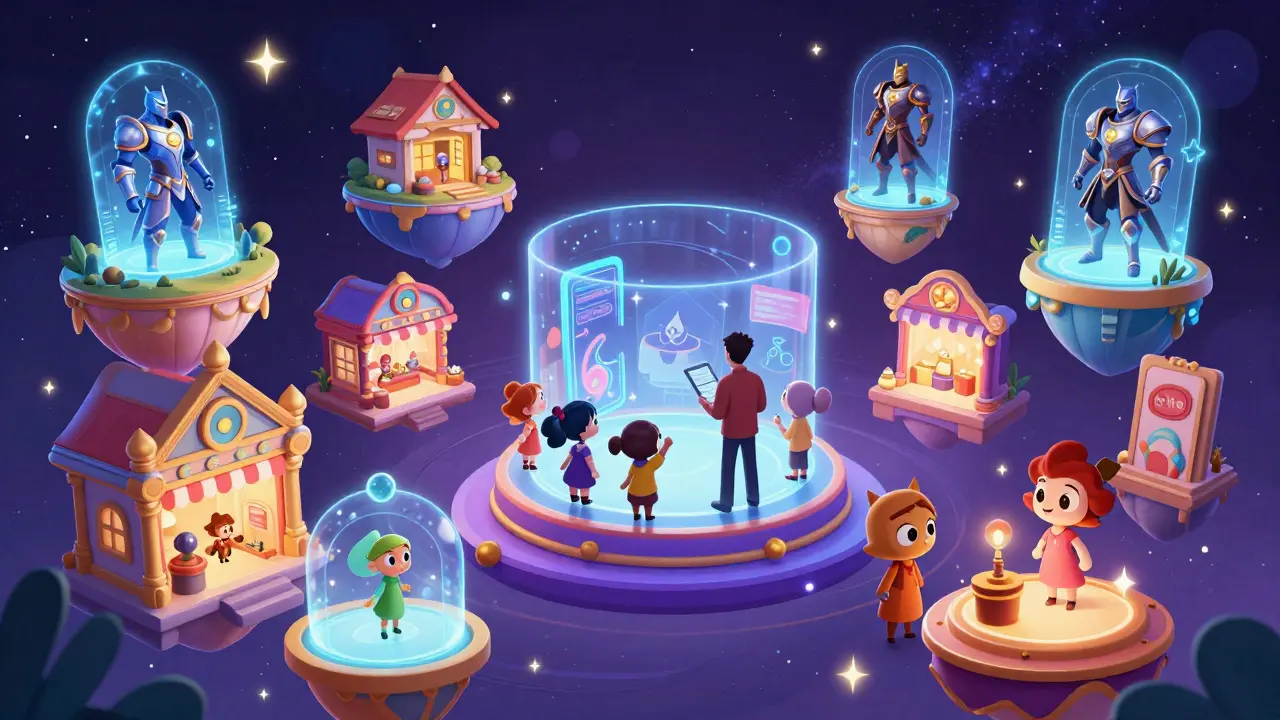
Imagine a digital version of eBay or Etsy, but instead of vintage lamps or handmade jewelry, the shelves are filled with 3D art, virtual real estate, and rare gaming skins. That is essentially what an NFT marketplace is. It is a specialized platform where people buy, sell, and trade non-fungible tokens, which are unique digital items verified by a blockchain. While a standard digital image can be copied a million times, an NFT acts as a digital deed, proving who owns the original version.
How These Platforms Actually Work
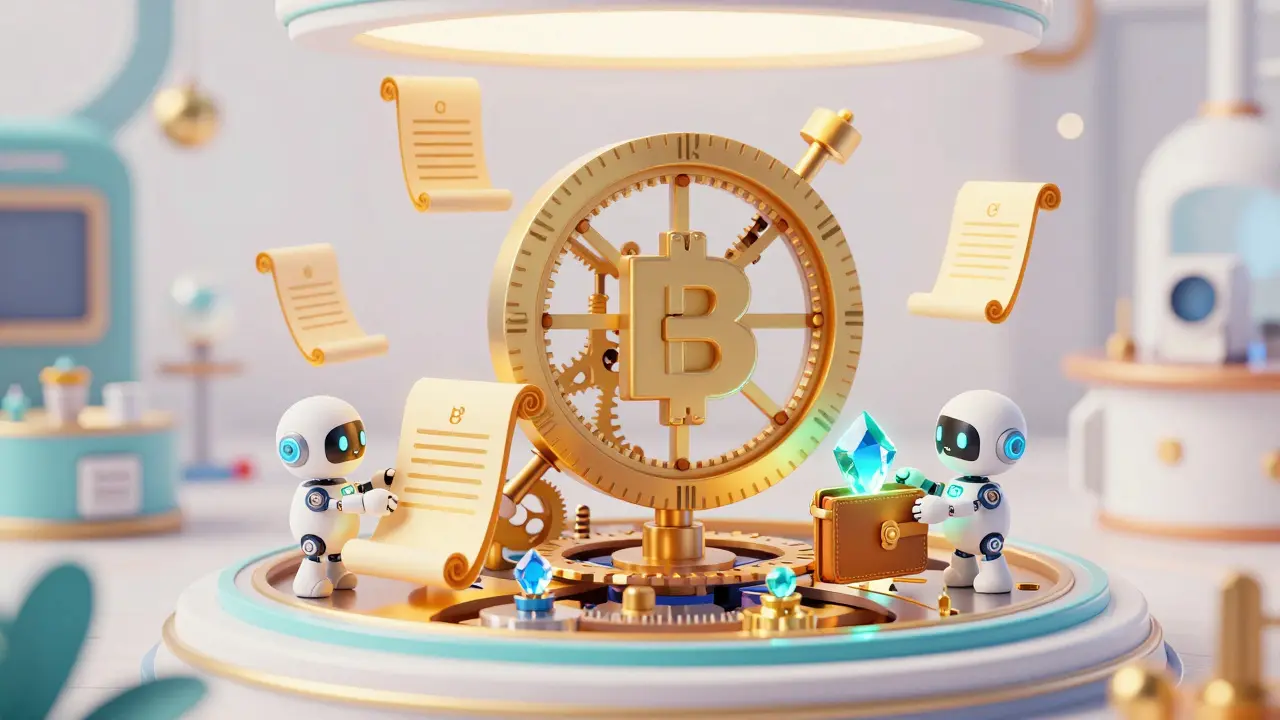
You might wonder how a website can "prove" you own a piece of art. These platforms rely on smart contracts, which are self-executing pieces of code stored on the blockchain. When you buy an NFT, the smart contract automatically transfers the ownership record from the seller to you and the funds from your wallet to the seller. There is no middleman sitting in an office approving the trade; the code handles everything.
Most of these marketplaces run on the Ethereum network using the ERC-721 token standard, which ensures each token is unique. To get started, you don't create a traditional account with a password. Instead, you connect a cryptocurrency wallet like MetaMask. This wallet holds your private keys and your digital currency, acting as your digital identity and payment method all in one.
One technical detail often missed is that the actual image or video isn't usually stored on the blockchain because that would be too expensive and slow. Instead, platforms use decentralized storage systems like IPFS (InterPlanetary File System). The blockchain simply stores a "link" and the metadata that proves the token's authenticity.
Types of Marketplaces You'll Encounter
Not all platforms are created equal. Depending on whether you are a casual collector or a professional trader, you'll want different features. Generally, they fall into three structural buckets:
- Open Marketplaces: These are the "wild west" of NFTs. Anyone can sign up, mint (create) an NFT, and list it for sale. OpenSea is the prime example here, offering a massive variety of collections for everyone from beginners to whales.
- Closed Marketplaces: These are more like exclusive galleries. Artists usually have to apply or be invited to join. This keeps the quality high and the community curated. Foundation operates this way, making it a favorite for high-end digital artists.
- Proprietary Marketplaces: These are run by a specific company to sell their own branded assets. For instance, Nike's .SWOOSH platform is designed specifically for their own digital products and sneakers.
| Platform | Primary Focus | Fee Structure | Best For |
|---|---|---|---|
| OpenSea | Universal/Diverse | ~2.5% | Beginners & General Collecting |
| Blur | Professional Trading | 0% (Variable) | High-volume traders/flippers |
| Magic Eden | Multi-chain/Gaming | Competitive | Solana and Gaming assets |
| Rarible | Community-governed | ~1% - 5% | Decentralization enthusiasts |
The Creator's Side: Minting and Royalties
For artists, these platforms are a game-changer. In the traditional art world, a painter sells a piece once and never sees another dime, even if that painting later sells at Sotheby's for millions. In an NFT marketplace, creators can program royalties directly into the smart contract. This means every time a collector sells that NFT to someone else (a secondary sale), the original artist automatically gets a percentage of the sale price-often between 2% and 10%.
The process of turning a digital file into a blockchain asset is called minting. While this sounds complex, most platforms have simplified it to a few clicks: upload your file, add a description, set your price, and sign the transaction with your wallet. However, be aware of "gas fees"-the cost required to process the transaction on the network. While Ethereum's move to proof-of-stake in 2022 slashed energy use by 99.95%, fees can still spike during high-traffic periods.
Risks and Red Flags
It isn't all digital gold. The market is volatile, and scams are common. One of the biggest risks is the "rug pull," where developers hype up a project, collect a massive amount of money from investors, and then suddenly disappear, leaving the NFTs worthless. Another common issue is copyright infringement, where someone steals a piece of art from a social media site and mints it as their own NFT.
To stay safe, you should always verify the smart contract address of a collection. If a project claims to be an official collaboration with a big brand, check the brand's official Twitter or website. If the "deal" seems too good to be true-like a rare asset being sold for 90% off-it's almost certainly a scam.
Where the Industry Is Heading
We are moving past the phase of "expensive JPEGs." Enterprises are starting to realize that NFT marketplaces are actually tools for customer engagement. Some companies are using them for loyalty programs, while others are creating digital twins of physical products. By 2026, it's predicted that a significant chunk of global enterprises will have their own branded marketplaces to interact with customers.
We are also seeing a shift toward cross-chain marketplaces. Instead of being locked into just Ethereum, newer platforms allow you to trade assets across different blockchains, making the ecosystem more fluid and accessible. As regulations like the EU's MiCA framework kick in, we can expect these platforms to become more professional, with better identity verification (KYC) and consumer protections.
Do I need to buy crypto to use an NFT marketplace?
While many platforms are starting to accept credit cards via third-party processors, you generally need cryptocurrency (like ETH or SOL) to pay for the assets and the network transaction fees (gas fees).
What is the difference between a centralized and decentralized marketplace?
Centralized marketplaces (like OpenSea) are managed by a company and offer a more polished user interface. Decentralized marketplaces (like LooksRare) are often governed by a DAO (Decentralized Autonomous Organization), meaning the community votes on how the platform is run.
Can I sell physical items on an NFT marketplace?
Not directly. However, some creators use "phygitals," where the NFT acts as a digital certificate of authenticity for a physical object. You buy the NFT, and the seller then ships the physical item to you.
What are gas fees and why do they matter?
Gas fees are payments made to blockchain validators to process your transaction. They can vary wildly based on how busy the network is. If you're minting an NFT during a high-demand drop, you might pay significantly more than during a quiet period.
Is it possible to lose my NFTs if the marketplace shuts down?
If your NFTs are stored in your own wallet (non-custodial), they are safe. The marketplace is just a window to view and trade them. If the marketplace disappears, your tokens still exist on the blockchain and can be viewed through any other compatible wallet or platform.
Next Steps for New Users
If you're ready to explore, start by setting up a secure wallet and backing up your seed phrase-never share this phrase with anyone. Once your wallet is funded, spend some time browsing "floor prices" (the lowest price for an item in a specific collection) to get a feel for the market. For those wanting to create, try a "lazy minting" platform that allows you to list an item without paying the gas fee upfront, shifting that cost to the buyer instead.

Eric Raines
Honestly, everyone acts like this is new but smart contracts have been around for years. The real tragedy is how most of these platforms just create a feedback loop of speculation without adding any actual utility to the blockchain layer. I've seen a dozen projects launch with these exact 'innovative' royalty structures only to crash within a month because the liquidity wasn't there to support the floor price. It's basic economics, really.
Liz Ariza
This is such a sparkly way to get into the digital art world! ✨ I love how it supports artists directly. Just remember to keep those seed phrases locked away like the crown jewels! 💎💖
Matthew Morse
too many platforms and not enough actual art
Mike Krasner
imagine thinking a link to an ipfs folder is actually ownership lol the whole thing is a house of cards and everyone is just pretending it is not
Tara Aman
I'm so excited to see more people jumping into this! It's a great time to start exploring and collaborating with digital creators. Let's all get those wallets set up and start discovering some amazing art together! 🚀
Alex Hunter
For anyone feeling overwhelmed, just take it slow. Start by browsing the free galleries on OpenSea before you put any money in. It's the best way to learn the ropes without the stress of losing funds. Once you're comfortable with the interface, the rest usually clicks into place.
Yvette P
Oh, absolutely, because the 'revolutionary' move of putting a jpeg on a ledger is just what the world needed to solve the crisis of overpriced digital pixels. If you actually understand the gas optimization of Layer 2 solutions like Polygon or Arbitrum, you'd realize that relying on Ethereum mainnet for basic minting is practically prehistoric. It's just adorable that some people still think a 2.5% fee on OpenSea is a 'competitive' cost of doing business when we have programmatic liquidity pools and automated market makers that could render these clumsy storefronts obsolete in a heartbeat. Truly, we are living in the golden age of paying money for the privilege of owning a URL that could break if the hosting provider has a bad day. But hey, keep chasing that 10% royalty dream while the whales dump their bags on you! 🙄
Jason M
This is a monumental shift in how we perceive ownership! Imagine the empowerment of an artist who finally controls their legacy across generations of sales! It is absolutely thrilling to be part of this evolution. Don't let the fear of the unknown stop you from embracing the future of creativity!
Jennifer L
Oh my goodness, the concept of a rug pull is just absolutely heartbreeking!! It is so cruel to take advantage of peoples hopes like that. I realy hope the new regulatons can stop these devious people from hurting others. We must all look out for each other in this scary digital wilderness!
Jagdish Sutar
It's wonderful to see how this technology is bridging different cultures. I've seen artists from all over India using these marketplaces to share traditional motifs in a modern, digital format. It really opens up global opportunities for creators who were previously limited by local galleries.
Keith Garcia
The sheer banality of the 'JPEG' era is almost poetic in its tragedy 🙄. While the masses scramble for 'rare' traits, the true cognoscenti recognize that the aesthetic value is entirely decoupled from the tokenized scarcity. It's a carnival of the mediocre, dressed up in the language of decentralization 🎭✨.
Candace Sherrard
It's interesting to think about the philosophical shift here. We've spent centuries defining value by physical scarcity, but now we're attempting to impose that same scarcity on a medium that is fundamentally designed for infinite reproduction. It makes me wonder if the desire to 'own' a digital asset is less about the art itself and more about a primal human need to establish status and territory, even in a space that has no physical boundaries. Eventually, the novelty of the token will fade and we will be left asking what actually constitutes value when the cost of replication is zero.
Tony Gurley-Ward
Ownership is such a funny little ghost, isn't it? We're basically buying a very expensive receipt for a party we weren't invited to. But hey, if the receipt looks pretty and the community is vibing, who cares if the 'asset' is just a fancy link to a server in Iceland? Let's just enjoy the ride into the digital abyss!
Sarah Ingrams
just be careful with your keys please
Mary Tawfall
The part about lazy minting is such a helpful tip for those just starting out. It removes so much of the initial financial barrier for artists who are just testing the waters. I really believe this accessibility will lead to a huge surge in diverse digital art!
Kathleen Bergin
You just need a wallet and some ether. It's not that hard. Just don't get scammed by those fake links in your DMs.
Miranda Jamieson
Most of you are just gambling and calling it 'investing.' If you can't explain the utility of your NFT without using the word 'community' or 'moon,' you're just a sucker in a digital casino. Wake up.
Larry Yang
The UX on most of these platforms is honestly abysmal. They're trying to pretend it's intuitive but the moment you have to deal with a seed phrase or a gas spike, the whole illusion of a 'user friendly' experience falls apart. It's just lazy design masquerading as innovation.
Guy Bianco
One must ensure that the chosen marketplace aligns with their specific risk tolerance and goals. The distinction between custodial and non-custodial storage is paramount for the long-term security of one's assets. 💼
Charlie Queen
Love the breakdown! 🌟 I think the 'phygital' aspect is where the real magic happens. Imagine buying a rare sneaker NFT and having the real ones show up at your door! That's the kind of bridge between worlds I'm here for! 👟🔥
debashish sahu
The mention of the MiCA framework is very important. Regulatory clarity will help many people in my country feel more secure about entering this market without fearing that the entire system is unregulated.