Imagine buying a slice of a high-rise in London or a commercial complex in New York for the price of a used car. That’s not a fantasy anymore; it’s the reality of real estate tokenization. This process converts physical property rights into digital tokens on a blockchain, turning historically illiquid assets into tradable securities. If you’ve ever felt priced out of prime real estate markets, this technology is likely the key to unlocking that door.
The Core Problem with Traditional Real Estate
Traditional property investment has always suffered from three major headaches: high entry costs, slow transactions, and poor liquidity. You need tens or hundreds of thousands of pounds just to get started. Selling takes months, involving lawyers, agents, and banks who take a hefty cut. And if you want to cash out part of your investment? Good luck finding a buyer for "half" a bathroom in a shared house without selling the whole place.
Tokenization solves these issues by using distributed ledger technology to split ownership into smaller, manageable pieces. Instead of one deed for one person, you have thousands of digital tokens representing shares in a property. This shift isn’t just about convenience; it fundamentally changes how value moves in the property market.
Fractional Ownership Lowers Entry Barriers
The most immediate benefit for investors is accessibility. In the traditional world, institutional-grade properties-think office buildings or luxury hotels-are reserved for pension funds and wealthy individuals. A single unit might cost £500,000. With tokenization, platforms like RealT or Harbor divide that same asset into thousands of tokens, each costing as little as £1,000.
This democratization means you can build a diversified portfolio. Instead of putting all your savings into one flat in Bristol, you could own small stakes in ten different properties across Europe and the US. This spreads risk significantly. If one market dips, your entire net worth doesn’t crash with it.
| Feature | Traditional Real Estate | Tokenized Real Estate |
|---|---|---|
| Minimum Investment | £50,000 - £100,000+ | £1,000 - £5,000 |
| Transaction Time | 30-90 days | Near real-time (seconds) |
| Liquidity | Low (hard to sell quickly) | High (tradeable on secondary markets) |
| Intermediary Costs | 5-10% of property value | 1-3% via smart contracts |
Enhanced Liquidity and Faster Transactions
Liquidity is the holy grail for investors. In traditional real estate, your money is locked up until you find a buyer, negotiate, and close the deal. This process often drags on for months. Tokenization introduces a secondary market where these digital shares can be bought and sold almost instantly.
Because the ownership record lives on a blockchain, transfers don’t require manual paperwork at a land registry every time a share changes hands. Smart contracts automate the transfer once payment is verified. According to industry analysis, this reduces settlement times from weeks to mere seconds. While secondary markets are still growing-with only about 12 dedicated platforms globally as of late 2023-the trend is clearly toward faster, frictionless trading.

Transparency and Trust Through Blockchain
Doubt is expensive in real estate. Did the agent disclose that roof leak? Is the rental income report accurate? Blockchains provide an immutable ledger where every transaction, dividend payment, and ownership change is recorded permanently. No one can quietly alter history.
This transparency extends to operational data too. Many tokenization platforms integrate with property management software like Yardi or Buildium. When rent comes in, the smart contract automatically distributes dividends to token holders’ wallets. You see exactly when money arrives and why. There’s no waiting for a quarterly statement from a distant fund manager.
Global Access and Reduced Friction
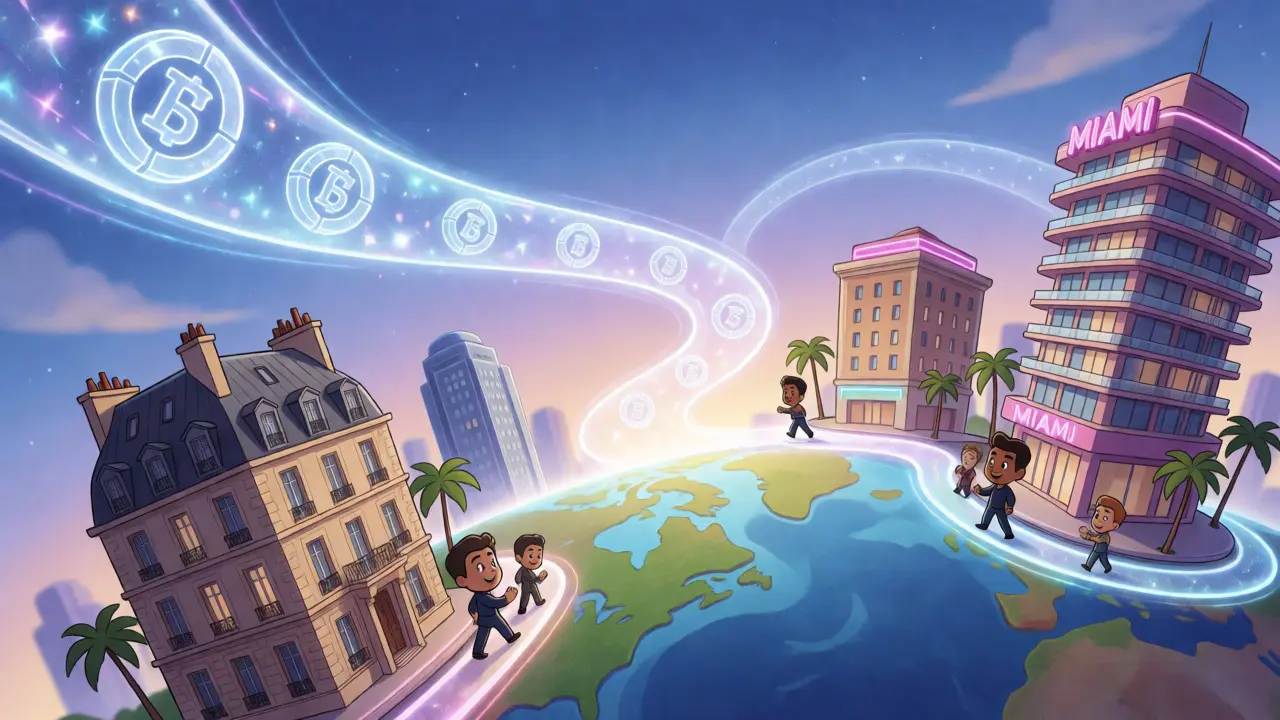
Buying property abroad is a nightmare of currency exchange, foreign laws, and tax complexities. Tokenization simplifies this by allowing global investors to buy into local markets digitally. A user in the UK can easily purchase tokens representing a stake in a Miami apartment complex without needing to open a US bank account or hire a local lawyer for every transaction.
Platforms handle the legal structuring through Special Purpose Vehicles (SPVs), which hold the actual property title. Investors simply buy tokens that represent equity in that SPV. This abstraction layer shields individual investors from much of the direct regulatory burden, although tax implications remain a critical area to research.
Risks and Realities to Consider
It’s not all smooth sailing. Regulatory frameworks vary wildly. The EU’s MiCA framework provides some clarity, but the US remains fragmented, with different states applying different rules. This uncertainty can impact liquidity and exit strategies.
There’s also technological risk. Smart contracts are code, and code can have bugs. While major breaches are rare in established real estate projects, the broader crypto space has seen billions lost to exploits. Always check if the platform uses audited smart contracts. Furthermore, while liquidity is better than before, it’s not infinite. During market downturns, finding a buyer for niche tokens can still take time.
Who Should Consider Tokenized Real Estate?
This isn’t for everyone. If you prefer holding physical keys and managing tenants yourself, traditional ownership might suit you better. But for passive investors seeking diversification, lower entry points, and automated income streams, tokenization offers compelling advantages.
Institutional players are already jumping in. Firms like BlackRock and J.P. Morgan are exploring tokenized funds, signaling long-term confidence in the model. As infrastructure matures, we expect more residential assets to join the predominantly commercial focus of today’s market.
What is real estate tokenization?
Real estate tokenization is the process of converting ownership rights of a physical property into digital tokens on a blockchain. These tokens represent fractional ownership, allowing multiple investors to hold shares in a single asset, similar to owning stocks in a company.
How does tokenization improve liquidity?
By breaking large properties into smaller digital shares, tokenization allows investors to buy and sell portions of a property quickly on secondary markets. This contrasts with traditional real estate, where selling requires finding a buyer for the entire asset, a process that can take months.
Is tokenized real estate safe?
Security depends on the platform and underlying smart contracts. Reputable platforms use audited code and secure custody solutions. However, risks include regulatory changes, smart contract bugs, and market volatility. Always conduct due diligence on the issuer and the specific property.
What are the minimum investment requirements?
Entry barriers are significantly lower than traditional investing. While a full property might cost hundreds of thousands, tokenized shares can often be purchased for as little as £1,000 to £5,000, making institutional-grade assets accessible to retail investors.
How do I receive rental income?
Rental income is typically distributed automatically via smart contracts. Once the property generates revenue, the smart contract calculates each token holder's share and sends payments directly to their digital wallet, often monthly or quarterly.