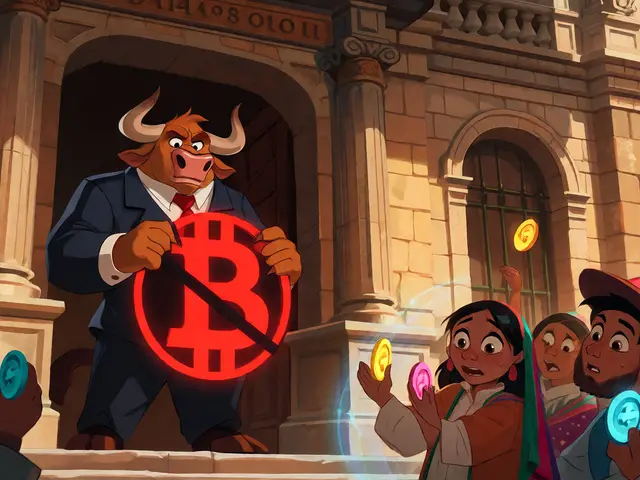
Is cryptocurrency mining legal in Nigeria? The short answer is yes, but the long answer involves navigating a maze of new laws, strict licensing requirements, and banking hurdles that changed dramatically in 2025. If you are looking to set up a mining rig or run a mining farm in Lagos or Abuja today, you are no longer operating in the shadows. You are entering a highly regulated sector where ignorance of the law can cost you millions of Naira in fines.
The regulatory landscape shifted from total ambiguity to structured oversight with the passage of the Investments and Securities Act (ISA) 2025, which defines virtual assets as securities and places them under the direct supervision of the Securities and Exchange Commission (SEC). This means mining is not just about hardware and electricity anymore; it is about compliance, capital, and corporate registration.
The New Legal Framework: ISA 2025 and SEC Oversight
For years, miners operated in a grey area. That ended with the ISA 2025. Under Section 357 of this act, digital assets are legally classified as securities. This classification triggers a mandatory licensing regime for any business interacting with these assets. While individual hobbyists mining Bitcoin on their laptops might fly under the radar, any operation resembling a business-especially those offering "mining-as-a-service" or pooling resources-must register with the SEC.
The SEC’s Digital Assets Rules 2022 laid the groundwork, but the ISA 2025 pulled the trigger. Here is what you need to know if you plan to operate commercially:
- Licensing is Mandatory: All Virtual Asset Service Providers (VASPs), including mining farms that interface with exchanges or clients, must apply for an SEC license.
- Capital Requirements: Applicants must demonstrate sufficient paid-up capital. The exact amount varies by business model, but it is designed to filter out shell companies.
- Local Presence: Foreign entities cannot simply mine remotely without accountability. You need Nigerian corporate registration, a local office, and management based in the country.
- Fidelity Bonds: To protect investors and users, operators often need to secure fidelity bonds, adding another layer of financial responsibility.
In late 2024, the SEC awarded its first provisional licenses to homegrown exchanges like Quidax and Busha. This signaled that the regulator was ready to enforce these rules. For miners, this means your exchange partners must be licensed, and if you are providing services, so must you be.
Taxation and Penalties: The NTAA 2025 Impact
If you thought avoiding taxes on mined crypto was easy, think again. The Nigeria Tax Administration Act (NTAA) 2025, signed into law in June 2025, brought severe consequences for non-compliance. Set to take full effect in 2026, this law puts VASPs directly in the crosshairs of tax authorities.
The penalties are steep and designed to force immediate compliance. If a VASP fails to comply with reporting and tax obligations, the fine starts at ₦10 million ($6,693) in the first month. For every subsequent month of default, the penalty increases by ₦1 million ($669). Beyond fines, the SEC holds the power to suspend or revoke licenses, effectively shutting down your operation overnight.
This marks a significant shift from the inconsistent approach of previous years. The government is now treating crypto revenue as taxable income, requiring meticulous record-keeping. Miners must track every satoshi earned, convert it to fiat value at the time of receipt, and report it accordingly. Ignorance is no longer a valid defense when the law explicitly outlines these financial obligations.

Banking Restrictions and the P2P Workaround
One of the biggest headaches for Nigerian miners remains access to traditional banking. In February 2021, the Central Bank of Nigeria (CBN) issued a directive banning financial institutions from facilitating cryptocurrency transactions. Although this ban was lifted in late 2023 to allow banks to service *licensed* crypto businesses, the practical reality is still restrictive.
Most commercial banks remain cautious. They may freeze accounts if they detect unusual transaction patterns associated with mining payouts or crypto conversions. This has forced many miners to rely on Peer-to-Peer (P2P) trading platforms. Between July 2024 and June 2025, Nigerians moved an estimated $92.1 billion in digital assets through such channels, nearly double South Africa's activity.
While P2P trading bypasses the banking block, it introduces other risks:
- Counterparty Risk: Dealing with individual traders carries the risk of fraud or failed trades.
- Price Volatility: Slippage between trade initiation and completion can eat into profits.
- Regulatory Scrutiny: High-volume P2P activity can still flag accounts for anti-money laundering (AML) reviews.
To mitigate these issues, successful miners often diversify their exit strategies, using multiple P2P platforms and maintaining relationships with fintech companies that have secured necessary regulatory approvals.
Infrastructure Challenges: Power and Profitability
Legal compliance is only half the battle. The physical infrastructure in Nigeria poses significant challenges to mining profitability. Electricity costs are high, and power supply is sporadic. Most miners rely on diesel generators to keep rigs running during grid outages, which drastically increases operational costs.
When you factor in the cost of diesel, hardware depreciation, and regulatory fees, the profit margin for mining in Nigeria can be razor-thin compared to countries like Canada or Kazakhstan, which offer abundant renewable energy and clear incentives. However, some Nigerian miners are adapting by:
- Using Hybrid Energy Systems: Combining solar power with grid electricity and backup generators to reduce fuel dependency.
- Locating in Industrial Zones: Setting up operations in areas with more stable industrial power supply.
- Leasing Hashrate: Instead of owning hardware, some businesses lease computing power, shifting capital expenditure to operational expense.
These strategies help maintain sustainability, but they require careful financial planning. A miner who ignores energy efficiency will likely fail, regardless of how compliant they are with the SEC.

Compliance Checklist for Nigerian Miners
To operate legally and safely in Nigeria’s current environment, follow this checklist:
| Requirement | Action Needed | Regulator |
|---|---|---|
| Corporate Registration | Register business with Corporate Affairs Commission (CAC) | CAC |
| SEC License | Apply for VASP license if offering services or pooling | SEC |
| Tax Compliance | Register for TIN and file returns under NTAA 2025 | FIRS / State IRS |
| AML/KYC | Implement Know Your Customer procedures for all users | NFIU / EFCC |
| Banking Access | Partner with licensed banks or use approved fintechs | CBN |
Future Outlook: What to Expect in 2026 and Beyond
The trajectory for crypto mining in Nigeria is moving toward greater clarity but also stricter enforcement. The National Blockchain Policy 2023 encourages technology adoption, suggesting that the government sees value in blockchain beyond speculation. However, the focus is on investor protection and preventing fraud.
Expect the SEC to issue more licenses in 2026, but also expect tighter audits. The coordination between the SEC, Economic and Financial Crimes Commission (EFCC), and Nigerian Financial Intelligence Unit (NFIU) means that data sharing is seamless. Any irregularity in your mining operations could trigger investigations across multiple agencies.
For small-scale miners, the path forward is to stay informed, keep records, and consider joining established, licensed pools. For large-scale operations, the investment in compliance and infrastructure is non-negotiable. The era of wild west crypto mining in Nigeria is over; the age of regulated, professional digital asset production has begun.
Is individual crypto mining illegal in Nigeria?
No, individual crypto mining is not explicitly illegal. However, if you operate as a business or provide services, you must comply with SEC licensing and tax regulations under the ISA 2025 and NTAA 2025.
What happens if I don't get an SEC license for my mining farm?
You face substantial fines starting at ₦10 million per month under the NTAA 2025, and the SEC can suspend or revoke your operations, effectively shutting down your business.
Can I use my regular bank account for mining profits?
It is risky. While the CBN lifted the ban on licensed crypto businesses in 2023, many banks remain cautious. Using P2P platforms or licensed fintech solutions is often safer to avoid account freezes.
How does the ISA 2025 affect mining pools?
Mining pools that offer services to Nigerian users are considered Virtual Asset Service Providers (VASPs) and must obtain an SEC license, adhere to KYC/AML rules, and pay applicable taxes.
Are there any tax exemptions for crypto miners in Nigeria?
Currently, there are no specific tax exemptions for crypto mining. All mined assets are subject to taxation under the NTAA 2025, and accurate reporting is mandatory to avoid penalties.