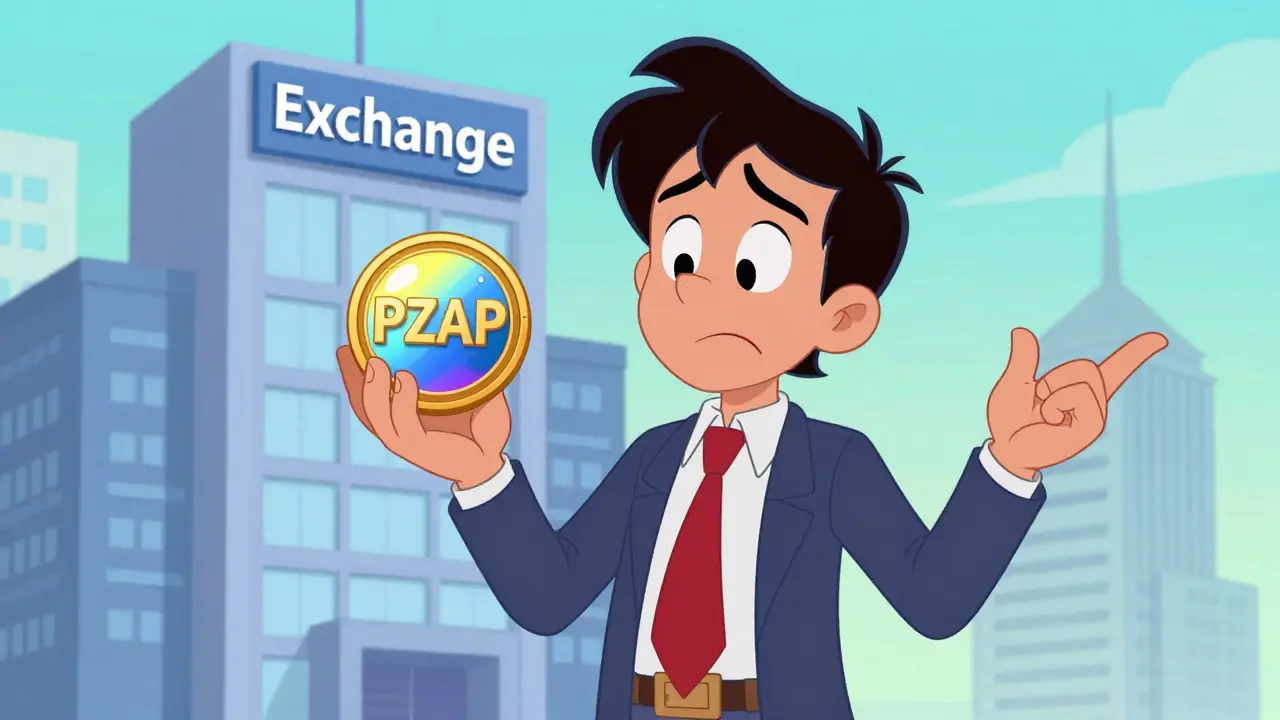
You might be searching for a "PolyZap crypto exchange" because you saw an ad or heard a rumor about a new platform. Here is the hard truth right away: PolyZap is not an exchange. It is a cryptocurrency token called PZAP. Confusing a token for a trading platform is a common mistake that can lead to serious financial loss. In this guide, we will clear up what PolyZap actually is, why experts are warning against it, and how you can protect your money in the current UK market.
What Is PolyZap Finance (PZAP)?
First, let’s get the definitions straight. When you hear "exchange," think of a marketplace like Binance or Coinbase where you buy and sell assets. When you hear "token," think of a digital item you hold in a wallet, like a share in a company or a ticket to an event. PolyZap Finance is the latter. It is a digital asset, specifically a token with the ticker symbol PZAP.
This distinction matters. You cannot log into "PolyZap" to trade Bitcoin. Instead, you would go to a major exchange like Bitget or Binance to find PZAP in their list of tradable assets. The fact that it relies on other platforms for visibility is already a signal that it lacks independent infrastructure.
The Red Flags: Price Predictions and Market Value
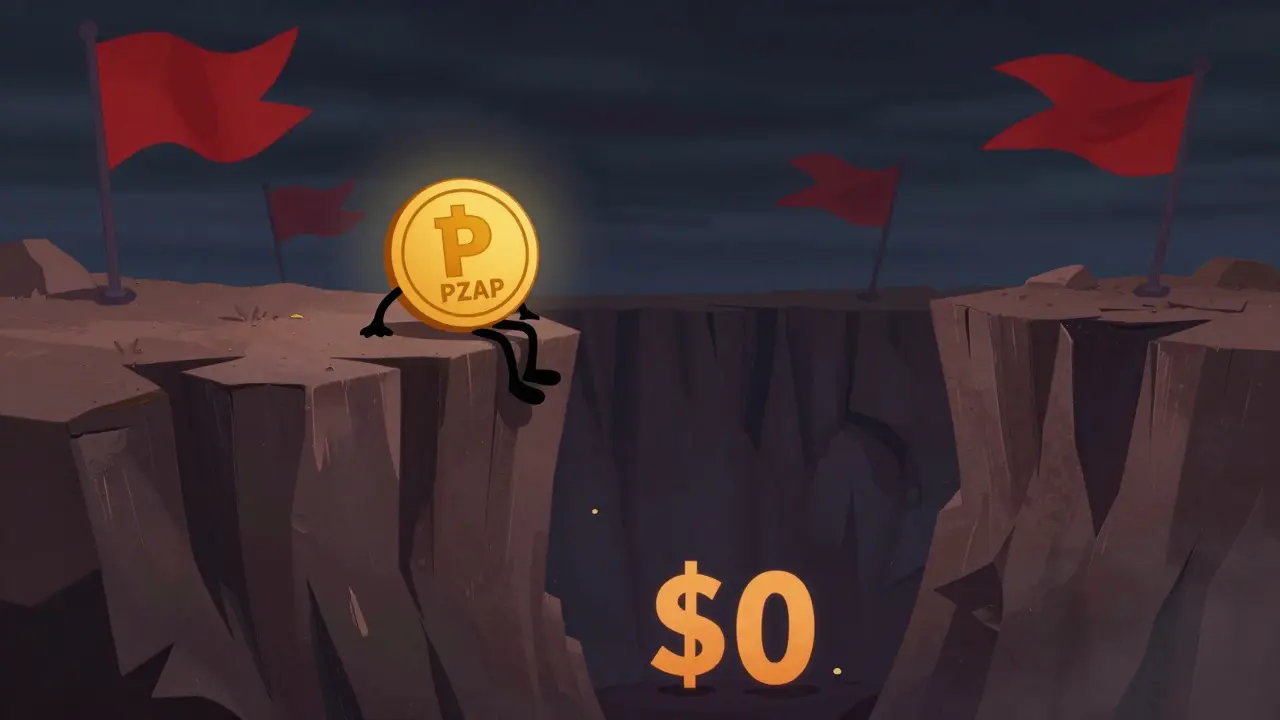
If you are considering investing in PZAP, you need to look at the data, not just the hype. The numbers currently available are concerning. According to price prediction models from Bitget, the outlook for PolyZap Finance is bleak. Their analysis projects the token’s value reaching $0 by late 2025 and continuing through 2026.
Why would a model predict zero value? Usually, this happens when a token has:
- No liquidity: There aren’t enough buyers to keep the price stable.
- No utility: The token doesn’t do anything useful in the real world or within its own ecosystem.
- Low growth rate: With a monthly growth rate hovering around 0.42%, the project shows no momentum.
In the crypto world, momentum is everything. A token that isn’t growing is usually dying. Legitimate projects have active development teams, regular updates, and partnerships. PolyZap appears to have none of these. The absence of a whitepaper, developer documentation, or a clear roadmap is a massive red flag. If a project won’t tell you what it does, assume it’s nothing.
Regulatory Warnings in the UK (2025-2026 Context)
Living in the UK, you have access to strong consumer protection resources, but you also face specific risks. The Financial Conduct Authority (FCA) has been increasingly vocal about crypto scams. In their 2025 report, they highlighted a 37% year-over-year increase in reported crypto frauds. Many of these involved low-cap tokens that vanished overnight-a tactic known as a "rug pull."
The FCA lists numerous fraudulent entities every month. While PolyZap may not be explicitly named in every single warning letter, it fits the profile of high-risk assets that regulators caution against. These are often tokens with no regulatory compliance, no registered company behind them, and anonymous creators. When you buy a token like PZAP, you have no legal recourse if the developers disappear with your funds. Unlike stocks or regulated bonds, there is no insurance for lost crypto investments.
| Feature | PolyZap (PZAP) | Established Tokens (e.g., BTC, ETH) |
|---|---|---|
| Price Prediction Trend | Projected to $0 (High Decline) | Volatile but sustained long-term value |
| Regulatory Status | Unregulated / High Risk | Increasingly compliant with global standards |
| Liquidity | Very Low (Hard to sell) | High (Easy to buy/sell anytime) |
| Documentation | Absent / Vague | Detailed whitepapers and audits |
| Exchange Listings | Secondary listings only | Listed on all major global exchanges |
Where Can You Trade PZAP? (And Should You?)
If you still want to proceed despite the warnings, you need to know where PZAP is traded. Currently, it appears on platforms like Bitget and potentially Binance. However, being listed on a major exchange does not mean the exchange endorses the token. Exchanges list thousands of assets, many of which fail quickly. They provide the infrastructure, not the guarantee.
To buy PZAP on Bitget, for example, you would typically:
- Create an account and complete KYC (Know Your Customer) verification.
- Deposit funds via bank transfer or credit card.
- Search for "PZAP" in the spot trading section.
- Execute the buy order.
But here is the catch: selling is harder than buying. With low liquidity, you might find that when you try to sell your PZAP, there are no buyers waiting. This means your price could crash instantly, or you might not be able to sell at all. This is a classic trap for retail investors. You see a cheap price, you buy in, and then you realize you’re stuck holding a worthless asset.
Expert Analysis and Community Sentiment
I’ve looked through forums, Reddit threads, and expert reviews. What I found was silence. That silence is loud. Legitimate projects generate discussion. People talk about features, bugs, and future plans. For PolyZap, there is virtually no community engagement. No active Discord server, no Twitter updates from developers, no news articles from reputable sources like CoinDesk or Cointelegraph.
Industry analysts generally advise extreme caution with tokens that lack this presence. As one user on r/CryptoCurrency noted in late 2024: "Be extremely careful with tokens that have no price history on CoinGecko or CoinMarketCap - many are exit scams waiting to happen." PZAP fits this description perfectly. Without transparency, you are gambling, not investing.
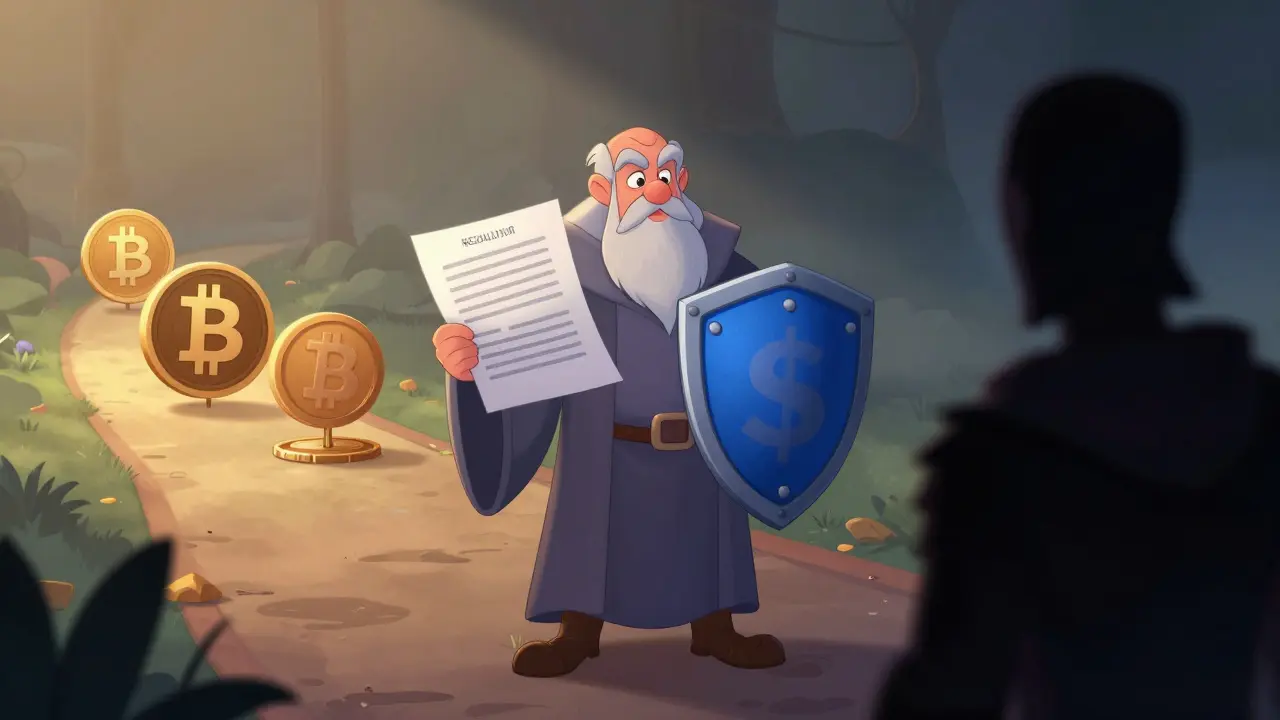
How to Protect Yourself from Crypto Scams
The crypto market is full of opportunities, but it’s also rife with traps. Here is how you can stay safe:
- Check the Source: Never trust an ad. Go directly to the official website of the exchange or token. Look for verified social media accounts.
- Read the Whitepaper: Every legitimate project has one. It explains the technology, the team, and the use case. If it’s missing, walk away.
- Verify Liquidity: Use tools like CoinMarketCap to check trading volume. If the volume is near zero, you won’t be able to sell.
- Beware of "Guaranteed Returns": No one can guarantee profits in crypto. Anyone promising this is lying.
- Use Reputable Exchanges: Stick to well-known platforms like Binance, Kraken, or Coinbase for mainstream assets. Avoid obscure exchanges that only list unknown tokens.
In the UK, you can also check the FCA’s register to see if a firm is authorized. If they claim to be regulated but aren’t on the list, they are operating illegally.
Conclusion: Is PolyZap Worth Your Time?
Based on the available evidence, PolyZap (PZAP) is a high-risk asset with poor prospects. It is not an exchange, but a token with declining value, no clear utility, and no regulatory backing. The prediction of $0 value is not just a guess; it’s a reflection of the lack of interest and support from the market.
Instead of chasing low-cap tokens with questionable histories, consider focusing on established cryptocurrencies with proven track records. Or, if you are interested in DeFi, look for projects with open-source code, active communities, and transparent teams. Your capital is hard-earned. Don’t risk it on a token that offers nothing but potential loss.
Is PolyZap a crypto exchange?
No, PolyZap is not a crypto exchange. It is a cryptocurrency token (PZAP) that can be traded on existing exchanges like Bitget or Binance. An exchange is a platform where you trade assets; PolyZap is one of those assets.
Is PolyZap (PZAP) a scam?
While not officially labeled a scam by authorities yet, PolyZap exhibits many characteristics of high-risk or fraudulent projects. These include a predicted value of $0, lack of documentation, no active community, and low liquidity. Investors should treat it with extreme caution.
Where can I buy PZAP token?
PZAP can be purchased on cryptocurrency exchanges such as Bitget and Binance. However, due to low liquidity and high risk, buying it may result in difficulty selling the token later.
What is the price prediction for PolyZap in 2026?
Current models from Bitget predict that PolyZap (PZAP) will reach a value of $0 by 2026. This suggests a total loss of investment potential based on current market trends and lack of growth.
Is it safe to invest in low-cap tokens like PZAP?
Investing in low-cap tokens is highly risky. They often suffer from low liquidity, meaning you cannot easily sell them. Additionally, they are more susceptible to manipulation and rug pulls. Only invest money you can afford to lose entirely.