
Imagine trying to send money to your family while the government bans the very technology that makes it possible. This is the daily reality for millions of Afghans living under Taliban rule, where cryptocurrency trading has been declared haram (forbidden) since August 2022. Despite this strict prohibition, an underground network of digital finance continues to operate in the shadows. It is not a hobby or a speculative investment strategy here; it is a matter of survival.
When the Taliban returned to power in August 2021, they froze Afghanistan’s foreign reserves and severed ties with the international banking system. Traditional banks collapsed or withdrew. In their place, a desperate need for alternative financial channels emerged. By 2025, peer-to-peer (P2P) cryptocurrency trading has become a clandestine lifeline for a population facing unprecedented economic isolation. This article explores how this underground economy functions, the severe risks involved, and why it persists despite harsh penalties.
The Collapse of Traditional Finance and the Rise of Digital Alternatives
To understand why people risk imprisonment for crypto trading, you must first look at the state of conventional finance in Afghanistan. Before the takeover, the country had a fragile but functional banking sector. After August 2021, international sanctions hit hard. The central bank’s assets were frozen, and correspondent banking relationships were cut off. For the average citizen, this meant ATMs ran dry, salaries went unpaid, and businesses could not import goods.
In this vacuum, cryptocurrency adoption surged organically. People did not choose Bitcoin because they believed in decentralization as a philosophical ideal; they chose it because it was the only way to move value across borders without going through sanctioned banks. Between 2021 and early 2022, domestic crypto activity accelerated rapidly. New applications were developed specifically for the Afghan market to bridge the gap.
HesabPay is a prime example of this innovation. Launched during this period, it allowed users to transfer funds between mobile phones using blockchain technology. Within its first three months, it secured more than 380,000 users. This rapid adoption demonstrates the sheer scale of unmet demand. However, this nascent digital economy was short-lived. The authorities viewed these developments with suspicion, leading to a drastic shift in policy.
The Ban: Religious Justification and Legal Prohibition
In August 2022, the Taliban government implemented a comprehensive ban on all forms of cryptocurrency trading, mining, and usage. The decree was absolute. All existing licenses for cryptocurrency exchanges were revoked indefinitely. The justification provided was rooted in religious interpretation rather than just economic control.
The Taliban declared cryptocurrency haram under Islamic law. Their argument rests on two main points:
- Lack of Tangible Asset Backing: Unlike gold or fiat currency backed by state reserves, cryptocurrencies are seen as having no intrinsic physical value.
- Speculative Nature: The volatility of crypto markets is compared to gambling (maysir), which is strictly forbidden in Sharia law.
This legal framework transformed crypto trading from a gray area into a criminal offense. Authorities began conducting crackdowns on traders and miners. Arrests were documented as early as August 2022. The immediate impact was visible in transaction data. Recorded crypto transaction values dropped dramatically, falling to approximately $80,000 per month by November 2022. On paper, it looked like the ban had succeeded. In reality, it only pushed the activity deeper underground.
How Underground P2P Trading Operates Today
As of 2025, cryptocurrency remains illegal in Afghanistan, yet P2P trading persists. How does this work in a country with limited infrastructure and heavy surveillance? The ecosystem has adapted to become decentralized, informal, and highly localized.
There are no public exchanges operating legally. Instead, transactions happen through trusted networks. Here is the typical flow:
- Digital Transfer: A sender abroad transfers USDT (Tether) or Bitcoin to a recipient’s digital wallet via a global P2P platform or direct wallet address.
- Local Settlement: The recipient contacts a local forex dealer or a trusted intermediary within Afghanistan.
- Cash Conversion: The intermediary verifies the receipt of crypto and pays the recipient in Afghan afghani cash or provides access to other essential services.
USDT (Tether) and Bitcoin have emerged as the primary cryptocurrencies used. USDT is preferred for its stability relative to the volatile afghani, while Bitcoin serves as a store of value for larger sums. Forex dealers have seen increased business as new customers seek to convert these digital assets into hard currency.
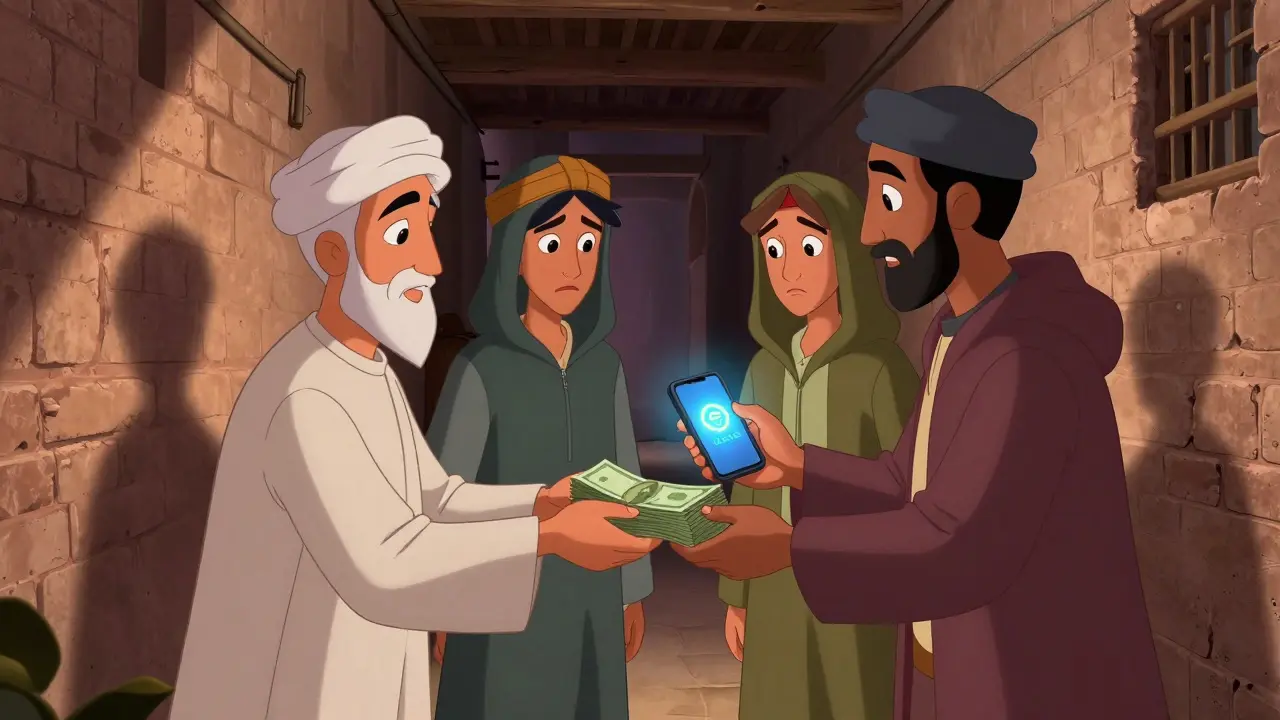
This system relies heavily on trust. Without legal recourse, fraud is a significant risk. Traders often use encrypted messaging apps to coordinate deals, meeting in person to exchange cash for confirmed blockchain transactions. This human element makes the system resilient to technical shutdowns but vulnerable to infiltration by authorities.
The Impact of Internet Blackouts and Infrastructure Limits
One of the biggest challenges for underground traders is connectivity. Afghanistan has limited internet infrastructure to begin with. Only about 8.64 million of the nearly 40 million inhabitants have reliable internet access. This creates a natural barrier to both adoption and surveillance.
However, the situation worsened significantly in recent years. In September 2024, the Taliban imposed sweeping internet blackouts across five northern provinces: Kunduz, Badakhshan, Baghlan, Takhar, and Balkh. Supreme Leader Hibatullah Akhundzada ordered these measures to combat what he described as 'vice' and 'immoral activities,' particularly online pornography.
These restrictions reduced internet connectivity to less than 1% of normal levels in affected areas. For cross-border traders, this was devastating. Afghan traders operating near the Pakistan border, such as in Peshawar, reported being unable to communicate with customers who required product images before purchases. If you cannot verify the goods, you cannot process the payment, whether it is via crypto or traditional means.
Nationwide outages have also compounded these issues. When mobile services go down, the entire underground financial network grinds to a halt. Traders are forced to wait for connectivity to return, delaying critical remittances that families depend on for food and medicine.
Economic Desperation: Why People Keep Trading
Why do Afghans continue to trade crypto despite the risks? The answer lies in the severity of the humanitarian crisis. The United Nations warned that 97% of Afghans would fall below the poverty line during 2022. This represents a 25% increase from previous levels. Food availability exists, but purchasing power has evaporated.
Cryptocurrency has become essential for receiving international remittances. Family members working abroad in countries like Turkey, Iran, and Europe send money home. Since traditional banking channels are blocked or unreliable, crypto offers a faster, albeit riskier, alternative. Immediately after the Taliban took control, cryptocurrency transfers from abroad increased by 80%. These are not investments; they are life support.
The underground nature of these operations has even influenced education. Digital literacy courses within the country have pivoted to offer cryptocurrency knowledge and advice, teaching young people how to manage wallets and secure transactions despite the legal risks involved. This indicates a long-term structural shift in how Afghans view digital finance.

Broader Restrictions and Social Control
The crackdown on cryptocurrency is part of a broader pattern of systematic restrictions by the Taliban. In 2025, the regime began purging books written by women from universities. They instructed educational institutions to eliminate 18 courses covering democracy, human rights, and women's studies. These actions are claimed to align with their interpretation of Sharia law.
Freedom of expression is severely curtailed. The internet bans are justified as preventing moral decay, but they effectively isolate the population from global information flows. In this environment, cryptocurrency trading represents more than just economic necessity; it is a form of resistance to authoritarian control over financial autonomy. Holding assets outside the state’s reach allows individuals to maintain a degree of independence.
| Channel Type | Legal Status | Accessibility | Risk Level |
|---|---|---|---|
| Traditional Banking | Restricted/Sanctioned | Very Low | High (Freezing of assets) |
| Hawala (Informal Value Transfer) | Tolerated/Gray Area | Medium | Medium (Trust-based) |
| Cryptocurrency (P2P) | Illegal (Banned) | Low (Requires Tech) | Very High (Arrest/Fines) |
Future Prospects and Ongoing Challenges
The future of underground crypto trading in Afghanistan remains precarious. The dramatic reduction in recorded transaction volumes following the 2022 ban shows the immediate impact of enforcement. However, the persistence of P2P trading indicates underlying economic demand that regulatory prohibition cannot eliminate.
The Taliban’s approach to internet control is becoming more sophisticated. Targeted provincial bans and nationwide service disruptions show they are developing better tools for monitoring digital activities. As authorities improve their ability to track IP addresses and monitor encrypted communications, the window for safe operation may shrink.
Yet, the drivers of adoption remain strong. International sanctions and domestic governance failures maintain the conditions that make alternative financial systems essential. Unless there is a major change in the political landscape or a restoration of traditional banking links, cryptocurrency will likely remain a vital, albeit hidden, component of Afghanistan’s economy. Innovations in offline or mesh networking solutions may emerge to bypass internet blackouts, further entrenching these decentralized networks.
Is cryptocurrency completely banned in Afghanistan?
Yes. Since August 2022, the Taliban government has declared all forms of cryptocurrency trading, mining, and usage illegal. They classify it as haram (forbidden) under Islamic law due to its speculative nature and lack of tangible asset backing. All exchange licenses have been revoked.
How do people trade crypto if it is illegal?
Trading happens through underground Peer-to-Peer (P2P) networks. Individuals use digital wallets to receive crypto from abroad and then meet with local forex dealers or trusted intermediaries to exchange the digital assets for cash. This process relies on personal trust and encrypted communication apps to avoid detection.
What are the risks of participating in underground crypto trading?
The risks are severe. Participants face arrest, fines, and confiscation of assets. Additionally, there is a high risk of fraud since there is no legal recourse if a deal goes wrong. Internet blackouts can also trap funds, making it impossible to verify transactions or communicate with counterparts.
Which cryptocurrencies are most commonly used?
Bitcoin and USDT (Tether) are the most common. USDT is preferred for daily remittances and transactions because its value is pegged to the US dollar, offering stability against the volatile Afghan afghani. Bitcoin is often used for larger value storage.
How have internet blackouts affected crypto trading?
Internet blackouts, particularly those imposed in northern provinces in 2024, have severely disrupted trading. With connectivity dropping to less than 1% of normal levels, traders cannot access wallets, verify blockchain transactions, or communicate with buyers and sellers. This halts the flow of remittances that many families depend on for survival.
Why did HesabPay gain so many users quickly?
HesabPay emerged when traditional banking collapsed. It allowed easy fund transfers between mobile phones using blockchain tech. It gained over 380,000 users in three months because it solved an immediate problem: moving money in a country where banks were inaccessible or frozen.






Kat Barr
It is absolutely heartbreaking to read about this, seriously. 😢 The fact that people are risking their lives just to send money for food and medicine shows how broken the system is. We need more global awareness on this issue, not just crypto hype. 💔
Kristy Morrow
people always romanticize suffering as resistance but its just desperation. the taliban banned it because it violates sharia and thats the law there. stop pretending crypto is a magic bullet for human rights.
Sophie Nakasako
I find it fascinating how technology adapts to survive even in the most oppressive environments. It makes me wonder if this underground network could eventually become a model for financial inclusion in other sanctioned regions? The resilience of the human spirit to find workarounds is truly inspiring, don't you think?
Antony Lopez
Look, Afghanistan has been a mess for decades. The Taliban banning crypto is just another layer of control. But let's be real, our own government should focus on securing our borders instead of worrying about Afghan crypto markets. This isn't our problem to solve.
Michelle Walker
The article ignores the massive fraud risk. P2P without legal recourse is a scam waiting to happen. These traders are naive. They will get robbed or arrested. Simple economics dictates that illegal markets breed corruption.
Logan Edmison
i mean its kinda wild how they use USDT. like tether is basically just a promise from a company in dubai. so afghans are trusting a corporate entity while dodging the taliban. ironic much. also typos r hard when ur stressed lol
DJ Maleko
You guys are missing the point entirely. 🤨 This is about survival. If you had to choose between starving and getting arrested, what would you do? Don't judge them from your safe little houses. They are fighting for their lives every single day. 🙄
Kristy Morrow
survival doesnt justify breaking religious law. its haram for a reason. volatility equals gambling. simple as that.
Kat Barr
@Kristy Morrow oh come on! You can't tell someone starving to follow rules when those rules are keeping them poor. 😡 That is so insensitive. Empathy matters here, not just rigid interpretations of law. ❤️
Shay Thomson
This entire situation is a tragedy of epic proportions! The world watches while families starve because of sanctions and ideological bans. It breaks my heart to see such ingenuity used merely for basic sustenance rather than growth. We must demand change!
Linda Hilliard
Let us analyze the geopolitical implications here. The proliferation of unregulated digital assets in failed states creates a precedent for shadow economies. It is a fascinating case study in monetary sovereignty vs authoritarian control. :)
Erika Pozzetto
It is imperative to consider the broader socio-economic ramifications of such prohibitions, as they inevitably lead to increased informal economic activities which may have unforeseen consequences on the stability of the region, thereby necessitating a comprehensive review of international aid strategies and their alignment with local cultural and religious norms.
Kristine Lawson
The moral hazard of encouraging illegal activity is profound. One cannot simply dismiss the rule of law because one disagrees with it. Order is essential for society; chaos is not freedom.
Tawny Holmes
USDT is better than BTC for remittances. Less volatile. Obvious choice.
Jessie Smith
its quaint how they think blockchain saves them. meanwhile the taliban tracks ip addresses. these folks are walking into a trap. typical western naivety thinking tech solves political oppression. its never that simple, darlings.
Drew M
I just wish we could help more directly. 🌟 It’s amazing how they keep going despite the blackouts. Truly resilient people. Let’s spread the word! ✨
Deep Rahman
When we look at the history of money, we see that value is always a social construct, and when that construct is threatened by authority, people find new ways to assign value, which is why crypto persists even under ban, showing that trust is harder to kill than ideas.
Melissa Beckwith
The infrastructure limitations mentioned in the article are critical. With only 8 million people having reliable internet, the scalability of this solution is inherently capped, suggesting that while it serves a niche desperate population, it will never replace traditional banking systems without significant technological investment and political stabilization.