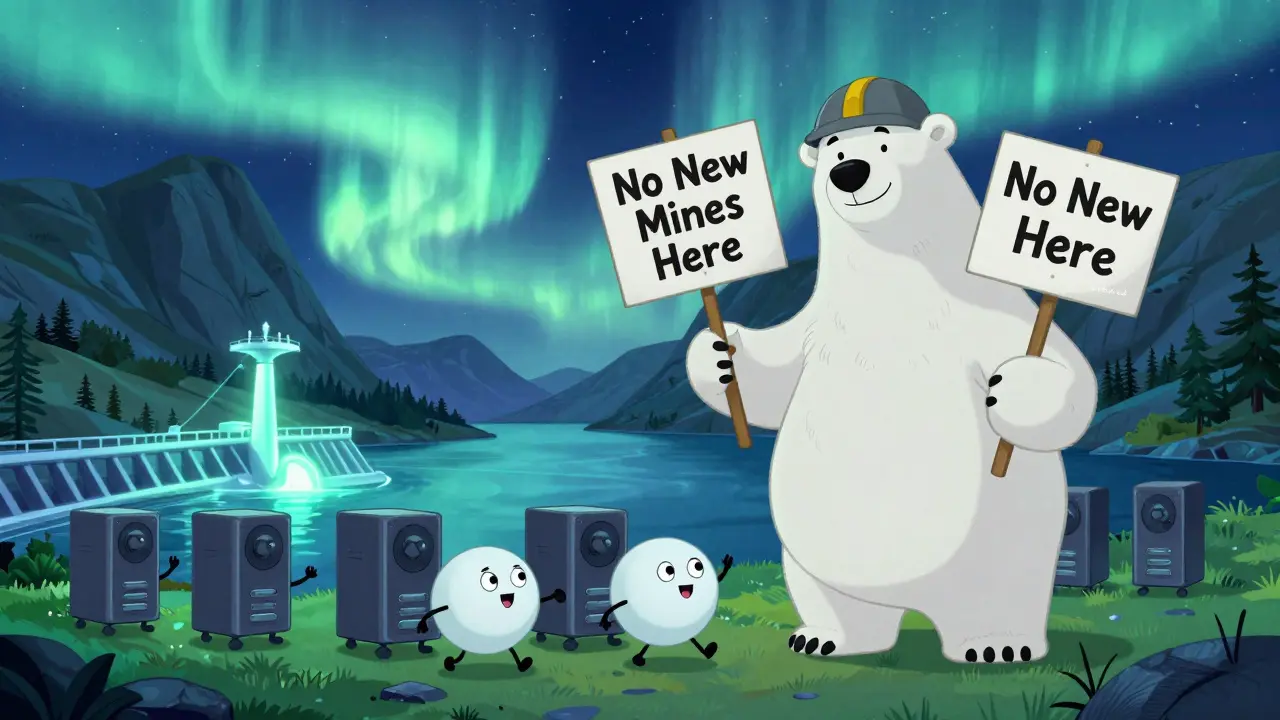
When you think of Norway, you probably picture fjords, Northern Lights, and clean energy. But in 2025, it became known for something else: taking a hard stand against cryptocurrency mining. The Norwegian government didn’t shut down existing operations. It didn’t ban Bitcoin. It simply said: new crypto mining data centers won’t get access to the country’s electricity anymore. And the reason isn’t what you might expect.
Why Norway Is Stopping New Crypto Mines
Norway has one of the cheapest and cleanest power supplies in the world-over 95% hydroelectric. That made it a magnet for crypto miners looking to cut costs and reduce carbon footprints. By 2024, data centers for Bitcoin and other cryptocurrencies were using nearly 2% of Norway’s total electricity. That’s more than all the electric cars in the country combined. But here’s the catch: those mines didn’t create jobs. They didn’t build factories. They didn’t pay local taxes in meaningful ways. Most were owned by foreign companies, operated remotely, and shipped their profits overseas. Meanwhile, Norwegian families were seeing their electricity bills rise, and industries like aluminum smelting and green hydrogen production were struggling to get enough power. The government’s message was simple: our clean energy isn’t a free resource for global tech speculation. If you want to mine crypto, go somewhere with cheap coal or gas. Norway’s power belongs to industries that create real value here-at home.What the Ban Actually Does
The proposed rule, announced in June 2025 and expected to take effect in autumn 2025, doesn’t touch existing mines. If you already had a data center running in Oslo or Tromsø, you’re fine-for now. But if you wanted to open a new one, you’d be out of luck. The government used its authority under the Planning and Building Act to block permits for new mining facilities based on energy use criteria. It’s not a blanket ban on all crypto activity. You can still buy, sell, and hold Bitcoin in Norway. Exchanges still operate. You still pay taxes on gains. But the physical act of mining-using massive amounts of electricity to solve complex math problems-is now restricted at the infrastructure level. The move also came with a new requirement: all existing mining operations had to register with authorities. This gave the government a clear picture of who was using how much power. Before, they were flying blind. Now they knew exactly where the energy was going-and how little it was contributing to the local economy.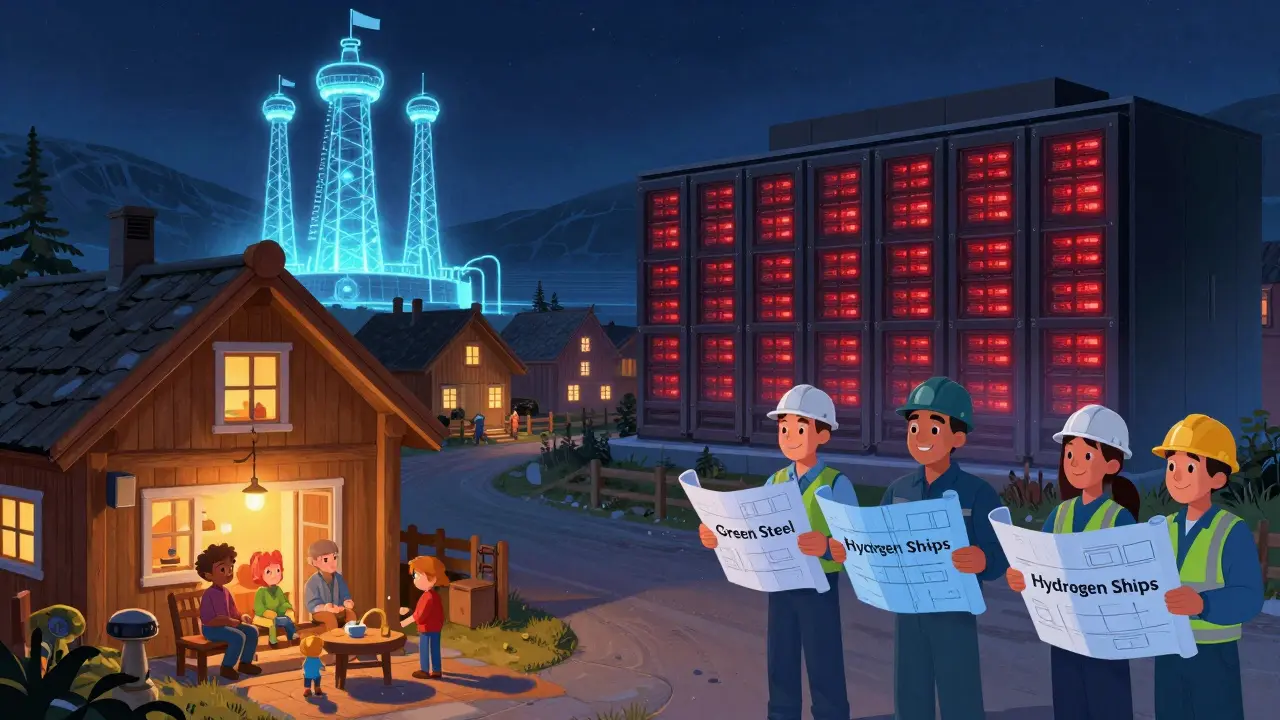
How This Compares to Other Countries
Norway isn’t the first country to crack down. China banned mining in 2021. Russia blocked it in 10 regions in early 2025 to prevent blackouts. Kosovo shut it down entirely in 2022 after power plants couldn’t keep up. New York State imposed a two-year pause on carbon-powered mining in 2022. But Norway’s approach is different. It’s not about pollution. It’s about opportunity cost. You can run a Bitcoin mine on 100% renewable energy and still be part of the problem if that energy could have powered a battery factory, a data center for healthcare AI, or a hydrogen plant that creates clean fuel for ships. Other countries saw crypto mining as a threat to grid stability. Norway saw it as a waste of a national asset. That’s a crucial distinction.What This Means for the Crypto Industry
The crypto industry argued that mining drives investment in renewables. Some miners even built new hydropower plants in Iceland or Canada, claiming they were expanding clean energy infrastructure. But Norway’s government wasn’t convinced. They pointed out that most mining operations don’t build infrastructure-they rent it. And the energy they consume doesn’t lead to long-term industrial growth. The ban sent shockwaves through mining hubs. Companies that had planned to expand in Norway scrambled to find alternatives. Some moved to Canada, where hydro power is also abundant but regulations are looser. Others looked at Georgia or Sweden. But none of those places have Norway’s combination of cheap, clean, and reliable power-and now, none have its political will to say no. This move may become a model. Countries with similar energy advantages-like Iceland, Finland, and parts of Canada-are watching closely. If Norway’s ban works, expect similar policies elsewhere. The message is clear: renewable energy isn’t a free lunch for global tech startups.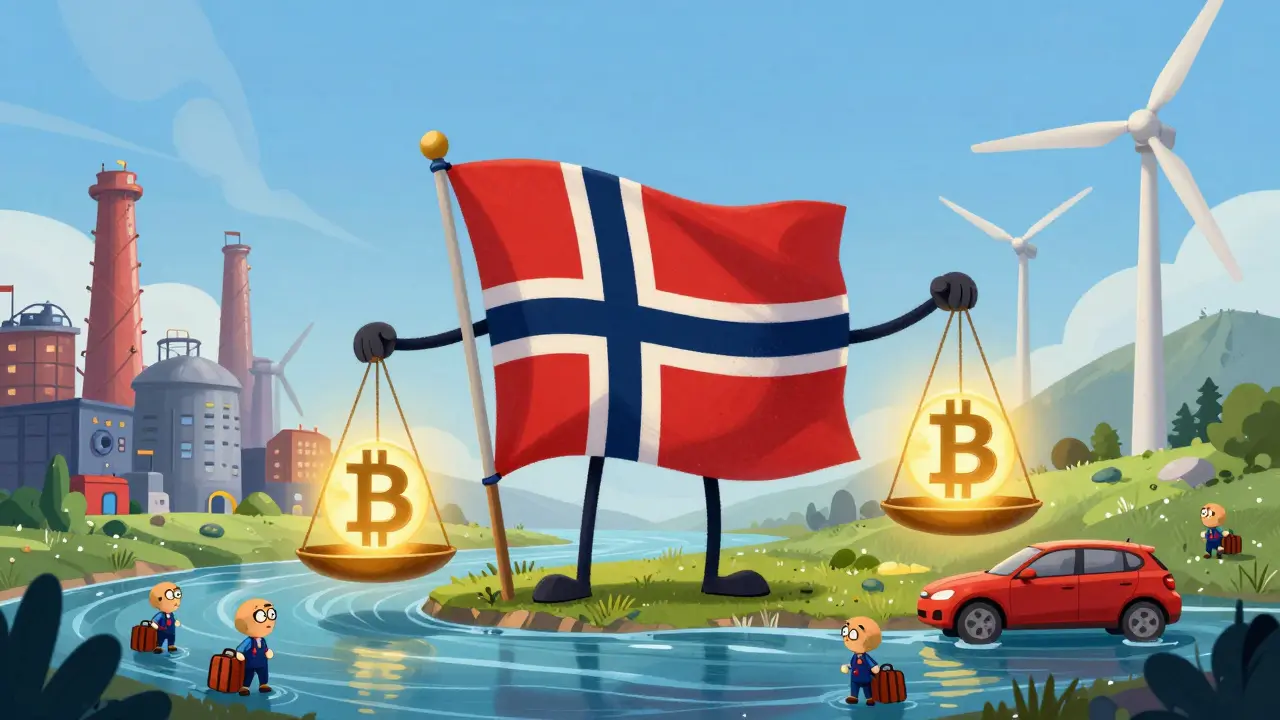
What Happens Next?
The ban is temporary. The government says it will review the policy in 2027. That means if mining technology becomes 50% more energy-efficient, or if crypto mining starts creating real local jobs-like maintenance crews, engineers, or tax-paying employees-the ban could be lifted. For now, though, the message is firm: Norway’s energy is for Norwegians. Not for anonymous miners in server farms who don’t pay local taxes, don’t hire local workers, and don’t contribute to the communities that supply the power. It’s a bold stance. And it’s working. Since the announcement, no new crypto mining permits have been issued. Existing operations are being monitored. The grid remains stable. And industries that actually build things-like offshore wind components and green steel-are getting the power they need to grow.Is This Fair?
Critics say it’s unfair to target crypto mining while letting other energy-heavy industries off the hook. But Norway doesn’t see it that way. Aluminum smelting? It employs thousands. It pays taxes. It exports goods. It builds supply chains. Crypto mining? It doesn’t. Even if it uses clean power, it doesn’t create a local economy. This isn’t about hating Bitcoin. It’s about protecting the future. Norway has a rare gift: clean energy. They’re choosing to use it for what matters most-not speculation, but sustainability.Is cryptocurrency mining illegal in Norway?
No, cryptocurrency mining is not illegal in Norway. The government banned only new mining data centers from receiving electricity permits. Existing operations are still allowed to run. You can still own, trade, and mine Bitcoin legally-you just can’t build a new large-scale mining facility that draws power from the national grid.
Why did Norway choose to ban only new mining operations?
The government wanted to avoid punishing businesses that had already invested in mining infrastructure. By focusing on new installations, they gave existing operators time to adapt while stopping future growth. It’s a practical, phased approach that balances economic stability with long-term energy planning.
Does Norway’s ban apply to all cryptocurrencies or just Bitcoin?
The ban applies to all cryptocurrency mining operations that are power-intensive, regardless of the coin. Bitcoin is the biggest energy user, but Ethereum, Litecoin, and others are also affected if they require large-scale mining hardware. The rule targets energy consumption, not specific coins.
Can I mine crypto at home in Norway?
Technically yes, but it’s not practical. Home mining with a few rigs won’t generate meaningful returns anymore, especially with Norway’s high electricity prices. The ban targets commercial-scale operations that use hundreds of kilowatts or more. Personal mining is not regulated under this law, but it’s economically unviable for most people.
What happens to miners already operating in Norway?
They must register with the government and report their energy use. They’re under observation, but not shut down. The government is collecting data to assess whether these operations provide any real economic benefit. If future reviews show they’re still a net drain, even existing mines could face restrictions later.
Is Norway’s ban permanent?
No, it’s temporary. The government plans to review the policy in 2027. If mining technology becomes significantly more efficient, or if mining operations start creating local jobs and tax revenue, the ban could be lifted or modified. The goal isn’t to kill crypto-it’s to make sure Norway’s energy serves its people first.




Alexandra Wright
Let me get this straight - Norway’s saying their clean energy isn’t a free buffet for anonymous server farms? Holy hell, it’s about time. I’ve seen so many ‘green crypto’ lies floating around, but this? This is actual policy with teeth. Aluminum smelting employs people. Bitcoin mining just heats up buildings and sends cash offshore. No wonder Norway’s grid’s still stable.
Kenneth Mclaren
THIS IS THE NEW WORLD ORDER. They’re using ‘clean energy’ as a cover to control the narrative. Who owns the power grid? Who controls the permits? It’s not about jobs - it’s about centralizing power. They’ll ban mining today, next they’ll ban private crypto wallets. Mark my words - this is step one of the digital currency takeover. The Fed’s already testing CBDCs. This isn’t policy. It’s tyranny wrapped in eco-brochure.
dina amanda
They dont want us mining because they dont want us to be rich. The government wants everyone poor and dependent. Look at the news - they banned mining but let the banks keep printing money. Thats the real crime. Crypto is freedom. Norway is just scared of it.
Josh Seeto
Wow. So Norway’s basically saying ‘your hash rate doesn’t pay property taxes’? That’s the most honest thing any government’s said about crypto in years. I mean - yeah, mining uses clean power, but if your only contribution to society is spinning fans and burning electricity, maybe you’re not the hero you think you are.
SUMIT RAI
😂😂😂 Norway just pulled a ‘we’re too good for your crypto’ move. Meanwhile, I’m in India mining on a stolen laptop and a prayer. 🤷♂️⚡
Kevin Gilchrist
They’re not banning crypto - they’re banning the idea that energy should be a commodity for anyone with a GPU and a dream. This is beautiful. I’m crying. I’ve watched American cities get hollowed out by coal and gas, and now Norway’s saying ‘nope, we’re saving ours for real innovation.’ If only the U.S. had this kind of spine. 🫡
Khaitlynn Ashworth
Oh wow. So now we’re supposed to feel bad for Norwegian aluminum factories? Like, the same ones that emit more CO2 than all the Bitcoin miners in Iceland? This is such a performative virtue signal. ‘Oh no, the miners are stealing our clean power’ - but hey, your smelters are just fine? Please. Wake up.
NIKHIL CHHOKAR
It’s not about hating crypto. It’s about prioritizing. Norway didn’t ban crypto. They just said - if you want to use our energy, you have to give something back. That’s not evil. That’s called being a responsible nation. Most miners are just parasites. They take, take, take - and leave nothing. Even the servers are imported. Even the cooling systems are rented. It’s a ghost economy.
rachael deal
I love this. Finally someone gets it. Clean energy isn’t a utility you plug into like a toaster - it’s a national inheritance. We’re not just talking about electricity, we’re talking about future jobs, future industries, future kids who get to breathe clean air because we chose wisely. Norway’s being a parent. The rest of us are still arguing over which flavor of soda to drink while the fridge’s empty.
Gavin Hill
There’s a difference between using energy and wasting it. Mining doesn’t build roads or hospitals or schools. It doesn’t feed people or power schools. It just moves numbers around. If you’re using renewable energy to do that - fine. But if that same energy could power a hydrogen plant that creates fuel for ships and trucks? That’s not a choice. That’s an obligation. Norway’s just doing what any sane society would do.
Jack and Christine Smith
ok so like i just read this and i think its so cool that norway is like ‘hey we got this amazing gift of clean energy and we’re gonna use it for stuff that actually helps people’ like i live in texas and we’re literally building data centers next to oil rigs and calling it ‘green mining’ and its just… i dont even know what to say anymore. like why are we letting strangers from other countries use our resources to make billionaires richer? 🤔
Andrea Stewart
Let’s be real - most crypto mining operations don’t even create ‘green energy.’ They just buy up existing hydro or wind and use it for zero economic return. Norway’s move isn’t anti-crypto. It’s pro-value. If you want to mine, build your own solar farm. Don’t just hook into public infrastructure and vanish with the profits. That’s not innovation. That’s exploitation.
surendra meena
NOBODY IS TALKING ABOUT THE TRUTH! THIS IS A POWER GRAB BY THE ELITE! THEY WANT TO CONTROL EVERYTHING! THE ENERGY, THE MONEY, THE MINING - IT’S ALL A SETUP FOR THE DIGITAL SLAVE SYSTEM! THEY’RE AFRAID OF DECENTRALIZATION! THIS IS THE FIRST STEP TO TAKING AWAY OUR CRYPTO! WE MUST RESIST! RESIST! RESIST!
Mike Pontillo
So what, now we’re supposed to feel bad because Norway doesn’t want to be a server farm for rich guys in Miami? I mean, yeah, aluminum smelting uses power too - but at least someone’s making something. You can’t eat Bitcoin. You can’t drive a car made of Bitcoin. You can’t build a house with it. But you can build a bridge with aluminum. That’s the difference.
Joydeep Malati Das
Interesting approach. Norway has always been pragmatic. Their energy policy reflects long-term thinking, not short-term profit. This isn’t about crypto being bad - it’s about energy being too valuable to waste on speculative activity. Other nations should take note. Resource allocation matters.
Emily L
Wait so I can still mine at home with my 3 GPUs? 😏