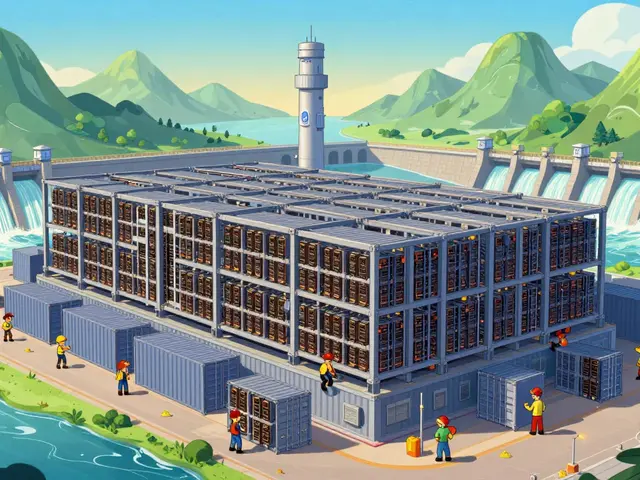
Imagine trying to run a business where you can only buy one specific unit of fuel at a time, and if you try to cheat the meter, armed agents show up to seize your assets. That is the reality for cryptocurrency miners in Kazakhstan today. Since China banned mining operations in 2021, this Central Asian nation became a global hub for digital asset production. But that sudden influx created massive strain on the national power grid. To prevent blackouts and stabilize energy supply, the government introduced strict electricity rationing measures. These rules are not just suggestions; they are enforced with significant legal consequences.
If you are looking to understand how this system works, or why it matters for the future of Bitcoin mining, you need to look past the headlines. The situation involves a complex mix of state-controlled energy markets, aggressive anti-corruption drives, and new financial compliance requirements. This article breaks down exactly how the rationing system operates, what happens when miners break the rules, and what the future holds for legitimate operators in the region.
The Shift from Wild West to State Control
Kazakhstan’s journey with crypto mining started with open arms but quickly turned into a regulatory crackdown. When Chinese miners fled their home country due to bans, many relocated to Kazakhstan because of its cheap coal-powered electricity and cold climate, which helps cool servers. Initially, the government welcomed this economic boost. However, by late 2021, the surge in demand caused severe power shortages. Homes went dark, and industrial facilities faced outages. The message was clear: the grid could not handle unregulated growth.
In response, the Ministry of Energy took direct control. They established a mandatory state-run marketplace for electricity purchases. This wasn't just about selling power; it was about tracking every kilowatt-hour consumed by mining farms. The goal was to ensure that residential users and strategic industries got priority access to energy before miners did. Today, the system is far more rigid than the early days. It represents a shift from a free-market approach to a highly centralized command structure designed to protect national energy security.
How the Electricity Rationing System Works
At the heart of Kazakhstan’s strategy is a technical framework that limits how much power any single operation can consume at once. As of 2025, the rules are specific and restrictive. Mining farms cannot simply negotiate bulk contracts with utility providers as they might in other countries. Instead, they must purchase electricity through a state-operated platform administered by the Ministry of Energy.
Here are the key mechanics of the current rationing system:
- Transaction Caps: Miners are limited to purchasing a maximum of 1 megawatt-hour (MWh) per transaction. This prevents large operators from hoarding capacity and forces them to make frequent, smaller purchases, giving the state better visibility and control over consumption patterns.
- Licensing Requirements: You cannot mine legally without a license. The government has issued only 84 licenses to legitimate mining operations. Each machine must be registered in an official database, which currently tracks over 415,000 mining units.
- Accredited Pools: Miners must work with one of five accredited mining pools recognized by the state. This ensures that revenue flows through monitored channels rather than disappearing into anonymous wallets.
This structure creates a bottleneck. For smaller operators, navigating these administrative hurdles can be costly. Compliance costs are estimated to represent 10-15% of operational expenses for medium-sized firms. But for the government, this control is non-negotiable. It allows them to throttle mining activity instantly if the grid faces stress during peak winter months.

The Rise of Illegal Mining and Enforcement Actions
No matter how strict the rules, some operators try to bypass them. The cost of doing so is high, both financially and legally. In October 2025, a major case highlighted the scale of illegal activity. Authorities in East Kazakhstan Oblast uncovered a scheme that had been siphoning power for two years. The Financial Monitoring Agency (AFM) and the National Security Committee (KNB) worked together to dismantle the network.
The details are staggering. Corrupt employees at local utility companies were illegally selling electricity meant for residents and hospitals to unauthorized mining farms. Over two years, this operation consumed over 50 megawatt-hours of stolen power. That amount of energy is enough to power a city of 50,000 to 70,000 people. The value of the stolen electricity reached approximately 9 billion Kazakhstani tenge, or about $16.5 million.
This wasn't just petty theft. The proceeds funded luxury purchases, including apartments in the capital and multiple vehicles. Courts have since ordered the seizure of these assets. Cases like this demonstrate that the government is willing to deploy serious law enforcement resources to protect the grid. It also shows that corruption within utility companies remains a vulnerability in the rationing system.
Financial Compliance and the AIFC Mandate
Energy is only half the battle. Kazakhstan also wants to keep the money generated from mining inside its regulated financial system. This is where the Astana International Financial Centre (AIFC) comes into play. The AIFC is a special jurisdiction within Kazakhstan with its own courts and laws based on English common law.
To operate legally, miners must adhere to strict asset sale requirements. In 2024, the rule required miners to sell 50% of their mined assets on AIFC platforms. By 2025, this requirement increased to 75%. This means that three-quarters of the Bitcoin or other cryptocurrencies mined in Kazakhstan must be traded on approved exchanges within the AIFC zone. This policy serves two purposes: it generates tax revenue and prevents capital flight.
| Regulatory Aspect | Requirement / Limit | Impact on Operators |
|---|---|---|
| Electricity Purchase Cap | 1 MWh per transaction | Requires frequent buying; limits rapid scaling |
| Asset Sale Requirement | 75% on AIFC platforms | Increases liquidity needs; reduces autonomy |
| Tax Rate | 15% on mining profits | Affects net profitability margins |
| Registered Machines | 415,000+ tracked units | High transparency; difficult to hide hardware |
| Active Licenses | 84 issued | Creates a barrier to entry for new players |
For many international investors, this level of oversight is a double-edged sword. On one hand, it provides legitimacy and reduces the risk of sudden shutdowns. On the other, it adds complexity. Smaller miners often struggle with the paperwork and reporting duties required to prove they are complying with the 75% rule. Larger, well-capitalized firms navigate these waters more easily, leading to market consolidation.
Proposed Solutions: The 70/30 Energy Program
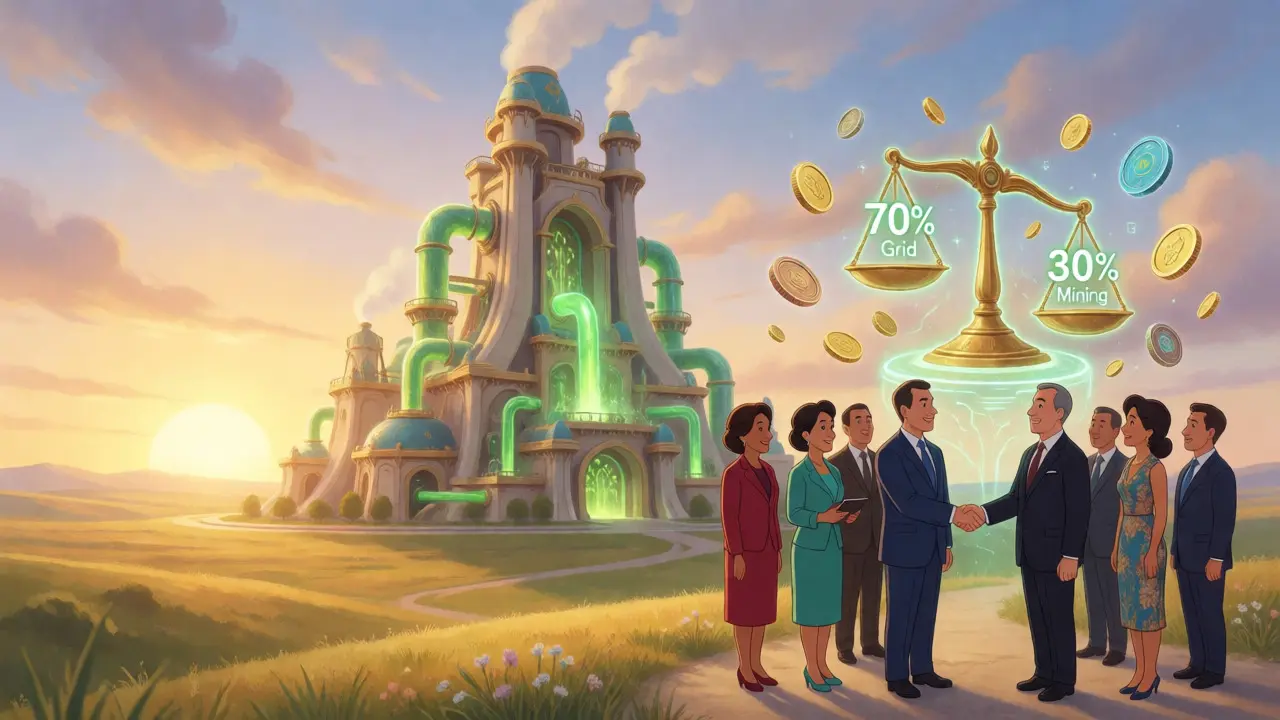
The government knows that restrictions alone aren't enough. They need more power generation capacity to support both the population and the mining sector. Enter the proposed 70/30 energy program. This initiative aims to attract foreign investment to upgrade thermal power plants across Kazakhstan.
Under this plan, foreign investors would fund the construction or modernization of power stations. In return, they would receive a guaranteed share of the generated electricity. Specifically, 30% of the new capacity would be reserved for crypto mining operations, while the remaining 70% would go to the national grid for residential and industrial use. This model attempts to balance economic incentives with social obligations.
Analysts view this cautiously. While it promises to expand the total pie of available energy, it relies on long-term infrastructure projects that take years to complete. Meanwhile, the immediate pressure on the grid continues. Some experts argue that miners could actually help stabilize the grid by consuming surplus energy during off-peak hours. If managed correctly, mining could act as a flexible load balancer, absorbing excess power that would otherwise go to waste.
What This Means for Global Mining Trends
Kazakhstan’s experience offers lessons for other countries considering hosting crypto mining operations. The global market for mining infrastructure is growing, valued at $2.75 billion in 2025. With Bitcoin consuming roughly 0.55% of worldwide electricity, nations are scrambling to find ways to integrate this demand without compromising their own energy security.
Countries like Russia are following suit, launching national registries for mining equipment. France is exploring ways to redirect unused nuclear power to regulated mining facilities. The trend is clear: unregulated mining is becoming a thing of the past. Governments want to capture value from the industry while protecting their citizens' access to affordable, reliable power.
For miners, this means the era of cheap, unrestricted energy is ending everywhere. Success now depends on regulatory agility. Operators who can adapt to strict reporting standards, pay fair taxes, and invest in energy-efficient hardware will survive. Those who rely on loopholes or corrupt practices face increasing risks of asset seizure and criminal prosecution.
Why does Kazakhstan limit electricity purchases to 1 MWh?
The 1 MWh cap is a control mechanism designed to prevent large-scale hoarding of energy resources. By forcing miners to make smaller, frequent transactions, the state maintains tighter oversight over consumption rates. This helps the Ministry of Energy manage grid loads dynamically, ensuring that residential and industrial users are not displaced by mining demand during peak times.
What happens if a miner fails to sell 75% of assets on AIFC platforms?
Non-compliance with the 75% asset sale requirement can lead to fines and potential revocation of the mining license. The regulation is intended to keep capital within Kazakhstan's regulated financial ecosystem. Failure to comply suggests an attempt to move funds offshore prematurely, which triggers scrutiny from the Financial Monitoring Agency.
Is illegal mining still common in Kazakhstan?
Yes, despite strict regulations, illegal mining persists. The October 2025 bust in East Kazakhstan revealed that corrupt insiders within utility companies can facilitate unauthorized connections. While the number of licensed machines is high, enforcement challenges remain, particularly in remote areas where monitoring infrastructure is less robust.
How does the 70/30 energy program benefit foreign investors?
The 70/30 program allows foreign investors to fund thermal power upgrades in exchange for guaranteed access to 30% of the generated capacity for crypto mining. This provides a predictable energy supply for mining operations while helping the government expand its overall power generation capabilities without solely relying on state budgets.
What is the tax rate for crypto mining in Kazakhstan?
Legitimate mining operations are subject to a 15% tax rate on their profits. This tax applies to income generated from mining activities conducted under the official licensing regime. Additionally, miners may face standard corporate taxes depending on their legal structure and residency status.