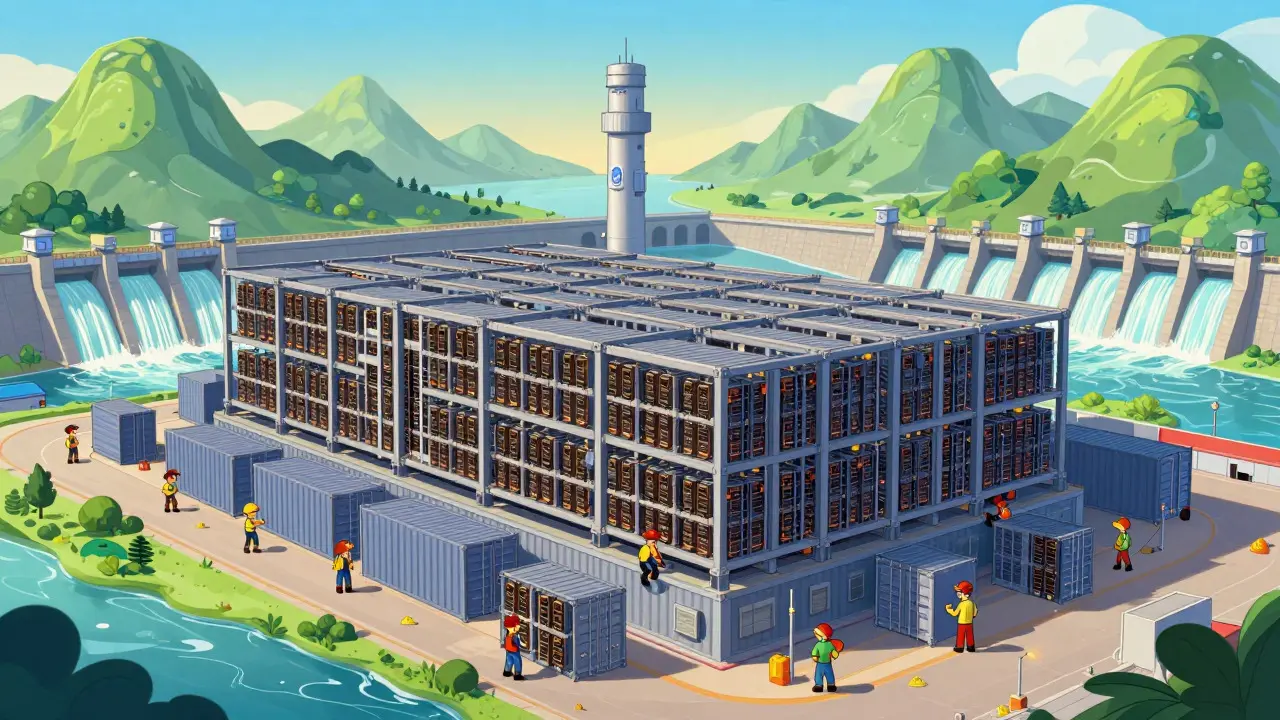
Imagine packing up an entire industrial factory the size of a football field and moving it across continents in under three months. That is exactly what happened to Bitcoin mining is the process of validating transactions on the Bitcoin network using specialized hardware that solves complex mathematical problems. When Chinese authorities moved to ban these operations in 2021, the industry did not collapse. It simply moved. This massive shift, often called the Great Mining Migration, fundamentally changed where the world’s most important digital currency gets secured.
You might wonder how such a heavy, power-hungry operation can be so mobile. The answer lies in the nature of the equipment. Unlike traditional manufacturing plants that require specific supply chains and raw materials on-site, mining farms primarily need two things: electricity and internet. Once you have those, the rest is just plugging in ASIC miners are Application-Specific Integrated Circuit machines designed exclusively for calculating Bitcoin hashes. This portability turned a regulatory crackdown into a global logistics event, reshaping the map of crypto infrastructure overnight.
The Scale of the Chinese Crackdown
To understand why miners fled, you have to look at how dominant China was before 2021. According to data from the Cambridge Centre for Alternative Finance (CCAF), China controlled roughly 75.5 percent of the global Bitcoin hashrate in September 2020. That is not just a majority; it is near-total control. If you were mining Bitcoin during that period, you were likely doing it in Sichuan or Yunnan provinces, taking advantage of cheap hydropower generated by seasonal rainfalls.
The situation changed rapidly as provincial governments began banning energy-intensive industries. Inner Mongolia was one of the first to act, citing environmental concerns. But the real turning point came when central government committees issued warnings that carried significant regulatory weight. By April 2021, China’s share had dropped to 46 percent. Within months, it continued to fall as local enforcement tightened. This wasn't just a tax hike or a trading restriction; it was a direct attack on the physical infrastructure of the network.
Kazakhstan: The New Powerhouse
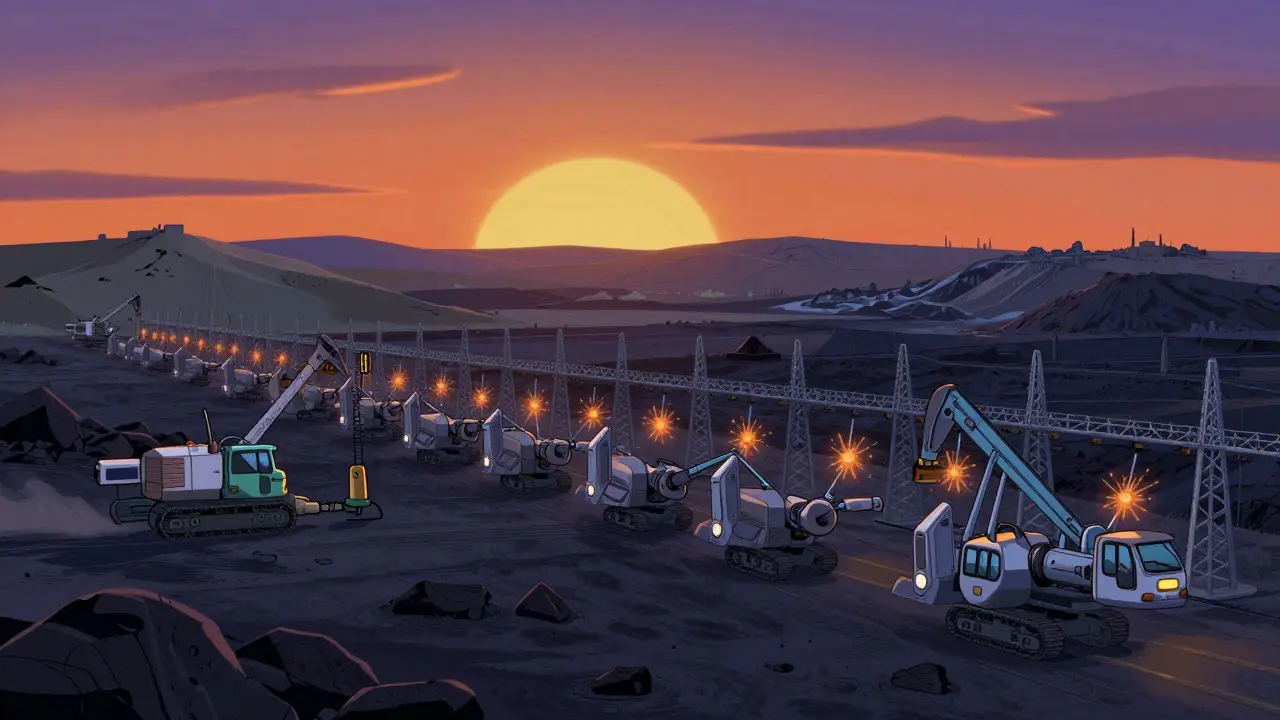
Where did all those machines go? The biggest winner was Kazakhstan is a Central Asian country with abundant coal reserves and relatively low industrial electricity costs. Its share of global mining power surged almost six-fold, jumping from 1.4 percent in 2019 to over 8 percent by mid-2021. By October 2021, reports indicated that Kazakhstan had become the second-largest mining nation globally, effectively challenging China's former dominance.
Why Kazakhstan? It comes down to energy. The country has vast coal mines and existing electrical infrastructure capable of handling massive loads. For miners who were used to paying high prices in other regions, the cost-per-kilowatt-hour in Kazakhstan was attractive. However, this convenience came with trade-offs. The reliance on coal raised questions about the carbon footprint of Bitcoin, leading to debates about sustainability. Despite these concerns, the economic logic was hard to ignore for operators looking to keep their margins healthy.
Texas and the US: A Strategic Hub
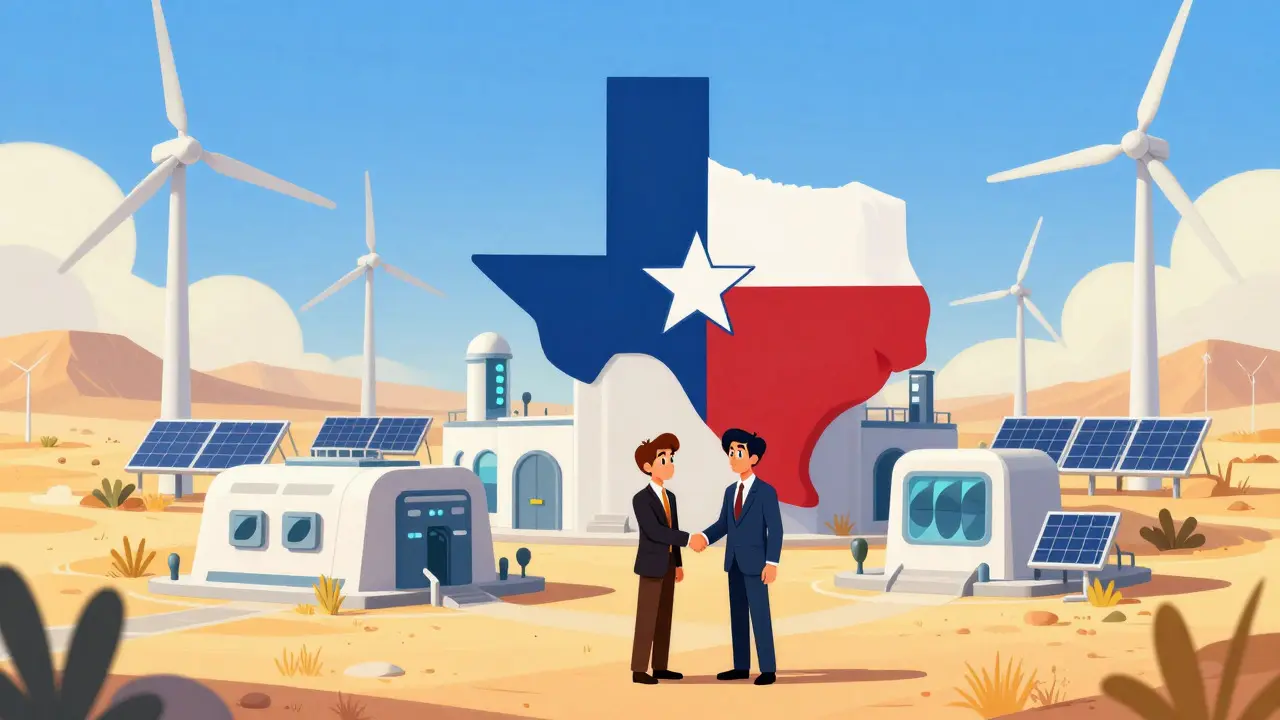
While Kazakhstan took the volume lead initially, the United States, specifically Texas is a US state with a deregulated energy market and favorable legislative stance toward cryptocurrency mining, emerged as the premium destination. Texas offered something Kazakhstan lacked: political stability and access to diverse energy sources. The state’s grid includes significant wind and solar capacity, which appealed to miners wanting to reduce their environmental impact while still keeping costs low.
The deregulated energy market in Texas allowed miners to buy power directly from producers, bypassing traditional utility markups. This flexibility meant that mining facilities could operate during off-peak hours when electricity was cheapest, even helping to stabilize the grid by absorbing excess renewable energy. By 2023, Texas accounted for roughly half of the 5.2 gigawatts of Bitcoin mining capacity being installed across the US. It became the center of gravity for major corporate entrants and institutional investors who wanted exposure to mining without the geopolitical risks associated with smaller nations.
Other Key Destinations
The migration wasn’t limited to just two countries. Several other regions carved out niches based on specific advantages:
- Russia: Benefited from low energy costs and a large landmass, though sanctions later complicated operations for some firms.
- Iran: Attracted miners due to subsidized electricity rates, although currency volatility posed challenges.
- Pakistan: Saw increased activity due to cheap hydroelectric power, particularly in the northern regions.
- Canada: Became a popular choice for its stable legal framework and access to cold climate, which reduces cooling costs for mining rigs.
Each location offered a different mix of pros and cons. Some prioritized raw cost savings, while others focused on long-term security and legal clarity. The diversity of destinations actually strengthened the network, reducing the risk that a single country’s policy change could disrupt global consensus.
Why Mobility Matters for Decentralization
Before 2021, there was a valid concern among purists: if 75% of mining happened in one place, wasn’t Bitcoin too centralized? The exodus proved that the network could withstand even the most aggressive regulatory pressure. By spreading hashrate across multiple continents, the system became more resilient. No single government could easily shut down the entire network because the infrastructure was no longer concentrated in one jurisdiction.
This geographic distribution also introduced new dynamics. Miners now have to navigate different legal systems, tax codes, and cultural norms. In the US, they deal with strict environmental reviews and community relations. In Kazakhstan, they focus on maintaining relationships with local energy providers. This complexity adds a layer of operational difficulty but ultimately makes the network harder to control by any single entity.
Economic and Environmental Impacts
The relocation had ripple effects beyond just crypto markets. In destination countries, local economies benefited from new investments. In Texas, mining companies helped fund upgrades to the power grid, creating jobs and attracting related tech businesses. In Kazakhstan, the influx of capital spurred development in remote areas with unused energy capacity.
However, the environmental story is mixed. Moving from China’s hydropower to Kazakhstan’s coal-fired plants initially increased the carbon intensity of Bitcoin. Yet, the shift to renewable-heavy grids in places like Texas and Canada has started to reverse that trend. Today, a growing percentage of global hashrate runs on clean energy, a direct result of miners seeking both cost efficiency and ESG (Environmental, Social, and Governance) compliance to appeal to institutional investors.
| Location | Primary Energy Source | Regulatory Environment | Key Advantage |
|---|---|---|---|
| Kazakhstan | Coal | Initially lenient, later regulated | Low electricity costs |
| Texas (USA) | Mixed (Wind/Solar/Gas) | Pro-mining, deregulated market | Political stability & renewables |
| Russia | Hydro/Nuclear | Uncertain due to sanctions | Large land area & low costs |
| Canada | Hydro | Stable & clear laws | Cool climate & legal safety |
Lessons from the Great Migration
The Chinese exodus taught the industry several critical lessons. First, diversification is not just a good strategy; it is a survival requirement. Second, energy arbitrage remains the primary driver of miner location decisions. Finally, regulatory risk is a permanent feature of the crypto landscape, requiring constant monitoring and agility.
As we look at the current landscape in 2026, the map continues to evolve. New regions are emerging, and old ones are adapting. But the core principle remains unchanged: Bitcoin mining will always follow the path of least resistance-wherever the power is cheapest and the rules are clearest. The exodus didn't just move machines; it matured the industry, forcing it to grow up and think globally rather than locally.
Did Bitcoin mining stop in China after the ban?
Not completely. While the official ban reduced China's share significantly, some underground mining operations continue. However, the vast majority of legitimate, large-scale mining has relocated to countries like Kazakhstan, the US, and Russia.
Why did miners choose Kazakhstan over other countries?
Kazakhstan offered the best combination of low electricity costs and existing industrial infrastructure. Its coal-based energy grid could handle the massive power demands of displaced Chinese miners without immediate major upgrades.
Is mining in Texas more sustainable than in Kazakhstan?
Generally, yes. Texas has a higher proportion of renewable energy (wind and solar) in its grid compared to Kazakhstan's coal-heavy mix. This allows miners in Texas to potentially lower their carbon footprint while still accessing competitive power rates.
How fast can a mining farm relocate?
With proper planning, a large mining facility can disconnect, ship, and reconnect its equipment within 3 to 6 months. The main bottlenecks are shipping logistics and securing power contracts at the new location.
Does the location of miners affect Bitcoin's price?
Indirectly, yes. If mining becomes too expensive in a region, miners may sell Bitcoin to cover costs, creating selling pressure. Conversely, stable and cheap energy environments help maintain network security and can support price stability by ensuring continuous hashrate growth.





Sarah Hafner
Just wanted to say this breakdown was super helpful for understanding the logistics side of things! :)
I always assumed moving that much hardware would be a nightmare, but seeing how they leveraged existing grids in places like Kazakhstan makes it click.
Sonia Gomez Gomez
You know what is really funny about all this? We are so proud of our 'decentralization' but we just moved the problem from one dictatorial regime to another bunch of unstable governments. It's not actually decentralized, it's just geographically distributed chaos. And don't get me started on the carbon footprint; we traded hydro for coal and called it progress. Typical. :P
Gary Straiton
Sarah is right, the logistics are impressive, but let's not forget who won here. The US! Texas is now the new center of gravity because we have stable laws and actual infrastructure. China tried to kill Bitcoin and ended up pushing the industry into American hands. That is the real story. Everyone else is just playing second fiddle to the American energy sector now. 🇺🇸
alex fordy
While the national pride angle is fun, I think there is a deeper philosophical shift happening here. Before 2021, the network had a single point of failure: Beijing. Now, the 'point of failure' is the global grid itself. It’s less about geography and more about energy arbitrage as a survival mechanism. The resilience isn’t in the location, it’s in the mobility of the capital. 💡
Nia Franklin
Ooooh, I love the idea of energy arbitrage!! It’s like a giant game of musical chairs with electricity! 😂 But seriously, did anyone notice how the environmental narrative flipped? First it was 'Bitcoin kills trees' then 'Bitcoin saves the grid by eating excess wind power'. We are so flexible with our morals when it comes to tech!
Mohamed Shoaeb
From an Indian perspective, it is interesting to see why we didn't become a major hub despite having cheap power. Maybe it is the regulatory uncertainty or the lack of large contiguous industrial zones compared to Kazakhstan or Texas. But I am optimistic that if India stabilizes its crypto tax laws, we might see some migration there in the next few years. The potential is definitely there.
SHIV SHANKAR KANTA
The true tragedy is not the movement of machines but the spiritual displacement of the miners. They left their homes their families their familiar landscapes for the cold winds of Siberia or the dry heat of Texas. Is this not a modern diaspora? A wandering people seeking the Promised Land of low kilowatt hours? We romanticize the tech but ignore the human cost of such massive industrial migration. It is a profound existential crisis wrapped in silicon.
Daniel Brown
Daniel here to clarify a technical point often missed. The bottleneck isn't just shipping the ASICs, it's securing the interconnection agreements with the local transmission operators. In Texas, ERCOT allows direct market entry, which is why it's so attractive. In most other countries, you're stuck dealing with state monopolies or complex permitting processes that can take years. The hardware moves fast, the bureaucracy doesn't.
Marco Maldonado
Daniel is right but he forgot to mention the political risk premium. Look at Russia. Cheap power? Sure. But sanctions make it a nightmare for international firms. You need stability. That is why America wins. We have the rule of law. We have deep capital markets. Other countries are gambling houses. If you want your investment safe, you come to the USA. Simple as that.
Dianne Ritter
Meh. Another article pretending that 'moving servers' is a big deal. It's just industrial pollution hopping continents. The 'Great Migration' sounds dramatic until you realize it's just rich guys chasing cheap dirt-cheap coal while telling themselves they're saving the world. 🙄
Calliope Clio
Actually, the carbon intensity has dropped significantly since the initial jump to coal. The post mentions this, but people miss it. Texas and Canada are running on renewables now. The 'pollution hopping' argument is outdated data from 2021. We are getting cleaner. 🌱
Kelsey Anne
Let's be honest. The only reason mining works anywhere is because the government ignores it or subsidizes it. There is no free lunch. Someone is paying for that cheap electricity. Usually, it's the ratepayers in the neighboring towns. Stop pretending it's efficient.
Teri W
This whole thing feels like a soap opera! One minute China bans it, next minute everyone is scrambling. Who knows where it will be in five years? Maybe Mars? At least the drama keeps us engaged. I just hope the price doesn't crash when the next country decides to ban it. It's so stressful watching all this money move around! 😩
Dianne Ritter
True, but the volatility is part of the charm, isn't it? Or is it just FOMO? I guess we'll find out when the next crackdown hits. Until then, I'm sticking to my index funds. Crypto is too much work. 😒