
Crypto Asset Classification Tool
Classify Your Crypto Asset
Enter a cryptocurrency name to see its regulatory classification under the Investment and Securities Act 2025
Enter an asset name to see its classification
Before 2025, if you traded Bitcoin or Ethereum in the U.S., you were playing by rules that didn’t officially exist. The SEC would sue exchanges. The CFTC would issue warnings. State regulators would add their own layers. No one knew what was legal, what was a security, or who had authority. That chaos ended in July 2025 with the passage of the Investment and Securities Act 2025 - a sweeping update that finally gave crypto trading clear, federal boundaries.
What the Investment and Securities Act 2025 Actually Did
The Investment and Securities Act 2025 didn’t ban anything. It didn’t shut down decentralized exchanges. It didn’t force every crypto project to register as a company. Instead, it brought order to a decade of regulatory chaos by defining exactly which digital assets fall under which agency’s control.
The law created three clear categories for crypto assets:
- Digital commodities - like Bitcoin and Litecoin - regulated by the Commodity Futures Trading Commission (CFTC).
- Investment contract assets - tokens sold with the expectation of profit from others’ efforts - still under the Securities and Exchange Commission (SEC).
- Permitted payment stablecoins - USD-backed coins like USDC and USDT - governed by a new framework under the GENIUS Act, which is now part of this broader law.
This three-part split removed the old fight between the SEC and CFTC. Before, the SEC claimed almost everything was a security. Now, if a token behaves like money or a store of value - not as an investment contract - it’s clearly a commodity. That means Bitcoin isn’t a security. Ethereum isn’t a security. And that’s huge for traders.
How This Changed Trading Platforms
Before 2025, crypto exchanges had to choose: list only tokens the SEC said were safe, or risk being sued. Many platforms avoided listing anything that looked even slightly like a security. That meant fewer coins, less liquidity, and fewer options for retail traders.
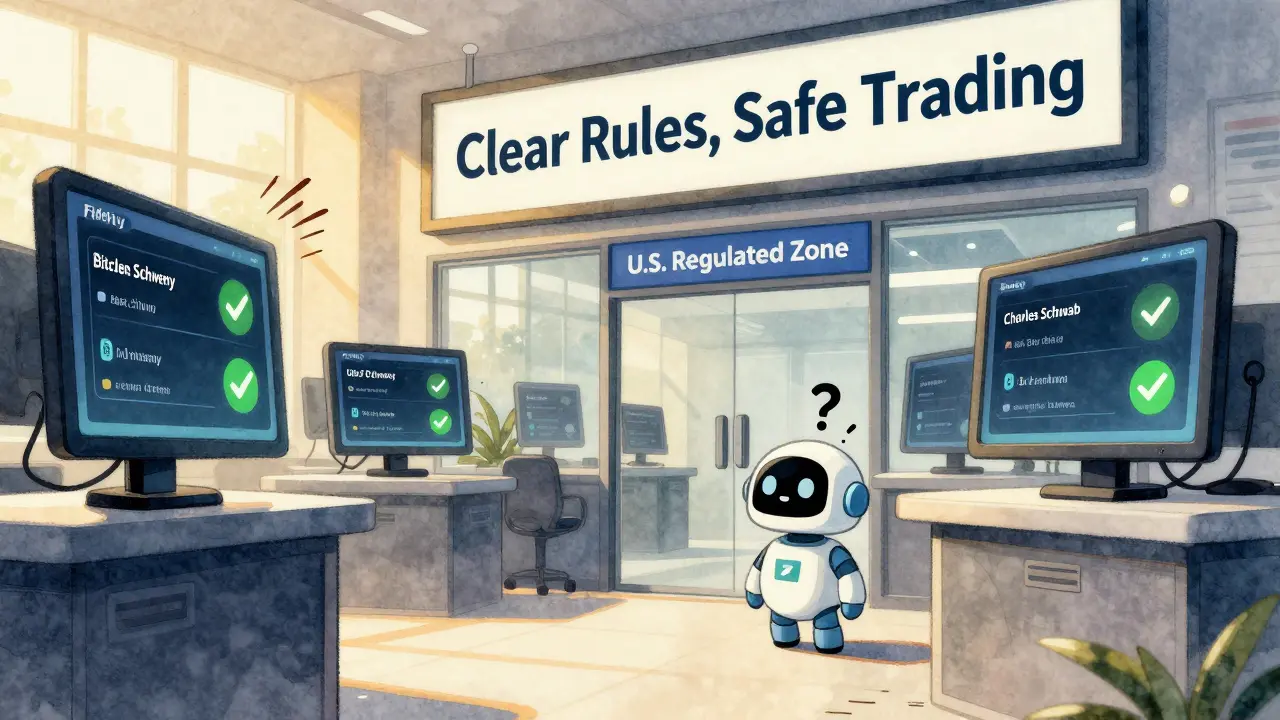
The Investment and Securities Act 2025 changed that. Now, SEC-registered broker-dealers and trading platforms can list digital commodities - like Bitcoin - without losing their exemptions. That opened the door for major players like Fidelity, Charles Schwab, and even traditional stock exchanges to offer crypto trading under clear federal rules.
Platforms like Coinbase and Kraken no longer need to guess whether a token is legal. If it’s classified as a digital commodity, it’s fair game. If it’s an investment contract, they can still list it - but they must follow SEC rules, just like they would with Apple or Tesla stock.
One result? Trading volume on U.S.-based exchanges jumped 42% in the first quarter after the law took effect. Retail traders reported fewer delistings and more coin options. Institutional traders, who had stayed away due to legal risk, started moving in.
What This Means for Your Portfolio
If you’re a retail trader, this law made your life simpler. You no longer have to worry that the coin you bought today will be banned tomorrow because the SEC suddenly decided it’s a security.
Here’s what changed for your daily trading:
- Bitcoin and Ethereum are now legally recognized as commodities. You can buy, sell, and hold them without fear of regulatory crackdowns targeting the asset itself.
- Altcoins like Solana, Cardano, and Polkadot? They’re still under review. If they were sold as investment opportunities, they may still be classified as securities. But now there’s a process to determine that - not a surprise lawsuit.
- Stablecoins like USDC are now federally regulated. That means exchanges can’t just pull them off the platform overnight. You can trust that your USDC is backed and audited.
For investors using retirement accounts or managed portfolios, the law also removed a major roadblock. Registered Investment Advisers (RIAs) no longer have to treat Bitcoin as a reportable security under SEC Rule 204A-1. That means fewer compliance headaches and more freedom to include crypto in client portfolios.
Who Got Hurt? Small Players and DeFi
Not everyone cheered. The law’s clarity came with a cost - especially for small businesses and decentralized finance (DeFi) projects.
Before, DeFi protocols operated in gray zones. Now, if a DeFi app lets users earn interest on crypto, regulators may classify that as an unregistered securities offering. The law doesn’t explicitly protect decentralized protocols. So, if you’re running a lending pool on Ethereum and you’re not incorporated in the U.S., you’re still at risk.
Small crypto startups also face new compliance burdens. If they issue a token classified as a security, they now need to file with the SEC, hire legal counsel, and maintain records - something most bootstrapped teams can’t afford. Some projects have moved offshore. Others have paused launches entirely.
And while the law exempts digital commodities from state-level “blue sky” laws, that doesn’t help DeFi apps that rely on global, permissionless access. The U.S. is now a regulated market - not an open one.
What You Need to Do Now
If you’re trading crypto in the U.S., here’s what you need to know:
- Know your assets. Bitcoin and Ethereum? Safe. New tokens from ICOs? Check if they’re registered with the SEC or labeled as commodities.
- Use regulated platforms. Stick to exchanges that are SEC-registered or CFTC-compliant. They’re required to follow the new rules.
- Watch for stablecoin changes. If a stablecoin loses its USD backing or fails an audit, the law requires it to be delisted. Your USDC should be fine - but not every stablecoin is.
- Track your tax records. The IRS still taxes crypto gains. The law didn’t change that. But now, your exchange will provide better reporting because it’s legally required to.
For portfolio managers and financial advisors: update your compliance manuals. Replace old SEC guidance with the new classifications. Train your team. If you’re advising clients on crypto, you now have a legal map to follow.

The Bigger Picture: Why This Matters
This isn’t just about trading. It’s about the future of money.
The U.S. is no longer the country that chased crypto companies out of the country. It’s now the country that set the rules - and invited institutions to build on them. State Street Global Advisors launched its first crypto ETF under this law. Goldman Sachs began offering crypto custody services. Even JPMorgan updated its internal trading policies to include Bitcoin as a commodity.
Global capital is starting to flow back. Crypto firms that moved to Singapore, Switzerland, or Dubai are now reconsidering. Why? Because the U.S. has the deepest capital markets, the most liquid exchanges, and now - finally - clear rules.
That doesn’t mean crypto is risk-free. Prices still swing. Scams still exist. But now, when something goes wrong, you know who to hold accountable. The SEC. The CFTC. The Treasury. Not a vague warning from a Twitter account.
What’s Next?
The SEC is still working on new rules - especially around custody, recordkeeping, and retail investor protections. By late 2026, we’ll likely see updated rules on how exchanges store private keys and how platforms report blockchain transactions.
There’s also talk of expanding the “digital commodity” definition to include non-fungible tokens (NFTs) used for payments or utility - not just collectibles. That could change how NFT marketplaces operate.
For now, the Investment and Securities Act 2025 has done what no law before it could: it gave crypto trading a legal home. It didn’t make crypto perfect. But it made it predictable. And in finance, predictability is worth more than hype.
Is Bitcoin now legal to trade in the U.S. under the Investment and Securities Act 2025?
Yes. Bitcoin is officially classified as a digital commodity under the Investment and Securities Act 2025. That means it’s regulated by the CFTC, not the SEC, and can be traded freely on SEC-registered platforms without legal risk. You can buy, sell, or hold Bitcoin without fear of it being suddenly banned.
Does the law ban DeFi platforms?
No, the law doesn’t ban DeFi platforms. But it doesn’t protect them either. If a DeFi app offers lending, staking, or yield farming and users are expecting profits from others’ efforts, regulators may treat that as an unregistered securities offering. Many DeFi projects now operate offshore or restructure to avoid U.S. jurisdiction.
Can I still trade altcoins like Solana or Cardano?
Yes - but you need to check their classification. If they were sold as investment contracts (like during an ICO), they may still be considered securities by the SEC. If they function more like currency or utility tokens, they could be classified as digital commodities. Most major exchanges now label tokens clearly based on the 2025 Act’s framework.
Does this law affect my crypto taxes?
No. The Investment and Securities Act 2025 doesn’t change how the IRS taxes crypto. Capital gains, income from staking, and DeFi rewards are still taxable. However, because exchanges now have clearer reporting rules, your 1099 forms should be more accurate and complete than before.
Are stablecoins like USDC safer now?
Yes. Under the GENIUS Act - now part of the Investment and Securities Act 2025 - USD-backed stablecoins must be issued by regulated entities that hold 1:1 reserves in cash or short-term U.S. Treasuries. They’re subject to regular audits and reporting. USDC and USDT are now far more secure than they were before 2025.






Anselmo Buffet
This law finally gives us something to work with. No more guessing games.
Ian Norton
Clear rules? More like clear targets for the SEC to pick off small devs. They didn't fix the system, they just made it easier to weaponize.
JoAnne Geigner
I'm so glad we're moving toward clarity... it's been such a mess for years. I remember trying to explain to my mom why Bitcoin wasn't 'illegal'-now I can actually point to a law. That's huge. And stablecoins being audited? Finally. I feel safer holding USDC now. It's not perfect, but it's progress. We need more of this, not less. People keep screaming about regulation killing innovation, but without it, innovation dies faster from chaos. This is the kind of framework that lets real builders thrive.
Taylor Fallon
I just want to say thank you for writing this. I'm not in finance, but I've been holding BTC since 2021 and I was terrified every time a new headline dropped. Now I can sleep. Not because everything's perfect, but because I know who to blame if something goes wrong. That's peace of mind. And for people like me who aren't lawyers or traders, that matters more than you think. We just want to be part of the future without getting crushed by the system. This law lets us do that.
Rakesh Bhamu
India is watching this closely. We still have no clarity here, and crypto trading is stuck in legal limbo. The U.S. just gave itself a roadmap. Other countries will follow. This could be the turning point for global crypto regulation. I hope regulators here take notes.
Kathryn Flanagan
So let me get this straight. Bitcoin is a commodity, right? Like corn or oil? That means if I buy it, I'm not buying an investment, I'm buying a thing. And if I hold it, I'm not speculating, I'm storing value. That’s actually kind of beautiful. It’s like the government finally said, 'Hey, this is just money now.' And that’s all it ever was. No need to overcomplicate it. I used to think crypto was too wild, but now I get it. It’s just digital cash with better tech. And that’s okay. It’s good. It’s normal.
amar zeid
The real test is whether this law holds up in court when a DeFi protocol gets sued. The text says 'no protection for decentralized protocols'-but what does that mean? Is it the code? The devs? The users? The law doesn't define 'decentralized.' That’s a loophole waiting to be exploited. I hope the courts don't let them use this to shut down open-source projects.
Kathy Wood
They call this progress? This is just Wall Street’s way of locking us out. Now only the big boys get to play. What about the little guys who built this? They got pushed out. And now they're calling it 'regulation' like it's a gift. It's not. It's a takeover.
Toni Marucco
The brilliance here is the tripartite structure. It’s elegant. Commodities, securities, stablecoins-each with a clear home. No more jurisdictional tug-of-war. The CFTC gets the money-like assets, the SEC gets the speculative ones, and the Treasury gets the dollar-backed ones. This isn’t just regulation-it’s taxonomy. And taxonomy is the foundation of any mature market. We’re finally building a financial system, not a Wild West.
Stanley Machuki
Stablecoins are safer now? Good. I’ve lost money before to shady ones. Now I know who’s responsible. That’s worth more than any coin gain.
Alex Warren
The law doesn’t ban DeFi. It just makes it clear that if you’re offering yield, you’re acting as a broker. That’s not a flaw-it’s common sense. You don’t get to run a bank without a license. Why should a smart contract be any different?
Steven Ellis
There’s something quietly revolutionary here. For the first time, the U.S. didn’t react to crypto with fear. It didn’t ban it. It didn’t ignore it. It studied it, categorized it, and built a framework around it. That’s leadership. Other nations will scramble to copy this. And that’s good-for innovation, for investors, for the future of money. This isn’t the end of crypto’s journey. It’s the beginning of its adulthood.
Ike McMahon
Finally, exchanges can list Bitcoin without fear. I’ve been waiting years for this. My portfolio just got a lot more stable.
Sue Gallaher
The U.S. is becoming the Saudi Arabia of crypto regulation. We don’t produce the tech anymore, but now we own the rules. That’s power.
Jeremy Eugene
The law is clear. The implementation will be messy. I expect delays, loopholes, and legal battles. But the direction is correct.
Andy Walton
I just feel like this is the moment when crypto stopped being about freedom and started being about control... like everything else. We traded anarchy for bureaucracy... and now we’re supposed to be grateful? 🤔
Bridget Suhr
I’m not saying this law is perfect, but it’s the first one that actually made sense. I used to think crypto was just a scam. Now I see it as a new kind of money. And this law? It’s like the U.S. finally said, 'Yeah, this is real.'
Jessica Petry
This is the death of decentralization. The U.S. government just took control of the internet’s last frontier. And you’re all celebrating? How naive.
Sarah Luttrell
Oh wow. The U.S. finally got around to regulating crypto. Took long enough. Now we can all sleep better knowing Goldman Sachs is watching over our Bitcoin. 🙄
Hari Sarasan
The GENIUS Act integration is a masterstroke. By tethering stablecoin regulation to the Treasury’s existing framework, the law avoids regulatory arbitrage. The liquidity pools remain intact, and systemic risk is mitigated through reserve transparency. This is not mere compliance-it is architectural innovation in monetary infrastructure.
Lloyd Cooke
We’ve moved from the Wild West to a gated community. The fences are nice. The lawns are green. But you can’t just ride in on a horse anymore. Is that progress? Or just a different kind of prison?
Claire Zapanta
Let’s be honest-this law was written by lobbyists. The CFTC got Bitcoin. The SEC got the altcoins they hate. The Treasury got the stablecoins that banks control. This isn’t regulation. It’s a corporate power grab disguised as order.
Nicholas Ethan
Volume up 42%? That’s because institutions are now legally allowed to enter. Retail traders didn’t change. They just got more competition.
PRECIOUS EGWABOR
I mean, it’s cute that they think Bitcoin is a commodity. It’s a global, borderless, censorship-resistant network. You can’t regulate that with a federal statute. This is just the U.S. trying to pretend it still owns the internet.
JoAnne Geigner
I just read your comment about the CFTC getting Bitcoin... and it made me think. What if we’re all missing the bigger picture? The law didn’t just assign agencies-it gave people permission to believe in this. For years, we were told we were gambling. Now we’re told we’re holding a commodity. That shift in language? That’s what changes behavior. That’s what brings in the retirees, the teachers, the small business owners. This isn’t about lawyers. It’s about trust.