
Nigeria Crypto Tax Calculator
Calculate Your Tax Liability
Capital Gain: ₦0.00
30% Tax (Nigerian rate): ₦0.00
Total Tax Liability: ₦0.00
Important: Under Nigeria's new tax law effective January 1, 2026, you must report all cryptocurrency transactions including trades between different cryptocurrencies. This calculator uses a standard 30% tax rate as an example.
Key Information
The Nigeria Tax Act 2025 requires all Nigerians to pay tax on capital gains from cryptocurrency transactions starting January 1, 2026.
Taxable events include selling crypto for Naira, trading one cryptocurrency for another, receiving crypto as payment, and using crypto to buy goods or services.
Keep detailed records of all transactions, including dates, amounts, and Naira values at the time of each transaction for tax filing.
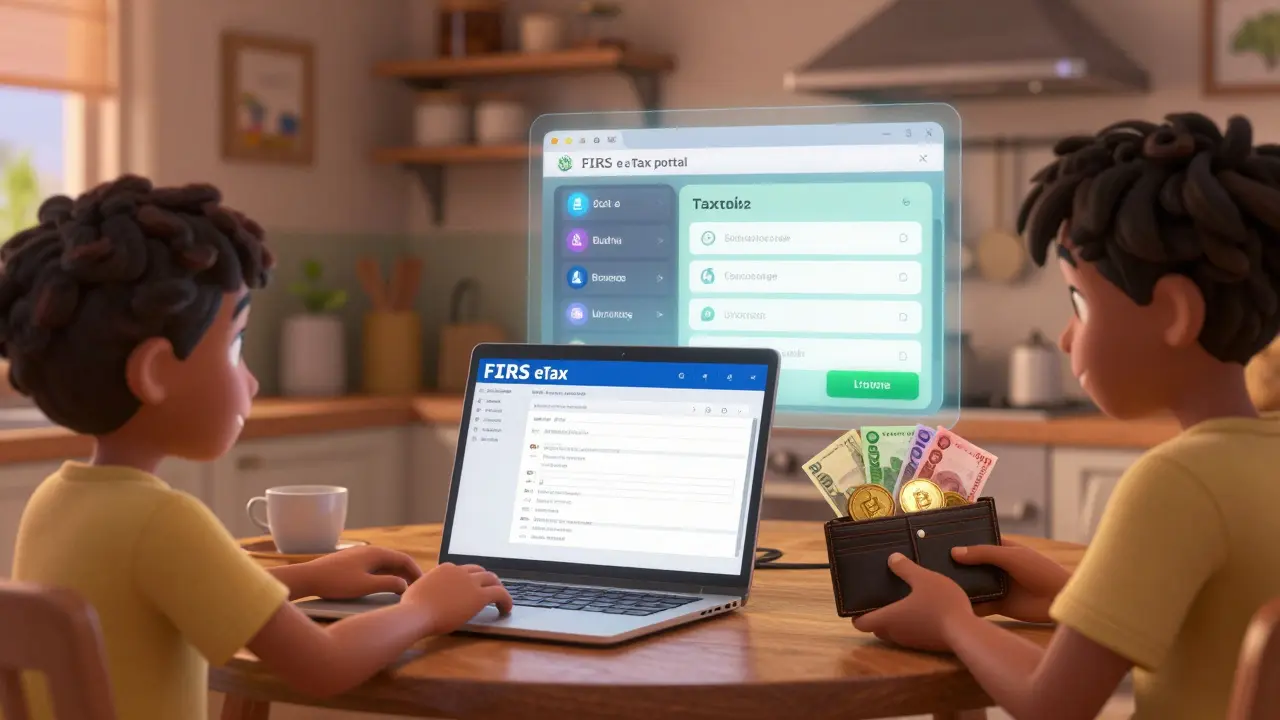
Filing must be done through the FIRS eTax portal with your Taxpayer Identification Number (TIN).
Starting January 1, 2026, every Nigerian who trades, sells, or earns cryptocurrency will be required to pay taxes on it. This isn’t a rumor. It’s the Nigeria Tax Act 2025 - a new law signed in June 2025 that turns crypto from a gray-area activity into a fully regulated, taxable financial behavior. If you’ve been buying Bitcoin on Busha, earning crypto as salary, or swapping tokens on offshore exchanges, this changes everything.
What’s Actually Taxable Now?
The law doesn’t tax you for just holding crypto. You’re only taxed when you trigger a taxable event. That means:- Selling Bitcoin for Naira
- Trading Ethereum for Solana
- Getting paid in crypto for freelance work
- Receiving crypto as a gift and later selling it
- Using crypto to buy goods or services
Even if you didn’t convert crypto to Naira, trading one coin for another counts. The tax is based on the capital gain - how much the asset increased in value from when you bought it to when you sold or traded it.
Example: You bought 0.5 BTC for ₦2.5 million in March 2024. In October 2025, you traded it for 12 ETH worth ₦6 million. Your capital gain is ₦3.5 million. That’s taxable income.
Who’s Responsible for Paying?
Everyone. Individuals, freelancers, small businesses, and crypto companies all fall under the same rules. If you’re earning or trading crypto, you’re part of the tax system now.For individuals, it’s simple: track your purchases and sales. Use a spreadsheet or a crypto tax app that supports Nigerian exchanges. Keep records of dates, amounts, and values in Naira at the time of each transaction.
For businesses, it’s more complex. If your company accepts crypto as payment, you must record those transactions as income. If you pay employees in crypto, that’s salary - and you must withhold taxes just like you would with Naira wages. The law requires companies to update their accounting software to handle crypto entries. Many are already hiring crypto-savvy accountants to avoid mistakes.
What About Offshore Exchanges?
You can still use Binance, KuCoin, or other foreign platforms - but the government is making it harder. Since December 2023, Nigerian banks have been allowed to work only with licensed Virtual Asset Service Providers (VASPs). That means if you’re sending money from your Nigerian bank account to Binance, you’re doing it through an unregulated channel. The Central Bank of Nigeria (CBN) and the Securities and Exchange Commission (SEC) are actively blocking these flows.Why does this matter? Because if you can’t trace the money, you can’t tax it. The government wants transactions to go through local, licensed platforms like Busha, Luno, and Paxful (which are now SEC-approved). These platforms are required to report all user activity to the Federal Inland Revenue Service (FIRS). If you’re using an offshore exchange, your transactions are invisible to the tax authority - but that’s changing fast.
By mid-2026, FIRS will have direct data feeds from licensed exchanges. If you’ve made large trades on Binance and never reported them, you’ll be flagged. Penalties for non-compliance start at 10% of the unreported gain, plus interest and possible criminal charges for repeated violations.
How Do You File?
The process is digital and centralized. Starting January 2026, all crypto tax filings will go through the FIRS eTax portal. You’ll need your Taxpayer Identification Number (TIN), which most Nigerians already have. If you don’t, you can register online in under 15 minutes.Here’s what you’ll need to submit:
- A full transaction history (buy, sell, trade, receive)
- Value of each transaction in Naira at the time it occurred
- Cost basis (what you paid for each asset)
- Capital gains or losses calculated per transaction
- Proof of payment for any taxes owed
The system auto-calculates gains based on the exchange rates from official Nigerian financial data sources. You can upload CSV files from your wallet or exchange, or manually enter details. There’s no paper filing anymore.
What Happens If You Don’t File?
Ignoring crypto taxes is no longer an option. The penalties are serious:- First offense: 10% of unreported gains + 5% interest per month until paid
- Second offense: 25% penalty + possible asset freeze
- Repeated non-compliance: Criminal investigation, fines up to ₦5 million, or jail time
It’s not just about fines. The FIRS can now freeze bank accounts linked to unreported crypto activity. If you’ve been using your GTBank account to fund Binance trades and haven’t declared it, they can lock that account until you prove compliance.
There’s a 6-month amnesty window from January to June 2026. During this time, you can file past crypto transactions without penalties. After June 2026, the doors close. No more forgiveness.

What About NFTs and Tokens?
The law doesn’t just cover Bitcoin and Ethereum. It includes all digital assets:- Security tokens (like shares in a blockchain startup)
- Utility tokens (used to access a platform’s service)
- Non-fungible tokens (NFTs) - even if you bought one as a collectible
If you sold an NFT for 5 ETH, that’s a taxable event. If you bought an NFT with crypto you mined, you owe tax on the value at the time of purchase. The SEC’s Digital Assets Rules make it clear: if it’s on a blockchain and has value, it’s taxable.
Should You Hire a Tax Advisor?
If you’re doing more than simple buying and selling - if you’re running a business, mining crypto, or dealing with DeFi staking - yes. The rules are complex. Staking rewards? Taxable as income when received. Airdrops? Taxable at fair market value. Liquidity pool fees? Capital gains apply when you withdraw.There are now over 200 certified crypto tax advisors in Lagos, Abuja, and Port Harcourt. Many offer flat-fee packages for individuals starting at ₦25,000. For businesses, expect ₦150,000-₦500,000 depending on transaction volume. It’s cheaper than getting fined.
What’s Next?
Nigeria is no longer trying to ban crypto. It’s trying to control it - and profit from it. By bringing crypto into the formal economy, the government expects to collect over ₦120 billion in tax revenue in 2026 alone. That’s money going into infrastructure, education, and public services.For users, this means more security. Licensed exchanges have better fraud protection. Your crypto isn’t stuck on an offshore platform that could vanish overnight. You can cash out through regulated channels without fear of your bank cutting you off.
The message is clear: crypto isn’t going away. But it’s no longer a free zone. If you want to keep your assets, your bank account, and your peace of mind, start tracking your crypto now. Don’t wait for January 2026 to panic. Start today.





Sue Gallaher
So now the government wants to tax my crypto like it's my salary? Cool. I'll just keep it on Binance and ignore them. They can't touch it if they can't trace it
Kathy Wood
THIS IS A POWER GRAB. THEY'RE NOT TAXING CRYPTO - THEY'RE TAKING YOUR FREEDOM. WHAT'S NEXT? TAXING YOUR TWITTER THREADS???
Rakesh Bhamu
Actually, this isn't that bad. In India, we've been dealing with crypto taxes since 2022. The key is just tracking your buys and sells. Use Koinly or CoinTracker - they support Nigerian exchanges now. Keep your records clean and you'll be fine. No need to panic.
Stanley Machuki
Start tracking today. Seriously. Even if you only bought $50 worth of BTC in 2023 - log it. You don’t want to be that guy getting audited because he ‘forgot’
Kim Throne
Capital gains taxation on crypto transactions is a globally recognized fiscal mechanism. The Nigerian Federal Inland Revenue Service’s approach aligns with OECD guidelines on digital asset reporting. Compliance ensures regulatory legitimacy and reduces systemic risk.
Scot Sorenson
Oh wow, the government’s gonna ‘protect’ us by forcing us to use Busha? Lol. That’s like letting the fox guard the chicken coop. They’re not regulating - they’re monetizing your desperation
Ian Norton
Let’s be real - if you’re trading on Binance and not reporting, you’re already committing tax fraud. The CBN’s blocking transfers for a reason. You think you’re clever? The FIRS has AI that cross-references bank metadata with blockchain analytics. You’re already flagged.
Sarah Luttrell
They’re gonna tax my NFTs?? 😭 I spent 6 months collecting those pixelated apes… now I owe the government for my digital art?? This is communism with a blockchain logo 💀
Bridget Suhr
Wait so if I get airdropped tokens and never sell them… do I still owe tax? I thought you only pay when you cash out? Someone please clarify before I panic
Nicholas Ethan
Capital gain calculation methodology must be based on fair market value at time of transaction as defined by FIRS exchange rate benchmarks. Failure to utilize approved data sources constitutes noncompliance and triggers statutory penalties under Section 4.7 of Nigeria Tax Act 2025
Albert Chau
Interesting how they call it ‘regulation’ but really it’s just a revenue grab. You know what’s worse than paying taxes? Paying them to a government that can’t even fix the power grid. You’re funding your own oppression
Abhishek Bansal
Why are we even talking about this? Crypto is global. Nigeria can’t control it. They’re just scared because their naira is garbage and people are using crypto to escape. Let them try to tax it - we’ll just use P2P
Caroline Fletcher
Mark my words - this is how they track us. Next thing you know, your crypto wallet gets linked to your NIN. They’ll know if you bought a pizza with BTC. Welcome to the surveillance state
PRECIOUS EGWABOR
Can we just admit that Nigeria is trying to become the next Singapore? Like… really? They’re not ready. The last time they tried to regulate anything, the whole system crashed. This is a disaster waiting to happen
Lynne Kuper
Am I the only one who thinks the amnesty window is a trap? Like… ‘Hey, come out and confess… we’ll be nice… then we’ll audit everyone who did’? Classic
Hari Sarasan
As a certified blockchain tax auditor with over 12 years of experience in emerging market digital asset compliance, I must emphasize that the FIRS’s integration of real-time blockchain analytics with KYC-verified VASP data streams represents a paradigm shift in fiscal sovereignty. Failure to adopt compliant accounting frameworks under IFRS 22.4b for crypto-asset recognition will result in material misstatements and potential liability under the Nigerian Companies Act. You are not just filing taxes - you are participating in the institutionalization of a new monetary order.
Jeremy Eugene
Just because the government is cracking down doesn’t mean you have to panic. Use the amnesty window. Get your records in order. Hire a pro if you’re unsure. This isn’t about fear - it’s about responsibility. You’ve benefited from crypto. Now help make the system work.