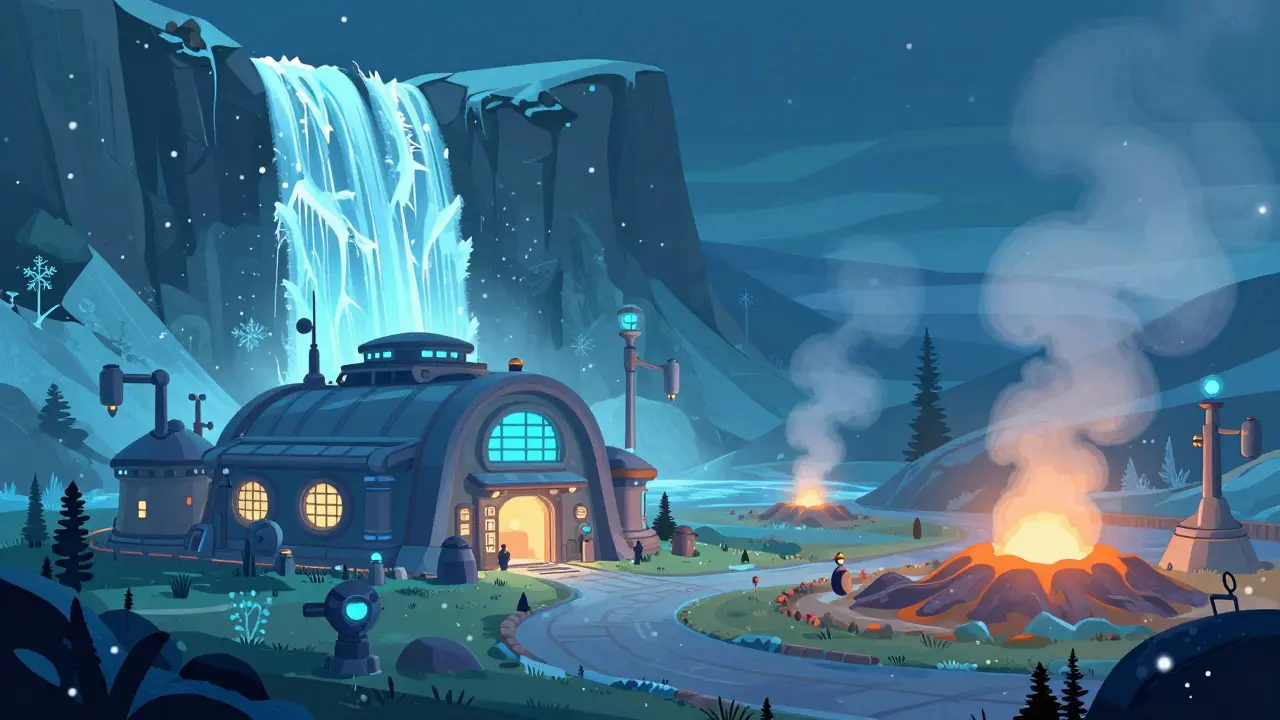
Imagine running a business where your success depends entirely on a volcano or a waterfall. For a decade, that was the dream for crypto miners in Iceland. They flocked to the island for its 100% renewable energy and naturally freezing air that kept expensive hardware cool without costing a dime in air conditioning. But the party is hitting a wall. The island is simply running out of room for new power plugs. If you're trying to set up a mining farm there today, you're not fighting a competitor-you're fighting a grid that is already tapped out.
| Metric | Value / Detail |
|---|---|
| Energy Mix | ~75% Hydroelectric, ~25% Geothermal |
| Mining Energy Share (2023) | Approximately 8% of total national consumption |
| GDP Contribution (2024) | Estimated 2% |
| Current Power Allocation Limit | ~120 Megawatts (MW) for Bitcoin mining |
The Renewable Energy Paradox
Iceland is a powerhouse. It's essentially the world's largest electricity producer per capita. However, there is a massive difference between having crypto mining in Iceland and having the capacity to grow it. Geothermal energy is heat derived from the earth's interior, used here to generate constant, baseload electricity. Pair that with massive hydroelectric dams, and you have the perfect storm for energy-hungry ASICs.
The problem is that these resources aren't infinite. Waterfalls only drop so much water, and volcanoes only provide so much steam. Most of Iceland's power plants are operating at near-maximum capacity. This means the country has reached a ceiling. For years, the government welcomed miners, but now the math has changed. When the grid is full, every megawatt given to a Bitcoin miner is a megawatt taken away from a local home or a high-value factory.
Why the Government is Changing Its Mind
For a long time, Iceland was the "safe haven" compared to the chaos in China or Kazakhstan. But by 2024, the mood in Reykjavik shifted. Former Prime Minister Katrín Jakobsdóttir made it clear that the government wants to scale back mining. Why? Because of opportunity cost.
Let's look at the trade-off. A mining farm uses a staggering amount of power but employs very few people. Compare that to Aluminum Smelting, which is a cornerstone of Iceland's economy. Smelters provide stable, long-term jobs and consistent tax revenue. Then there are the new kids on the block: AI data centers and hydrogen production. The government is starting to realize that using a megawatt of clean energy to train an AI model or power a green ship might be a better deal for the national economy than hashing for Bitcoin.

The "Old Guard" vs. New Entrants
If you started mining in Iceland between 2013 and 2017, you're probably doing great. Companies like Genesis Mining, Advania Data Centers, and Verne Global secured long-term Power Purchase Agreements (PPAs) when energy was plentiful. They have their spots locked in and their infrastructure ready.
If you're a new player? Good luck. Most new requests for grid connections are meeting indefinite delays. The infrastructure just isn't there to support more high-density loads. Modern gear, like the Antminer S19 XP or the Whatsminer M50S, requires a constant, heavy draw of electricity. The grid can't just "absorb" another 10 megawatts without risking stability for everyone else.
Rationing and the Price of Power
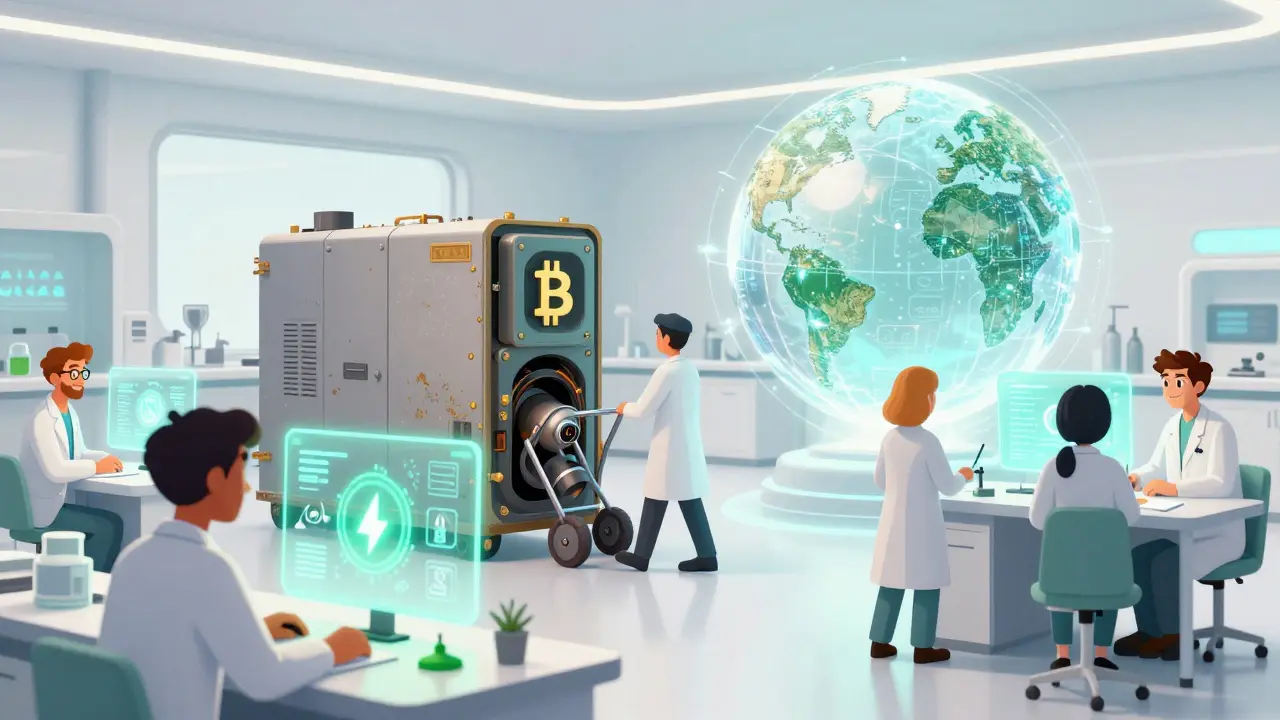
To manage this, Iceland has started using the same playbook as Quebec and Inner Mongolia: energy rationing and tariff hikes. When the grid gets tight, the government doesn't just say "no"; they make it expensive. By raising tariffs for energy-intensive industrial users, they can naturally push out the least efficient operators.
This creates a zero-sum game. For a new mining project to get power, an old one usually has to shut down or move. This has led to a surge of frustration on forums like Bitcoin Talk and Reddit, where operators complain about the "impossibility" of scaling. You might have the best hardware and the perfect cooling, but if you can't get a contract from the National Energy Authority, your machines are just expensive paperweights.
From Mining to the Broader Blockchain Ecosystem
The strategic pivot is now official. Iceland wants the tech, not just the mining. The government is pushing for a shift toward the broader Blockchain Technology industry-things like smart contracts, supply chain tracking, and even Central Bank Digital Currencies (CBDCs). These applications provide the same digital innovation but don't require the power of a small city to run.
This means the era of the "mining gold rush" in Iceland is over. The industry is entering a stability phase. It's no longer about who can build the biggest farm, but who can run the most efficient operation with the power they already have. With a global weighted average efficiency of around 28 joules per terahash, Icelandic mines are still competitive, but they are effectively capped.
Why is Iceland so popular for crypto mining?
Iceland offers a unique combination of 100% renewable energy (mostly geothermal and hydro), a cold climate that reduces cooling costs, and a very stable political environment compared to other mining hubs.
Can I still start a new mining operation in Iceland?
It is extremely difficult. Most grid capacities are full, and new energy allocations are being restricted or delayed indefinitely as the government prioritizes other industries and domestic use.
How much of Iceland's energy goes to crypto?
As of 2023, cryptocurrency mining activities consumed approximately 8% of the nation's total energy consumption.
What is the government's current stance on mining?
The government has shifted from welcoming miners to actively seeking to reduce mining activities to lower the environmental impact and free up energy for more job-creating industries.
Will new power plants be built to help miners?
Unlikely in the short term. Current development timelines suggest significant new capacity won't be available before 2030, and if it is, it will likely be allocated to AI or green energy exports rather than crypto mining.




Felix Eduardo Velasquez
The shift toward AI data centers is a logical evolution of the energy-value chain. When you calculate the revenue per megawatt, training a Large Language Model provides a far more significant economic multiplier for the local host than Proof-of-Work hashing, which essentially exports the value to global token holders while leaving the host with the infrastructure wear and tear.
VIVEK SINGH
Oh, how wonderful that we've finally realized that digging holes in the digital ground for 'magic internet money' is less useful than actually building a factory. Truly a pinnacle of human enlightenment here.
Lloyd I
I actually think this is a great way to push the industry toward more sustainable practices! It's an opportunity for miners to innovate on efficiency or look for underutilized grids in other regions. Let's keep the momentum going for green tech!
Arti Jain
Pathetic. Only a backward nation would prioritize such wasteful ventures over real national progress.
Noel Mandotah
Shocking. Who knew resources were finite? Groundbreaking analysis right here.
Carli Bates
imagine thinking a few volcanoes can power the whole world of greed lol just typical capitalism pretending to be green while shifting to ai
Aaron Zeiler
the ppa agreements are the real key here since they lock in rates for years and make it almost impossible for new guys to compete even if they have better gear
Jimmy vasquez
It's a tough spot for new entrepreneurs, but looking at the efficiency metrics, the ones who survive will be the ones who really optimize their heat recovery systems for local greenhouses or heating!
Gabrielle Danis
From a regulatory perspective, the transition to a stability phase is inevitable. The Icelandic government is simply optimizing its utility function by prioritizing industries with higher employment density and long-term fiscal viability over the volatile nature of cryptocurrency mining.
Andrew Todd
America would handle this better. We don't need some tiny island telling us how to mine. Just get more power.
Elle Kharitou
It's such a fascinating intersection of nature and technology, isn't it? 🌿 I feel like this is a gentle reminder that we are always guests of the Earth and that our digital ambitions must eventually bow to the physical realities of the land we occupy. Maybe this is a chance for the industry to breathe and find a more harmonious rhythm with the planet's natural limits! 🌏✨
April D Thompson
This is basically a tragedy of the commons playing out in real time! It's just wild how we treat the planet like an infinite battery until the light starts flickering and then suddenly we're all 'strategic' about it. It's a total wake-up call for the whole tech world!
Janis Naglis
I'm totally seeing the synergy here!!! If they can pivot the existing infrastructure toward high-throughput AI compute clusters, they'll maximize the utility of their geothermal baseload while reducing the carbon footprint of the global LLM training pipeline!!! So exciting!!!
Kathleen Warren
It sounds really stressful for the people who put their life savings into those machines. I hope they can find a way to transition their businesses without losing everything.
Kara Spadone
Money is just an illusion anyway... 🙄 the energy should be used for spiritual awakening, not hashing. 🧘♀️
Arun Prabhu
A quaint little struggle for a few megawatts. How utterly tedious and pedestrian.
Nitin Gupta
I agree that prioritizing high-value industries is the right move for any nation's long-term growth. It's a balanced approach to sustainable development.
AP Fisher
I wonder if other countries with similar setups will do the same thing.
Wayne Gillis
Wait, so if I move my rigs there now, I'm basically out of luck? 😭 That's such a bummer! Who do I even talk to about getting a plug?? 🔌⚡️
Chloe Fletcher
You just have to pivot! 🚀 Don't let the grid limits stop you from finding a new angle! maybe look into those other blockchain techs they mentioned! You got this! 💪✨
Harvey Alford
I've had a dream about this lately. I can't stop thinking about the people trapped in those cold rooms. It's so heavy. I feel like I'm absorbing the coldness of the Arctic just reading this.