When you hear about a cryptocurrency project announcing a buyback and burn, it sounds like magic: they buy up their own tokens and then make them disappear. But this isn’t a trick-it’s a deliberate economic move built into the design of many blockchain projects. The goal? To reduce the total supply of tokens in circulation, hoping that less supply means higher value. But does it actually work? And how do projects like Binance and Ethereum pull it off without cheating?
What Exactly Is a Buyback and Burn?
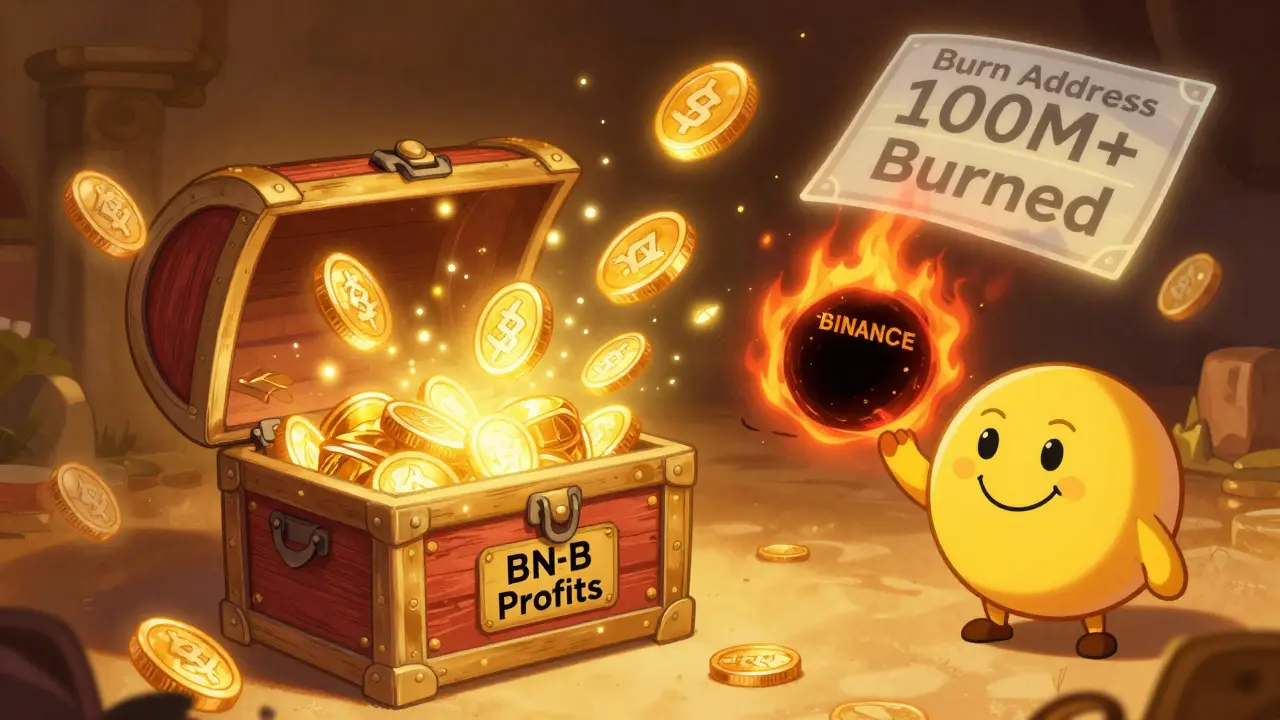
A buyback and burn program is a two-step process. First, a project uses its revenue-often a percentage of trading fees or profits-to buy its own tokens on the open market. Then, those tokens are permanently removed from circulation by sending them to a special wallet address that no one can access. This is called a burn address. Once tokens land there, they’re gone forever. No one can spend them. No one can recover them. They’re effectively erased from the blockchain. This isn’t just theory. Binance started this trend in 2017 with its BNB token. Every quarter, they take 20% of their profits and use it to buy BNB on the open market. Then they send those tokens to the burn address:0x000000000000000000000000000000000000dEaD. As of early 2023, they’d burned over 100 million BNB tokens-half the original supply. That’s not a rumor. You can verify every single burn on BscScan or any blockchain explorer. The tokens show up with a zero balance, and that’s final.
Why Do Projects Do This?
At its core, it’s basic economics: if you reduce supply while demand stays steady-or grows-you increase scarcity. Scarcity drives price. That’s the theory, anyway. But it’s not just about price. It’s also about trust. When a project commits to burning tokens regularly, it signals to holders that they’re serious about long-term value. It’s not a quick pump-and-dump scheme. It’s a structured, repeatable system. Compare this to traditional companies that buy back their own stock. The idea is similar: reduce shares outstanding to boost earnings per share and investor confidence. But in crypto, there’s no central authority. No SEC filings. No board meetings. So transparency becomes everything. If a project can’t prove it burned tokens, the whole thing falls apart.How Do You Know It’s Real?
This is where most projects fail. Some have claimed to burn tokens, but didn’t. In 2022, one project announced a burn of 50 million tokens. Blockchain analysts checked the transaction history and found the tokens were just moved between wallets controlled by the same team. No burn. Just a fake. That’s why verifiable burn addresses matter. The most trusted systems use automated smart contracts. Binance’s Auto-Burn system, for example, calculates how many tokens to burn based on quarterly trading volume. It triggers automatically. No human intervention. That’s why their 21st burn in October 2022 destroyed exactly 2,065,152.42 BNB tokens-down to the decimal. That level of precision builds credibility. Ethereum takes a different approach. Instead of buying tokens on the market, it burns a portion of every transaction fee. Since EIP-1559 launched in August 2021, over 3.5 million ETH have been permanently destroyed-worth more than $10 billion at today’s prices. This isn’t a quarterly event. It’s continuous. Every time someone sends ETH, a chunk vanishes. It’s a deflationary pressure built into the protocol itself.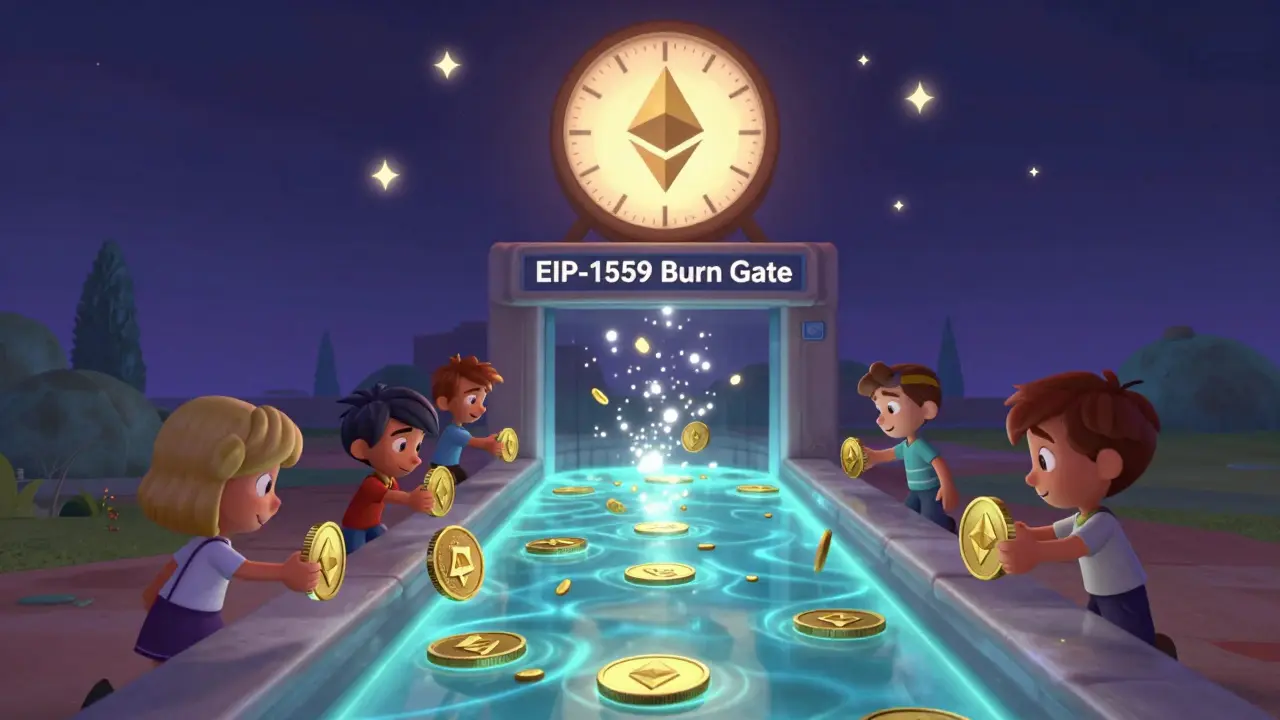
Not All Burns Are Created Equal
Some projects go all-in with one massive burn. TRON burned 1 billion TRX tokens in 2018-about half their total supply. It sent the price soaring overnight. But then? Nothing. No more burns. No ongoing mechanism. The price eventually settled back down. A one-time burn doesn’t create long-term confidence. It’s a spike, not a trend. Meanwhile, projects like Binance, Kucoin, and OKEx stick to a regular schedule. Quarterly burns. Predictable. Transparent. This consistency has real market effects. According to Krayon Digital’s 2023 report, tokens with regular burn cycles show 15-20% less price volatility than those without. Traders start using burn dates as support levels. Some even time their buys around them. But here’s the catch: burns don’t work in a vacuum. If the project has no real utility, no users, no revenue, then burning tokens won’t save it. A 2022 study by the University of Cambridge analyzed 15 major burn events. Only four showed any statistically significant price impact beyond 30 days. The rest? Price bounced back quickly. Burn announcements often trigger short-term spikes-5-8% on average-but those gains fade fast without solid fundamentals.What Experts Are Saying
John Pfeffer of Pfeffer Capital says well-designed buyback programs can create real value-especially when tied to actual business performance. Binance’s 20% profit allocation is a textbook example: they only burn when they make money. That links token value to real-world revenue. But not everyone agrees. Placeholder VC argues that burning governance tokens-tokens that let holders vote on protocol changes-can backfire. If you burn too many, you reduce the number of people who can participate in decision-making. Chris Burniske put it bluntly: “When it comes to capital assets like governance tokens, issuance is key to capitalization and burning can get in the way of growing fundamental value.” Even more controversial? Some projects are now trying “buyback-and-make.” Instead of burning tokens, they redistribute them to stakers. MakerDAO did this in early 2023, giving 50,000 MKR to stakers instead of destroying them. The idea? Keep the tokens circulating, but reward loyal users. It’s a different philosophy: value should be distributed, not reduced.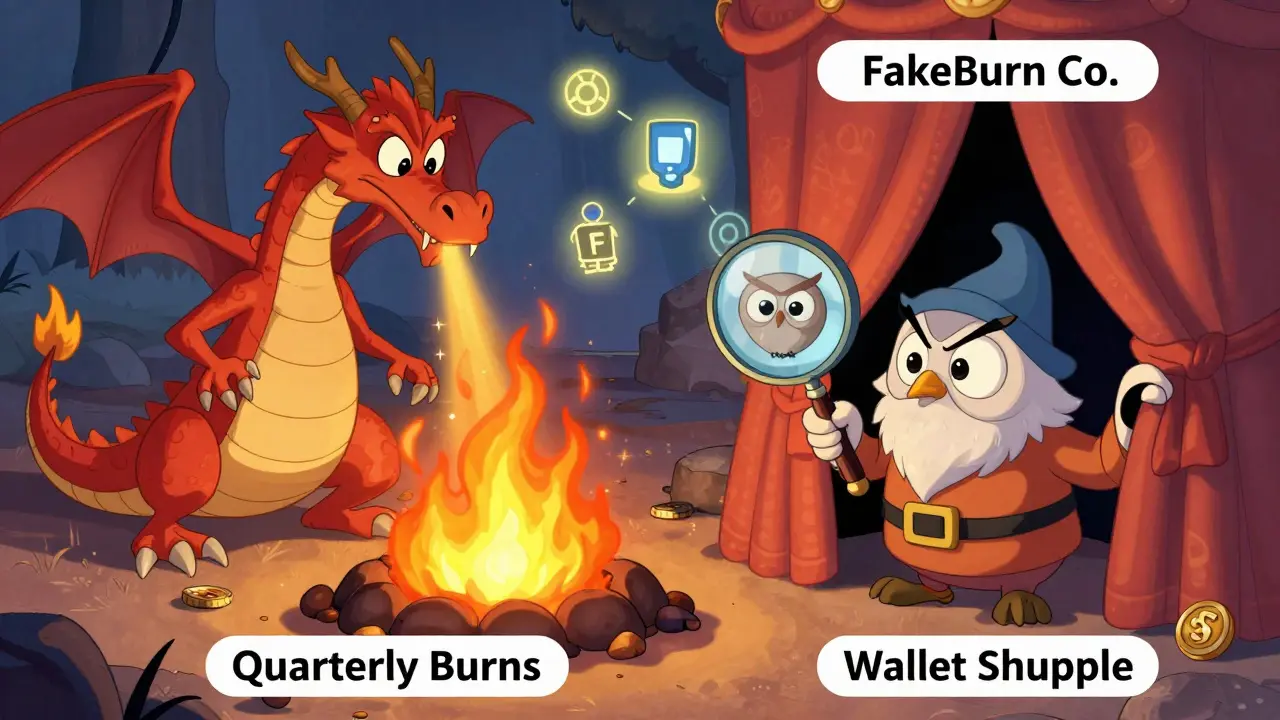
Real-World Impact: Numbers That Matter
By early 2023, 78 of the top 200 cryptocurrencies had some kind of burn mechanism-up from just 12% in 2020. Total value burned? Over $15 billion. BNB alone accounts for $6.2 billion of that. Ethereum’s fee burning adds another $10.5 billion. These aren’t small numbers. The market noticed. Tokens with regular burns showed 22% lower volatility during the 2022 crypto crash. That’s huge. In a market where panic sells are common, predictability matters. Traders feel safer holding tokens that have a clear, transparent supply reduction plan. But there’s risk. In 2022, the SEC warned that improper burn structures could be considered unregistered securities offerings. And Huobi learned the hard way in Q3 2022: they bought back tokens at prices 20% above the quarterly average. That meant they spent more than necessary. Efficiency matters. Burning 100 tokens at $10 each is better than burning 100 tokens at $12 each.What You Should Look For
If you’re evaluating a project with a burn program, ask these questions:- Is the burn automated or manual? Automated is more trustworthy.
- Is the burn address publicly verifiable? Check the blockchain explorer.
- Is the burn tied to real revenue? (e.g., trading fees, profits) Or is it just marketing?
- Is there a history of consistent burns? Look at past announcements.
- Are third-party audits done? CertiK or OpenZeppelin verification adds credibility.
The Future of Token Burning
The trend is moving toward smarter, more integrated systems. Binance’s “Burn Hub” now combines automatic fee burning with quarterly profit burns. Ethereum’s Dencun upgrade (coming in late 2023) will make fee burning even more efficient during high-demand periods. And by 2025, analysts predict 65% of major cryptocurrencies will use some form of supply reduction-not just burns, but staking rewards, token locks, or redistribution models. But the bottom line hasn’t changed. Burning tokens doesn’t create value. It just changes the math. If a project has no users, no revenue, no utility-no matter how many tokens they burn-it’s still a hollow shell. The burn is a tool, not a cure.What works? Consistency. Transparency. Real revenue. And a clear link between the token’s value and the project’s actual performance. The rest is noise.
Are buyback and burn programs guaranteed to increase token price?
No. While reducing supply can create upward pressure on price, it’s not guaranteed. If demand doesn’t rise or the project lacks utility, the price often reverts after a short spike. Studies show only a small percentage of burns lead to lasting price increases. The burn must be paired with strong fundamentals-like real revenue, user growth, or ecosystem adoption-to have a meaningful impact.
Can anyone check if a token burn actually happened?
Yes. All burns are recorded on the blockchain. You can verify them using a blockchain explorer like BscScan, Etherscan, or Solana Explorer. Look for transactions sent to a burn address-these are public, immutable records. Addresses like 0x000...dEaD are widely recognized as burn addresses. If tokens are sent there, they’re gone forever. No one can access them.
Why do some projects burn tokens instead of using them for development?
It’s a trade-off between short-term perception and long-term growth. Burning tokens signals commitment to scarcity and value preservation, which can attract investors. Using funds for development builds utility, which supports long-term demand. Some projects do both: burn a portion of revenue and reinvest the rest. The best models-like Binance’s-tie burns directly to profits, so burning doesn’t hurt growth.
Is token burning legal?
In most jurisdictions, yes-but with caveats. The European Union’s MiCA framework explicitly allows burn mechanisms. The U.S. SEC hasn’t banned them, but has warned that poorly structured burns could be seen as unregistered securities offerings. Projects must prove the burn is transparent and not used to manipulate prices. In China, any form of token supply manipulation is prohibited. Regulatory clarity is still evolving, so legality depends on location and implementation.
What’s the difference between BNB burn and Ethereum’s fee burning?
BNB burn is a buyback model: Binance uses profits to buy BNB on the market and then burns it. Ethereum’s model is fee burning: a portion of every transaction fee is automatically destroyed. BNB burn depends on exchange profits; Ethereum burn happens with every transaction. The first is discretionary and periodic; the second is continuous and protocol-level. Both reduce supply, but through different mechanisms.
Can a project fake a burn?
Yes-and some have. In 2022, a project claimed to burn 50 million tokens, but blockchain analysis showed they were just moved between wallets controlled by the same team. This is why transparency matters. Always verify burns using a public blockchain explorer. Look for transactions sent to known burn addresses. If the tokens aren’t sent to a blackhole address, it’s not a real burn.
Do buyback and burn programs benefit long-term holders?
They can, but not always. If the burn is part of a larger strategy that includes real-world utility, revenue growth, and adoption, then yes-holders benefit from reduced supply and increased scarcity. But if the burn is just a marketing tactic with no underlying value, long-term holders may still lose money. The burn itself doesn’t create value-it just changes the supply side. The project’s actual performance determines the outcome.
What happens if a project stops burning tokens?
It depends on why. If the project was profitable and suddenly stops, holders may lose confidence. If it’s because revenue dropped, that’s a red flag. Binance’s credibility comes from consistency-they’ve burned every quarter for over six years. If a project skips a burn without explanation, it can trigger price drops and distrust. Predictability is part of the value.
Are there alternatives to burning tokens?
Yes. Some projects use staking rewards, token locks, or buyback-and-redistribution models. MakerDAO, for example, stopped burning MKR and instead distributed repurchased tokens to stakers. This keeps tokens circulating while rewarding participation. Others use token buybacks to fund development or community grants. Burning is just one tool-other models can be more sustainable depending on the project’s goals.
How much does it cost to implement a burn program?
For a basic system, development and auditing costs range from $15,000 to $50,000. More advanced systems-like Binance’s Auto-Burn-cost over $200,000 due to smart contract complexity, security audits, and real-time monitoring. Ongoing costs include blockchain explorer integration, third-party verification (e.g., CertiK), and legal compliance. Most major projects treat this as a core infrastructure investment, not an optional feature.

Lindsey Elliott
burns are just marketing fluff tbh 🤡
blake blackner
bro this is why crypto is trash. they buy back tokens at $12 when they couldve bought at $8. so much wasted money. also why are we even talking about this like its some genius move? its just a pump tactic.
Elizabeth Choe
i love how some people act like burning tokens is alchemy. it's not magic. it's math. if your project has zero users and zero revenue, burning 90% of supply just makes the remaining 10% harder to trade. you're not creating value-you're just making a smaller, less liquid pile of nothing.
Andrea Atzori
The structural elegance of Ethereum’s EIP-1559 fee-burning mechanism represents a paradigm shift in tokenomics. Unlike discretionary buybacks-which are subject to corporate whims-this protocol-level deflation is immutable, transparent, and mathematically deterministic. It transforms transactional activity into a non-negotiable deflationary force. This is not merely a financial instrument; it is a new economic architecture.
Grace Mugambi
I think people miss the point when they focus only on supply. The real question isn't 'how many tokens were burned'-it's 'what value is being created around them?' A burn without adoption is like deleting a file on a dead hard drive. No one sees it. No one cares. The magic isn't in the burn-it's in the ecosystem that makes the token matter.
Tammy Chew
Binance’s burn program is the only one that actually makes sense. They’re not burning because they want to look good-they’re burning because they have real, measurable revenue. 20% of quarterly profits? That’s not a PR stunt. That’s a commitment. And the fact that you can verify every single burn on BscScan? That’s transparency you can’t fake. Most projects couldn’t handle that level of scrutiny.
Beth Trittschuh
I wonder if people realize that burning governance tokens reduces participation. If you burn too many MKR or UNI, you’re not just reducing supply-you’re silencing voices. Who gets to vote when only 10% of holders remain? Is scarcity worth democracy? 🤔
Desiree Foo
I’m so tired of crypto bros acting like burning tokens is some moral victory. If you’re burning tokens because you’re afraid of inflation, you’re not a visionary-you’re a scared speculator. Real wealth isn’t created by making things scarce. It’s created by making things better. And right now? Most of these projects are just... not better.
Joe Osowski
the fact that you even need to explain this to people shows how far we've fallen. this isn't innovation. this is casino economics with blockchain glitter on it. and don't even get me started on the SEC warning. if this was real finance, half these projects would be shut down yesterday.
Crystal McCoun
I just want to say-thank you for including the verification checklist. So many people don’t know how to check a burn. Here’s how: go to Etherscan, type in the burn address (like 0x000...dEaD), look for the transaction hash, and confirm the token amount matches the announcement. If the project doesn’t link to it? Run. Also, if the burn address has ever received a transaction from a known team wallet? That’s a red flag. Always verify. Always.
Gaurav Mathur
burns are a lie. all of it. the blockchain is controlled by the same people who made the coin. they move tokens to fake addresses and call it burned. the whole thing is a scam to get you to buy more. dont trust the numbers. trust nothing.
kelvin joseph-kanyin
Ethereum’s burn is the future. 💥 Every time you send ETH, you’re helping shrink supply. No CEO. No quarterly meeting. Just pure, automated deflation. This is how money evolves. BNB’s model is good too, but it’s still tied to a company. Ethereum? It’s decentralized. That’s the real win.
Elijah Young
The real takeaway here is that token burns are not a substitute for product-market fit. They’re a complement. If you’re building a decentralized exchange and your burn is tied to trading volume, that’s smart. If you’re selling a meme coin and burning tokens to hype a tweet? That’s not innovation. That’s fraud. The line is thin-and too many are crossing it.