
Ever seen PEAGUY pop up on your crypto tracker and wondered if it’s real or just a weird internet joke? You’re not alone. The Pea Guy by Virtuals (PEAGUY) isn’t another Bitcoin or Ethereum. It’s a tiny, almost invisible token built on Ethereum - and it’s got a story that sounds like it came out of a sci-fi cartoon. But here’s the thing: it’s real. And it’s trading right now. The question is - should you care?
What Exactly Is PEAGUY?
PEAGUY is an ERC-20 token created by the Virtuals Protocol team. It’s not meant to be a currency. It’s not meant to pay for things. It’s designed to be an AI agent - a digital character that lives inside the crypto world. Think of it like a cartoon mascot with a job: teach people about something called volatility farming. Volatility farming? That’s not a term you hear every day. It’s a niche DeFi strategy where you earn rewards by locking up crypto assets and letting their price swing up and down. The more volatile the price, the more you can potentially earn. PEAGUY’s whole purpose is to explain this in a fun, simple way. It’s supposed to travel the "crypto galaxy," drop knowledge, and even burn tokens to show how value can be created by removing supply. It’s tied to another token, $PEAS, from Peapods.Finance. PEAGUY’s job? To manage a $PEAS wallet, create "Pods" (which are wrapped tokens), and burn both $PEAS and PEAGUY to generate returns. Sounds abstract? It is. But that’s the point. It’s not about utility like PayPal or Bitcoin. It’s about storytelling in crypto.How Big Is PEAGUY Really?
Don’t be fooled by the name or the cute branding. PEAGUY is tiny. Like, microscopic tiny. As of late 2023, its market cap hovered around $40,000. For comparison, Dogecoin is worth over $11 billion. Even the smallest meme coins usually sit at $10 million or more. PEAGUY? It’s in the bottom 0.5% of all cryptocurrencies tracked. It has only about 1,090 holders. That’s fewer people than live in a small English village. Trading volume? Barely anything. On some exchanges, it trades less than $11 in a full day. That’s less than what you’d spend on coffee in Bristol. On others, it’s around $3,700 - but even that’s a glitch. Prices jump wildly between platforms. CoinGecko says it’s worth $0.00002293. CoinMarketCap says $0.00004477. That’s more than double. Why? Because there’s no real market. No buyers. No sellers. Just a few people trading back and forth, pushing the price around. The all-time high? $0.003833 - a number that doesn’t make sense because that date (January 3, 2025) hasn’t happened yet. Someone messed up the data. The all-time low? $0.00000054. That’s half a microcent. It’s not a bug. It’s a symptom. When a token has this little liquidity, the numbers become meaningless.Can You Actually Buy PEAGUY?
Yes. But you shouldn’t unless you’re okay with losing money. You can buy PEAGUY on a few decentralized exchanges like MEXC, LBank, and through Binance’s Web3 Wallet. But here’s the catch: slippage. Slippage is the difference between the price you see and the price you actually get when you click "buy." For PEAGUY, slippage can hit 30% or more. That means if you want to buy $10 worth, you might end up paying $13 just because there are so few sellers. You need a Web3 wallet like MetaMask. You need to understand gas fees. You need to know how to set slippage tolerance. And you need to accept that your transaction might fail - not because of a mistake, but because the market is too thin to handle it. There’s no app. No easy way to buy it. No customer support. If something goes wrong, you’re on your own. Even Binance’s help center warns users: "This token requires special handling due to low liquidity."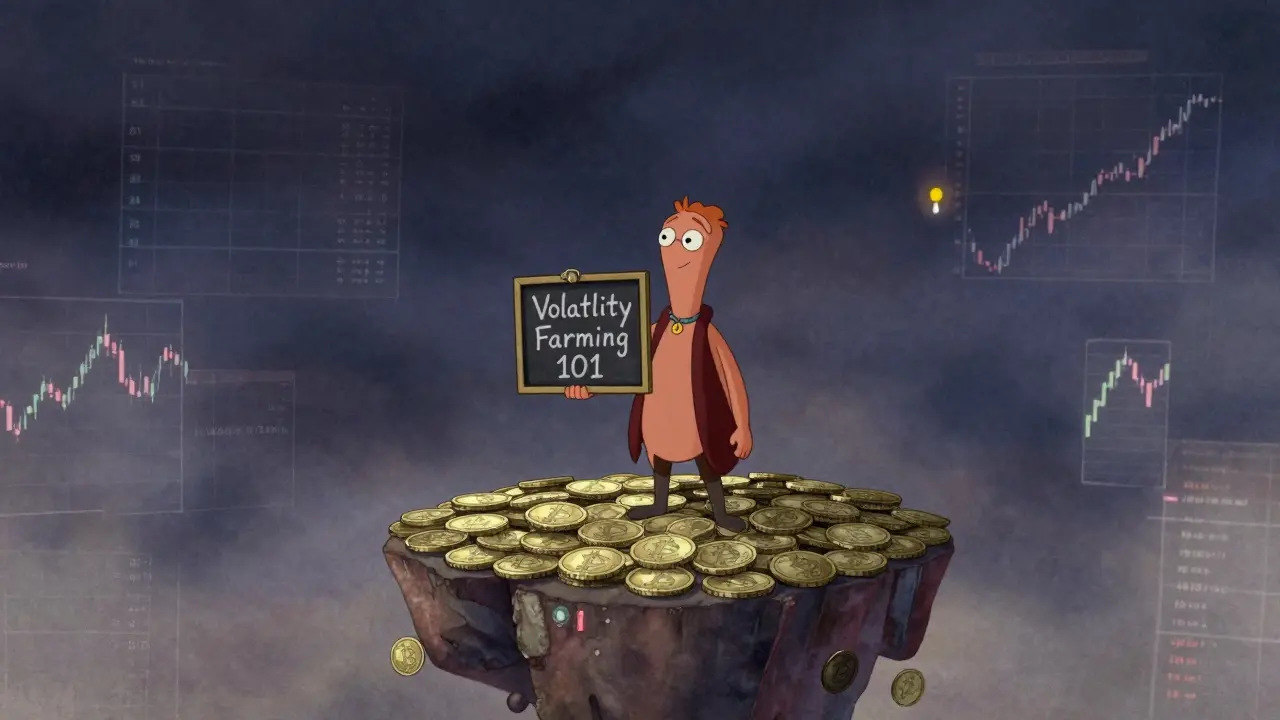
Is There Any Real Use for PEAGUY?
The official story says yes. PEAGUY is supposed to be an educational tool. It’s meant to help people understand how wrapping assets and volatility farming work. But here’s the problem: no one’s seen it actually do that. There’s no video series. No blog posts. No tutorials from "PeaGuy" himself. The Virtuals Protocol website describes the concept, but there’s zero evidence of it being implemented. Users on Reddit and crypto forums keep asking: "Where’s the education?" The answer? Nowhere. It’s a concept without execution. A mascot without a show. A teacher who never shows up to class. Compare that to Dogecoin. It started as a joke too. But it built a community, got celebrity endorsements, and became a real payment option for some companies. PEAGUY has none of that. No partnerships. No media coverage. No influencers talking about it. Just a contract address on Ethereum and a few people trading it on obscure exchanges.Why Does This Even Exist?
Because crypto still rewards novelty. There are thousands of meme coins launched every year. Most die within weeks. A few get lucky and explode. PEAGUY is one of the many that didn’t explode - but didn’t die either. It’s still alive because the team keeps it listed on CoinGecko and CoinMarketCap. It’s still traded because a handful of people think it might "go to the moon." It’s also a perfect example of how crypto can blur the line between innovation and illusion. The idea of an AI agent teaching DeFi? That’s clever. But without real tools, content, or adoption, it’s just a logo with a whitepaper. The Virtuals Protocol team didn’t build a product. They built a myth. And myths can survive longer than you think - as long as people keep believing.
Should You Invest in PEAGUY?
No. Not because it’s a scam. But because it’s not an investment. It’s a gamble with near-zero odds. Here’s the hard truth: tokens with daily trading volumes under $100,000 have a 92% chance of becoming completely illiquid within six months, according to crypto analyst Wendy O. PEAGUY’s volume is under $11. That’s not risky. That’s suicidal. If you buy PEAGUY, you’re not betting on its future. You’re betting that someone else will buy it from you at a higher price - even though no one else is buying anything. The SEC has warned about "pump and dump" schemes targeting tokens with volumes under $100,000. PEAGUY fits that description perfectly. There’s no regulation. No oversight. No transparency. Just a contract address and a cute cartoon pea.What Happens Next?
If nothing changes, PEAGUY will fade into obscurity. It won’t crash dramatically. It won’t make headlines. It’ll just slowly disappear. Trading volume will drop to zero. Holders will forget about it. The contract address will sit on Ethereum like a ghost town. The only way it survives is if the Virtuals Protocol team suddenly releases actual educational tools - videos, interactive demos, real DeFi integrations. But as of now, there’s no roadmap. No updates. No announcements. In crypto, silence is death.Final Thoughts
PEAGUY is not a currency. It’s not a tool. It’s not even really a meme. It’s a digital artifact - a weird, quiet experiment in crypto storytelling. It’s the kind of thing you’d see in a museum of failed crypto ideas five years from now. If you’re curious? Go ahead. Buy a few tokens. See what it feels like to trade something with no liquidity. But don’t call it investing. Don’t call it a project. Call it a digital art piece. A glitch in the system. A whisper in a storm. And if you’re looking to learn about volatility farming? Skip PEAGUY. Go find a real tutorial. There are plenty. You don’t need a cartoon pea to understand DeFi.Is PEAGUY a scam?
No, it’s not a scam in the traditional sense. There’s no evidence the team stole funds or lied about the token’s existence. But it’s also not a legitimate investment. It’s a low-liquidity meme coin with no real utility, no roadmap, and almost no trading activity. Calling it a scam overstates the intent - but calling it a good bet is dangerously naive.
Can PEAGUY reach $1 in value?
Technically, yes - if every single one of the 1 billion tokens suddenly became worth $1, the market cap would be $1 billion. But that’s like saying a pebble could become a mountain if everyone pretended it was. There’s zero demand, zero adoption, and zero infrastructure to support such a jump. The odds are effectively zero.
Where can I buy PEAGUY?
You can buy PEAGUY on decentralized exchanges like MEXC, LBank, and through Binance’s Web3 Wallet. You’ll need a crypto wallet like MetaMask, Ethereum gas fees, and a tolerance for high slippage (10-15% or more). It’s not available on Coinbase, Kraken, or any major centralized exchange.
Is PEAGUY built on Ethereum?
Yes. PEAGUY is an ERC-20 token on the Ethereum blockchain. Its contract address is 0x44e1...5b2e3e. That means it works with any Ethereum-compatible wallet and can be traded on any DEX that supports ERC-20 tokens. But being on Ethereum doesn’t make it safe or valuable - it just means it’s technically functional.
Why does PEAGUY have so many holders if no one trades it?
Most of the 1,090 holders are likely bots, team wallets, or people who bought it during a short-lived pump and then forgot about it. Real active traders? Maybe a dozen. Holding a token doesn’t mean you’re using it. In crypto, holding is often just a sign of waiting - and waiting for something that never comes.
Does PEAGUY have a future?
Only if the Virtuals Protocol team suddenly delivers on its promise: real educational tools, live demos, and actual integration with DeFi protocols. Without that, it’s just a digital ghost. The crypto graveyard is full of tokens with cute names and big ideas. PEAGUY is one of them - unless it wakes up.
