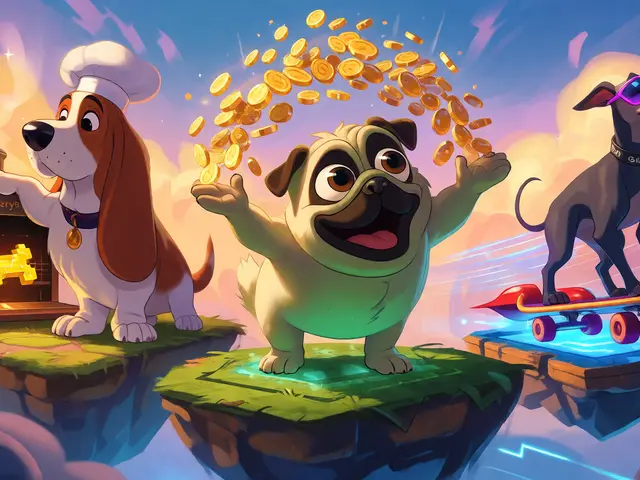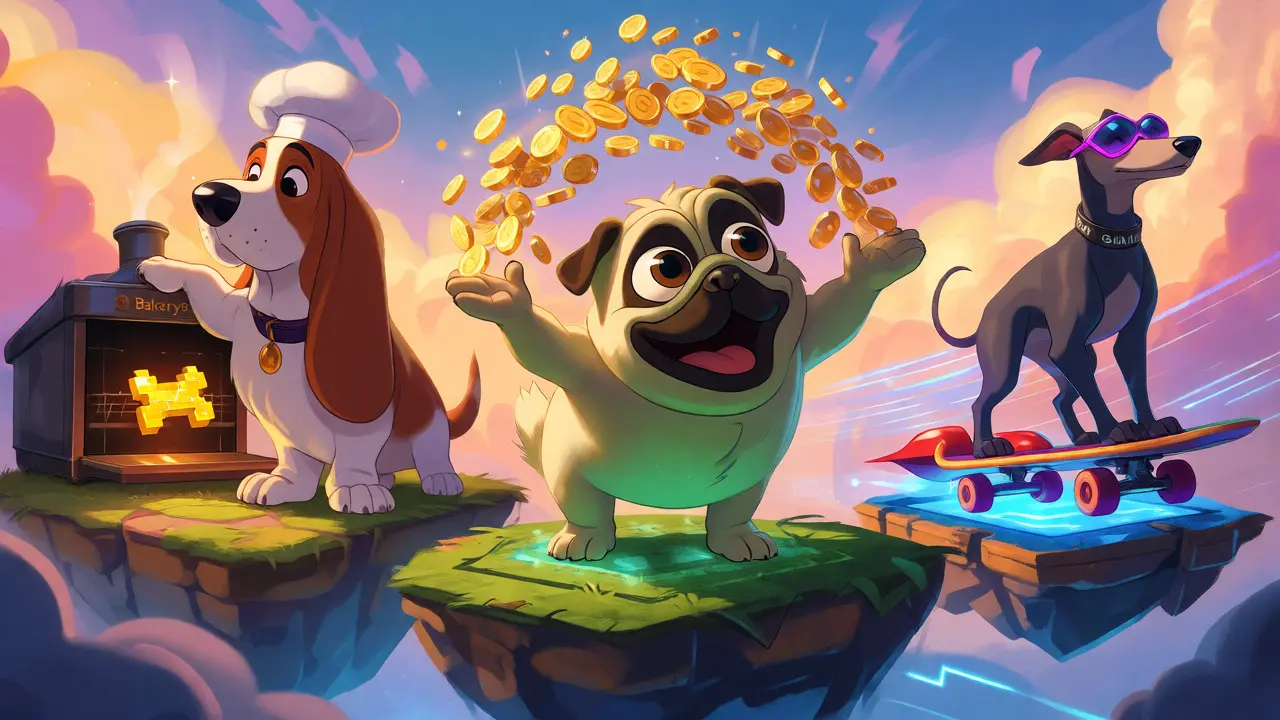
You might have seen DOGGY (ticker: DOGGY) pop up in your wallet or on a decentralized exchange and wondered what it actually does. Is it another Dogecoin clone? Is it a serious project? The answer is messy because "DOGGY" isn't just one thing. It’s a label used by several small, community-driven projects across different blockchains like Binance Smart Chain, Ethereum, and Solana. Most of these are microcap assets-meaning they’re tiny compared to giants like Bitcoin or even Shiba Inu-with market caps often under $500,000.
If you’re looking for a revolutionary protocol that changes how finance works, you won’t find it here. Instead, DOGGY represents the wild west of crypto: memecoins, NFT utilities, and gamified tokens where value comes from hype, community vibes, and specific use cases like buying pixelated dog art. Let’s break down what these coins actually are, how they differ, and whether they’re worth your attention.
The Many Faces of DOGGY
Here’s the tricky part: there is no single "official" DOGGY coin. When people talk about DOGGY, they usually mean one of three distinct things, depending on which blockchain they’re using. Confusing them can lead to bad trades, so let’s clarify the landscape.
- Binance Smart Chain (BSC) DOGGY: This is the most documented version. It started as a utility token for Crypto Doggy, an NFT collection on BakerySwap. You use this token to buy NFTs and stake it for rewards.
- Ethereum DOGGY COIN: This is a pure memecoin inspired by "Doggy," the pet dog of Pepe the Frog created by artist Matt Furie. It has a massive supply and focuses on community speculation rather than utility.
- Solana HOLDER (DOGGY): Sometimes listed as HOLDER but with the ticker DOGGY, this token lives on Solana. It’s known for faster transactions and lower fees, appealing to users who want to avoid Ethereum’s gas costs.
There’s also The Doge Pound, an NFT collection that uses DOGGY as its identifier, though it’s separate from the fungible tokens mentioned above. Each of these operates independently, with different smart contracts, supplies, and communities.
BSC DOGGY: The Utility Token
The original and perhaps most structured version of DOGGY launched around May 2021 on Binance Smart Chain. It wasn’t just a joke; it had a job. This token served as the exclusive currency for purchasing Crypto Doggy NFTs on BakerySwap, a popular decentralized exchange (DEX) and DeFi platform.
Here’s how it worked: To mint one of the 10,000 unique, pixelated dog avatars, you needed exactly 100,000 DOGGY tokens. Every time someone bought an NFT, those 100,000 tokens were permanently burned (sent to an unspendable address). This created deflationary pressure-as more dogs were adopted, the total supply of DOGGY decreased, theoretically increasing scarcity for remaining holders.
Holders could also stake their DOGGY within the BakerySwap ecosystem to earn additional rewards. This integration gave the token real utility beyond just holding it and hoping the price goes up. However, despite this structure, the token remains a microcap asset. As of late 2026, its price hovers around $0.00009, with daily trading volumes sometimes dropping below $100 on PancakeSwap V3. That low liquidity means if you try to sell a large amount, you might crash the price yourself.
Ethereum DOGGY COIN: The Memecoin Play
If you prefer Ethereum, you’ll encounter a different beast entirely. The Ethereum-based DOGGY COIN leans heavily into meme culture. Its branding ties directly to the internet-famous character "Doggy," owned by the creator of Pepe the Frog. This connection taps into the massive popularity of Pepe-related memes in the crypto space.
This version is characterized by an enormous total supply-roughly 421 trillion tokens. Because the supply is so high, the price per token is microscopic, sitting at approximately $0.000000001378. Don’t let the zeros scare you off; the key metric here is market capitalization, which sits around $58,000. This makes it incredibly cheap to buy large quantities, appealing to traders who like seeing big numbers in their wallets.
The project markets itself on fairness: zero transaction fees and liquidity locked forever. These features aim to prevent "rug pulls," where developers suddenly withdraw all the money and leave investors with worthless tokens. While these promises sound good, always verify the contract addresses on sites like Etherscan before investing. With only about 850 unique holder addresses recorded on OpenSea data, the community is niche and tight-knit, meaning social media buzz can swing the price dramatically.
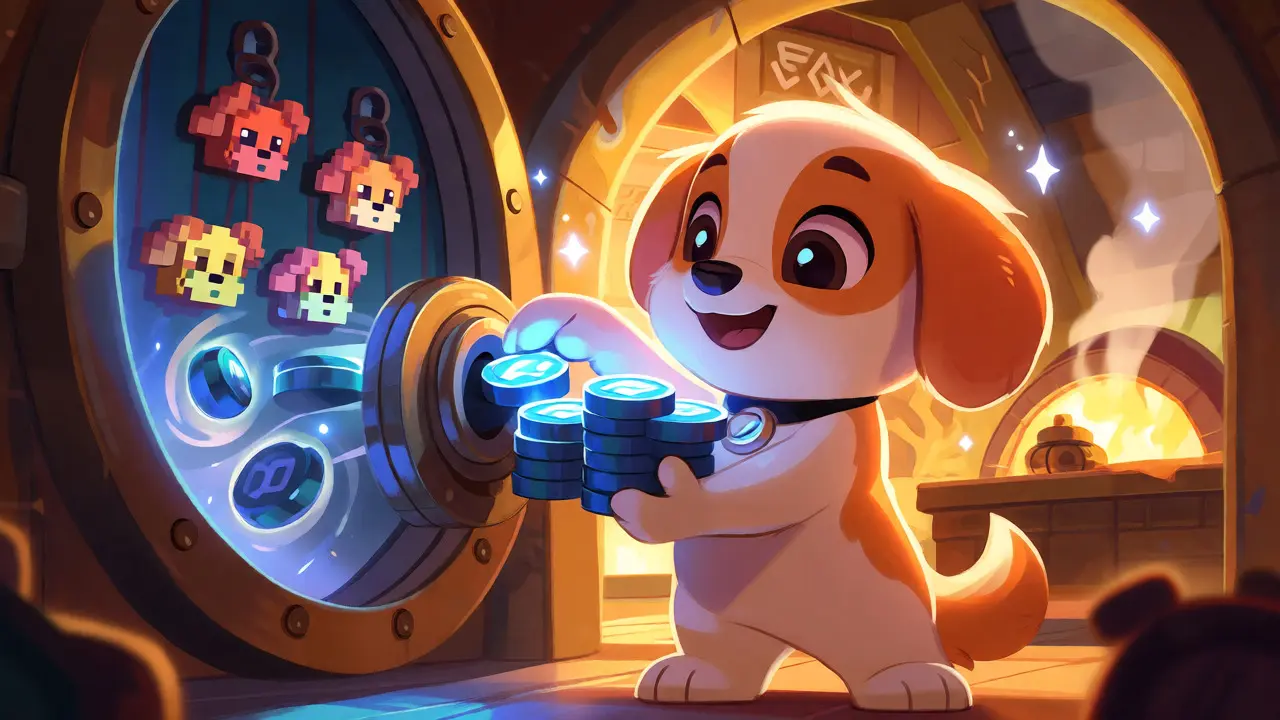
Solana DOGGY: Fast and Cheap
For those frustrated by slow networks and high fees, the Solana variant offers an alternative. Often listed under the name HOLDER but traded under the ticker DOGGY, this token leverages Solana’s speed and low cost.
With a total supply of roughly 991 million tokens, it sits between the BSC and Ethereum versions in terms of scale. Its market cap is slightly higher than the Ethereum memecoin, hovering around $190,000 to $217,000. Trading happens primarily on PumpSwap, a DEX designed for launching new Solana tokens. Daily volumes here are modest but healthier than some other DOGGY variants, reaching over $3,000 in recent snapshots.
The appeal here is accessibility. If you already use Phantom Wallet and trade on Solana, adding DOGGY is seamless. There are no complex bridges to cross from Ethereum, and transaction fees are negligible. However, like its counterparts, it lacks major institutional backing or audited security reports, keeping it firmly in the speculative category.
Comparing the DOGGY Variants
To help you decide which version interests you, here’s a breakdown of the key differences. Note that prices and market caps fluctuate rapidly due to low liquidity.
| Feature | BSC DOGGY | Ethereum DOGGY COIN | Solana DOGGY (HOLDER) |
|---|---|---|---|
| Blockchain | Binance Smart Chain (BEP-20) | Ethereum (ERC-20) | Solana (SPL) |
| Total Supply | 5 Billion (with burns) | ~421 Trillion | ~991 Million |
| Primary Use Case | NFT Minting & Staking | Meme Speculation | Community Trading |
| Key Platform | BakerySwap / PancakeSwap | Uniswap V2 | PumpSwap |
| Approx. Price (Oct 2026) | $0.00009 | $0.000000001378 | $0.00021 |
| Liquidity Risk | Very High | High | Moderate-High |

Risks and Realities
Investing in any DOGGY variant requires a stomach for volatility. These are not blue-chip investments. Here’s what you need to watch out for:
- Liquidity Traps: Some pairs have traded less than $10 in a day. If you buy $500 worth, you might own a significant chunk of the available liquidity. Selling it back could move the price against you significantly.
- No Audits: Most of these contracts haven’t undergone rigorous third-party security audits. While many operate without issues, the risk of a bug or malicious code exists.
- Community Dependence: Value is driven almost entirely by sentiment. If the Twitter/X chatter dies down, the price likely follows. There are no earnings reports or cash flows to support the valuation.
- Fragmentation: Because multiple tokens share the name, confusion leads to mistakes. Always double-check the contract address. Buying the wrong "DOGGY" means you’re holding a completely different asset.
How to Buy DOGGY Tokens
Since these aren’t typically listed on major centralized exchanges like Coinbase or Kraken, you’ll need to use a decentralized approach. Here’s a quick guide for the BSC version, which is common:
- Set up a Wallet: Install Trust Wallet or MetaMask. Ensure it supports the relevant chain (BSC, Ethereum, or Solana).
- Fund Your Wallet: Buy the native coin of the network (BNB for BSC, ETH for Ethereum, SOL for Solana) on an exchange like Binance.
- Transfer Funds: Send the native coin to your decentralized wallet address.
- Connect to a DEX: Go to PancakeSwap (for BSC), Uniswap (for Ethereum), or PumpSwap (for Solana). Connect your wallet.
- Find the Token: Paste the correct DOGGY contract address into the search bar. Do not rely on the name alone; verify the address via CoinGecko or CoinMarketCap.
- Swap: Exchange your BNB, ETH, or SOL for DOGGY. Be mindful of slippage settings, especially with low-volume tokens.
Final Thoughts
Is DOGGY a good investment? That depends on what you’re looking for. If you want stable returns and fundamental analysis, look elsewhere. But if you enjoy the thrill of microcap gems, love dog-themed memes, or want to participate in niche NFT ecosystems like BakerySwap’s Crypto Doggies, it offers a low-cost entry point.
Just remember: treat it like lottery tickets. Only invest what you can afford to lose, keep track of which blockchain you’re on, and stay active in the community groups. The next big pump might be coming, or the token might fade into obscurity. In the world of meme coins, both outcomes are equally likely.
Is DOGGY the same as Dogecoin?
No, they are completely different. Dogecoin is a major cryptocurrency with billions in market cap and its own blockchain. DOGGY refers to several smaller, community-driven tokens on chains like BSC, Ethereum, and Solana, often with much lower market caps and different use cases.
Which blockchain hosts the main DOGGY token?
There isn't one "main" token. The most utility-focused version is on Binance Smart Chain (BSC) for NFT purchases. A popular memecoin version exists on Ethereum, and another variant is on Solana. Always check the contract address to know which one you are buying.
Can I stake DOGGY for rewards?
Yes, specifically the BSC-based DOGGY token can be staked on BakerySwap to earn rewards. Other variants may have different mechanisms, but staking options are generally limited to the specific platforms hosting each token's primary liquidity pool.
Why is the price of DOGGY so low?
The price is low because of the high total supply. For example, the Ethereum DOGGY COIN has a supply of over 400 trillion tokens. Low unit price doesn't necessarily mean undervalued; you must look at the market capitalization (price × supply) to understand the true size of the project.
Where can I trade DOGGY?
You can trade DOGGY on decentralized exchanges (DEXs). Use PancakeSwap for the BSC version, Uniswap for the Ethereum version, and PumpSwap for the Solana version. It is rarely listed on centralized exchanges like Binance or Coinbase.