
Imagine trying to send money home to your family, but every bank account is frozen, every card is declined, and the government says the only way out is illegal. That is the reality for millions of Afghans today. In August 2022, the Taliban declared a total ban on all cryptocurrency activities. They labeled Bitcoin and other digital assets as "haram" (forbidden) under their strict interpretation of Sharia law. Yet, despite this absolute prohibition, underground crypto usage has skyrocketed. Why? Because when the formal banking system collapses, people find a way to survive.
The Official Stance: Why Bitcoin Is Forbidden
To understand the ban, you have to look at how the current regime views money. The Taliban’s leadership, including Da Afghanistan Bank (DAB), argues that cryptocurrencies lack intrinsic value. In Islamic jurisprudence, money must represent something tangible or be backed by real assets. Since Bitcoin exists only on a digital ledger, officials claim it falls under maysir, which translates to gambling or speculation. This is strictly prohibited in Islam.
On August 15, 2022, Sayed Shah Sa'adat, head of Herat Police's counter-crime unit, made the stance clear. He announced the closure of 16 crypto exchanges in Herat province alone. The message was simple: there is no legal room for digital currencies. FinTRACA, the country’s financial intelligence unit, enforces this through existing anti-money laundering laws. There is no separate crypto legislation because the concept itself is rejected. For the Taliban, allowing crypto would threaten monetary sovereignty and open doors to illicit flows they cannot control.
| Country | Status | Key Reason / Approach |
|---|---|---|
| Afghanistan | Banned | Deemed haram; lacks intrinsic value; equated to gambling. |
| Saudi Arabia | Regulated | No central bank crypto, but private sector can use blockchain tech. |
| UAE | Legal & Regulated | VARA established in 2022 to license virtual asset businesses. |
| Iran | Mixed | Mining allowed with licenses; trading restricted/banned for citizens. |
| Egypt | Limited Ban | Crypto not legal tender, but some licensed exchanges operate cautiously. |
This table shows just how extreme Afghanistan’s position is. While neighbors like the UAE are building entire regulatory frameworks for virtual assets, Afghanistan has shut the door completely. Even Iran, another theocratic state, allows mining under strict controls. The Taliban’s approach is unique in its absolutism.
The Economic Paradox: Sanctions Drive Adoption
Here is the twist: the very crisis that led to the ban also created the demand for crypto. When the Taliban returned to power in August 2021, international sanctions froze approximately $9.5 billion of Afghanistan’s foreign reserves. Traditional banks collapsed. Remittance channels-the lifeblood of the Afghan economy-dried up. Before 2021, families relied on informal networks called hawala or Western Union. But with global pressure mounting, these options became unreliable or too expensive.
Enter Bitcoin and stablecoins like USDT (Tether). Between July 2020 and June 2021, Afghanistan processed about $740 million in crypto transactions, ranking 20th globally according to Chainalysis’ Global Crypto Adoption Index. People weren’t buying Bitcoin to get rich quick. They were using it to send wages from Dubai or London back to Kabul without losing half the value to fees. It was a survival tool. And ironically, the more the Taliban cracked down, the more people turned to peer-to-peer (P2P) networks.
By 2024, UNDP surveys showed that 38% of Afghans had used cryptocurrency for remittances, up from just 2% before the takeover. That is a massive shift driven purely by necessity. You can ban an idea, but you can’t ban hunger or the need to pay rent.
Life Underground: How P2P Trading Survives
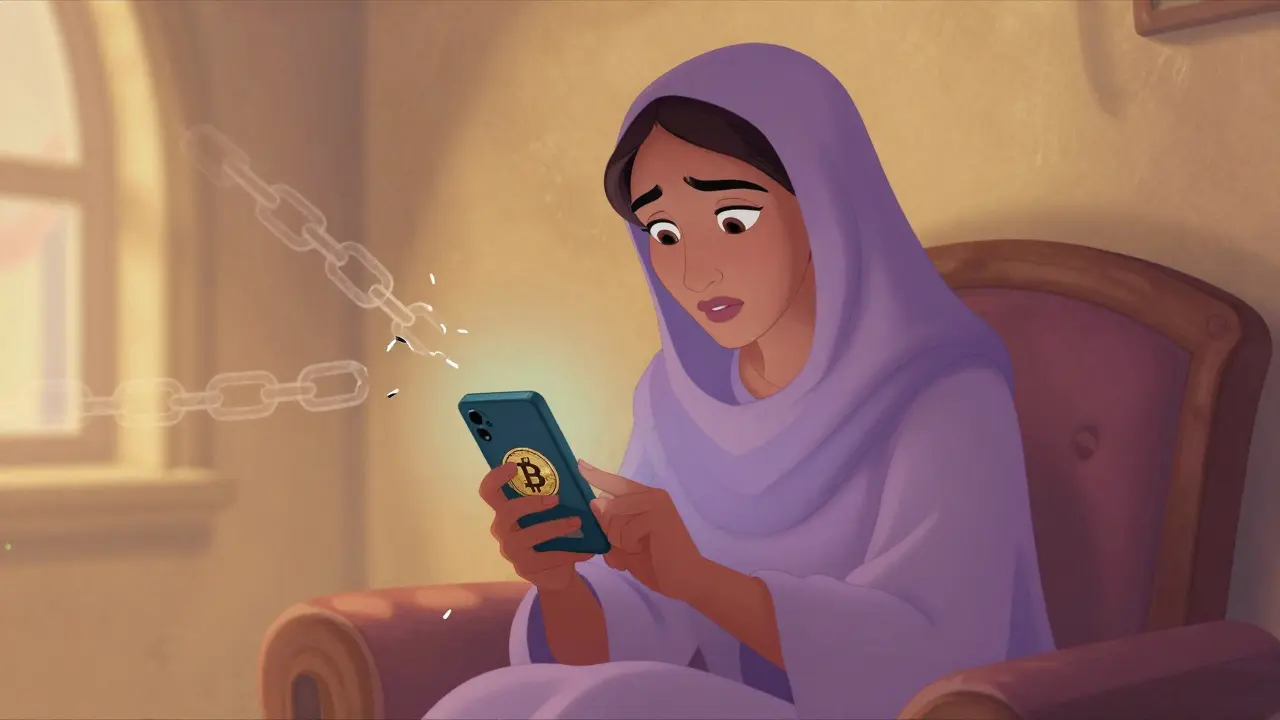
If official exchanges are closed, how do people trade? The answer lies in decentralized, person-to-person deals. Telegram channels like 'AfghanCryptoHelp' have become the new stock exchange. With over 15,000 members as of mid-2025, these groups facilitate trades where one person sends USDT digitally while the other transfers cash via local mobile wallets or hand-delivers physical notes. In Q1 2025, monthly P2P volumes reached $4.2 million, up 22% year-over-year.
But this isn’t easy. Users face constant risks. In late 2022, raids in Herat led to arrests and confiscations. One Reddit user, 'KabulTrader88', reported losing 1.2 Bitcoin-worth roughly $52,800 at the time-when his exchange account was seized. These stories circulate widely, creating fear. Yet, the alternative is having no access to funds at all.
Technical barriers add another layer of difficulty. Internet blackouts are common. In October 2024, a nationwide outage lasted 48 hours, affecting 13 million citizens. Blockchain expert Michail Angelov noted this highlights a critical weakness: blockchain depends on centralized internet infrastructure. During such outages, traders switch to mesh networks or SMS-based solutions. Services like 'CryptoSMS' saw 12,500 registrations by early 2025, proving that innovation thrives even under oppression.
The Human Cost: Women and Financial Exclusion
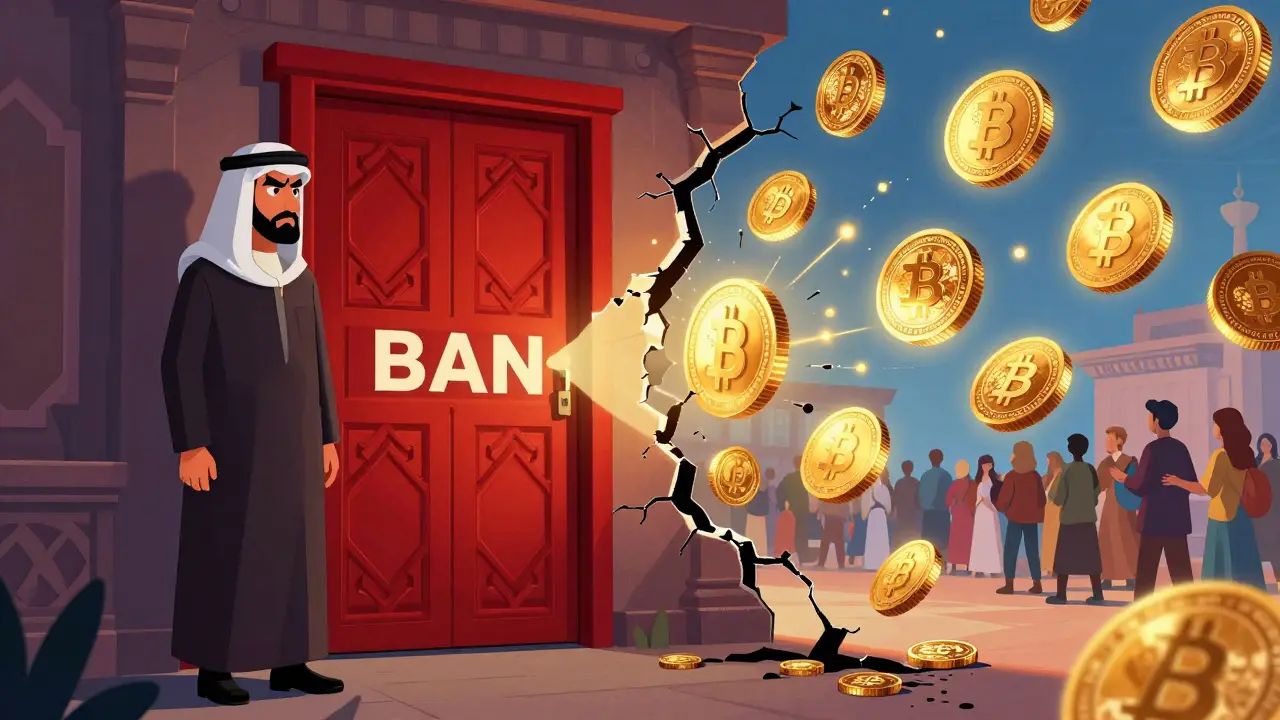
The impact of the ban is not felt equally. For Afghan women, who face severe restrictions on working, traveling, and accessing bank accounts, cryptocurrency offers a rare path to autonomy. Roya Mahboob, founder of the Digital Citizen Fund, has spoken extensively about this. She describes Bitcoin as a "survival tool" for women barred from traditional finance. In her 2024 address at the Bitcoin Policy Summit, she emphasized that crypto gives them "hope of financial freedom."
Data supports her claims. The Human Rights Foundation documented 127 cases between 2022 and 2024 where women used Bitcoin to bypass banking bans. The Digital Citizen Fund trained 687 women through underground networks. According to their 2024 report, 89% said it increased their financial independence. However, 42% faced harassment from authorities when attempting transactions. The risk is real. A woman caught holding a non-custodial wallet like Trust Wallet could be accused of violating religious edicts. Yet, for many, the danger is worth the ability to buy medicine or support children.
Enforcement Challenges and Future Outlook
Can the Taliban actually enforce this ban? The short answer is: partially. They have the power to arrest dealers and shut down offices. In Q1 2025 alone, Human Rights Watch recorded 47 crackdowns across 15 provinces, resulting in 112 arrests. But they cannot stop code. As long as someone has a smartphone and intermittent internet, they can generate a wallet address. No central server needs to approve it.
Moreover, there are whispers of hypocrisy. A December 2023 UN Security Council report suggested that some Taliban officials accepted Bitcoin payments for border crossings. If true, this undermines the moral high ground of the ban. Economically, the situation is unsustainable. Afghanistan’s GDP contracted by 20.7% between 2021 and 2023. Goldman Sachs’ 2025 Emerging Markets Report estimates only a 30% chance the ban lasts beyond 2028. Pressure may force a shift toward tacit tolerance, similar to Iran’s model, where mining is licensed but retail trading remains gray.
For now, however, the official line remains unchanged. Deputy Prime Minister Mullah Abdul Ghani Baradar reaffirmed in February 2025 that "digital currency has no place in an Islamic system." Until economic desperation forces a rethink, Afghans will continue navigating a dangerous dual reality: officially forbidden, practically essential.
Is Bitcoin legal in Afghanistan?
No. The Taliban banned all cryptocurrency activities in August 2022, declaring them haram (forbidden) under Sharia law. Trading, mining, and usage are illegal, though P2P transactions occur underground.
Why did the Taliban ban crypto?
They argue cryptocurrencies lack intrinsic value and constitute gambling (maysir). Additionally, the ban aims to maintain monetary sovereignty and prevent capital flight amid international sanctions.
How do people trade crypto if it's banned?
Most trading happens via peer-to-peer (P2P) networks on platforms like Telegram. Users exchange crypto for cash locally, avoiding formal exchanges. This carries significant legal and security risks.
Does the ban affect women differently?
Yes. Many Afghan women are barred from traditional banking. Crypto provides them with financial autonomy, but they face higher risks of harassment and arrest when conducting transactions.
Will the Taliban lift the crypto ban?
Currently, there are no signs of reversal. Officials reaffirmed the ban in 2025. However, economic collapse may force limited tolerance or licensing models in the future, similar to Iran.