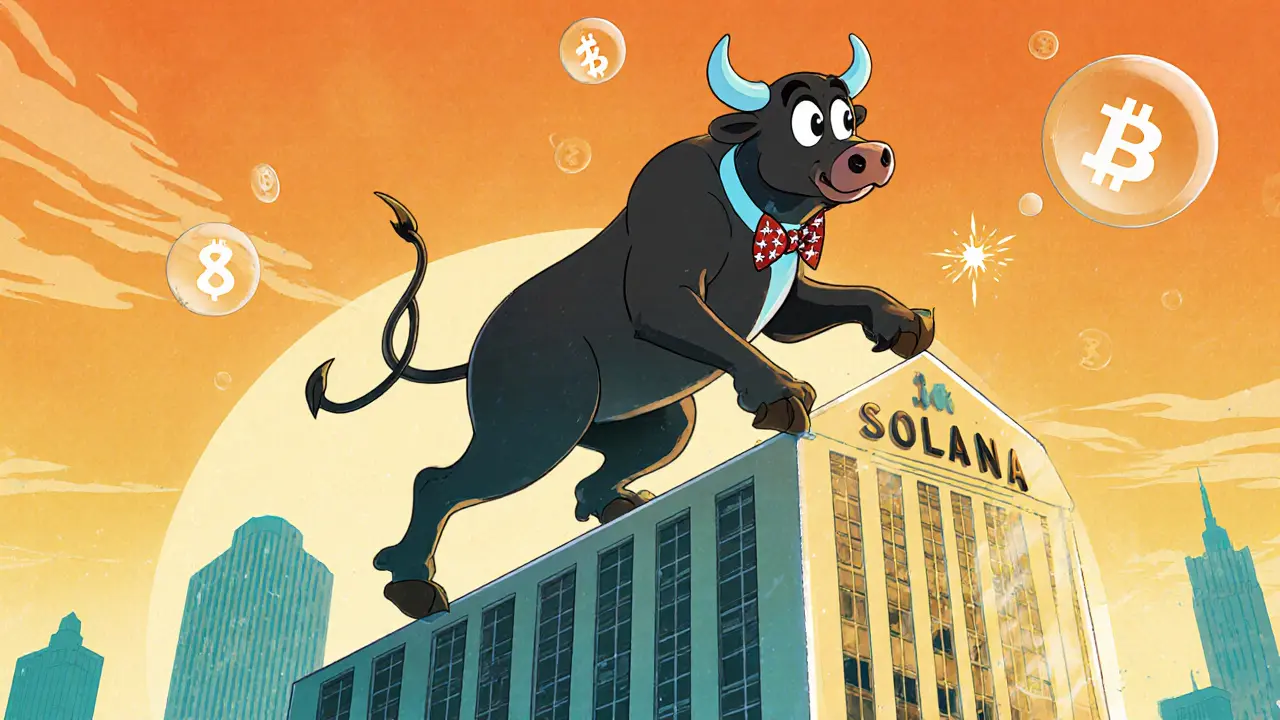
Discover what Wall Street Bull (BULL) crypto coin is, its Solana roots, price, volatility, exchange options, and why it’s considered a high‑risk investment.
Solana Crypto
When working with Solana crypto, a high‑performance blockchain known for its fast transaction speed and low fees. Also known as Solana, it powers a growing ecosystem of decentralized finance, NFTs, and Web3 apps. This ecosystem moves millions of dollars daily, so understanding the core pieces matters whether you’re a trader, developer, or just curious about the buzz.
One of the biggest draws is Decentralized Finance (DeFi), a set of financial services built on blockchains without traditional banks. DeFi on Solana enables lightning‑fast swaps, yield farms, and lending protocols that would be sluggish on many other chains. Because Solana can process up to 65,000 transactions per second, DeFi projects can offer near‑instant settlement and ultra‑low gas costs, which in turn attracts liquidity providers seeking higher returns.
Why Validator Staking Matters
Solana crypto requires staking to secure the network. Validator nodes, machines that confirm transactions and produce new blocks must lock up SOL tokens as collateral. This staking model creates a direct link between network health and token holders: the more SOL you stake, the stronger the validator, and the more reliable the platform becomes for users. For investors, staking also opens a passive income stream, typically yielding 5‑7% APY, which can offset market volatility.
Beyond staking, Solana’s unique consensus mechanism—Proof of History (PoH)—adds a cryptographic timestamp to each transaction. PoH works hand‑in‑hand with Proof of Stake, giving Solana the ability to line up events before they hit the ledger. The result is a chain that can scale without sacrificing decentralization. This technical edge fuels the rapid growth of DeFi, NFT marketplaces, and gaming projects that need both speed and cheap fees.
Regulators are starting to notice Solana’s rise, too. Countries offering favorable tax treatment for crypto traders, like the UAE, often highlight fast, low‑cost networks as part of their appeal. Meanwhile, compliance tools such as KYC/AML services are being integrated directly into Solana‑based platforms, helping users stay on the right side of the law while enjoying the network’s performance.
When you combine high‑throughput DeFi, validator staking incentives, and PoH‑driven scalability, you get a self‑reinforcing loop: more users attract more developers, which brings more applications, which in turn draws more token holders willing to stake. This loop is why Solana crypto continues to climb in market relevance and why its community talks about it as a serious alternative to older chains.
Below you’ll find a curated collection of articles that unpack each of these angles. From tax‑friendly jurisdiction guides and exchange reviews to deep technical breakdowns of validator setups, the posts give you actionable insights you can apply right now. Dive in to see how the pieces fit together and how you can benefit from the Solana crypto ecosystem.