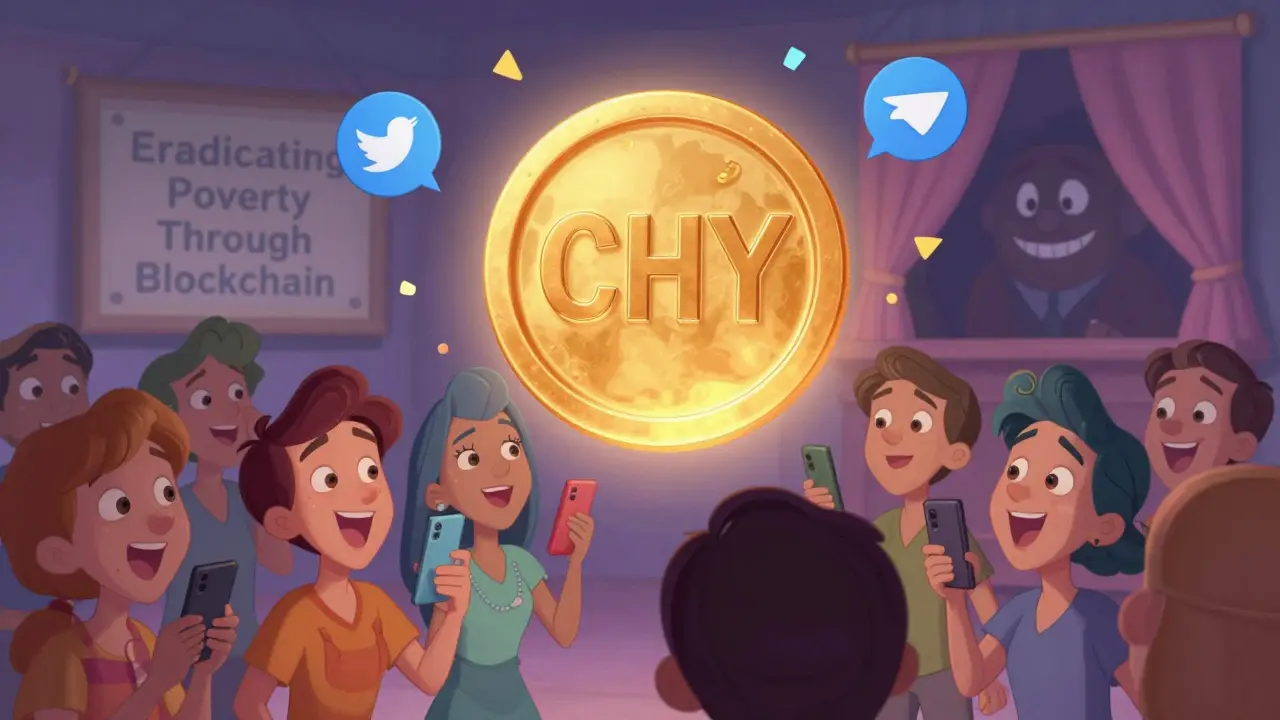
The CHY airdrop by Concern Poverty Chain offers free tokens but has zero market value, no trading activity, and no proof of charitable impact. Learn why this is a promotional stunt, not a real humanitarian effort.
CHY Airdrop: What It Is, How It Works, and Why It Matters
When you hear CHY airdrop, a token distribution event meant to reward users for early engagement or specific actions on a blockchain platform. Also known as crypto airdrop, it’s a way for new projects to spread awareness without spending millions on ads. But not all airdrops are created equal. Some hand out free tokens to real users who actually use the platform. Others are just marketing smoke screens—designed to get you to sign up, share links, and then vanish.
The crypto airdrop, a distribution method where tokens are sent to wallets for free, often to bootstrap community growth isn’t new. Projects like Bird Finance BIRD, a token that promised rewards but delivered confusion and low adoption and Elemon ELMON, a gaming token that vanished after its CoinMarketCap giveaway showed how easily hype can collapse. The same risks apply to CHY. If the team is anonymous, the website looks like a template, or the token has no exchange listings—run. Real airdrops don’t ask for your private key. They don’t require you to send crypto first. And they don’t promise 1000x returns on a token that doesn’t even have a whitepaper.
What makes a good airdrop? It’s not the size of the reward. It’s whether the project has traction. Look at WLBO (WENLAMBO), a token that automatically rewards holders every time someone trades, with no claiming needed. That’s a real incentive. Or VDR airdrop, a verified campaign by Vodra and CoinMarketCap that gave out real tokens to qualified participants. These projects had structure, transparency, and follow-through. CHY might be one of them—or it might be another ghost in the blockchain graveyard. The difference? Research. Check if the team has a track record. See if the token is listed anywhere. Look for community activity beyond Telegram spam. If you can’t find answers, assume it’s a trap.
You’ll find posts here that break down exactly how past airdrops worked—what people actually got, what went wrong, and who walked away with nothing. Some were scams. Others were just poorly executed. A few turned into real projects. This collection doesn’t just list them. It shows you how to tell the difference before you waste your time—or your money.