Did you know that the very first nation on Earth to officially declare Bitcoin illegal wasn’t China or Russia? It was Bolivia. Back in May 2014, while most of the world was still figuring out what a blockchain even was, Bolivia’s Central Bank slammed the door shut on digital currencies. They issued Resolution No. 24-14-001, a document that didn’t just warn people; it outright banned the use of any currency not issued by the government. This move made Bolivia the global pioneer in cryptocurrency prohibition, beating out major economic powers by years.
Why does this matter today? Because understanding where we started helps us see why regulations look the way they do now. For a decade, Bolivia stood as an outlier in Latin America, strictly forbidding Bitcoin while its neighbors slowly opened up. This article breaks down exactly how that ban happened, why it lasted so long, and the surprising reversal that turned Bolivia into one of the fastest-growing crypto markets in South America by 2025.
The Shocking 2014 Ban That Preceded the World
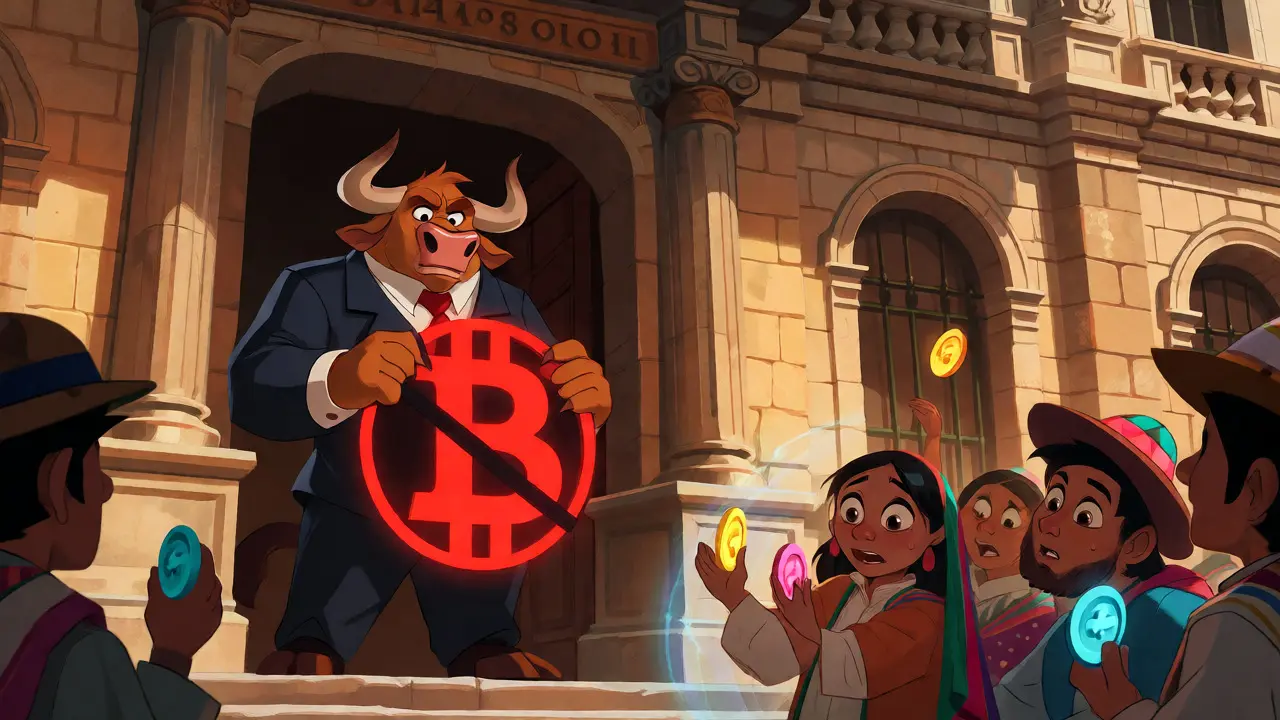
In early 2014, the global conversation around Bitcoin was mostly speculative. Prices were hovering around $650, and institutional investors were barely paying attention. But in La Paz, the Central Bank of Bolivia (BCB) was already worried about monetary sovereignty. On May 6, 2014, they released a statement that left no room for interpretation: using Bitcoin, Namecoin, Peercoin, or any other "uncontrolled" digital asset was illegal.
The logic behind the ban was rooted in protectionism. The BCB argued that allowing private digital currencies would undermine the boliviano, the national currency. They feared that if citizens could easily swap their savings for Bitcoin, the central bank would lose control over inflation and money supply. It wasn’t just about trading; the resolution prohibited even quoting prices in Bitcoin. If a shopkeeper wanted to sell bread for 0.0001 BTC, they technically couldn’t do it legally.
| Country | Action Taken | Legal Status | Enforcement Level |
|---|---|---|---|
| Bolivia | Full Prohibition (Resolution 24-14-001) | Illegal | High (Bank bans & fines) |
| China | Warning to banks | Gray Area | Low (Advisory only) |
| Russia | Draft law proposed | Unregulated | None (Not enacted) |
| Thailand | SEC Warning | Unregulated | Low (Non-binding) |
| Japan | Licensing framework planned | Legal | Medium (Regulatory prep) |
How the Ban Was Enforced (And Why It Failed)
You might think a ban like this would stop all activity. In reality, it just pushed it underground. The Financial System Supervisory Authority (ASFI) took charge of enforcement. Commercial banks were strictly forbidden from processing any transactions linked to cryptocurrencies. If a bank noticed a customer sending large sums to known exchange addresses, they had to report it.
The penalties were real. Financial institutions faced fines for non-compliance, which made them extremely cautious. By 2016, ASFI required daily reporting of suspicious transactions exceeding 5,000 BOB (roughly $725 at the time). Smaller banks struggled with this compliance burden, often taking six to nine months to set up the necessary monitoring systems. The result? A massive gap between official policy and actual behavior.
While the banks said "no," the people said "maybe." Data from later years showed that despite the ban, adoption didn’t die-it mutated. Users turned to peer-to-peer (P2P) platforms like LocalBitcoins and Paxful. These platforms allowed Bolivians to trade directly with each other, bypassing the traditional banking system entirely. A 2021 survey by the Bolivian Digital Rights Observatory found that 68% of crypto users operated through these informal channels. They weren’t breaking the law in a way that got them arrested, but they were definitely operating outside the regulated financial system.

The Economic Cost of Ignoring Innovation
For ten years, Bolivia maintained this stance. But economics has a way of punishing isolation. While Bolivia stuck to the boliviano, neighboring countries began experimenting with digital assets. El Salvador eventually made Bitcoin legal tender, attracting tourists and investors. Meanwhile, Bolivia faced rising inflation. By 2023, annual inflation exceeded 3.5%, according to World Bank data. Citizens who had access to stablecoins in other countries could hedge against currency devaluation. Bolivians, however, were stuck.
This created a peculiar situation: the ban intended to protect the economy actually hurt it. Capital flight increased because wealthy individuals sought safer stores of value abroad. Remittance corridors-where families send money home from jobs overseas-grew by 19% annually using cryptocurrency networks, even though those transactions were technically unregulated. The International Monetary Fund (IMF) eventually weighed in, with officials noting by 2020 that blanket bans often drive activity underground rather than stopping it.
Dr. Eduardo Soriano-Hernandez from the University of Los Andes pointed out in a 2023 analysis that the prohibition created a regulatory vacuum. Informal networks filled this space quickly. Without clear rules, users faced higher risks. Fraud cases involving cryptocurrency-related scams totaled approximately $2.3 million between 2018 and 2023, though experts believe the real number was much higher due to underreporting.
The Great Reversal: Lifting the Ban in 2024
If you thought the ban would last forever, you missed the pivot. On June 26, 2024, the Central Bank of Bolivia officially lifted the restrictions. This wasn’t a gradual easing; it was a full-on embrace. The new framework allowed Virtual Asset Service Providers (VASPs) to register with ASFI, bringing order to the chaos of the P2P market.
The response was immediate and explosive. Central Bank data shows that cryptocurrency transactions jumped by 630% in the first half of 2025 alone. Transaction volumes soared from $46.5 million in early 2024 to $294 million by mid-2025. Platforms like Binance saw a surge in Bolivian users, with Trustpilot reviews highlighting improved reliability once banking restrictions eased. However, it’s worth noting that Bolivia didn’t go as far as El Salvador. The boliviano remains the only legal tender for payments. You can buy and hold Bitcoin, but you still can’t buy your groceries with it directly.
This measured approach seems to be working. The Ministry of Economy projects transaction volumes will hit $1.2 billion by 2026. Unlike the chaotic early days, this growth is happening within a regulated environment. VASPs must adhere to strict Anti-Money Laundering (AML) protocols, giving regulators visibility they lacked during the ban era.

Lessons from Bolivia’s Decade of Restriction
What can other countries learn from Bolivia’s journey? First, bans rarely work as intended. They tend to displace activity rather than eliminate it. Second, timing matters. Bolivia acted when crypto was niche, making the ban easy to implement but hard to sustain as the technology matured globally. Third, isolation comes at a cost. By cutting off access to global financial innovation, Bolivia missed out on early benefits of fintech integration that its neighbors enjoyed.
Today, Bolivia serves as a case study in regulatory evolution. It moved from absolute prohibition to cautious acceptance in just a decade. The shift reflects a broader global trend: governments are realizing that regulating crypto is more effective than banning it. As of 2026, Bolivia stands as a prime example of how a nation can recover from restrictive policies by adapting to technological reality.
Frequently Asked Questions
Was Bolivia really the first country to ban Bitcoin?
Yes, Bolivia was the first national institution to formally ban Bitcoin and other cryptocurrencies. The Central Bank of Bolivia issued Resolution No. 24-14-001 on May 6, 2014, prohibiting the use of any currency not issued or regulated by the government. This predates similar restrictive measures in countries like China and Russia by several years.
Is Bitcoin legal in Bolivia today?
As of late 2024 and into 2026, yes. The ban was lifted in June 2024. While you can buy, sell, and hold cryptocurrencies like Bitcoin and USDT, they are not considered legal tender for everyday payments. The boliviano remains the only official currency for settling debts and purchases.
Why did Bolivia ban Bitcoin in 2014?
The primary reason was to protect monetary sovereignty. The Central Bank feared that uncontrolled digital currencies would undermine the boliviano and reduce the state's ability to manage inflation and money supply. They also cited consumer protection concerns, arguing that volatile assets could lead to significant losses for uninformed users.
Did the ban stop people from using crypto in Bolivia?
No, it largely drove usage underground. Despite the ban, many Bolivians used peer-to-peer platforms like LocalBitcoins and Paxful to trade cryptocurrencies. Estimates suggest that by 2023, over 10% of the population engaged in crypto activity through informal channels, bypassing the restricted formal banking sector.
What changed to make Bolivia lift the ban?
Several factors contributed to the reversal, including rising inflation, the success of crypto adoption in neighboring countries like El Salvador, and pressure from international bodies like the IMF. Additionally, the inability of the ban to stop underground activity highlighted the need for regulation rather than prohibition to ensure consumer safety and tax compliance.