You know that feeling when you trust a bank to hold your money, but you have no real control over it? DApps (Decentralized Applications) are built to fix exactly that. They run on blockchain networks instead of central servers, giving users actual ownership and transparency. But how do they actually work under the hood? It’s not magic-it’s code.
If you’ve ever wondered why some apps feel clunky while others promise total freedom, this guide breaks down the mechanics without drowning you in jargon. We’ll look at what makes a DApp different from the apps on your phone right now, how they talk to the blockchain, and why millions are still struggling to use them smoothly.
The Core Difference: Server vs. Ledger
Think of a traditional app like Instagram. You post a photo, and it goes to Meta’s servers. Meta stores it, controls who sees it, and can delete it if they want. If their server crashes, you’re stuck. A DApp flips this model upside down. Instead of one company’s computer, it runs on thousands of computers around the world connected via a peer-to-peer network.
This distributed setup means there is no single point of failure. If one node goes offline, the rest keep working. For example, when you interact with a financial DApp like Uniswap, you aren’t sending data to a company’s database. You’re broadcasting a transaction to the Ethereum network, where validators check your math before recording it permanently.
- Centralized Apps: Data lives on private servers. The company owns your data.
- DApps: Data lives on a public ledger. You own your data via cryptographic keys.
- Control: Centralized apps change rules unilaterally. DApps require consensus to change.
The Engine Room: Smart Contracts
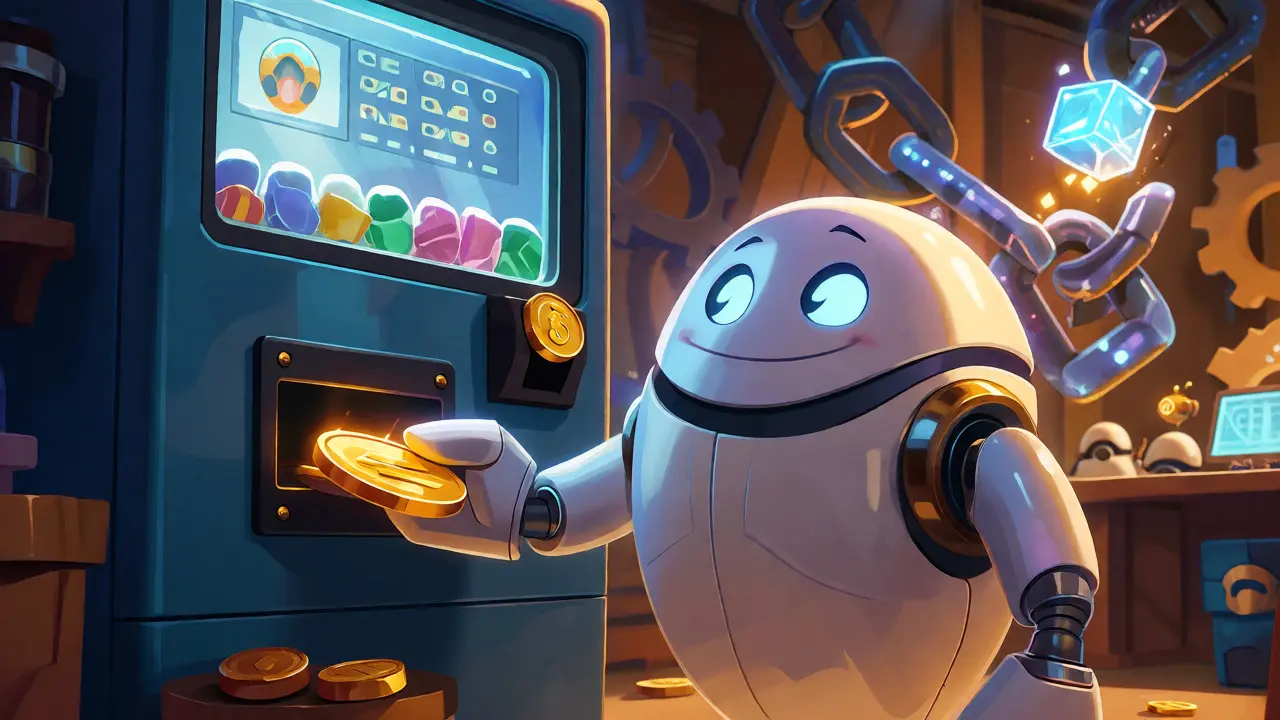
If the blockchain is the hardware, smart contracts are the software logic that makes DApps tick. These are self-executing codes stored directly on the blockchain. Think of them as digital vending machines: you put in the token (money), press the button (trigger condition), and the machine releases the product (result) automatically. No shopkeeper needed.
Most DApps today run on Ethereum because its Ethereum Virtual Machine (EVM) acts as a global computer that executes these contracts for everyone simultaneously. When you swap tokens on a DApp, you aren’t asking a broker to find a buyer. You’re triggering a smart contract that checks liquidity pools and executes the trade instantly if conditions match.
Here’s the catch: once a smart contract is deployed, it’s immutable. You can’t just patch bugs like a regular website update. This creates high security but also high stakes. If the code has a flaw, hackers can exploit it. In 2022 alone, the Wormhole bridge hack lost $320 million due to a coding error. That’s the price of automation.
Connecting Your Wallet to the Chain
How do you actually use a DApp? You don’t sign up with an email and password. You connect a crypto wallet like MetaMask. This tool acts as your identity and keyring. It signs transactions using your private key, proving you own the assets you’re trying to move.
The process looks simple on screen, but here’s what happens in the background:
- Initiation: You click "Swap" or "Mint" in the browser interface.
- Signing: MetaMask pops up, showing the gas fee (transaction cost). You approve it.
- Broadcasting: The signed transaction travels to the blockchain nodes.
- Validation: Validators verify your signature and balance.
- Execution: The smart contract runs, updating the state of the blockchain.
- Confirmation: The result appears in your wallet and on the public explorer.
This step-by-step flow ensures that only you can authorize actions. However, it also means mistakes are permanent. Send funds to the wrong address? There’s no "undo" button. This irreversibility scares off many casual users, which is why user experience remains the biggest hurdle for mass adoption.
Performance and Cost Realities
Let’s be honest: DApps are slower than Web2 apps. Visa processes about 24,000 transactions per second (TPS). Base-layer Ethereum handles roughly 15-30 TPS. During busy periods, like NFT minting crazes, fees spike. In May 2022, average transaction fees hit $50, making small trades impossible for regular people.
To fix this, developers use Layer 2 solutions like Optimism and Arbitrum. These rollups bundle hundreds of transactions into one batch, settling them on the main chain later. This boosts speed to 2,000-4,000 TPS and cuts costs significantly. Thanks to recent upgrades like Dencun, fees on Layer 2s have dropped by 90%, making DApps much more viable for everyday use.
| Feature | Traditional App (Web2) | DApp (Web3) |
|---|---|---|
| Storage | Central Servers (AWS, Azure) | Decentralized Network (IPFS, Arweave) |
| Identity | Email/Password | Crypto Wallet Address |
| Data Control | Company Owned | User Owned |
| Uptime | ~99.5% | ~99.998% (if nodes healthy) |
| Transaction Speed | Instant (milliseconds) | Seconds to Minutes (depending on layer) |
Why Use Them? Transparency and Ownership
So why bother with the hassle? Because DApps offer things centralized platforms can’t. Take DeFi (Decentralized Finance). Platforms like Aave allow you to lend and borrow without a credit check. Your collateral determines your loan size, not your credit score. This opens financial services to anyone with internet access, regardless of geography or banking status.
Then there’s transparency. Every transaction is visible on block explorers like Etherscan. You can audit the code yourself or see exactly where every dollar went. In supply chains, companies like VeChain use DApps to track luxury goods. You can scan a handbag and see its entire journey from factory to store, verified by multiple parties. No middleman can alter the history.
However, critics argue that many DApps solve problems that didn’t exist. NYU professor David Yermack points out that most DApps replicate centralized functions with added complexity. If you’re just playing a game or reading news, do you really need blockchain? Often, the answer is no. DApps shine best where trust is scarce or intermediaries are expensive.

Security Risks and User Experience
Security is a double-edged sword. While the blockchain itself is secure, the smart contracts running DApps are vulnerable. Hackers target code loopholes, not the chain. The Immunefi report noted $1.8 billion lost to breaches recently. Users must stay vigilant, checking contract addresses and avoiding suspicious links.
User experience is another pain point. Managing seed phrases, understanding gas fees, and navigating unfamiliar interfaces take time. Gitcoin surveys show developers spend 6-9 months mastering Solidity, the language for Ethereum contracts. For users, the learning curve is steep. Trustpilot reviews for MetaMask highlight complaints about confusion among beginners. Until wallets become invisible and gas fees disappear, DApps will remain niche tools for tech-savvy users.
Frequently Asked Questions
Do I need cryptocurrency to use DApps?
Yes, typically. Most DApps require native tokens (like ETH on Ethereum) to pay for transaction fees, known as "gas." Even if you're swapping stablecoins, you usually need the native coin to cover the network cost.
Are DApps completely anonymous?
No, they are pseudonymous. Your activity is linked to your wallet address, which is public. Anyone can see your transaction history. To link that address to your real identity, analysts often use exchange KYC data or social media connections.
Can DApps be shut down?
The backend smart contracts cannot be easily shut down if they are deployed on a robust network like Ethereum. However, the front-end website (the UI you see in your browser) can be taken offline by its host. Developers often mirror the UI on decentralized storage like IPFS to prevent this.
What happens if I make a mistake in a DApp transaction?
Transactions are generally irreversible. If you send funds to the wrong address, they are gone unless the recipient returns them. Always double-check addresses and test with small amounts first.
Are all DApps on Ethereum?
No. While Ethereum hosts the majority, other blockchains like Solana, BNB Chain, and Polygon also support DApps. Each has different speeds, costs, and programming languages, though many aim for compatibility with Ethereum's standards.
Next Steps for Explorers
If you’re ready to try a DApp, start small. Install MetaMask, fund it with a tiny amount of ETH, and try a simple swap on Uniswap or buy a low-cost NFT. Watch the gas fees. Read the contract details if you can. Don’t invest more than you’d lose in a coffee spill. The technology is evolving fast, with updates like account abstraction promising to hide the complexity soon. Until then, patience and caution are your best friends.