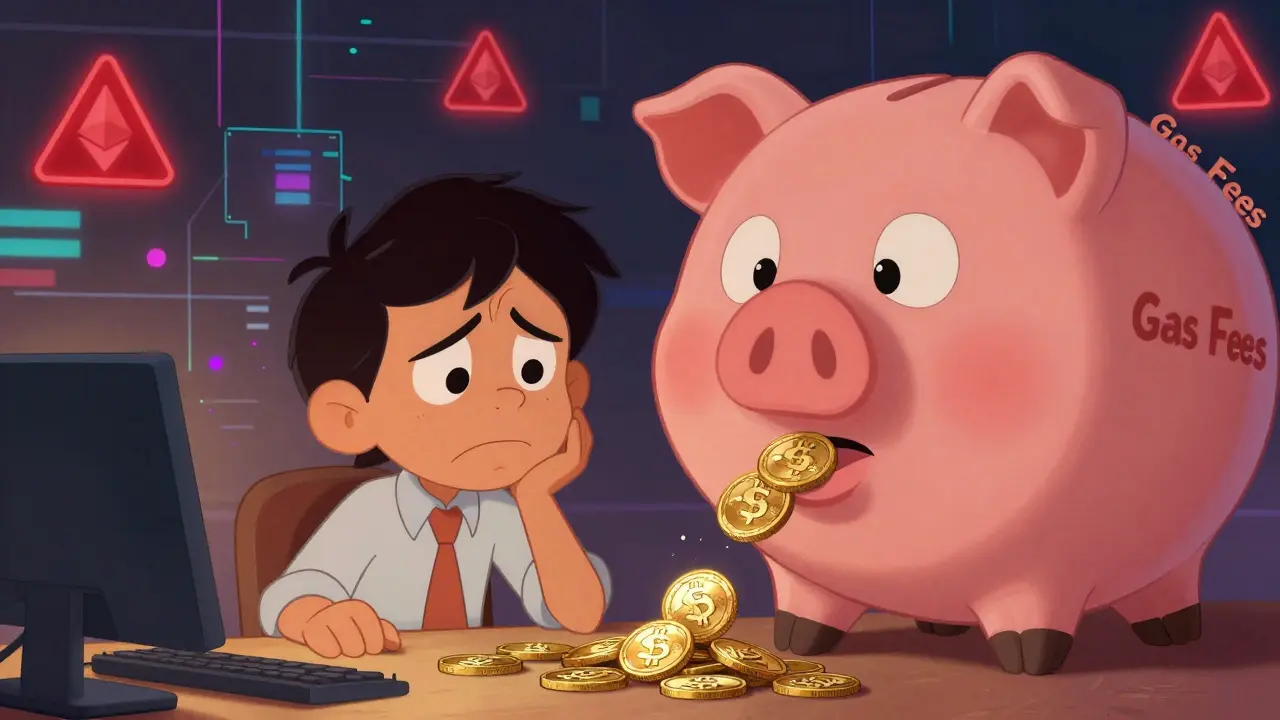
Have you ever tried to swap tokens on Ethereum only to watch your gas fees eat up half your profit? It’s a frustrating reality for many traders. That’s why platforms like BakerySwap, specifically its new iteration on the Base network, are gaining attention. But is this all-in-one decentralized exchange actually worth your time and money in 2026?
I’ve spent weeks testing the platform, analyzing its liquidity pools, and comparing it against giants like PancakeSwap and Uniswap. The short answer? BakerySwap offers a unique blend of trading and NFT tools that most competitors lack, but it comes with higher fees and a steeper learning curve than you might expect.
What Exactly Is BakerySwap (Base)?
To understand where BakerySwap stands today, we have to look at its roots. Originally launched in October 2020 on the Binance Smart Chain (BSC), BakerySwap was one of the first platforms to combine an Automated Market Maker (AMM) with an NFT marketplace. It introduced the $BAKE token to power governance and rewards.
However, the crypto landscape shifted dramatically over the last two years. In late 2025, BakerySwap expanded beyond BSC to include a dedicated AMM exchange on the Base blockchain, Coinbase's Layer 2 solution built on Ethereum. This move wasn't just about diversification; it was a strategic play to capture users seeking lower costs and faster speeds without leaving the Ethereum ecosystem entirely.
As of early 2026, BakerySwap (Base) operates as a hybrid platform. You can trade tokens, mint NFTs, stake assets for yield, and even launch new projects through their Launchpad-all within the same interface. According to CoinGecko data from December 2025, it ranks #17 among decentralized exchanges by volume, processing around $8.7 million daily across 142 trading pairs.
Fees and Costs: Are They Competitive?
Let’s talk about the money. When I started swapping on BakerySwap, the fee structure caught my eye immediately. The platform charges a flat 0.30% transaction fee on every trade. Whether you’re making or taking liquidity, that rate stays the same.
How does that compare to the rest of the market? Not great. The industry average for major DEXs sits closer to 0.20%. Even its biggest rival on BSC, PancakeSwap, charges just 0.25%. Steve Stanley, a senior DeFi analyst at Coin Bureau, pointed out in his December 2025 review that this 0.30% fee is a "competitive disadvantage." If you’re day trading high volumes, those extra basis points add up quickly.
On the flip side, the underlying blockchains help offset these costs. Transactions on both BSC and Base process in roughly 15-30 seconds, compared to Ethereum’s often sluggish 6-15 minutes during peak times. Plus, the actual gas fees-the network costs paid to validators-are significantly lower. On Base, you’re looking at fractions of a cent per transaction, which makes small trades viable in a way they aren’t on mainnet Ethereum.
| Platform | Trading Fee | Avg. Gas Cost (Est.) | Network Speed |
|---|---|---|---|
| BakerySwap (Base/BSC) | 0.30% | $0.01 - $0.05 | 15-30 seconds |
| PancakeSwap | 0.25% | $0.01 - $0.03 | 3-5 seconds |
| Uniswap V3 (Ethereum) | 0.05% - 1.00% | $2.00 - $20.00+ | 15-60 seconds |
| Uniswap V3 (Base) | 0.05% - 1.00% | $0.01 - $0.05 | 1-3 seconds |
Liquidity and Slippage: Can You Trade Big?
If you’re planning to move serious capital, liquidity is your best friend. Without it, you face slippage-where your execution price is worse than expected because there aren’t enough tokens in the pool.
Here’s the hard truth about BakerySwap right now: its liquidity is thinning. As of December 2025, the platform holds a Total Value Locked (TVL) of $58.3 million. That’s down 67% from its peak of $177 million in mid-2024. For context, PancakeSwap boasts over $1.2 billion in TVL.
The majority of BakerySwap’s liquidity is concentrated in just a few pairs. The BUSD/BAKE pair alone accounts for 38.7% of total liquidity ($22.4 million), followed by WETH/BAKE at 22.3%. If you try to trade obscure altcoins or smaller-cap tokens, you’ll likely encounter significant slippage. DeFi Rate’s analysis shows an average slippage of 2.3% for trades over $5,000 on non-major pairs. Compare that to PancakeSwap’s deeper order books, and you start to see why large traders might hesitate.
That said, for retail investors moving hundreds or low thousands of dollars, the liquidity is generally sufficient. Just stick to the top-tier pairs like BAKE, USDT, and WETH, and you should be fine.

The NFT Advantage: More Than Just Swaps
This is where BakerySwap really tries to differentiate itself. While other DEXs focus purely on token swaps, BakerySwap has built a robust NFT ecosystem. It’s not just a marketplace; it’s a hub for creation and earning.
The platform hosts over 12,450 active NFT collections with nearly 90,000 listed items. But the real kicker is the staking feature. You can lock your NFTs in specific vaults to earn BAKE tokens as rewards. It’s a clever way to put idle digital art to work.
User sentiment reflects this strength. In a November 2025 Reddit thread discussing DEX usability, 68% of positive comments highlighted BakerySwap’s NFT integration. Trustpilot reviews also praise the "easy NFT minting process," mentioning it in 28 out of 34 reviews. If you’re an artist or a collector who wants to trade and stake without jumping between three different websites, BakerySwap saves you a lot of clicks.
User Experience: Smooth or Clunky?
I’ll be honest: the interface isn’t the most intuitive I’ve used. CryptoCompare’s onboarding study found that new users take an average of 27 minutes to complete their first swap on BakerySwap, compared to the industry average of 19 minutes. Why? Navigation.
The dashboard tries to do too much at once. Switching between the AMM trading view, the NFT marketplace, and the staking vaults requires multiple clicks and sometimes feels disjointed. Mobile users report even more frustration. Seventy-three percent of critics in community forums complained about the mobile interface being less streamlined than competitors like PancakeSwap.
However, once you learn the layout, it becomes manageable. The wallet connection process is solid, supporting MetaMask, Coinbase Wallet, and Trust Wallet seamlessly. Documentation for developers is rated highly (4.1/5), but beginner guides lag behind (2.8/5). So, if you’re a novice, you might need to watch a tutorial video before diving in.
Security and Trust: Is Your Money Safe?
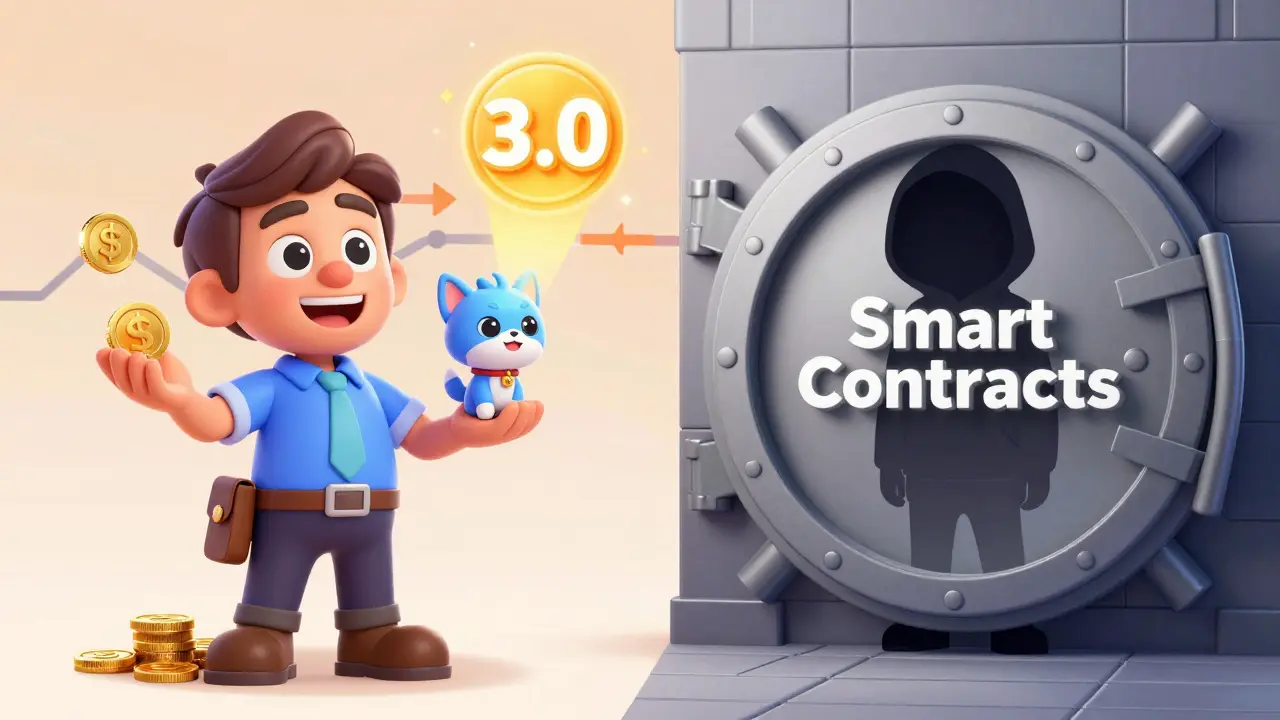
In DeFi, security isn’t optional-it’s everything. BakerySwap has maintained a clean record since its launch. SmartState, a reputable audit firm, confirmed in November 2025 that all smart contracts remain uncompromised after their latest review.
There’s one major red flag, though: the development team is anonymous. This concerns 68% of negative reviewers on Trustpilot. In an era where rug pulls and abandoned projects are common, anonymity raises eyebrows. However, because BakerySwap is decentralized, they never hold custody of your funds. Your assets stay in your wallet until you approve a transaction. This architectural choice mitigates some risk, even if the team remains faceless.
Additionally, the platform recently integrated with Manta Network in December 2025 to offer privacy-enhanced transactions. In its first week, this feature processed over 12,000 private swaps with minimal fees. It’s a promising step toward user privacy, though regulatory scrutiny on privacy tools is always a looming concern.
Future Outlook: BakerySwap 3.0
Is BakerySwap dying, or just evolving? The roadmap suggests the latter. Scheduled for Q2 2026, the "BakerySwap 3.0" upgrade promises significant improvements:
- Concentrated Liquidity: Similar to Uniswap V3, this will allow providers to allocate capital more efficiently, potentially boosting yields and reducing slippage.
- Cross-Chain NFT Bridging: Seamless movement of NFTs between BSC and Base networks.
- Quadratic Voting: A revamped governance system to give token holders more proportional influence.
Analysts are divided on its long-term viability. Messari projects a 45% chance of BakerySwap staying in the top 20 DEXs through 2027, citing its NFT integration as a growth catalyst. Delphi Digital is more pessimistic, giving it only a 30% probability due to fierce competition and declining user metrics.
Who Should Use BakerySwap?
Based on my testing and the current market data, here’s who benefits most from this platform:
- NFT Enthusiasts: If you want to mint, trade, and stake NFTs in one place, BakerySwap is hard to beat.
- Small-to-Medium Traders: Those moving under $5,000 per trade won’t feel the pinch of slippage or high fees.
- Base Network Users: If you prefer Ethereum’s ecosystem but hate gas fees, the Base version of BakerySwap is a solid option.
Who should avoid it? High-volume day traders will find the 0.30% fee and limited liquidity depth frustrating. Beginners might struggle with the UI unless they invest time in learning the ropes.
Is BakerySwap safe to use in 2026?
Yes, BakerySwap has no history of major exploits, and its smart contracts were audited by SmartState in late 2025. However, the anonymous development team remains a risk factor. Always ensure you are connecting to the official website and double-check contract addresses before approving transactions.
Why is BakerySwap charging 0.30% when others charge less?
The 0.30% fee is distributed to liquidity providers as incentives. While it’s higher than the industry average of 0.20%, the low gas fees on Base and BSC networks often make the total cost competitive for smaller trades. The fee structure supports the platform's sustainability and NFT ecosystem funding.
Can I use BakerySwap with Coinbase Wallet?
Absolutely. BakerySwap supports major Web3 wallets including MetaMask, Coinbase Wallet, and Trust Wallet. The integration is seamless, especially on the Base network, which is natively supported by Coinbase Wallet.
What is the BAKE token used for?
BAKE is the native utility token of BakerySwap. It’s used for paying fees (at a discount), participating in governance votes, staking for rewards, and accessing IDOs on the Launchpad. The token operates on a deflationary model with quarterly burns based on platform revenue.
Is BakerySwap better than PancakeSwap?
It depends on your needs. PancakeSwap offers deeper liquidity, lower fees (0.25%), and a more polished UI. BakerySwap excels in NFT integration, offering a unified experience for trading and staking NFTs. If NFTs are central to your strategy, BakerySwap may be the better choice despite higher fees.