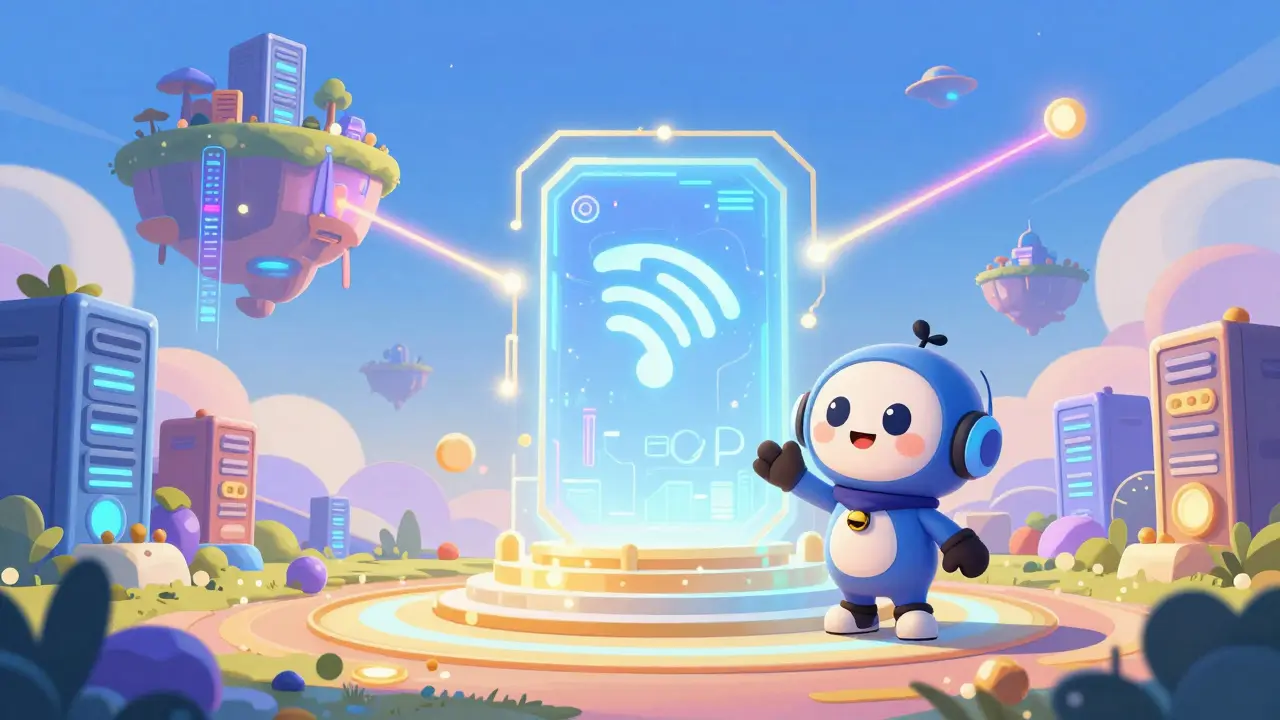
Have you stumbled across POP Network Token (POP) on a list of altcoins and wondered if it’s the next big thing in decentralized media? Or maybe you’re holding some from an old trade and want to know where things stand. The short answer is that POP is a utility token built for a specific vision: transforming how creators get paid in the streaming economy. But the reality behind the scenes tells a much more cautious story.
In this guide, we’ll break down exactly what POP is, how it was supposed to work, and why its current market presence is virtually non-existent. We aren’t here to hype or bash-it’s about giving you the clear facts so you can make an informed decision.
The Quick Takeaways
- POP is an ERC-20 token: It lives on the Ethereum blockchain, meaning it uses ETH for transaction fees.
- Ambitious but dormant: The project aims to combine AI, blockchain, and torrent technology for streaming, but shows little active development as of late 2023.
- Extremely low liquidity: With a market cap under $20,000 and negligible trading volume, buying or selling large amounts is nearly impossible without crashing the price.
- High risk profile: The token has lost over 99% of its value since launch, and major exchanges like Binance do not list it.
- Niche use case: It targets content creators and viewers, competing with giants like Theta Network, but lacks a functional product to date.
What Exactly Is POP Network?
To understand the token, you first need to understand the platform. POP Network is a decentralized media platform designed to remove intermediaries between content creators and their audiences. The core idea is simple but powerful: currently, platforms like YouTube or Twitch take a huge cut of revenue. POP Network wants to change that by using blockchain to handle payments directly and artificial intelligence to manage content distribution.
The project was founded by Valerian Bennett (Managing Director) and Ming 'Jack' Li (Technical Lead). Their pitch is that they are building a "universal system for turning streaming activity into economic value." In theory, this means every view, share, or download could generate micro-payments automatically via smart contracts.
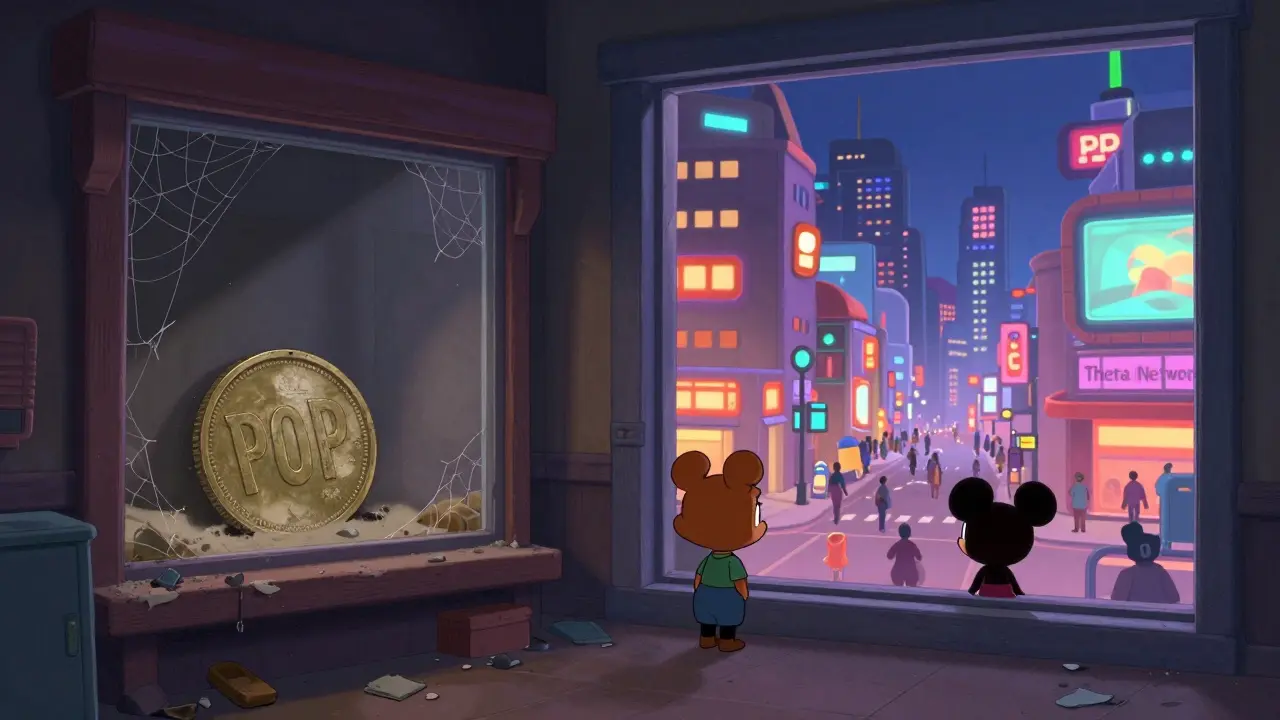
However, there is a big difference between a whitepaper concept and a working product. As of mid-2023, the ecosystem remains largely theoretical. There are no widely adopted decentralized applications (dApps) actively using the POP token for transactions. This lack of real-world usage is the primary reason for its current market status.
How Was the Technology Supposed to Work?
The technical architecture described by POP Network is ambitious. It claims to rely on three main pillars:
- Masternode Torrent Network: Instead of relying on expensive centralized servers, the network would use peer-to-peer (torrent) technology to distribute video data. This reduces bandwidth costs significantly.
- Superdelegated Proof-of-Stake (SDPoS): This is the consensus mechanism for their blockchain layer. Validators stake tokens to secure the network and process transactions, theoretically offering faster speeds than standard Proof-of-Stake models.
- Integrated Artificial Intelligence: AI would be used to analyze content for copyright infringement, recommend videos, and optimize user experiences without human moderation bottlenecks.
On paper, this sounds efficient. Combining torrenting with blockchain incentives is a model other projects have tried. However, independent analysts have pointed out that the technical implementation details are vague. For instance, integrating high-bandwidth video streaming with blockchain latency is notoriously difficult. Without open-source code repositories or live demos, it’s hard to verify if these technologies actually work together as promised.
Tokenomics: Supply and Distribution
When looking at any crypto asset, the numbers matter. Here is the breakdown for POP Token:
| Attribute | Value |
|---|---|
| Total Supply | 1,600,000,000 (1.6 Billion) POP |
| Blockchain Standard | ERC-20 (Ethereum) |
| Contract Address | 0x5d858bcd53e085920620549214a8b27ce2f04670 |
| Circulating Supply Discrepancy | Data conflicts: Some sources show 0, others show full supply circulating |
The fixed supply of 1.6 billion tokens means inflation isn't a factor-no new tokens will be minted. However, the circulating supply data is confusing. Some aggregators report zero tokens in circulation, while others show the entire supply is available. This inconsistency often points to poor listing maintenance or a lack of active trading pairs, which makes calculating the true market capitalization difficult.
Market Performance and Liquidity Crisis
This is where things get tricky for potential investors. POP Network Token ranks around #6000+ on most crypto trackers, which places it in the "micro-cap" category. Let’s look at the hard numbers from late 2023:
- Price: Approximately $0.00001
- Market Cap: ~$18,900
- 24-Hour Volume: Often less than $100
- Depreciation: Down 99.53% from its initial offering price
Why is the volume so low? Because POP is not listed on major centralized exchanges like Binance, Coinbase, or Kraken. Binance explicitly lists it as "Not Listed." Your only option is usually obscure centralized exchanges like Bitget or decentralized exchanges (DEXs) on Ethereum.
Trading on a DEX with such low liquidity is dangerous. If you try to sell even a small amount of POP, the "slippage" (the difference between expected price and executed price) could eat up most of your funds. Essentially, the market is too thin to support normal trading activity. This illiquidity traps holders because there simply aren't enough buyers to absorb sales.
How Does POP Compare to Competitors?
You might ask, "Why not just use Theta Network or Audius?" These are established players in the same space. Let’s compare them to see why POP struggles to gain traction.
| Feature | POP Network (POP) | Theta Network (THETA) | Audius (AUDIO) |
|---|---|---|---|
| Primary Focus | General Streaming & AI | Video Delivery Infrastructure | Music Streaming |
| Market Cap (Approx.) | $18,900 | $422 Million | $108 Million |
| Product Status | Theoretical / Dormant | Fully Operational | Fully Operational |
| Exchange Listings | Minor/Obcure Only | Major Exchanges (Binance, etc.) | Major Exchanges (Binance, etc.) |
| User Base | Unverified/Negligible | Millions of MAUs | Large Music Community |
The gap is massive. Theta Network has partnerships with Samsung and Sony and processes real video traffic. Audius has actual artists uploading music. POP Network, by contrast, has no verified user base or functional dApp. In the crypto world, execution matters more than ideas. Without a working product, the token has no fundamental utility to drive demand.

Red Flags and Risks to Consider
If you are considering interacting with POP, you need to be aware of several significant risks:
- Lack of Transparency: The official website offers high-level marketing speak but lacks technical documentation, API docs, or developer resources. There is no active GitHub repository showing recent code commits.
- Social Silence: The official Twitter account (@_popnetwork) had very few followers and posted infrequently (only 12 tweets in a year-long period). Engaged projects communicate regularly with their community.
- Vaporware Concerns: Independent analysts have noted that the described architecture doesn't match known implementations of torrent-blockchain hybrids. This raises questions about whether the technology actually exists or is just conceptual.
- Regulatory Uncertainty: As a utility token with no clear use case, it falls into a gray area. If regulators decide it’s an unregistered security, the project could face legal hurdles.
These factors contribute to a sentiment of skepticism in the broader crypto community. On forums like Reddit, discussions about POP are rare and often express confusion rather than excitement.
Can You Still Buy POP?
Technically, yes, but practically, it’s difficult. Since it’s an ERC-20 token, you can find it on Ethereum-based decentralized exchanges like Uniswap or SushiSwap if a liquidity pool exists. However, given the near-zero volume, the risk of getting stuck with unsellable tokens is high.
Some smaller centralized exchanges like Bitget may list it, but availability changes frequently. Always check Etherscan for the latest contract activity before attempting any transaction. Never send funds to a wallet address unless you have verified the contract address against multiple reliable sources.
Final Thoughts on POP Network
POP Network started with a compelling narrative: decentralizing the streaming economy using AI and blockchain. Ideas like that are common in crypto, but success requires building a product that people actually use. Currently, POP fails on that front. It lacks liquidity, exchange support, and a functioning platform.
For most investors, POP represents a speculative asset with extremely high risk and low reward potential. Unless you see concrete updates-a working app, major exchange listings, or transparent development logs-the token remains a dormant relic of early crypto ambitions. Keep your eyes on proven projects with active communities and real utility instead.
Is POP Network Token a scam?
There is no definitive proof that POP is a scam, but it exhibits many warning signs of a failed or abandoned project. These include extreme value depreciation, lack of product delivery, minimal social media activity, and absence from major exchanges. While not necessarily fraudulent, it carries a very high risk of total loss.
Where can I buy POP Network Token?
You cannot buy POP on major exchanges like Binance or Coinbase. It may be available on smaller centralized exchanges like Bitget or through Ethereum decentralized exchanges (DEXs) like Uniswap. Be cautious due to extremely low liquidity and high slippage risks.
What is the purpose of the POP token?
The POP token is intended to be the utility currency within the POP Network ecosystem. It should theoretically be used to pay for streaming services, reward content creators, and stake for network validation. However, since the platform is not fully operational, these use cases are currently theoretical.

Albert Lee
Man, this is such a sad look at where the dream went to die. I remember when people actually believed in decentralized streaming as a real solution for creators not getting screwed by big tech. It feels like we lost something special here. The idea of using torrent tech with blockchain incentives was genuinely clever on paper. But execution is everything and they clearly didn't have it. It's just heartbreaking to see all that potential vanish into thin air.
Matt Davis
You are completely missing the point here because you are looking at this through rose-tinted glasses of nostalgia. This isn't about 'lost dreams' or 'sadness'. It is about market efficiency eliminating garbage. If a project cannot deliver a functional product within three years, it deserves to die. Stop romanticizing vaporware.
Albert Lee
I am not romanticizing anything, Matt. I am acknowledging that innovation takes time and sometimes projects fail despite good intentions. You can be harsh but you cannot deny that the concept had merit. Being aggressive doesn't make you right.
Michelle Bonahoom
another dead coin another day honestly i dont get why people keep writing these long articles about shit that has no value its just waste of time
Jesse Alston
Hey Michelle! 👋 I totally get your frustration. It does feel like a lot of noise for very little signal in the crypto space right now. But I think posts like this are actually super important for education. 📚 Knowing what NOT to buy is just as valuable as knowing what to buy. It helps new investors avoid losing their shirts on dormant tokens like POP. We gotta protect our bags! 💰🛡️
Michelle Bonahoom
yeah whatever jesse just seems like clickbait to me
Bianca Vilas Boas Lourenço
Oh wow, look at Jesse trying to be so helpful with his emojis 🙄 It’s almost cute how naive he is. And Michelle, stop being so lazy. If you don’t want to read it, don’t. Nobody forced you. 😒💅
Tobias Gjerlufsen
the entire premise of pop network was flawed from day one because nobody understands how bandwidth costs work on ethereum sidechains or whatever they were calling it. it was always going to fail because the founders were selling snake oil to gullible retail investors who thought ai would magically fix latency issues. classic scam structure without the actual scam label attached which makes it even worse because you cant sue them for fraud easily
John Gonzalez Bentham
totally agree tobias but also people shouldnt trust whitepapers anyway its all marketing speak designed to fool you. i bought some back in 2018 thinking it was gonna be the next youtube killer now i have nothing. lesson learned never buy based on hype alone
Tobias Gjerlufsen
exactly john. if you cant verify the code on github then its not worth a single penny. most of these projects are just cash grabs by devs who disappear after the ICO. pop is just one of thousands of ghosts haunting the blockchain graveyard.
Yash Lodha
It is quite fascinating to observe the sheer audacity of the narrative constructed around POP Network. One must wonder if the silence is merely dormancy or perhaps a strategic withdrawal from a battlefield they knew they could not win. The absence of transparency is not an accident; it is a feature of their operational design. They are hiding something, and likely it is the fact that the technology never existed beyond a PowerPoint slide.
Gavin Wonnacott
Yash, you are being far too polite for my taste. Let us cut through the pretence. These individuals are thieves. They took money and ran. To suggest there is any nuance here is insulting to the intelligence of anyone who has been burned by such schemes. They deserve to be exposed as the frauds they are.
Yash Lodha
Gavin, your aggression is noted but perhaps misplaced. Calling them thieves assumes intent to deceive from the start, whereas incompetence is often a more common culprit in the crypto world. However, the result is the same: loss of capital and wasted time. The conspiracy lies in the regulatory bodies allowing such entities to operate with minimal oversight for so long.
Ellie Riddell
Sure, let’s pretend incompetence is better than malice. Because at least then you can blame it on bad luck instead of greed. Classic move. 🙃
Shelby Cantu
Just stick to the facts guys. No product means no value. Simple as that.
Sarah C
I really appreciate this breakdown. It’s so hard to find clear information on these micro-caps without all the hype. Thanks for saving me from making a mistake!
Kimberly Herbstritt
Actually, I think there’s still hope. Maybe they’re building in stealth mode? Sometimes big launches require silence. Don’t write them off just yet.
Samara McCallum
stealth mode? really kimberly? its been years. that’s not stealth that’s a coma. but sure keep dreaming sweetie maybe they’ll wake up tomorrow with a working app and a billion users lol
Kimberly Herbstritt
Wow, Samara. Have to be nice? Okay. I’m just saying don’t be so quick to judge. Innovation takes time.
Samara McCallum
i wasn’t judging i was stating facts. but okay buddy keep telling yourself that story it might make you feel better about buying the dip
Ankush Pokarana
when we look at the broader philosophical implications of failed projects like pop network we begin to understand that the market is not just a financial mechanism but a moral arbiter of sorts rewarding those who create value and punishing those who do not. the silence of the developers speaks volumes about their character and commitment to their vision or lack thereof. it serves as a cautionary tale for future entrepreneurs who seek to build upon the foundation of blockchain technology without the requisite technical expertise or ethical grounding.
robert Whitehead
Let me tell you something about these crypto grifters. They prey on the weak and the ignorant. I’ve seen this pattern a thousand times. You buy in, they pump, they dump, and you’re left holding the bag while they cash out to Miami condos. POP is just another example of the systemic rot in this industry. Wake up sheeple!
Jocelyn Garcia
From a technical standpoint, the liquidity crunch described here is textbook. When you have a market cap under $20k and zero volume, the order book is essentially empty. Any sell order will cascade down the bid ladder instantly. It’s not just risk; it’s mathematical certainty of slippage. The tokenomics are broken because there is no utility to anchor the price. Just pure speculation on a ghost ship.