
Imagine trying to buy something valuable without being able to use your bank card, your phone app, or even cash openly. That is the daily reality for thousands of people in Myanmar who want to trade cryptocurrency. As of 2026, the Central Bank of Myanmar (CBM) maintains a strict, total ban on all digital assets. You cannot legally own Bitcoin, you cannot trade Ethereum, and you certainly cannot mine them. Yet, despite these ironclad rules, an entire shadow economy has grown up beneath the surface. It is risky, it is unregulated, and for many, it is the only financial lifeline left.
The Iron Fist of Regulation
To understand why this market operates in the shadows, you have to look at the rules set by the government. The Central Bank of Myanmar made its position clear back in 2020 with a circular that effectively criminalized cryptocurrency. They defined digital currencies as neither legal tender nor recognized financial instruments. This wasn't just a suggestion; it was a mandate enforced through existing laws like the Foreign Exchange Management Law and the Financial Institutions Law.
Central Bank of Myanmar (CBM) is the national monetary authority that holds exclusive power over currency issuance and strictly prohibits all cryptocurrency activities under current regulations. For traders, this means that converting Kyat to USDT or Bitcoin can be interpreted as illegal foreign exchange activity. The penalties are severe. Authorities have the power to freeze bank accounts instantly. They can seize equipment used for mining. In serious cases, individuals face criminal charges and imprisonment. This regulatory environment forces every single transaction into the underground, creating a system where trust is scarce and risk is high.
How the Underground Network Actually Works
If there are no legal exchanges, how do people trade? The answer lies in a complex web of social media platforms and trusted intermediaries. Most trading happens on Facebook and Telegram. These apps are not just for chatting; they are the de facto stock exchanges for Myanmar's crypto community. Users post offers, negotiate prices, and arrange payments directly. Because domestic banks monitor transactions closely, traders often rely on cash-to-crypto deals arranged through local dealers.
Here is what a typical transaction looks like:
- Find a Counterparty: A trader posts an offer on a private Telegram group or a Facebook page dedicated to crypto trading.
- Negotiate Terms: Prices fluctuate wildly due to low liquidity. A buyer might pay a premium above the global market rate to ensure they find a seller quickly.
- Secure Payment Method: To avoid triggering bank alerts, many deals involve physical cash handovers or transfers through informal money transfer networks rather than direct bank wires.
- Transfer Assets: Once payment is confirmed, the seller sends the cryptocurrency from their personal wallet to the buyer’s wallet.
This peer-to-peer (P2P) model eliminates the need for a centralized platform but introduces massive counterparty risk. If a seller takes your cash and disappears, you have nowhere to go. There are no customer support teams, no chargebacks, and no regulators to file a complaint with. You are entirely on your own.
The Role of Community Education
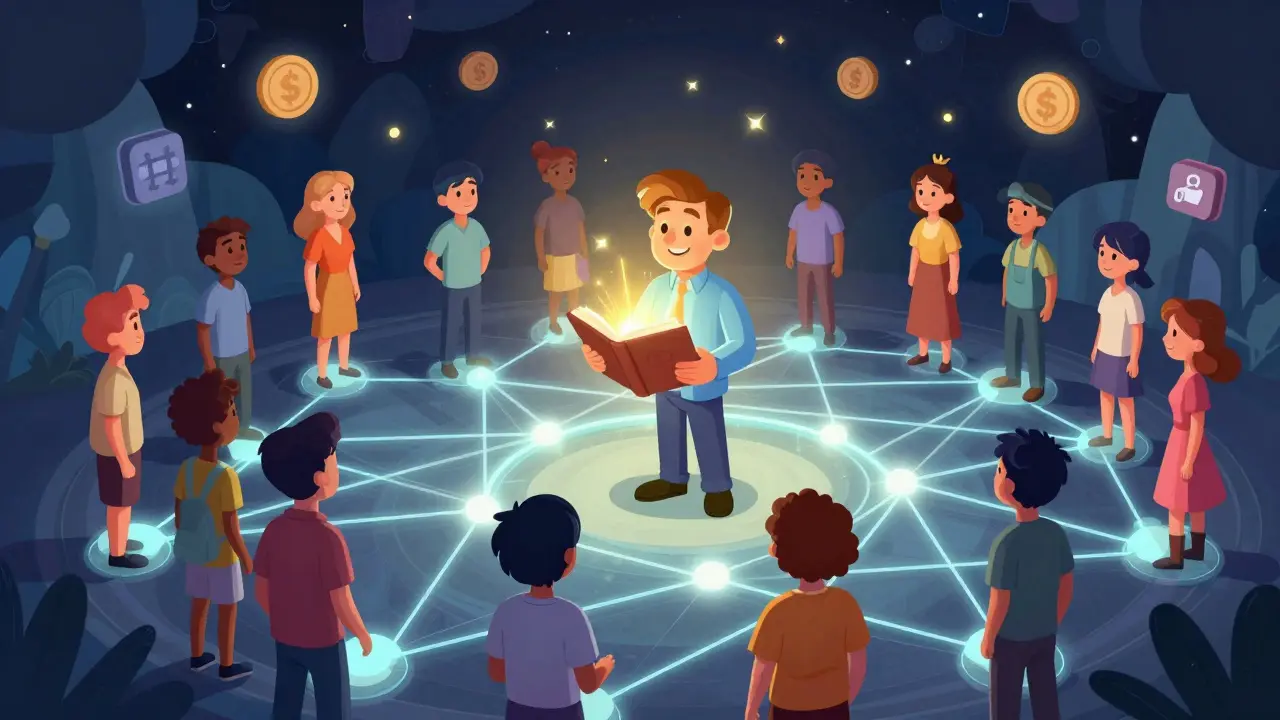
In a vacuum of official information, communities step in to fill the gap. One of the most significant players in this space is the Myan Crypto Masters Community (MCM). Founded by a figure known as Feliz, MCM has grown to include over 23,000 members. They operate as an educational hub, offering workshops and courses in Burmese to help newcomers understand blockchain technology, wallet security, and basic trading strategies.
Myan Crypto Masters Community (MCM) is a grassroots educational organization founded by Feliz that provides cryptocurrency training and resources to over 23,000 members in Myanmar, operating primarily through social media channels. Without groups like MCM, the barrier to entry would be much higher. Scams are rampant, and inexperienced users are easy targets. By breaking down complex concepts into digestible lessons, these communities try to protect their members. However, education alone cannot mitigate the legal risks. Knowing how to secure a wallet does not stop the police from freezing your account if they link it to crypto activity.
Technical Barriers and Workarounds
Accessing international exchanges like Binance is technically difficult. The government restricts internet access to varying degrees, and financial institutions block connections to known crypto domains. Traders rely heavily on Virtual Private Networks (VPNs) to bypass these blocks. Using a VPN adds another layer of complexity and cost. Free VPNs are often slow or insecure, exposing users to data theft. Paid services are expensive relative to average incomes in the country.
Mining presents an even bigger challenge. With electricity shortages and the threat of confiscation, large-scale mining operations are impossible. Instead, we see small, clandestine setups. Individuals hide ASIC miners in basements or remote areas, using solar power or generators to avoid detection. The energy costs are high, and the risk of losing expensive hardware to raids makes mining a precarious business. Most miners operate at a loss or break-even point, driven more by hope for future regulation than immediate profit.
| Feature | Official Legal Market (Non-existent) | Underground P2P Network |
|---|---|---|
| Regulatory Status | Banned by CBM | Illegal/Grey Area |
| Platform | N/A | Facebook, Telegram, WhatsApp |
| Liquidity | N/A | Low, volatile pricing |
| Security | N/A | No recourse for fraud |
| Access Method | N/A | VPN required for exchanges |
Risks Beyond the Law
The legal risks are obvious, but the operational risks are what keep traders awake at night. Fraud is endemic. In 2022, a high-profile crypto scheme collapsed, leaving thousands of investors with nothing. Without a regulatory body to investigate or recover funds, victims had no option but to accept their losses. Newcomers are particularly vulnerable. They may send money to a scammer posing as a trusted dealer, or they may fall for phishing links disguised as legitimate trading opportunities.
Veterans navigate this landscape by building reputation. In tight-knit Telegram groups, your word is your bond. Dealers who consistently deliver build a following. But even then, one bad actor can ruin everything. There is also the risk of price manipulation. Because liquidity is thin, a single large trade can swing the local price significantly. Traders must be vigilant about slippage and hidden fees.
Crypto as Resistance and Survival
It is important to recognize why people continue to trade despite the dangers. For many, cryptocurrency is not about getting rich quick. It is about survival. With inflation eroding the value of the Kyat and banking services unreliable, stablecoins like USDT offer a way to preserve wealth. They allow people to store value outside the traditional banking system, which is subject to government control and instability.
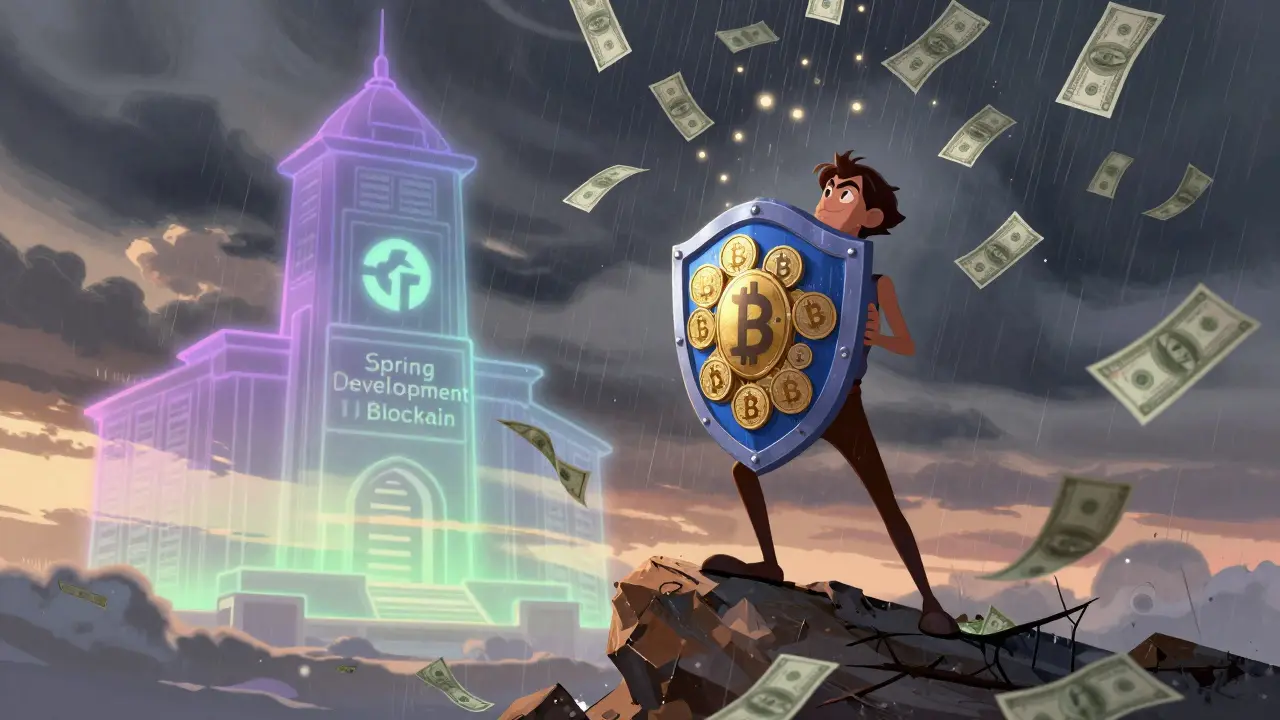
Furthermore, crypto has become a tool for political resistance. The National Unity Government (NUG), which opposes the military junta, launched the Spring Development Bank on the Polygon blockchain. This initiative allows the diaspora to send remittances directly to families inside Myanmar, bypassing state-controlled financial channels. It also facilitates gold-backed savings and other financial services for communities supporting the resistance. This dual nature-financial survival and political defiance-makes the underground market resilient. Bans drive activity deeper underground, but they do not eliminate the demand.
Future Outlook
As of 2026, there are no signs that the Central Bank of Myanmar will lift the ban. The military regime views financial freedom as a threat to its power. Any move toward legalization would require a fundamental shift in political leadership. Until then, the underground market will continue to evolve. We expect to see more sophisticated scams, tighter internet censorship, and perhaps more innovative workarounds by the community. The tension between prohibition and necessity ensures that this shadow ecosystem remains a vital, albeit dangerous, part of Myanmar's financial landscape.
Is it legal to own cryptocurrency in Myanmar?
No. The Central Bank of Myanmar (CBM) issued a circular in 2020 banning all cryptocurrency transactions. Owning, trading, or mining digital assets is considered illegal under current foreign exchange and financial institution laws.
What happens if I get caught trading crypto?
Penalties can include frozen bank accounts, confiscation of devices and mining equipment, fines, and potential criminal charges leading to imprisonment. Enforcement varies, but authorities actively monitor suspicious transactions.
How do people trade without legal exchanges?
Traders use peer-to-peer (P2P) networks on social media platforms like Facebook and Telegram. They negotiate directly with other individuals or trusted cash dealers, often using VPNs to access international wallets or exchanges discreetly.
Are there any safe ways to invest in crypto in Myanmar?
There is no truly "safe" way given the legal status. However, experienced traders reduce risk by dealing only with verified reputations in closed communities, using multi-signature wallets, and avoiding large lump-sum transactions. Education through groups like MCM helps mitigate some technical risks.
Why do people still use crypto despite the ban?
People use crypto to hedge against inflation, preserve wealth in stablecoins like USDT, receive remittances from abroad without relying on unstable banking systems, and support political resistance movements through decentralized finance tools.
Can I mine Bitcoin in Myanmar?
Mining is completely illegal and highly risky. While some individuals attempt small-scale clandestine mining using hidden equipment and alternative power sources, the risk of confiscation and legal action makes it impractical for most.
What is the role of the NUG in the crypto market?
The National Unity Government (NUG) uses blockchain technology, such as the Spring Development Bank on Polygon, to facilitate remittances and financial services for resistance communities, operating independently of the military-led central bank.





Terry Hyland
People in Myanmar are just asking for it by ignoring the law. The government knows what is best for stability and these crypto traders are disrupting the social order with their greed. It is a moral failure to participate in an illegal black market that undermines national sovereignty. They should focus on honest work instead of chasing digital ghosts.
Monica Pathammavong
u r missing the point completly. its not about morals its about survival. the central bank is corrupt as hell and freezing accounts randomly. i have seen friends lose everything because the system is rigged against the little guy. u need to look at the data not ur feelings.
Tim Lefebvre
i agree with monica here. the banking sector in myanmar has been unreliable for years. people use stablecoins like usdt just to keep their savings from evaporating due to inflation. it is a practical solution for many families who cant trust the kyat anymore.
ravi mahla
Haha Terry really thinks the government cares about 'stability' while they steal from everyone else. Classic delusion. The underground market is thriving because the official one is a joke. Keep dreaming buddy.
Mark Brunschwiler
I feel such deep sadness reading this. These people are fighting for their lives in the dark. It breaks my heart to think about the fear they live with every day. We need to send them love and support from across the ocean. Their struggle is our struggle too.
Sonya O'Brien
While I understand the emotional weight of the situation, it is crucial to consider the broader economic implications of such widespread illicit activity, which can inadvertently fuel corruption and undermine international sanctions efforts designed to pressure the regime, yet simultaneously providing a lifeline to civilians who are otherwise cut off from global financial systems, creating a complex ethical dilemma for observers.
Amit Thakur
Listen up you soft hands. This is pure alpha behavior. Navigating regulatory arbitrage in a hostile environment requires high risk tolerance and technical prowess. If you cant handle the counterparty risk you dont deserve the yield. Stop crying and start trading.
Eric Scheinberg
It is imperative to recognize the structural deficiencies within the current monetary framework which necessitate alternative mechanisms for value preservation; furthermore, the utilization of decentralized protocols serves as a testament to human ingenuity under duress.
Kwon Bill
From a geopolitical standpoint, the adoption of blockchain technology by the NUG represents a significant shift in asymmetric warfare capabilities. By leveraging Polygon for remittances, they bypass traditional SWIFT dependencies, effectively neutralizing state-level financial blockades. This is a textbook example of technological insurgency.
Josh Dodson
Hey guys! Just wanted to say that community education is key here. Groups like MCM are doing amazing work helping people stay safe. Its all about learning the ropes and looking out for each other. You got this!
Suman Patil
The synergy between grassroots education and decentralized finance is fascinating. We see a emergent ecosystem where knowledge sharing mitigates some of the inherent risks of P2P trading. It is a beautiful example of collective resilience in the face of authoritarian control.
Grace Newman
One must question the true motives behind the sudden popularity of cryptocurrency in conflict zones. Is it merely financial freedom or is there a deeper agenda orchestrated by foreign intelligence agencies seeking to destabilize sovereign nations? The evidence suggests a coordinated effort to undermine national security through digital subversion.
Annemarie Fitzgerald
its tragic how humans are forced into shadows. we are all connected by this web of deceit. the silence is deafening. i feel so alone knowing this but also part of something bigger. why do we suffer?
Abby Sivertsen
Look, I get the drama but let's keep it real. The tech works. The banks don't. People are using tools available to them. It's not a conspiracy, it's basic economics. Stop overthinking it and look at the results.
Benjamin Eisen
I wonder if there is a way to make this safer for everyone involved. Maybe better verification methods for dealers could help reduce fraud. What do you all think about implementing reputation scores in these telegram groups?
Kenneth Riley
reputation scores are useless in a black market. trust is earned through blood and sweat not points. you naive fools think algorithms can solve human greed. it will never work. the system is broken beyond repair.
Filbert Reeves
Everyone here is talking about survival but ignore the fact that crypto is actually a tool for the elite to launder money while poor people get caught in the crossfire. The whole narrative is a lie constructed by Silicon Valley to distract from climate change and inequality. It is a pyramid scheme disguised as liberation.
Nick Rice
You are absolutely wrong. This is not about elites. This is about everyday people trying to eat. Your cynicism is misplaced. The technology empowers the individual against the state. That is a positive development regardless of your biases.
pankaj chawla
I agree with Nick. The empowerment aspect cannot be overstated. In India we have seen similar trends with UPI but in Myanmar crypto fills a void left by failed institutions. It is a collaborative effort by the people to rebuild their economy from the ground up.
Jessica Lane
It is inspiring to see communities come together to educate themselves. The dedication of groups like MCM shows that even in the darkest times, hope and knowledge can prevail. We should support these initiatives wherever possible.
Charles Pawlikowski
Typical leftist nonsense. The government bans things for a reason. Crypto is just gambling for losers. If you follow the rules you wont get arrested. Simple as that. :)
Andrea Burd
ugh this article is so boring. nobody reads long posts anymore. just give me the tl;dr. also the formatting is terrible. whoever wrote this needs a job.
Akeem Whittaker
Andrea, please show some respect. The author put effort into this. The content is valuable and well-researched. Dismissing it because of length is lazy and unhelpful. Let's engage with the substance of the argument.
Manish Prajapat
In the grand tapestry of human history, moments of crisis often birth innovation. The Myanmar crypto market is a microcosm of this truth. It reflects the eternal struggle between control and freedom, order and chaos. We must observe with empathy and understanding.