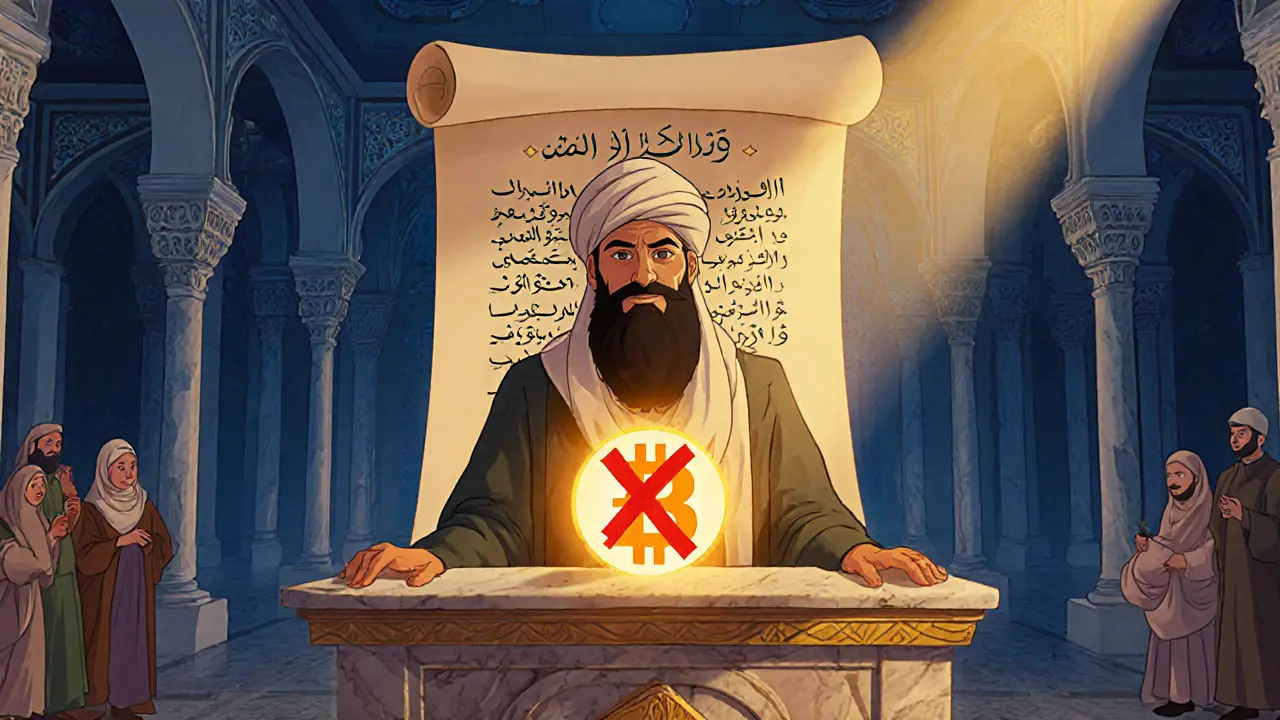
The Egyptian Grand Mufti's 2017 fatwa declares Bitcoin haram, detailing the religious, technical, and security reasons, its impact on Muslims, and how it compares to other Islamic crypto rulings.
Sharia Law Crypto: Bridging Faith and Digital Finance
When working with Sharia law crypto, cryptocurrencies that adhere to Islamic legal principles, avoiding interest (riba) and prohibited industries. Also known as Islamic crypto, it aims to let Muslim investors participate in the blockchain boom without compromising their beliefs.
Another key player is Islamic finance, the broader financial system built on Sharia guidelines, covering banking, investments, and insurance. Closely related is halal crypto, tokens that have been vetted for compliance with halal standards. Finally, a Sharia‑compliant exchange, a platform that enforces screening, reporting, and profit‑sharing rules in line with Islamic law helps users trade safely. These entities intersect: Sharia law crypto encompasses halal token standards, Islamic finance requires Sharia compliance, and halal crypto influences investment strategies.
What You’ll Discover
The landscape of Sharia law crypto is shaped by three main forces. First, scholars develop certification frameworks that define which blockchain activities are permissible. Second, developers design smart contracts that replace interest‑based yields with profit‑sharing models like mudarabah and musharakah. Third, regulators in countries like the UAE and Malaysia issue guidelines that let exchanges earn a “fatwa‑approved” status. This triple approach ensures that users can earn returns, trade assets, and hold wallets without violating core religious tenets.
Real‑world examples illustrate the concept. A UAE‑based exchange recently rolled out a Sharia‑compliant trading pair for a stablecoin pegged to the Dirham, while a Malaysian fintech launched a halal token backed by agricultural assets. Both cases show how Sharia‑compliant exchange services act as gateways, linking the global crypto market to local religious compliance. At the same time, halal token issuers must publish transparent audits, aligning with the Islamic finance principle of risk sharing.
Below you’ll find a curated selection of articles that dig deeper into each of these areas. From tax advantages in the UAE to detailed reviews of exchanges that claim Sharia compliance, the posts cover regulation, practical trading tips, and the tech behind halal tokens. Dive in to see how the principles of Islamic finance are reshaping the crypto world and what that means for your next investment move.