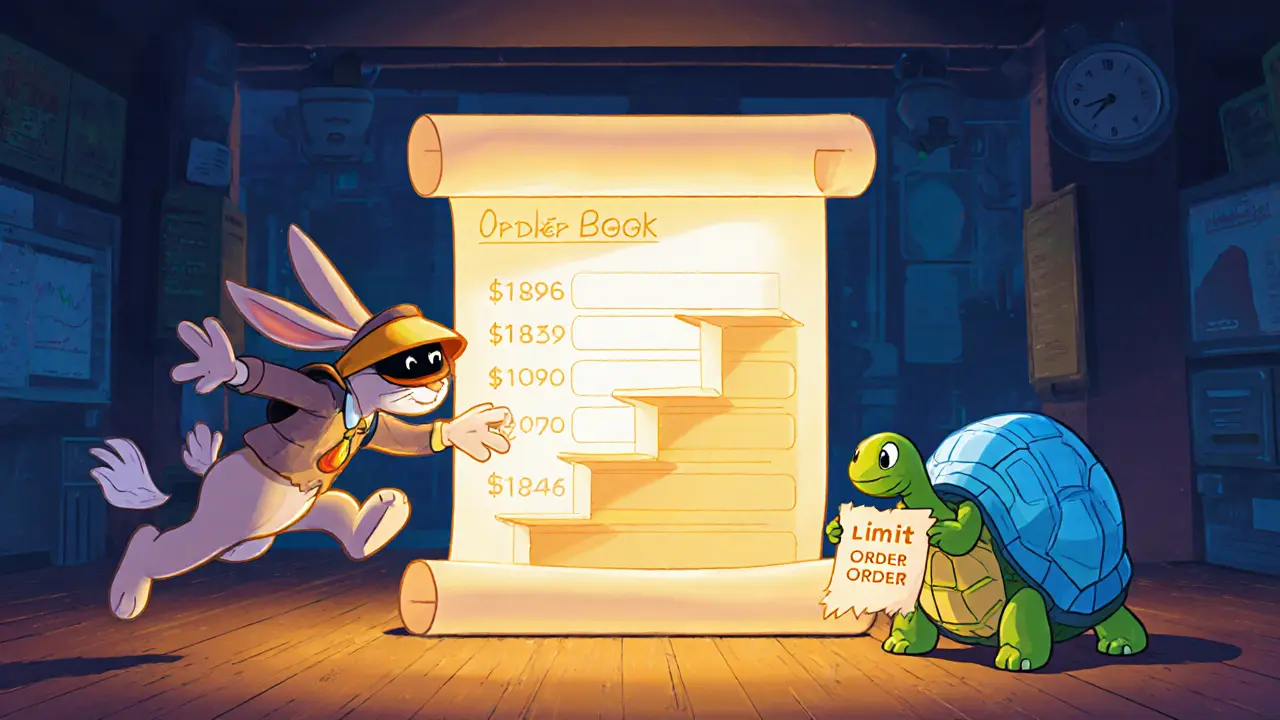
Learn how market orders and limit orders work inside order books, their pros and cons, and when each is best for your trading strategy.
Limit Orders: The Trader’s Tool for Precise Execution
When working with limit orders, pre‑set price instructions that execute only when the market hits a target level. Also known as price‑target orders, they let you lock in a buy price below the current market or a sell price above it, protecting you from unwanted spikes. In the world of decentralized exchanges, limit orders are often built into smart‑contract routers, meaning you don’t need a central authority to enforce them. Pairing a limit order with a trading bot can automate the monitoring process, so you never miss a trigger. Most traders love them because they reduce price slippage, the difference between expected and actual execution price, especially on volatile assets.
Why Limit Orders Matter Across Platforms and Strategies
Limit orders encompass price targeting, which means the order stays dormant until the market reaches your exact quote. This simple rule unlocks several benefits. First, the strategy requires exchange support; if the DEX you use doesn’t expose a limit‑order pool, you’ll need a bridge or a custodial service to fill the gap. Second, the approach demands precise timing—bots equipped with WebSocket feeds can react within milliseconds, keeping the order alive even during rapid swings. Third, by setting a tight price range, you actively lower slippage risk, a key factor when trading low‑liquidity tokens. Finally, limit orders interact with liquidity providers; when an order matches, it draws from the pool, often rewarding LPs with extra fees. In practice, a trader might set a buy limit at $0.10 for a new meme token, let a bot watch the order book, and watch the DEX fill the trade only when supply dips to that level, avoiding a sudden price jump that would otherwise erode the purchase price.
Below you’ll find a curated set of articles that break down limit‑order mechanics on various platforms, compare how centralized and decentralized exchanges handle them, and show step‑by‑step setups for bots and smart‑contract integration. Whether you’re a beginner looking to place your first limit order or a seasoned trader fine‑tuning a multi‑exchange strategy, the guides ahead cover everything from risk assessment to fee optimization. Dive in and start turning precise price targets into real‑world gains.