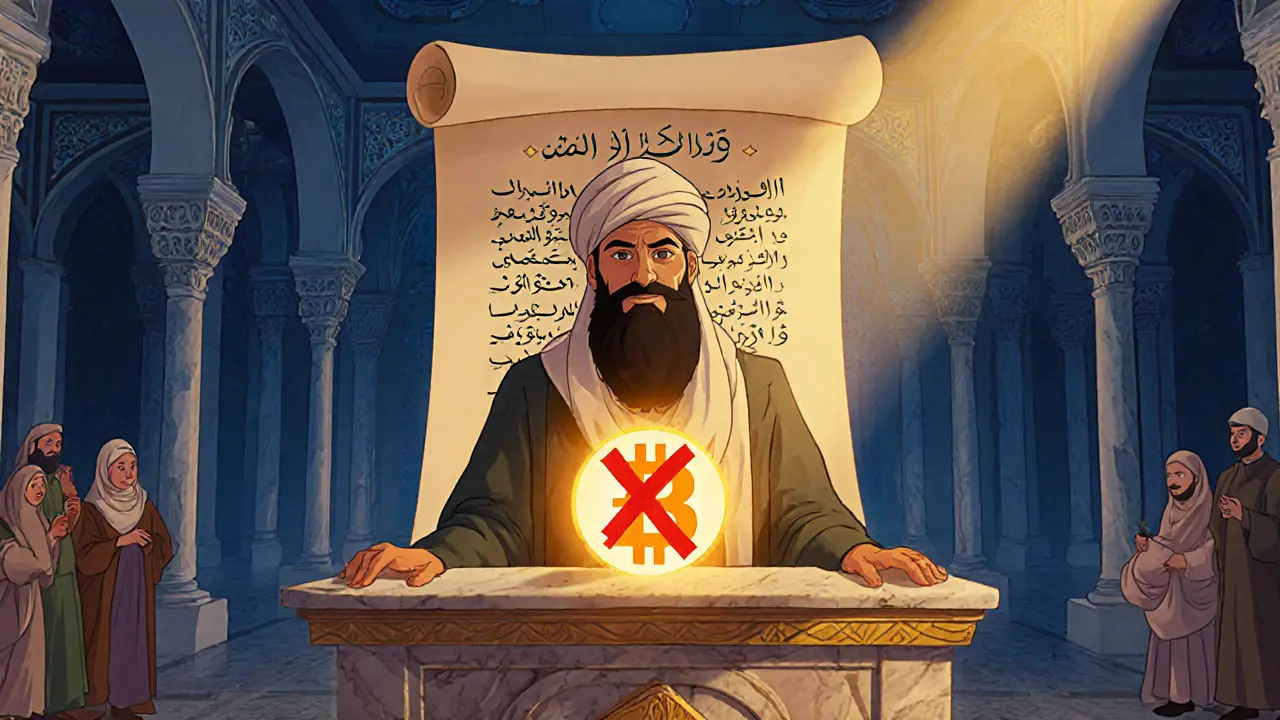
The Egyptian Grand Mufti's 2017 fatwa declares Bitcoin haram, detailing the religious, technical, and security reasons, its impact on Muslims, and how it compares to other Islamic crypto rulings.
Egyptian Grand Mufti Bitcoin Fatwa
When you hear about the Egyptian Grand Mufti Bitcoin fatwa, the official religious decree that decides whether Bitcoin fits within Islamic law, you instantly wonder how it connects to the broader crypto world. In simple terms, a fatwa is a scholarly answer to a legal or ethical question. This particular ruling tries to answer whether Muslims can buy, hold, or trade Bitcoin without breaking Sharia principles. It matters because Egypt has more than 100 million Muslims, and the Grand Mufti’s opinion often guides banks, investors, and everyday users.
Key concepts linked to the fatwa
Understanding the fatwa means looking at a few related ideas. First, Bitcoin, the leading decentralized digital currency that runs on a public ledger called blockchain is the asset the mufti is judging. Second, Islamic finance, a system of banking and investment that follows Sharia rules such as the prohibition of riba (interest) and excessive uncertainty provides the framework that the fatwa uses to decide if Bitcoin is permissible. Third, Sharia law, the moral and legal code derived from the Quran and Hadith, which governs many aspects of daily life for Muslims sets the criteria for what counts as halal (allowed) or haram (forbidden). Finally, Crypto regulation, government rules that shape how digital assets can be used, traded, and taxed interacts with the religious perspective, creating a space where law and faith overlap.
These entities form a web of influence: the Egyptian Grand Mufti Bitcoin fatwa Egyptian Grand Mufti Bitcoin fatwa influences Islamic finance, Islamic finance requires compliance with Sharia law, and Sharia law shapes how regulators draft crypto regulations. In practice, the fatwa can affect everything from a bank’s decision to offer Bitcoin custodial services to an individual’s choice of exchange. When regulators in the UAE announce zero personal crypto taxes, for instance, Muslims there will still ask if the tax advantage aligns with the fatwa’s stance. Similarly, Russia’s exchange restrictions or India’s non‑custodial wallet proposals become relevant to believers who want to stay halal while navigating global markets.
Why does this matter for the average reader? Because the fatwa isn’t just a theological footnote; it’s a practical guide that touches on real‑world decisions. If the ruling deems Bitcoin halal, then Islamic‑compliant wallets and exchanges can market their services to a massive audience, and scholars can develop Sharia‑aligned investment products. If it labels Bitcoin haram, Muslims might avoid it altogether or look for alternative tokens that meet the criteria, such as stablecoins backed by tangible assets. Either way, the fatwa sets a baseline for what is considered acceptable, and that baseline informs compliance tools, tax planning, and risk assessment.
Below you’ll find articles that explore the ripple effects of religious rulings across the crypto landscape. We’ve gathered pieces on tax advantages in the UAE, exchange bans in Russia and India, reviews of emerging platforms, and deep dives into compliance tools. Each post shows how regulators, tax authorities, and market innovators respond when a major religious authority weighs in. Whether you’re a trader, a compliance officer, or just curious about how faith meets technology, the collection gives you concrete examples of the fatwa’s impact on policy, product design, and everyday crypto use.
Take a look at the range of topics: from the zero‑tax environment for crypto investors in the UAE, to how non‑custodial wallet bans in India affect Sharia‑compliant users, to the way exchange reviews highlight fee structures that matter to Muslim traders. You’ll also see analyses of DeFi projects and stablecoins that try to align with Islamic principles, and guides on navigating FATF blacklists that can influence cross‑border transactions for believers. This blend of religious, regulatory, and practical insights equips you with a clearer picture of the landscape shaped by the Egyptian Grand Mufti’s decision.
Now, dive into the articles below to see how the fatwa informs tax strategies, exchange choices, compliance frameworks, and even the design of new crypto products. Each piece adds a piece to the puzzle, helping you understand how a single religious ruling can reverberate through markets, laws, and the wallets of millions of Muslims worldwide.