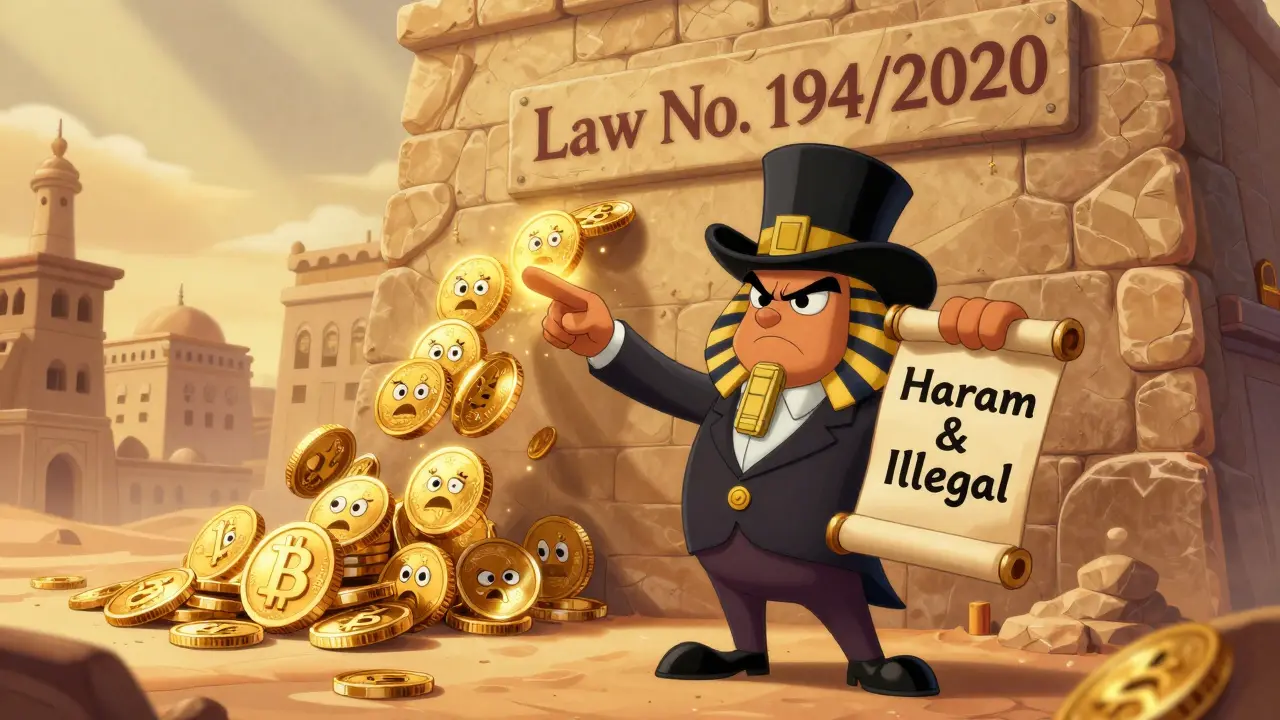
Egypt's Central Bank bans all cryptocurrency trading under Law No. 194/2020, backed by religious and economic concerns. Enforcement is inconsistent, but the ban remains strong. Blockchain tech, however, is being adopted for government use.
CBE Crypto Enforcement: What It Means and How It Affects Traders
When you hear CBE crypto enforcement, a term used to describe coordinated legal actions by authorities against cryptocurrency users and platforms. It’s not just about fines or warnings—it’s about arrests, frozen accounts, and exchanges being shut down overnight. This isn’t theoretical. In places like Afghanistan, the Taliban has jailed people for using Bitcoin to send money home. In India, the government taxes crypto at 30% with no way to offset losses. And in Qatar, owning Bitcoin is outright banned—even if you’re just holding it in a wallet.
Crypto regulation, the set of rules governments impose on digital assets is changing fast. Some countries treat crypto like property. Others treat it like gambling. And a few, like Bangladesh, ban it entirely while letting mobile payment apps like bKash dominate remittances. Crypto arrests, the criminal prosecution of individuals for crypto-related activity are rising—not because people are stealing, but because they’re using crypto to bypass broken banking systems. A mother in Kabul might get arrested for receiving crypto from her son working abroad. A trader in India might get hit with a TDS deduction they didn’t even know existed.
Crypto legal risks, the potential consequences of violating crypto laws in your country aren’t the same everywhere. In the U.S., the IRS tracks your DeFi rewards. In the EU, MiCA is creating new compliance rules. But in places where crypto is illegal, the risk isn’t taxes—it’s jail. That’s why knowing where you stand matters more than ever. You can’t just assume your exchange will protect you. OKX, Binance, or Coinbase won’t stop a government from freezing your account if you’re in a banned region.
The posts below show real cases—how airdrops got shut down, how exchanges blocked VPNs, how people got caught using crypto in countries that banned it. You’ll see what happened to Cratos, how WingRiders tried to stay legal on Cardano, and why projects like LOOP and CHY vanished overnight. This isn’t about hype. It’s about survival. If you’re trading, holding, or even just claiming free tokens, you need to know who’s watching, where it’s legal, and what happens when the authorities show up.