You’ve likely seen the hype. Social media feeds are flooded with claims about the Chihua Token a community-driven meme coin aiming to rival Dogecoin and Shiba Inu through a fair launch model. promises of free tokens, massive gains, and "100% rug pull proof" mechanics. It sounds too good to be true, doesn’t it? In the world of cryptocurrency, especially within the volatile meme coin sector, that instinct is your best defense. The reality behind the Chihua Token (CHIHUA) airdrop is far more complex-and potentially dangerous-than the flashy headlines suggest.
If you are looking for a straightforward guide on how to claim these tokens, you might be disappointed. That’s because there is no single, verified, active airdrop for a token strictly named "CHIHUA" that matches the safe, reputable standards of major projects like Ethereum or Solana. Instead, what you are encountering is a mix of outdated data, confused project names, and high-risk speculative assets. This article breaks down exactly what is happening with the Chihua name, why the data looks so strange, and how to protect your wallet from scams disguised as giveaways.
The Identity Crisis: CHIHUA vs. HUAHUA
The biggest hurdle in understanding the Chihua Token situation is simple confusion. There are at least two distinct entities floating around with similar names, and mixing them up can lead to significant financial loss or wasted time.
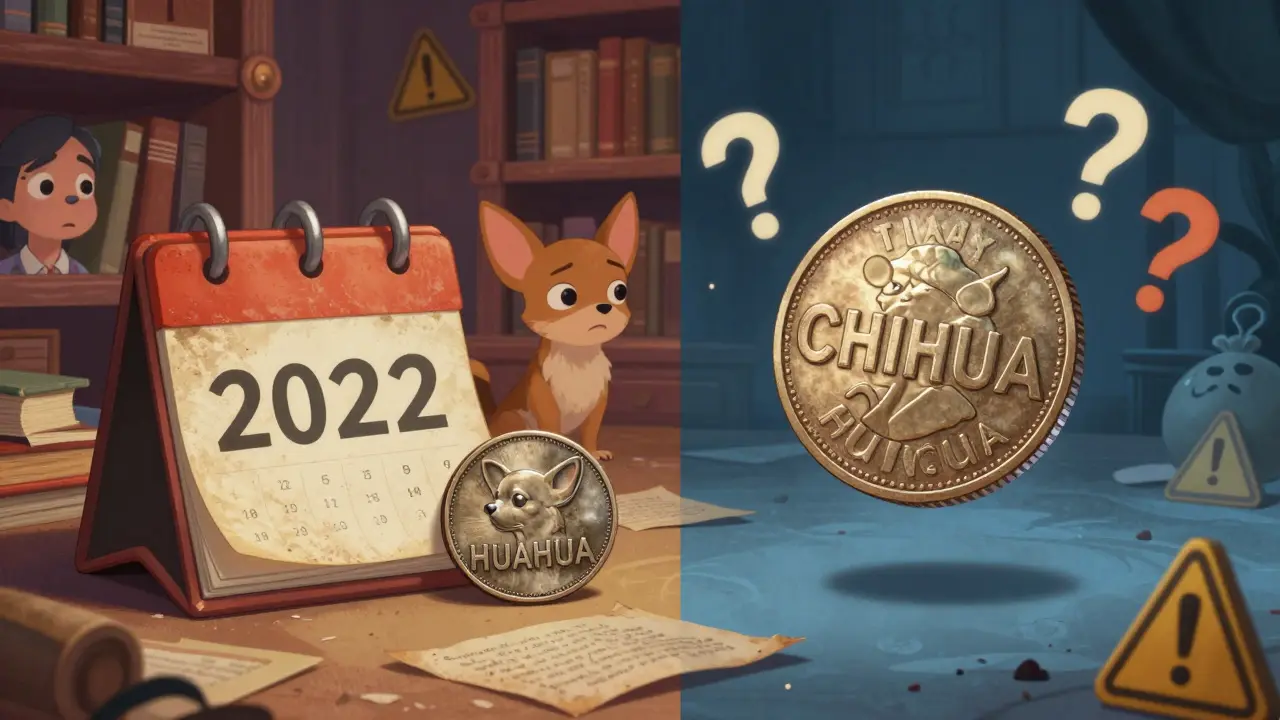
First, there is the Chihuahua Chain a blockchain network launched in 2022 that issued the HUAHUA token for governance and community funding. This project had a legitimate, documented history. In January 2022, the Chihuahua chain conducted an airdrop via the MEXC exchange. They distributed 7.2 million HUAHUA tokens the native utility token of the Chihuahua blockchain, used for voting and staking. Users had to stake MX tokens on MEXC to participate. This event is over. It happened years ago. If you are seeing references to this today, it is historical context, not an active opportunity.
Then, there is the Chihua Token (CHIHUA) an Ethereum-based meme coin claiming to be a fair-launch alternative to other dog-themed cryptocurrencies. This is the one currently generating buzz. According to data aggregators like CoinMarketCap, this token has a maximum supply of 490 trillion. However, here is where things get weird: the total supply and circulating supply often show as zero or negligible. The price is effectively $0, and trading volume is non-existent. This discrepancy suggests one of three things: the token hasn’t truly launched, the data tracking is broken, or the project is inactive.
Analyzing the Tokenomics and "Fair Launch" Claims
Proponents of the CHIHUA token often cite its tokenomics as proof of safety. Let’s look at the numbers they provide. The project claims a "fair launch" structure where even the founders bought their initial supply on Uniswap, the decentralized exchange. Here is the breakdown they advertise:
- 51% Burned: More than half of the total supply was sent to a dead address, removing it from circulation permanently.
- 48% Liquidity & Burned: Nearly half was added to liquidity pools on Uniswap and then locked or burned to prevent dumping.
- 1% Marketing & Development: A tiny fraction remains for future operations.
On paper, this looks secure. By burning the vast majority of tokens, the team argues that a "rug pull"-where developers abandon the project and drain the liquidity-is mathematically difficult or impossible. However, tokenomics alone do not guarantee legitimacy. A project can have perfect burning mechanics but still lack a working smart contract, a real community, or any actual utility. The fact that major data platforms show zero circulating supply raises serious questions about whether these tokens are actually tradable or if the contract is simply dormant.
Red Flags: Why You Should Proceed with Extreme Caution
In 2026, the crypto landscape is mature enough that we know exactly what suspicious activity looks like. When evaluating the Chihua Token airdrop, several red flags stand out that should make any prudent investor pause.
1. Lack of Verifiable Data If a token exists, it should have a footprint. You should see consistent pricing, holder counts, and transaction history on block explorers like Etherscan. For CHIHUA, the data is sparse or contradictory. Zero circulating supply means there is nothing to trade. If you cannot buy or sell it on a reputable exchange, what value does it hold?
2. The Name Confusion Trap Scammers love ambiguity. By using a name similar to the established (though older) Chihuahua/HUAHUA project, bad actors can create fake websites and social media channels. They might claim to be the "official" CHIHUA team, directing users to phishing sites designed to steal your private keys or seed phrases. Always verify the official contract address. The CHIHUA token lists a contract starting with `0x26ff...` on Ethereum, but without active liquidity, interacting with this contract offers no benefit and only risk.
3. No Official Communication Channel Legitimate projects have clear lines of communication. They post regular updates on Twitter (X), Discord, or Telegram. They publish whitepapers or litepapers. For the current CHIHUA hype, there is a distinct lack of authoritative, verified sources. Most information comes from third-party forums or unverified social media posts, which are easily manipulated by bots.
How to Verify Any Crypto Airdrop Safely
Whether it’s Chihua, the next big AI coin, or a new Layer-2 solution, the rules for staying safe remain the same. Do not let FOMO (Fear Of Missing Out) override your logic. Follow this checklist before engaging with any airdrop claim:
- Check Multiple Aggregators: Look up the token on CoinMarketCap, CoinGecko, and Dextools. If one site lists it and others don’t, or if the data conflicts significantly, assume it is unreliable.
- Verify the Contract Address: Never click links in DMs or comments. Go directly to the project’s official website (if you can find a verified one) and copy the contract address yourself. Paste it into Etherscan or BscScan to view the code and holders.
- Analyze Liquidity: Is there money in the pool? If the liquidity is low or unlocked, the developers can withdraw all funds instantly. Use tools like RugDoc or De.Fi to check lock status.
- Look for Community Engagement: Real communities ask technical questions and discuss development. Fake communities consist of bots posting "To the moon!" and emoji spam.
- Never Share Your Seed Phrase: No legitimate airdrop requires you to enter your 12-24 word recovery phrase. If a site asks for this, close it immediately.

The Broader Context of Meme Coin Airdrops in 2026
To understand why Chihua feels risky, it helps to look at the broader market. In recent years, we’ve seen legitimate airdrops from projects like Arbitrum, Starknet, and Jito. These were rewards for early usage of functional networks. They required gas fees, interaction with testnets, or holding specific assets. They were transparent and well-documented.
Meme coins, however, operate differently. They rely entirely on narrative and hype. While some, like Dogecoin or Shiba Inu, achieved longevity due to massive cultural adoption, thousands of others failed. The "fair launch" narrative is common in this space because it lowers the barrier to entry for skeptical investors. But without underlying technology or utility, the value is purely speculative. If the community loses interest, the price goes to zero. With CHIHUA showing zero volume, the community interest appears to be either non-existent or highly fragmented among scammers.
| Feature | Legitimate Project (e.g., Ethereum L2s) | Suspicious Project (e.g., Current CHIHUA Hype) |
|---|---|---|
| Data Consistency | Accurate across CoinGecko, CMC, and Dune Analytics | Conflicting data, zero supply, or missing listings |
| Communication | Verified social accounts, regular dev updates | No official channel, or impersonators on Telegram/Twitter |
| Liquidity | Locked liquidity, deep pools on major DEXs | Unlocked liquidity, minimal depth, or no trading pairs |
| Requirements | On-chain activity, testnet participation | Clicking links, joining groups, or sharing seed phrases |
| Token Utility | Governance, fee payment, staking rewards | Pure speculation, no stated use case beyond "meme" |
Conclusion: Is the Chihua Token Worth Your Time?
Based on the available evidence, the answer is no. The Chihua Token (CHIHUA) lacks the fundamental indicators of a healthy, active cryptocurrency. The zero circulating supply, absence of trading volume, and confusion with the older HUAHUA project create a minefield of uncertainty. While the idea of a "fair launch" meme coin is appealing, the execution here appears flawed or abandoned.
Your capital and security are valuable. Do not risk them on projects that cannot provide clear, verifiable data. If you are interested in meme coins, stick to those with established market caps, active communities, and transparent leadership. If you are looking for airdrops, focus on protocols with real utility and clear distribution mechanisms. The crypto market is full of opportunities, but the best ones are rarely hidden behind confusing names and empty promises.
Is the Chihua Token (CHIHUA) a scam?
While we cannot definitively label it a "scam" without legal proof, it exhibits many characteristics of high-risk or fraudulent projects. These include zero circulating supply, lack of trading volume, and confusion with other similarly named tokens. Scammers often exploit such ambiguities to phish users. Treat it with extreme caution and avoid connecting your main wallet to any associated contracts.
What is the difference between CHIHUA and HUAHUA?
They are different projects. HUAHUA is the token for the Chihuahua Chain, which had an active airdrop in 2022 via MEXC. CHIHUA is a separate Ethereum-based meme token that claims to be a fair-launch alternative to Dogecoin. The similarity in names causes confusion, but they have different contract addresses and histories.
How do I verify if a crypto airdrop is real?
Check multiple data aggregators like CoinGecko and CoinMarketCap for consistent information. Verify the smart contract address on a block explorer like Etherscan. Ensure liquidity is locked and look for verified social media channels with genuine community engagement. Never share your seed phrase or private key.
Why does CoinMarketCap show zero supply for CHIHUA?
Zero supply usually indicates that the token has not been properly deployed, the contract is inactive, or there is a data reporting error. In the context of CHIHUA, it suggests the token is not currently tradable or liquid, making any "airdrop" claims highly suspect.
Can I still get tokens from the old Chihuahua (HUAHUA) airdrop?
No. The Chihuahua Chain airdrop took place in January 2022 and has concluded. Any current claims offering HUAHUA tokens are likely scams attempting to capitalize on the past event.