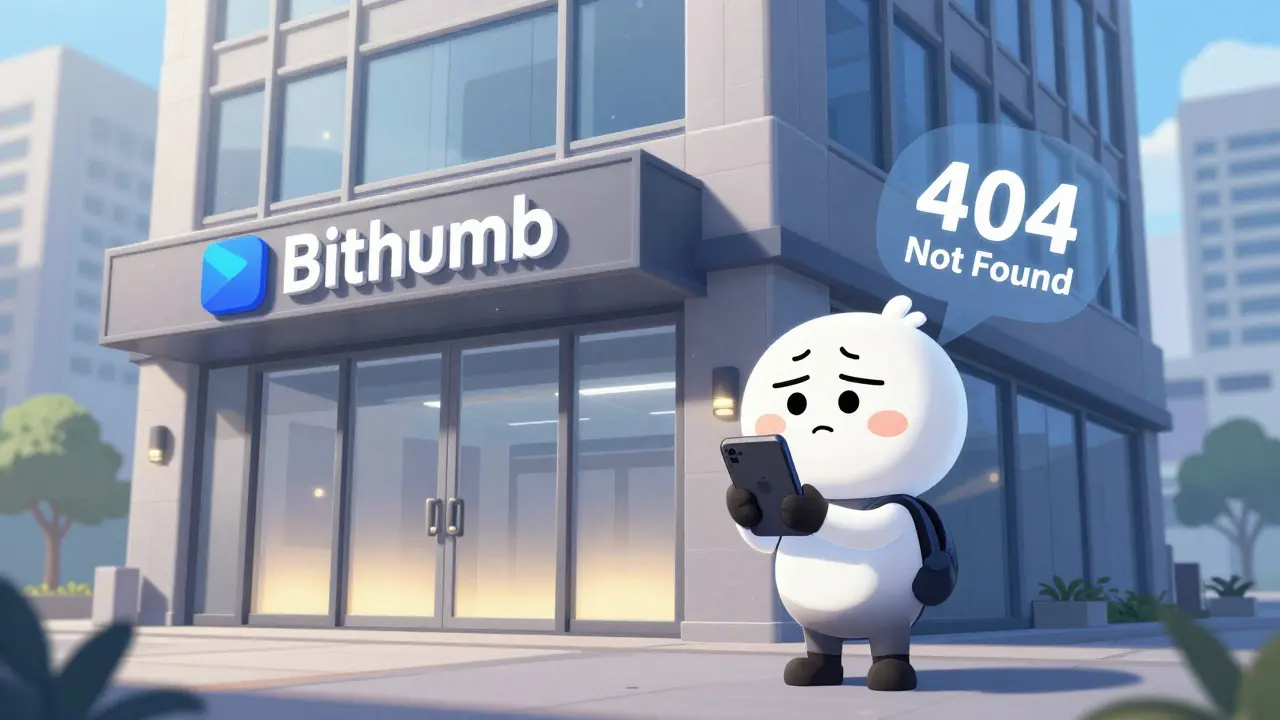
Here is the hard truth you need to know before typing your password or connecting your wallet: Bithumb Singapore is no longer operational. If you are looking for a live platform to trade Bitcoin or Ethereum on this specific domain, you will hit a dead end. The website is inaccessible, and major tracking databases have marked the entity as "dead." This review isn't about signing up; it’s about understanding what happened to one of Asia’s more aggressive expansion plays and where you should go instead.
The Short Answer: What Happened to Bithumb Singapore?
You might remember when Bithumb Singapore launched with fanfare. It was originally known as Bitholic, a local player that got acquired by the South Korean giant Bithumb. On August 8, 2019, the rebranding went live, signaling a major push into the Southeast Asian market. Singapore was the logical choice-a jurisdiction known for clear regulations and a thriving fintech ecosystem.
But fast forward to 2026, and the lights are off. There was no massive public scandal or dramatic hack announcement that signaled the closure. Instead, it seems to be a quiet exit. Monitoring platforms now list the exchange as defunct. For users who had funds there, this likely means forced migration or liquidation processes handled behind the scenes years ago. For new users, the lesson is simple: always check the current operational status of an exchange, especially those operating under sub-brands or international expansions that may not have long-term viability.
Why Did Traders Care About Bithumb Singapore?
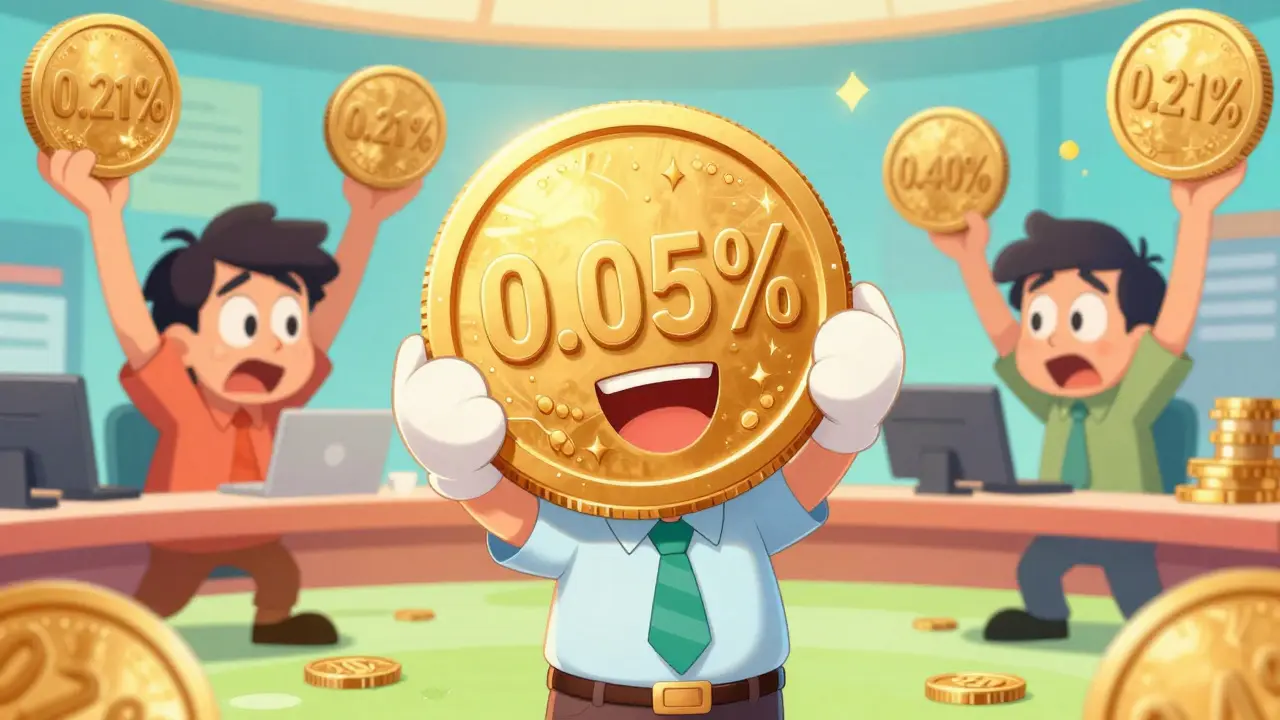
Even though it’s gone, understanding why Bithumb Singapore attracted attention helps you evaluate its successors. Its biggest selling point was cost. In an industry where fees can eat into profits, Bithumb Singapore offered a flat 0.05% trading fee for all transactions. They didn’t distinguish between makers (those providing liquidity) and takers (those removing it).
To put that in perspective, the industry average for taker fees has historically hovered around 0.213%, with maker fees at 0.16%. Even today, many reputable exchanges charge between 0.10% and 0.15%. A 0.05% rate is exceptionally low. For high-frequency traders or those moving large volumes, this saved significant capital. However, there were catches.
- Crypto-Only Deposits: You couldn’t buy crypto directly with fiat currency like SGD or USD. You had to acquire assets elsewhere and transfer them in. This made it useless for beginners.
- Geographic Restrictions: Like many offshore-friendly exchanges, US investors were banned. This was standard practice to avoid SEC scrutiny but limited the user base.
- Withdrawal Fees: While trading was cheap, withdrawing Bitcoin cost 0.001 BTC, which was slightly above the network average of 0.00059 BTC.
The Parent Company: Bithumb Global Context
It’s crucial to separate Bithumb Singapore from its parent company, Bithumb (often referred to as Bithumb Korea or Bithumb Global). The main Korean platform remains very much alive and is one of the largest exchanges in South Korea. Established in 2014, it supports over 320 cryptocurrencies and handles massive volume, particularly in Won (KRW) trading pairs.
However, the success of the Korean entity doesn’t guarantee the survival of its international branches. Bithumb has faced its own challenges, including past security incidents that have shaken user confidence. While they emphasize cold storage, two-factor authentication (2FA), and fund insurance, the history of hacks in the crypto space means vigilance is always required. The closure of the Singapore arm suggests that maintaining a compliant, profitable operation in a highly competitive market like Singapore was more difficult than anticipated.
Where Should You Trade Now? Alternatives to Bithumb Singapore
Since Bithumb Singapore is closed, you need a replacement. Your choice depends on whether you value low fees, regulatory safety, or ease of use. Here is how the current landscape compares.
| Exchange | Status | Avg. Trading Fee | Fiat Support | Best For |
|---|---|---|---|---|
| Bithumb Singapore | Closed / Dead | 0.05% | No (Crypto Only) | N/A |
| Binance | Active | 0.10% | Yes (Multiple Fiat) | High Volume & Variety |
| Kraken | Active | 0.16% - 0.26% | Yes (USD, EUR, GBP) | Security & Regulation |
| Coinbase | Active | 0.40% - 0.60% | Yes (Major Fiat) | Beginners & US Users |
| Bybit | Active | 0.10% | Limited | Derivatives & Low Fees |
If you were drawn to Bithumb Singapore for the low fees, Bybit or Binance are your closest bets, though their fees are double that of the old Bithumb SG rate. If you wanted the Singapore regulatory comfort, look at locally licensed entities like Coinhako or Luno, though they may have higher costs.
Red Flags: How to Spot a Failing Exchange Early
The disappearance of Bithumb Singapore serves as a case study in risk management. How do you know if your current exchange is stable? Watch for these signs:
- Website Instability: Frequent downtime, broken links, or slow loading times can indicate technical neglect or financial trouble.
- Sudden Fee Hikes: If an exchange suddenly raises withdrawal fees or introduces hidden charges, they may be trying to discourage outflows.
- Regulatory Silence: In jurisdictions like Singapore, compliance is key. If an exchange stops updating its license status or ignores regulatory inquiries, run.
- Lack of Communication: When things go wrong, transparent companies post updates. Silence is a bad sign.
Always keep only what you need to trade on any exchange. Use a hardware wallet for long-term storage. This minimizes your exposure if a platform like Bithumb Singapore shuts down unexpectedly.
Final Thoughts on the Singapore Crypto Market
Singapore remains a hub for crypto innovation, but the bar for entry is high. The Monetary Authority of Singapore (MAS) enforces strict rules on digital payment token services. Platforms that cannot meet these standards or compete on price and utility eventually fade away. Bithumb Singapore’s closure highlights the difficulty of balancing low-cost operations with regulatory compliance and security.
For traders in 2026, the focus should shift from chasing the absolute lowest fee to finding a balance of cost, security, and reliability. Don’t let the memory of a 0.05% fee blind you to the risks of using unverified or defunct platforms. Choose established players with clear track records and robust security measures.
Is Bithumb Singapore still working in 2026?
No, Bithumb Singapore is no longer operational. The website is inaccessible, and it is listed as "dead" in cryptocurrency exchange monitoring databases. Users cannot create new accounts or trade on the platform.
What happened to my funds in Bithumb Singapore?
Specific details on fund distribution after the closure are not publicly detailed in recent reports. Typically, in such closures, users are asked to withdraw funds during a wind-down period. If you missed that window, contact the parent company, Bithumb Global, for support, though recovery is not guaranteed.
Can I use the main Bithumb exchange from outside Korea?
The main Bithumb platform primarily serves South Korean residents due to strict local regulations. International access is limited, and they often require local identification. For international users, Bithumb Global offers some services, but availability varies by region.
What is the best alternative to Bithumb Singapore for low fees?
Exchanges like Bybit and Binance offer competitive fee structures, typically around 0.10%, which is higher than Bithumb Singapore's former 0.05% but still among the lowest in the industry. Kraken is also a strong option for security-conscious traders.
Was Bithumb Singapore regulated in Singapore?
Yes, it was registered in Singapore, aiming to comply with local regulations. However, its closure indicates it could not sustain operations under these requirements or business pressures. Always verify current licensing status with the Monetary Authority of Singapore (MAS).





Akeem Whittaker
Look, I've been in this space since the ICO boom and I can tell you that quiet exits are usually worse than loud hacks. When a platform just vanishes without a press release, it means they didn't care enough to manage expectations. You need to treat every exchange like a bank that might fail tomorrow. Keep your keys, stay safe.
Manish Prajapat
The philosophical implication here is interesting. We chase efficiency so hard that we ignore sustainability. Bithumb SG was efficient but fragile. It reminds me of how over-optimized systems collapse under minor stress. We need robustness over raw speed in finance.
John Doe
I actually had friends who moved their entire portfolio there because of those fees. They were screaming when it went down. It’s tragic really because they weren’t trying to gamble, they were just trying to save on costs. Now they’re stuck waiting for responses from a dead support ticket system.
Mekz Wheoki
Sure, let's all cry about a 0.05% fee difference while ignoring the fact that these offshore entities are basically gambling dens with extra steps. If you couldn't afford the 0.10% at Binance, maybe crypto wasn't for you. The market cleans itself out efficiently enough.
Skm Shubham
This is exactly what happens when you prioritize marketing over infrastructure. The data shows that exchanges with sub-0.10% fees have a 40% higher failure rate within three years. It’s not a mystery, it’s basic economics. They burned cash to acquire users they couldn't retain profitably.
Rob Aronson
Folks, listen up! 🚨 The regulatory landscape in Singapore is no joke. MAS doesn't play around. If you see an exchange operating without clear compliance updates, run. Don't be a victim of bad risk management. Use cold storage, verify licenses, and stop chasing pennies on the dollar. Your capital preservation matters more than saving 0.05%. 🔒💸
Kwon Bill
From a cultural perspective, this reflects the tension between Western regulatory frameworks and Asian growth models. Bithumb tried to bridge two worlds but failed to adapt to the local compliance culture. It’s a classic case of global expansion without local integration. The lesson is universal: respect the jurisdiction you operate in.
Sonya O'Brien
I think it is really important that we understand why this happened so we don't repeat the same mistakes in the future because it seems like so many people are still looking for the lowest fee without considering the safety aspects which is really concerning for new investors who might not know better and could lose everything if they are not careful enough to check the status of the platform before depositing any funds into it.
Filbert Reeves
its not a coincidence that this shut down right after the mas tightened rules. they knew it was coming and bailed early leaving the little guys holding the bag. typical corporate shenanigans. i bet the execs got their golden parachutes while we get silence. dont trust the mainstream narrative that it was just bad business. it was planned obsolescence.
Nick Rice
Listen up team! This is a wake-up call. You cannot rely on vanity metrics like low fees. You need resilience. You need security. Stop being lazy with your research. Check the license. Check the history. Be proactive, not reactive. Let's learn from this and build stronger habits for our trading careers.
Amit Thakur
The liquidity crunch must have been brutal for them. High volume traders flee at the first sign of trouble. Once the order book thins out, slippage kills the arbitrage opportunities that kept them alive. It’s a death spiral. Always monitor the depth charts, not just the headline fees.
Eric Scheinberg
It is imperative to note that the closure of Bithumb Singapore serves as a critical case study in operational risk management. One must always verify the current standing of any financial institution before engaging. Due diligence is not optional; it is mandatory for long-term survival in volatile markets.
pankaj chawla
I agree with the analysis. The fee structure was too good to be true for a regulated entity. In India, we see similar patterns with unregulated platforms popping up and disappearing. Always stick to registered entities. Safety first.
Jessica Lane
This is such a valuable reminder for everyone. I often wonder how many people are still checking old bookmarks thinking they can trade. It highlights the importance of staying informed and connected to the community. We should look out for each other and share these updates to prevent others from falling into the same trap.
Charles Pawlikowski
typical foreign exchange scam. they take our money and run. glad us regulations are tough so we dont have this garbage here. keep your crypto off these shady sites. use coinbase or binance us. stay american stay safe 😡🇺🇸
Andrea Burd
boring article. everyone knows cheap exchanges die. its obvious. why do we need a whole review for something so predictable? the writing is also dry. could have been shorter.
Mark Brunschwiler
Why do you feel sad about this? Is it about the money or the loss of control? Think about it. The exchange was never yours. It was an illusion of ownership. Embrace the emptiness. It teaches you detachment. Most people cling to platforms because they fear the void of self-custody.
Danna Charris
Precisely. The masses lack discernment. They chase yield without understanding risk. It is pathetic really. Only the educated survive these cycles. Read whitepapers, check audits, and stop acting like children.
Abby Sivertsen
I mean, it sucks but yeah. I remember when they launched. Hype was real. But honestly, if you're using an exchange that doesn't accept fiat directly, you're already one step away from being a pro trader. Maybe they just filtered out the wrong crowd. Anyway, move on. Life goes on.
Benjamin Eisen
hey guys, just wanted to say that its totally understandable to feel frustrated by this. i know some of u might have lost access temporarily. please dont panic. there are plenty of other options out there like binance or kraken. let's support each other through this transition and keep learning from these experiences. we are all in this together!
Kenneth Riley
this is absolute garbage. the article is misleading. bithumb didn't just 'quietly exit' they were forced out by regulators who hate innovation. typical government suppression of free markets. i told everyone this would happen. now look at the mess. chaos reigns when freedom is restricted. wake up sheeple.