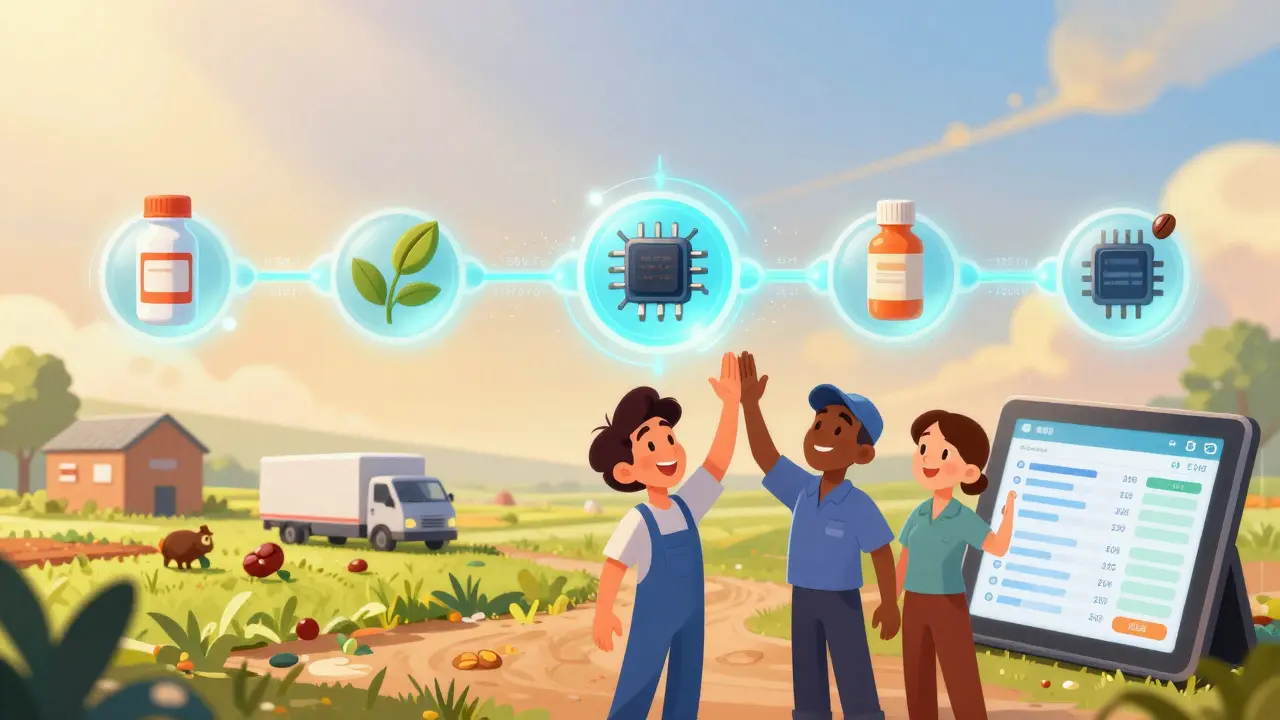
When a shipment of medicine goes missing, or a batch of spoiled food hits store shelves, who do you blame? The farmer? The shipper? The distributor? In traditional supply chains, answering that question takes days-sometimes weeks. Now imagine knowing exactly where every item came from, who handled it, and when it changed hands-all in under two seconds. That’s not science fiction. It’s what supply chain blockchain platforms are delivering today.
Why Supply Chain Blockchain Platforms Matter Now
Supply chains are messy. They involve dozens, sometimes hundreds, of companies across continents. Each one uses its own software, its own data formats, its own rules. When something goes wrong, everyone points fingers. Records get lost. Paperwork piles up. Disputes drag on for months. Blockchain fixes this by giving every participant a shared, unchangeable record. No one owns it. No one can delete it. Everyone sees the same version. That’s it. No magic. Just clarity. In 2025, 68% of food companies and 61% of pharmaceutical firms are either using or testing blockchain for supply chain tracking. Why? Because regulators are forcing them to. The FDA now requires full traceability for drugs by 2027. The EU’s Digital Product Passport will demand the same for electronics and textiles. Companies that don’t adapt won’t just lose efficiency-they’ll lose access to markets.How These Platforms Actually Work
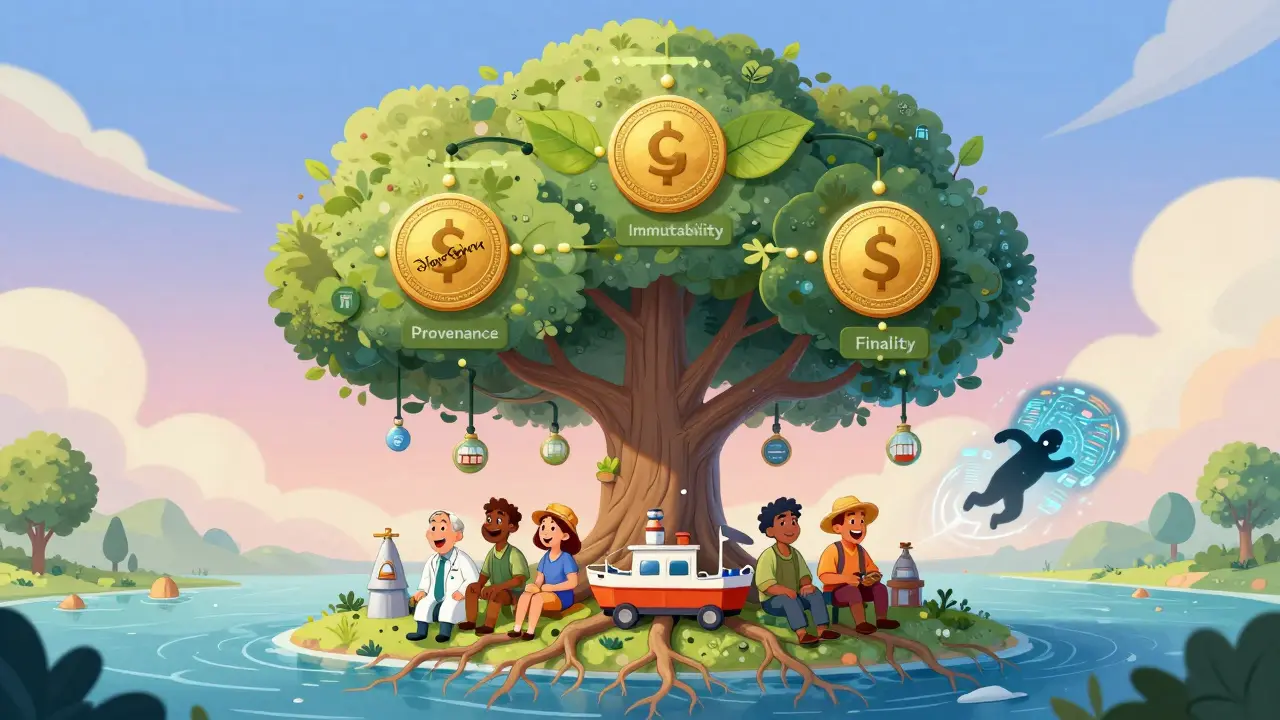
Forget Bitcoin. Enterprise supply chain blockchains aren’t public. They’re private. Only approved companies can join. Each transaction-like a shipment leaving a warehouse or a customs check-is recorded as a block. These blocks link together in a chain, timestamped and encrypted. Smart contracts automate actions. If a temperature sensor in a refrigerated truck spikes above 5°C, the contract automatically flags the shipment, notifies the buyer, and logs the breach. No human intervention. No dispute. Just facts. Three core features make these platforms powerful:- Provenance: You know where every component started. A diamond’s mine. A coffee bean’s farm. A microchip’s factory.
- Immutability: Once recorded, no one can alter the record. Not even the company that made the entry.
- Finality: Every participant has the exact same copy of the ledger. No more arguing over which Excel sheet is correct.
Top Three Platforms in 2025
Not all blockchains are built the same. Three platforms dominate enterprise supply chains today.IBM Blockchain
Built on Hyperledger Fabric, IBM Blockchain is the go-to for food and pharma. Its Food Trust network connects Walmart, Nestlé, Dole, and 200+ others. Before IBM’s system, tracing a mango from farm to store took 7 days. Now it takes 2.2 seconds. It’s not just speed. It’s cost savings. Walmart cut food recall investigation costs by 63%. Pharmaceutical clients saw a 41% drop in dispute resolution and 28% less paperwork. IBM’s latest update, Transparent Supply 2.0, adds AI-powered anomaly detection. It now reduces false alerts by 37%. The catch? It’s expensive. Enterprise support runs $185,000 a year. Integration with SAP or Oracle takes 8-12 weeks. But for big brands under regulatory pressure, it’s worth it.Hyperledger Fabric
If IBM is the salesperson, Hyperledger Fabric is the engineer’s dream. Open-source, modular, and designed for customization, it’s the backbone of 47% of manufacturing supply chains. It lets companies plug in their own consensus rules, privacy settings, and identity systems. Maersk used it for TradeLens, handling $1.2 trillion in global trade before shutting it down in 2023-not because it failed, but because governance became too complex. Fabric 3.0, released in January 2025, added cross-chain interoperability. That’s huge. It means a car manufacturer using Fabric can now talk to its tire supplier using a different blockchain. No more data silos. The downside? It’s hard to build. Developers need 3-6 months of training. Documentation is solid, but it’s not for beginners.XDC Network
XDC is the dark horse. Launched in 2019 by XinFin, it’s optimized for trade finance-not logistics. It handles letters of credit, payment guarantees, and cross-border settlements. Where traditional banks take 5-10 days to clear a trade, XDC does it in minutes. It’s now used by 28% of global trade finance platforms. Banks in Singapore, Dubai, and Rotterdam are migrating to it because it’s faster, cheaper, and more transparent than SWIFT. It’s not perfect. Developer satisfaction scores are lower than Hyperledger’s. Support is limited. But if your supply chain runs on invoices and payments, XDC is the only platform built for that.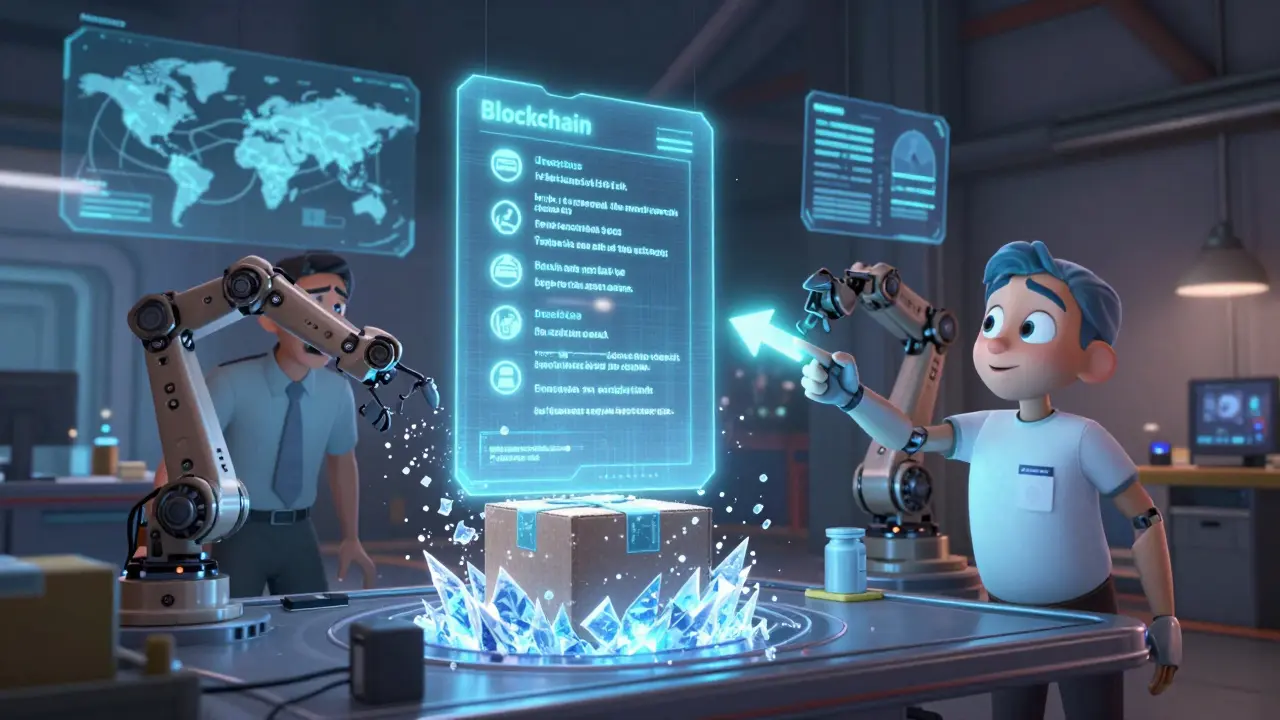
What About Ethereum?
Ethereum is famous for smart contracts. But its public blockchain is too slow and too open for enterprise supply chains. It handles only 15-45 transactions per second. IBM and Hyperledger do 3,500. Plus, anyone can see your data. That’s fine for crypto traders. Not for a company sharing proprietary supplier lists or pricing. Enterprise versions like ConsenSys Quorum fix some issues, but they’re niche. Most companies stick with permissioned platforms.Real Results, Real Failures
The success stories are loud:- FedEx automated 76% of shipment verifications using smart contracts. Paperwork dropped 68%.
- A major European pharma firm cut documentation processing time by 28%.
Who Should Use This?
You need a supply chain blockchain if:- You’re in food, pharma, or high-value manufacturing
- You’re under regulatory pressure (FDA, EU Digital Product Passport)
- You lose money on disputes, delays, or recalls
- You have partners willing to join the network
- You’re a small retailer with 3 suppliers
- Your data is already clean and centralized
- You can’t get all your partners on board
Implementation Challenges
This isn’t a plug-and-play tool. Here’s what breaks most projects:- Data standardization: 67% of implementations fail because suppliers use different formats for product IDs, weights, or dates.
- Network participation: If only 3 out of 10 suppliers join, the value drops to zero.
- Integration cost: Connecting to SAP or Oracle averages $285,000 per system.
- Skill shortage: Blockchain architects earn $145K-$185K. Good ones are scarce.
The Future: AI, IoT, and Digital Twins
The next wave isn’t just blockchain. It’s blockchain + AI + IoT. Siemens’ new Digital Supply Chain Twin combines real-time sensor data, blockchain records, and AI models to predict disruptions. In tests, it improved prediction accuracy by 44%. Gartner predicts 75% of big enterprises will use AI-driven blockchain for risk prediction by 2027. Right now, only 22% do. The goal? Move from tracking what happened-to predicting what will happen.Final Thoughts
Supply chain blockchain platforms aren’t a cure-all. They’re a tool. A powerful one. But only if you use them right. If you’re in a regulated industry with complex logistics, you’re already behind if you’re not exploring this. The technology is proven. The ROI is measurable. The cost of inaction is rising. Start small. Pick one high-value product. Trace it end-to-end. Show the savings. Then expand. Don’t chase the hype. Chase the problem.What is the difference between public and private blockchain platforms for supply chains?
Public blockchains like Ethereum are open to anyone and process transactions slowly (15-45 per second). They’re great for crypto but terrible for supply chains because they expose sensitive data and can’t handle high volume. Private blockchains, like IBM Blockchain or Hyperledger Fabric, restrict access to trusted partners, process thousands of transactions per second, and keep data confidential. That’s why 92% of enterprise supply chain platforms use private networks.
Can small businesses use supply chain blockchain platforms?
Generally, no. These platforms require multiple partners to join, technical integration, and ongoing costs. For a small business with 2-3 suppliers, the complexity and expense outweigh the benefits. Instead, focus on digital tracking tools like cloud-based inventory systems. Blockchain is for complex, regulated, multi-partner networks-not solo operations.
How long does it take to implement a supply chain blockchain platform?
Most projects take 6-9 months from start to production. The first 2-3 months are spent aligning partners and defining data standards. Another 2-4 months go into integrating with existing ERP systems. Testing and training add another 2-3 months. Quick pilots can run in 3 months, but full rollout across a global network takes longer.
Is blockchain really more secure than traditional databases?
It’s not about being “more secure”-it’s about being tamper-proof. Traditional databases can be altered or deleted by admins. Blockchain records are cryptographically linked and distributed. To change one record, you’d need to alter every copy across every partner’s system at the same time. That’s practically impossible. So while hackers can still attack endpoints (like a warehouse scanner), the ledger itself is immune to fraud.
What happens if a partner leaves the blockchain network?
Nothing. The ledger continues. All past transactions remain visible to remaining members. The departing partner loses access to future updates, but their historical data stays on the chain. This ensures audit trails remain intact even if a supplier goes out of business or changes systems.
Are there any government regulations forcing companies to use blockchain?
Yes. The FDA’s Drug Supply Chain Security Act requires full traceability of pharmaceuticals by 2027. The EU’s Digital Product Passport mandates blockchain-like traceability for electronics, batteries, and textiles starting in 2026. Companies that can’t prove origin, handling, and compliance will be blocked from selling in these markets.





roxanne nott
Blockchain ain't magic. If your suppliers send garbage data, you just get garbage on a fancy ledger. Seen it too many times.
Dan Dellechiaie
Let's be real - if your supply chain can't standardize product IDs across 10 vendors, no blockchain will save you. It's not a tech problem, it's a management failure.
Ellen Sales
So IBM charges $185k/year to make mango tracking faster? Cool. Meanwhile my cousin in Kerala still uses WhatsApp to track his spice shipments. 😅
Jordan Renaud
The real win isn't the tech - it's the trust. When everyone sees the same record, blame games stop. That's worth more than any ROI calculator.
Lloyd Yang
I worked on a pharma blockchain rollout last year. The tech? Solid. The real nightmare? Getting 47 different suppliers to agree on what 'batch number' means. One guy used Excel. Another used a paper logbook he scanned with his phone. We spent six months just mapping data fields. Blockchain didn't fix the chaos - it just made it visible. And honestly? That was the first step to fixing it.
Sarah Glaser
We're treating blockchain like a cure-all when it's really just a very precise scalpel. You don't use a scalpel to chop onions. And yet, so many companies are trying to.
Shubham Singh
The article mentions FDA requirements. Yet fails to note that even with blockchain, 60% of non-compliance incidents stem from human error at the warehouse level. Technology cannot replace training.
Sybille Wernheim
I love how people act like blockchain is new. It's just a fancy digital ledger. We've had traceable systems since the 80s. The difference? Now we have enough tech to make it actually work.
Janet Combs
I read this whole thing and my brain just went... huh? Like, I get the idea but why does it matter to me? I just want my coffee to not taste like cardboard.
Jake Mepham
XDC is underrated. I’ve used it for trade finance with a supplier in Dubai. Where SWIFT took 7 days and $200 in fees, XDC cleared in 90 seconds for $2.50. No drama. No calls. Just done. If your supply chain runs on invoices, this is your secret weapon.
Luke Steven
The real future isn't blockchain. It's blockchain + AI + IoT. Imagine a sensor on a refrigerated container that not only logs temperature but predicts when it’ll fail based on 10 years of weather + traffic + maintenance data. That’s the game changer. Blockchain just holds the record.
Radha Reddy
In India, many SMEs still rely on handwritten delivery notes. Blockchain feels like a luxury. But if regulators demand it, adaptation will happen - slowly, with help. We need tools designed for low-bandwidth, low-tech environments, not just enterprise-grade platforms.
vaibhav pushilkar
Start small. Pick one product. Trace it. Show the savings. Then expand. That’s the only way this works. Don’t try to boil the ocean.
Jacob Lawrenson
I work in logistics. We tried Hyperledger. Took 8 months. Cost $1.2M. Got a 12% reduction in disputes. Worth it? Only because we got audited last year and survived. Without blockchain? We’d have been fined $3M. So yeah. Worth it.
Cathy Bounchareune
I once saw a blockchain system that tracked a single coffee bean from farm to cup. The farmer got paid 40% more because the buyer knew exactly where it came from. That’s not tech. That’s justice.
Vyas Koduvayur
Let’s not pretend this is flawless. I’ve seen companies spend millions on blockchain only to realize their ERP system was the real bottleneck. You can’t fix a broken process with a shiny new ledger. You fix the process first. Then you automate it. Otherwise you’re just digitizing your dumpster fire.
Zavier McGuire
Blockchain is just a buzzword now. Everyone’s slapping it on their pitch decks like it makes them cool. Meanwhile the people actually running the warehouses are still using clipboards and Excel
Sheila Ayu
Wait - so if a partner leaves the network, their data stays? That’s insane. What if they were a fraud? What if they stole data? You’re permanently locking in lies? This isn’t transparency - it’s digital vandalism!
SHEFFIN ANTONY
You call XDC a dark horse? It’s a flickering candle in a hurricane. Developer satisfaction is low, support is nonexistent, and it’s basically just a glorified API with a blockchain label. Don’t be fooled.
Mark Cook
Ethereum is slow? So is my internet. That doesn’t mean I can’t stream Netflix. Maybe enterprise needs to stop acting like tech is a luxury and start adapting to reality.
Charles Freitas
The real failure? Companies think blockchain is a project. It’s not. It’s a cultural shift. You’re asking suppliers to give up control. To trust a system they didn’t build. That’s harder than writing code.
Craig Fraser
The EU Digital Product Passport sounds great until you realize it’ll force every small manufacturer to pay for compliance they can’t afford. This isn’t innovation - it’s regulatory capture disguised as sustainability.
Ashley Lewis
This article reads like a vendor whitepaper. IBM? Hyperledger? XDC? All of them are trying to sell you something. The truth? Most supply chains don’t need blockchain. They need better communication.
Radha Reddy
You mentioned regulators forcing adoption. But what about countries without digital infrastructure? How do we ensure equity? Blockchain can’t be a tool only for the wealthy.