Have you ever tried to trade a cryptocurrency only to get stuck in a traffic jam of slow transactions and high fees? That frustration is exactly why platforms like XSwap Protocol exist. If you are new to the world of decentralized finance (DeFi) on the XinFin XDC Network, you might be wondering what this platform actually does and whether its native token, XSP, is worth your attention.
XSwap Protocol is not just another copy-paste project. It positions itself as the primary automated market maker (AMM) and launchpad specifically built for the XDC Network. Think of it as the bridge that allows users to swap, stake, and discover new tokens within this specific ecosystem. But how does it work, and why should you care about a token that trades at fractions of a cent? Let's break down the mechanics, the utility, and the risks involved with XSP.
Understanding the Core Function: What is XSwap?
To understand XSwap, you first need to understand the problem it solves. In traditional centralized exchanges, a company matches buyers and sellers. In decentralized exchanges (DEXs), there is no middleman. Instead, you trade against a pool of funds provided by other users. This is called an Automated Market Maker (AMM).
XSwap Protocol operates on the XDC Network. This network is unique because it uses a hybrid architecture that combines public blockchain transparency with private ledger efficiency. The result? The XDC Network can process over 2,000 transactions per second (TPS) with a latency of just two seconds. Compare that to Ethereum, which often struggles with congestion and higher costs during peak times, and you start to see the advantage. XSwap leverages this speed to offer near-instant swaps for XRC-20 tokens.
XRC-20 is simply the standard format for tokens on the XDC Network, similar to how ERC-20 works on Ethereum or TRC-20 on Tron. By focusing exclusively on this standard, XSwap ensures compatibility and speed for assets native to this ecosystem. It acts as the central hub where liquidity flows, allowing traders to move between different cryptocurrencies without leaving the network.
The Role of the XSP Token
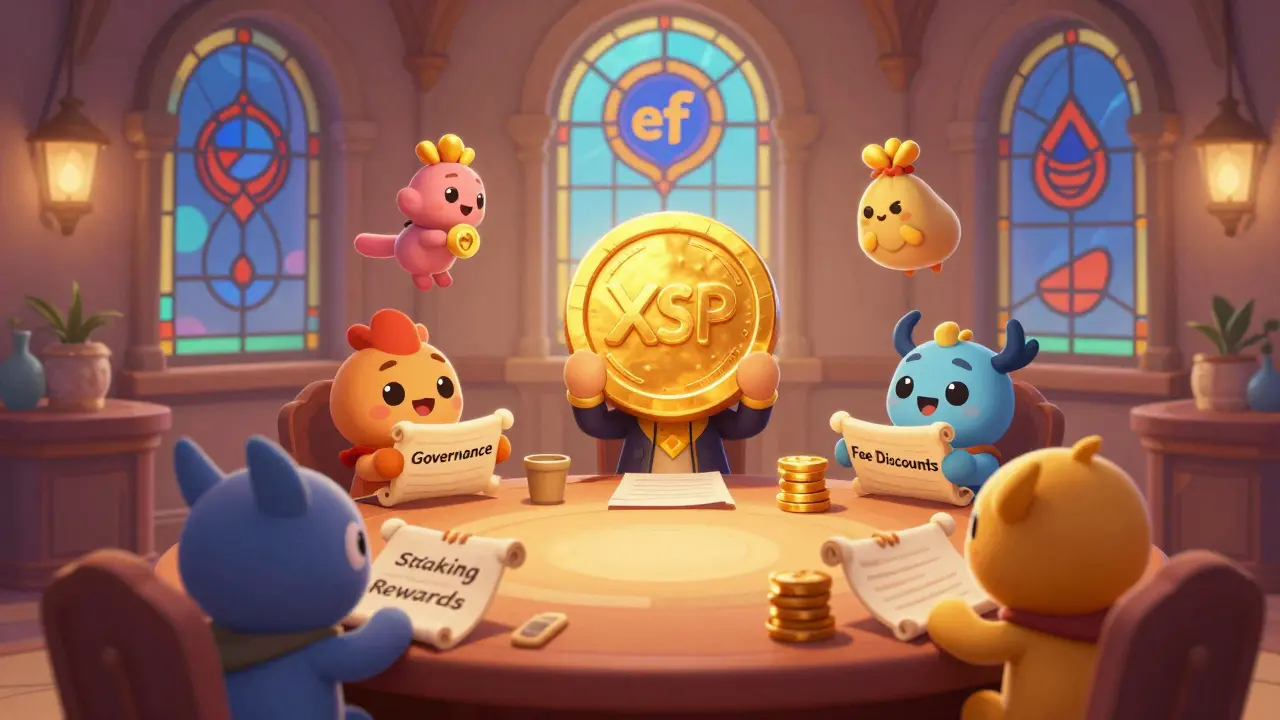
Every major DeFi platform has a native governance and utility token. For XSwap, that token is XSP. Its value isn't just speculative; it serves specific functions within the protocol's ecosystem.
- Governance: Holding XSP often gives users a voice in how the protocol evolves. While specific voting mechanisms vary by update, governance tokens typically allow holders to propose or vote on changes to fee structures, new token listings, or treasury allocations.
- Staking and Farming Rewards: This is the most direct utility. Users who provide liquidity to XSwap pools (depositing pairs of tokens so others can trade) earn rewards. These rewards frequently include XSP tokens. Additionally, staking XSP directly may yield additional returns, incentivizing long-term holding over short-term selling.
- Fee Discounts: Many protocols offer reduced trading fees for users who hold or stake their native token. While you need to check the current terms on the XSwap dashboard, this is a standard feature designed to keep the token in circulation and useful.
As of recent data, the circulating supply of XSP stands at approximately 2.4 billion tokens. With a price hovering around $0.0005 USD, it is classified as a low-cap altcoin. This means it has high potential for percentage gains but also carries significant risk due to lower liquidity and higher volatility compared to giants like Bitcoin or Ethereum.
How XSwap Compares to Giants Like Uniswap and PancakeSwap
You might ask, "Why not just use Uniswap or PancakeSwap?" Those are excellent questions. Uniswap dominates the Ethereum ecosystem, and PancakeSwap rules the Binance Smart Chain (BSC). They have massive user bases, deep liquidity, and established reputations.
| Feature | XSwap Protocol (XDC) | Uniswap (Ethereum) | PancakeSwap (BSC) |
|---|---|---|---|
| Network Speed | ~2,000 TPS / 2s latency | Variable (often slower) | High (~100+ TPS) |
| Transaction Cost | Very Low | High (Gas fees) | Low |
| Primary Focus | XRC-20 Tokens / Trade Finance | ERC-20 Tokens / General DeFi | BEP-20 Tokens / Gaming & Meme Coins |
| Ecosystem Size | Niche / Growing | Largest / Most Mature | Large / Very Active |
The key differentiator for XSwap is its niche. It doesn't try to compete with Uniswap on general-purpose DeFi. Instead, it focuses on the XDC Network's strength: enterprise-grade infrastructure and trade finance applications. If you are holding tokens related to supply chain finance, digital receipts, or other assets issued on XDC, XSwap is likely the most efficient place to trade them. Using Uniswap for these would require bridging assets across networks, adding complexity and cost.
Security and the USDC Bridge Integration
In DeFi, security is paramount. One of the biggest concerns for users is smart contract vulnerabilities. XSwap has undergone multiple iterations, currently operating on V3, which includes improved capital efficiency and security patches. The development team emphasizes reliability, encouraging community audits and engagement.
A significant recent development is the integration of a USDC bridge. Circle, the issuer of USDC, has deployed native contracts on the XDC Network. This allows users to transfer USDC from Ethereum or Arbitrum directly to XDC without relying on risky third-party wrapped versions. This integration enhances trust and interoperability, making it easier for users to bring stablecoins into the XSwap ecosystem for trading or liquidity provision.
Risks and Volatility: What You Need to Know
Let's be realistic. Trading XSP or providing liquidity on XSwap comes with risks. First, look at the price action. Recent data shows XSP experiencing swings of over 17% in a week, followed by sharp recoveries. This volatility is typical for tokens ranked outside the top 5,000 on CoinMarketCap. It means your investment can drop significantly in a short period.
Second, consider liquidity depth. While XSwap facilitates millions in volume annually, its daily trading volume is modest compared to top-tier DEXs. This means large trades might suffer from slippage (getting a worse price than expected) because there aren't enough funds in the pool to absorb the order size instantly.
Third, there is ecosystem risk. XSwap's success is tied to the growth of the XDC Network. If the broader XDC ecosystem fails to attract more developers and users, demand for XSP could stagnate. Unlike Ethereum, which has thousands of apps, XDC is still building its critical mass.

How to Get Started with XSwap
If you decide to explore XSwap, here is the basic workflow:
- Set Up a Wallet: You need a wallet compatible with the XDC Network. Trust Wallet and XDC Ripple Wallet are popular choices. Ensure you have some XDC tokens to pay for gas fees (transaction costs).
- Acquire XRC-20 Tokens: Buy XDC or other XRC-20 tokens from a centralized exchange and withdraw them to your XDC-compatible wallet address.
- Connect to XSwap: Visit the official XSwap website. Always double-check the URL to avoid phishing sites. Connect your wallet using the "Connect Wallet" button.
- Swap or Provide Liquidity: Use the Swap interface to trade tokens. To earn rewards, go to the "Earn" section and add liquidity to a pair (e.g., XDC/XSP). You will receive LP tokens representing your share of the pool.
- Stake XSP: If you hold XSP, check the Staking section to lock up your tokens and earn additional yields.
Always start with small amounts to test the waters. DeFi interfaces can be complex, and mistakes are irreversible.
Future Outlook: Is XSP Worth Watching?
XSwap Protocol is betting on the future of enterprise blockchain adoption. The XDC Network is actively pursuing partnerships with banks, governments, and supply chain firms. If these sectors adopt XDC for real-world asset tokenization, XSwap will become the essential liquidity layer for those assets.
The launchpad functionality is another wild card. By helping new projects raise funds and list tokens, XSwap captures early-stage growth. However, this also means exposure to risky, unproven projects. Investors need to do their own due diligence (DYOR) before farming rewards from new token launches.
For now, XSP remains a speculative asset with clear utility within a growing niche. It is not a blue-chip investment like Bitcoin, but for those interested in the intersection of traditional finance and blockchain, it offers a unique entry point. Keep an eye on the total value locked (TVL) in the protocol and the number of active daily users-these are better indicators of health than short-term price spikes.
Is XSwap Protocol safe to use?
XSwap employs standard security practices for DeFi platforms, including smart contract audits and a focus on code reliability. However, no platform is 100% immune to hacks or exploits. Always verify URLs, enable two-factor authentication where possible, and never invest more than you can afford to lose. The integration of Circle's native USDC contracts adds a layer of trust for stablecoin transfers.
What is the difference between XDC and XSP?
XDC is the native coin of the XinFin XDC Network, used primarily for paying transaction fees (gas) and securing the network through consensus. XSP is the native token of the XSwap Protocol, a decentralized exchange built on top of the XDC Network. XSP is used for governance, staking rewards, and liquidity incentives within the XSwap ecosystem. You need XDC to operate on the network, but you use XSP to participate in XSwap's specific features.
Can I buy XSP on Coinbase or Binance?
As of mid-2026, XSP is not listed on major centralized exchanges like Coinbase or Binance. It is primarily traded on decentralized exchanges like XSwap itself or smaller centralized platforms that support XRC-20 tokens. This lack of listing on major CEXs contributes to its lower liquidity and higher volatility.
How do I earn rewards with XSP?
You can earn rewards by providing liquidity to trading pairs on XSwap (e.g., depositing XDC and XSP into a pool) and then staking the resulting LP tokens. Additionally, you may be able to stake XSP directly in designated farming pools to earn more XSP or other incentive tokens. Check the current APY (Annual Percentage Yield) on the XSwap dashboard, as rates fluctuate based on pool depth and reward emissions.
What are XRC-20 tokens?
XRC-20 is the technical standard for creating tokens on the XDC Network. It is analogous to ERC-20 on Ethereum or BEP-20 on Binance Smart Chain. Any token that follows the XRC-20 standard can be seamlessly integrated into XSwap for swapping and liquidity provision. This includes stablecoins, governance tokens, and real-world asset tokens issued on the XDC Network.