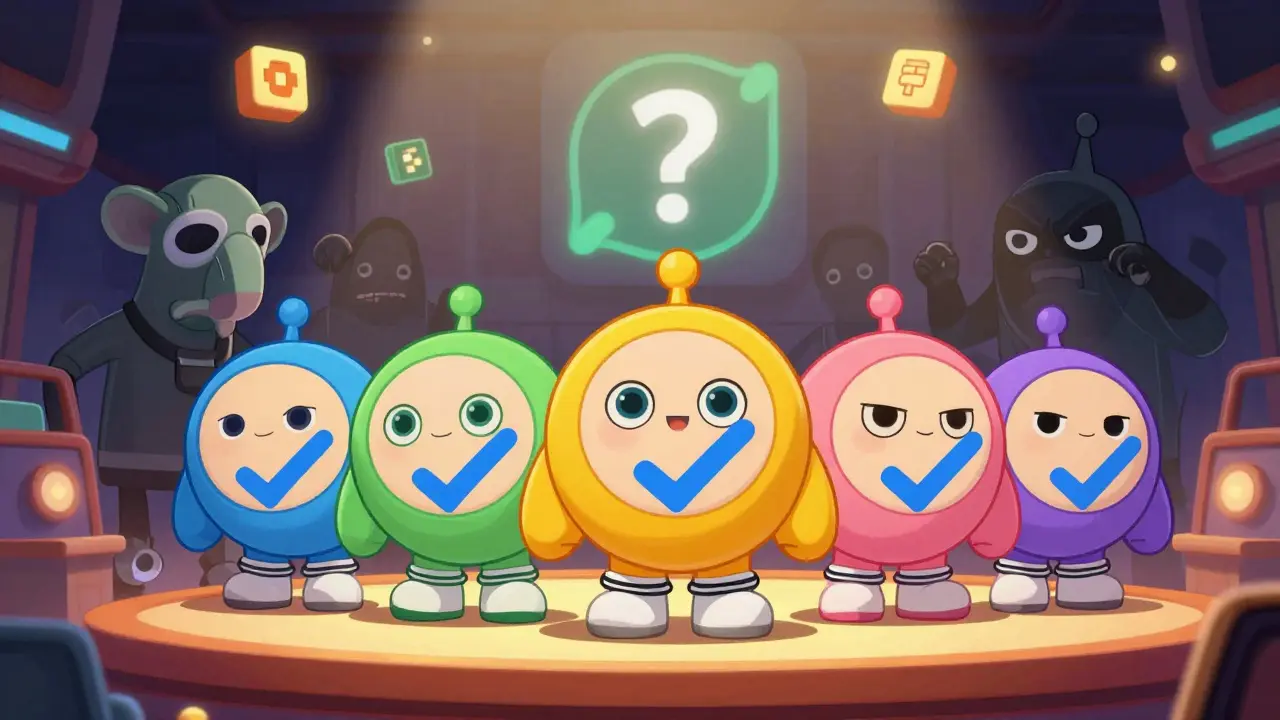
When you see a blue checkmark next to an NFT collection on OpenSea or LooksRare, it might feel like a stamp of approval - like a verified account on Twitter. But here’s the truth: verification doesn’t mean the collection is good, valuable, or even safe. It just means the marketplace thinks it’s real. And that’s a big difference.
Every day, hundreds of new NFT collections pop up. Some are legitimate art projects. Others are clones of popular ones - fake Bored Apes, counterfeit CryptoPunks, or scammy PFPs with no team behind them. Without verification, buyers would be swimming in fraud. That’s why marketplaces built systems to sort the real from the fake. But these systems aren’t the same. They’re messy, uneven, and often confusing.
What Does Verification Actually Do?
Verification stops impersonation. It prevents someone from creating a collection called "Bored Ape Yacht Club" and selling fake NFTs to unsuspecting buyers. The blue checkmark tells users: "This is the official collection. Not a copy. Not a scam. Not a phishing site."
But it doesn’t tell you if the art is good. It doesn’t guarantee the team won’t rug pull. It doesn’t say the NFTs will go up in value. OpenSea’s co-founder Alex Atallah said it plainly in a 2022 CoinDesk interview: "Verification is about preventing scams, not endorsing projects."
That’s why you’ll see verified collections with zero trading volume - and others with millions, but no real community. The checkmark is a security tool, not a quality badge.
How OpenSea Verifies Collections
OpenSea handles about 65% of all NFT trading. That means most creators want their collection verified there. But getting that blue checkmark is harder than winning a lottery.
There’s no public checklist. No formula. No way to know exactly what they’re looking for. But from creator reports, interviews, and leaked internal docs, we know the pattern:
- You need media coverage - TechCrunch, CoinDesk, or even a decent YouTube video with 50k+ views.
- The team must be public. Real names. LinkedIn profiles. Twitter handles with history. No anonymous founders.
- You need community traction. At least 5,000-10,000 followers across socials. Active Discord. Real engagement, not bots.
- Trading volume helps - but it’s not the main factor. Some collections with 50 ETH volume got verified. Others with 500 ETH were rejected.
And the process? It’s slow. Creators on Reddit and Discord report waiting 4 to 12 weeks just to hear back. Some applied three times before getting approved. One creator, u/CryptoCollector89 on Reddit, spent eight months trying. They had 300 ETH in volume, press coverage, and a verified team - and still got rejected twice.
OpenSea updated their criteria in April 2023 to require at least 10 ETH in trading volume. But even that didn’t make it easier. The real barrier is the manual review. A small team at OpenSea looks at each application. They’re drowning in requests. With over 1.4 million monthly active users, they can’t verify every project. So they pick the ones that look "legit" - not the ones with the most volume, but the ones with the most visibility.
LooksRare: The Volume-Based System
LooksRare took a different approach. No mystery. No waiting. Just math.
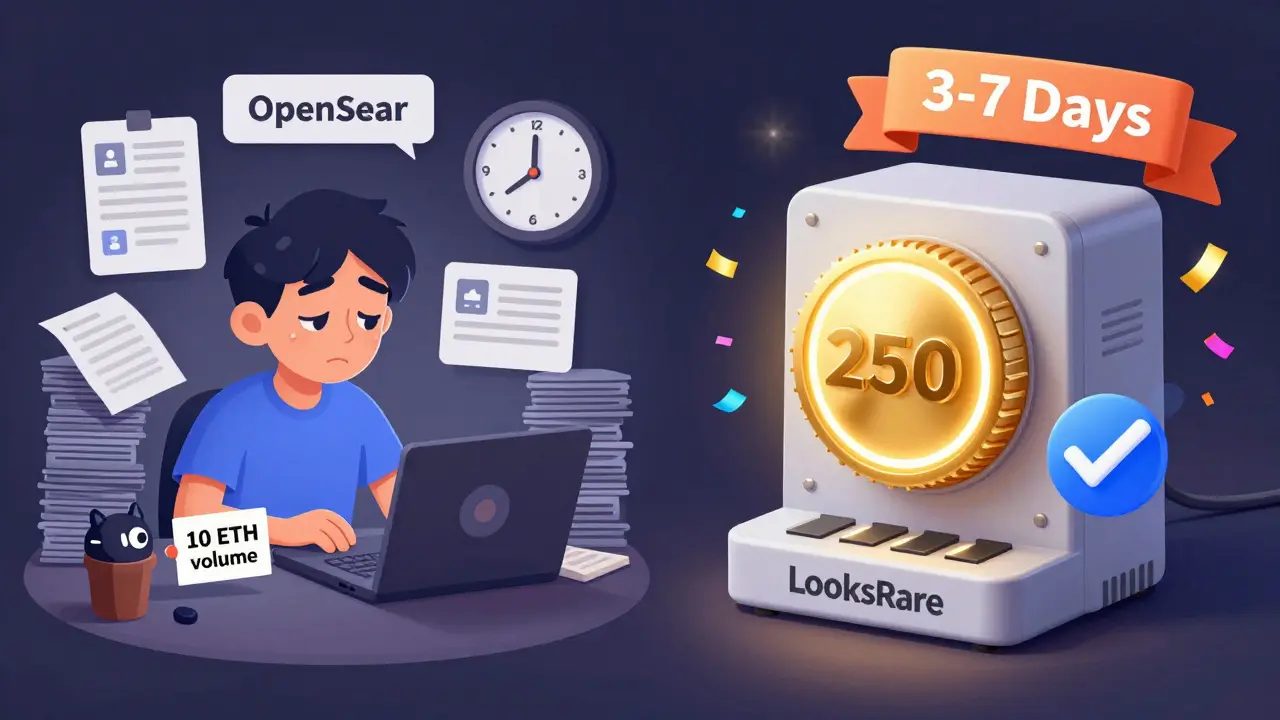
Since early 2022, LooksRare’s verification system has been built around one thing: trading volume. Specifically, 250 ETH in trading volume on their platform (not including private sales). That’s about $500,000-$700,000 depending on the price of ETH.
Here’s how it works:
- Your collection must have at least 250 ETH traded on LooksRare.
- You submit a request through their official form.
- They check if the volume is real - no wash trading, no bots.
- If it passes, you get verified in 3-7 business days.
This system is transparent. You know what you need. No guesswork. But it’s also exclusionary. A new project with 100 ETH volume? No chance. A team with great art but no marketing budget? Out of luck.
According to the NFT Creator Survey 2023, 78% of creators said this system made it harder for new projects to get verified. Only 12% of collections under six months old met the threshold. LooksRare fixed this in July 2023 by adding a second path: "notable" collections. If you’re partnered with a celebrity, brand, or major influencer - like a famous musician or athlete - you can get verified without hitting volume. But that’s still out of reach for 92% of creators, according to the NFT Creator Alliance.
Blur and Other Platforms
Blur, which captured 60% of trading volume in Q2 2023, doesn’t have a public verification system. You apply through a form. You get a reply. That’s it. No criteria. No timeline. No transparency.
X2Y2 used to require 100 ETH in volume and manual review. They shut it down in late 2022. Why? Because maintaining verification costs money - and they were losing money on trading fees. It’s a reminder: verification isn’t free. It’s a service. And if a marketplace doesn’t make money from it, they’ll drop it.
The Future: Zero-Knowledge Proofs
What if you could prove a collection was real without revealing who you are? Or how much you traded? That’s the idea behind zero-knowledge proofs - a cryptographic method being explored by the Ethereum Research community.
Their proposal (thread #18689, May 2023) suggests a system where:
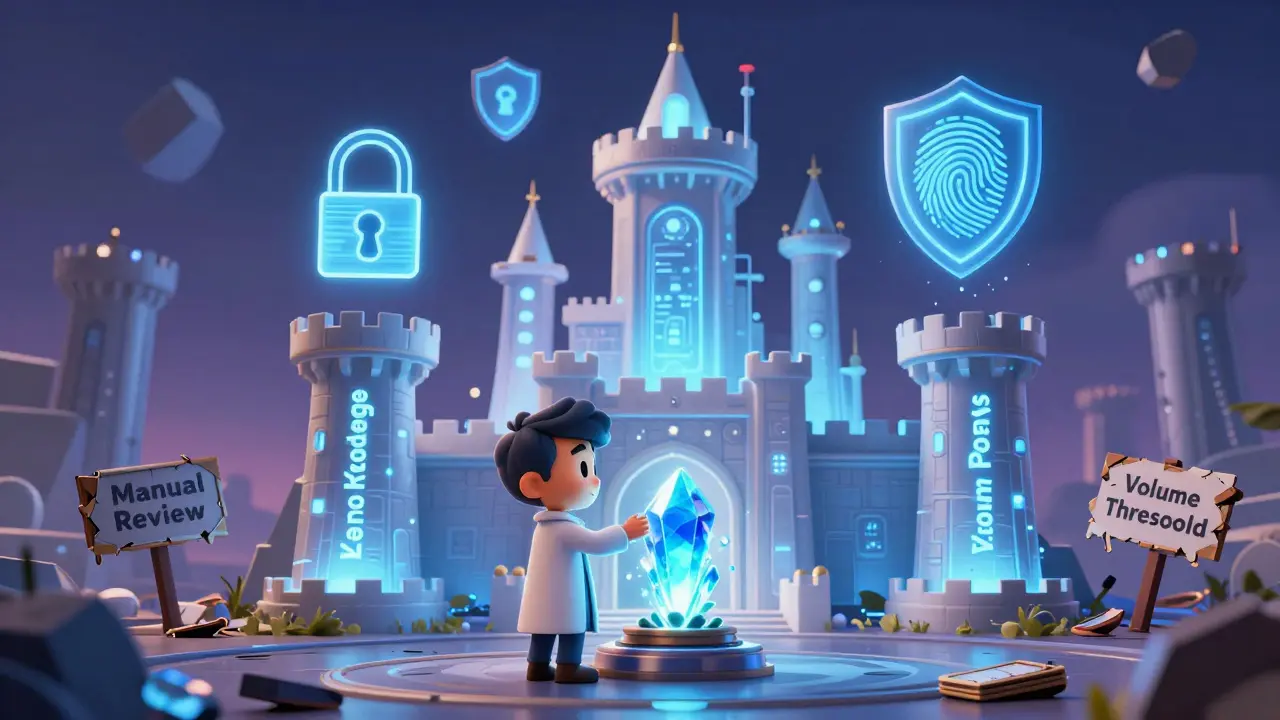
- The collection’s smart contract address is locked.
- Every trade is verified using cryptographic proofs - no public ledger needed.
- Double-spending and impersonation are mathematically impossible.
This isn’t science fiction. The Ethereum Foundation gave $250,000 in June 2023 to the Privacy & Scaling Explorations team to build it. Developers say it would take 80-120 hours to implement. But gas costs are still high. And most users don’t understand cryptography.
Still, experts like Barry Whitehat call it "the only way forward." Manual reviews can’t scale. Volume thresholds exclude new creators. Zero-knowledge proofs? They’re the first system that could be fair, secure, and private - all at once.
Why Verification Still Fails
Even with verification, scams happen. Nansen’s August 2023 report found that verified collections show 37% higher trading volume - but also 22% more wash trading. That’s right: scammers can buy their way into verification. They pump volume. They fake media. They bribe reviewers.
The SEC’s 2023 enforcement action against Stoner Cats showed how bad it can get. A project with a verified badge on OpenSea turned out to be a shell company with no real team. Buyers lost millions.
Verification isn’t foolproof. It’s a filter. A first line of defense. Not a guarantee.
What Creators Should Do
If you’re building an NFT collection:
- Don’t chase verification as your main goal. Build community first.
- Get real press. Talk to journalists. Don’t pay for fake coverage.
- Be public. Use your real name. Link your Twitter. Show up in Discord.
- Track your volume. If you’re on LooksRare, aim for 250 ETH. On OpenSea, focus on visibility.
- Use tools like Moralis API to check if your collection is already verified - programmatically, not manually.
And remember: verification is not validation. A blue checkmark won’t save you if your project has no substance. But it might help you get seen.
What Buyers Should Know
Even if a collection is verified:
- Check the team. Are they real? Do they have history?
- Look at the trading history. Is volume real? Or just bots?
- Read the comments. Are people talking about the art - or just flipping?
- Don’t assume verified = safe.
Chainalysis reported $142 million lost to NFT impersonation scams in 2022. Verification helped reduce that - but didn’t stop it. Stay skeptical. Do your own research.
What does it mean when an NFT collection is verified?
It means the marketplace has confirmed the collection is legitimate and not an impersonation of another project. It does not mean the collection is valuable, well-made, or a good investment. Verification prevents scams, not bad projects.
How do I get my NFT collection verified on OpenSea?
There’s no public formula, but successful applicants usually have media coverage, a public team with real identities, active social media (5k-10k followers), and at least 10 ETH in trading volume. Submit your request through OpenSea’s official form and wait 4-12 weeks. Most applications are rejected.
Does LooksRare verify collections based on volume?
Yes. To get verified on LooksRare, your collection must have at least 250 ETH in trading volume on their platform (excluding private sales). Once you meet that, you can request verification through their form. Processing takes 3-7 days. They also accept "notable" collections tied to celebrities or brands.
Why do some verified collections still get scammed?
Because verification only checks if a collection is real - not if it’s honest. Scammers can fake media coverage, buy volume, or pay for verification. A blue checkmark doesn’t stop rug pulls or fraud. Always research the team, history, and community before buying.
Is there a better way to verify NFT collections in the future?
Yes. The Ethereum Research community is developing a system using zero-knowledge proofs that would verify collections cryptographically - without revealing private data or requiring manual reviews. This method could prevent impersonation and double-spending while being fairer to new projects. It’s still in development, but it’s the most promising path forward.

Abhishek Thakur
Verification on OpenSea is just a gatekeeping tool disguised as safety. They prioritize visibility over substance. I've seen projects with real tech and no PR get rejected while some meme coins with paid influencers get the blue check. It's broken. The system favors those who can afford marketing, not those building something meaningful.
Jackie Crusenberry
I just don't get why anyone cares about a blue check. It's not like it means anything real. I bought a 'verified' NFT last year and the team vanished. It's all theater.
Neil MacLeod
The current verification paradigms are fundamentally flawed. They conflate market visibility with legitimacy, thereby entrenching structural inequities within the NFT ecosystem. The reliance upon centralized entities to adjudicate authenticity is antithetical to the decentralized ethos that underpins blockchain technology.
Misty Williams
It's disgusting how these platforms let scammers buy their way in. You pay for volume, you fake media, you bribe reviewers - and suddenly you're 'verified.' This isn't security. It's corruption dressed up as a feature. Where's the accountability?
Anand Makawana
The zero-knowledge proof model is the only viable path forward. Cryptographic verification eliminates subjectivity, removes human bias, and ensures that authenticity is mathematically guaranteed. The Ethereum Research team is on the right track - we must invest in infrastructure that scales without compromising integrity.
Mohammed Tahseen Shaikh
Look, if you’re waiting for OpenSea to notice you, you’re already behind. LooksRare’s system sucks too - 250 ETH? That’s a wall for new creators. The real problem? No one’s building open, permissionless verification. We need on-chain reputation systems. Not blue checks. Not volume. Proof of contribution. Proof of community. Something that doesn’t require a marketing budget to be seen.
Sarah Terry
I’ve helped three indie artists get verified. It’s not easy, but it’s possible. Focus on real community. Show up in Discord. Post daily. Engage. Don’t just post art - talk to people. The checkmark follows consistency, not cash. You don’t need 10k followers - you need 100 real ones.
kavya barikar
Verification doesn’t mean safety. It just means the platform didn’t outright reject it. That’s it. Buyers need to understand this. The blue check is not a stamp of quality. It’s a stamp of paperwork.
namrata singh
I remember when I first saw my collection get verified. I cried. Not because I thought it meant success, but because I finally felt seen. After months of silence, someone noticed. That’s the real power of verification - not security. Belonging.
Andrea Zaszczynski
Wait so you’re saying the blue check is just for show? Then why do people pay 10x more for verified collections? It’s a scam within a scam. The market is rigged. They want you to believe it’s legit so you spend more. Classic psychological manipulation.
Cordany Harper
I’m from Canada and I’ve watched this whole NFT thing unfold. The verification mess is a mirror of how tech platforms handle trust globally. Centralized, opaque, biased. We need decentralized trust. Not more forms. Not more waitlists. Just code that proves truth.
Zion Banks
This whole verification system is a CIA op. They’re using NFTs to track crypto users. The blue check? It’s a backdoor. They know who you are. They know what you bought. They know your wallet. Next thing you know, the IRS comes knocking. Wake up, people.
manoj kumar
If you think verification means safety, you’re an idiot. I’ve seen verified collections with 0 community and 100% rug pulls. The system is designed to protect the platform’s revenue, not your money. Stop being naive.
JOHN NGEH
I really appreciate how this post breaks it down. It’s easy to get caught up in the hype, but the truth is quieter. Real value isn’t in a checkmark. It’s in the people who show up every day. That’s what lasts.
Jenni Moss
To every creator reading this: you’re not behind. You’re not failing. Keep showing up. Even if no one notices today, someone will tomorrow. The art matters. The community matters. The checkmark? It’s just a bonus.
vu phung
LooksRare’s volume model is brutal but fair. At least you know the rules. OpenSea’s black box? That’s worse than no system. If you’re building something, go where the rules are clear. Play the game. Don’t wait for someone to notice you.
Joshua T Berglan
You got this! I’ve been there - rejected 3 times. Then one day, boom. Verified. It’s not about luck. It’s about persistence. Keep posting. Keep engaging. Keep showing up. The algorithm rewards consistency, not cash. You’re not alone. We’re rooting for you 💪
Andrew Midwood
Man I just applied to OpenSea last week. Got a reply saying 'review in progress.' Took 6 weeks. No update. No email. Just radio silence. I think they auto-reject if you don’t have a PR firm. Pure nonsense.
Kayla Thompson
Zero-knowledge proofs? Please. That’s just blockchain bros trying to sound smart. Real verification is about people, not math. If you can’t show your face or your team, you don’t deserve a checkmark. End of story.
Brijendra Kumar
This is why NFTs are doomed. You have platforms that prioritize volume over value, visibility over virtue. It’s a casino with a blue check. And the house always wins. The only way out? Leave. Stop feeding the machine.