Have you been searching for details on the AdEx Network airdrop? If you clicked this article hoping to claim free tokens right now, you might be looking at outdated information. The most famous AdEx distribution happened back in 2021, but the network has evolved significantly since then. Today, AdEx isn't just about giving away tokens; it's about using AI to help you find them.
This guide clears up the confusion between the historical CoinMarketCap campaign and the current ecosystem. We’ll break down exactly how the original drop worked, what the ADX token is used for today, and how the new AURA platform changes the game for airdrop hunters in 2026.
The Original AdEx Network Airdrop: What Actually Happened
To understand where we are now, we have to look at the past. In August 2021, AdEx Network partnered with CoinMarketCap for a promotional campaign. This wasn’t an open-ended farming session where anyone could farm unlimited tokens. Instead, it was a structured giveaway designed to boost community engagement.
The mechanics were straightforward but required specific actions. Participants had to complete three tasks to enter the random draw:
- Join the official Telegram chat at t.me/AdExNetworkOfficial.
- Follow both @adex_network and @AdexWallet on Twitter.
- Add the ADX token to their CoinMarketCap watchlist.
Out of all eligible participants, 300 winners were randomly selected. Each winner received exactly 100 ADX tokens, totaling 30,000 tokens distributed across the group. Winners were announced on August 6, 2021, and funds were sent out by August 10, 2021. If you missed that window, those specific tokens are already circulating. However, this event set the precedent for how AdEx values direct community interaction over passive holding.
Understanding the ADX Token and Its Utility
ADX is the native utility token of the AdEx Network. Unlike many meme coins or speculative assets, ADX has a functional backbone. The total supply is capped at 150 million units, with approximately 144.04 million in circulation as of early 2025. This means liquidity is high, and the token is widely traded on major exchanges.
So, what do you actually use it for? Originally, ADX powered the decentralized advertising exchange. Advertisers would deposit ADX into OUTPACE channels-off-chain payment streams-to pay publishers when users interacted with ads. This created a trustless environment where payments were automated based on real-time data, removing the need for middlemen agencies.
However, the utility has expanded. Today, ADX is also used for staking within the AURA ecosystem. By staking ADX, projects can boost their visibility in AI recommendations, but only if they align with user interests. This creates a quality filter: low-quality projects can’t just buy their way into your feed; they have to prove value through stake commitment. For holders, this adds a layer of security to the recommendation engine, ensuring that what you see is backed by significant capital at risk.
AURA: The Shift from Advertising to AI-Driven DeFi
If you think AdEx is still just an ad-tech company, you’re missing the biggest shift in its history. In 2025, the network launched AURA, a personal AI agent framework designed to simplify Web3 experiences. AURA represents a pivot from decentralized finance (DeFi) and artificial intelligence (AI), creating a new category often referred to as DeFAI.
AURA doesn’t just sit there. It monitors your on-chain activity, analyzes your risk profile, and recommends tailored opportunities. Think of it as a smart assistant that knows your wallet better than you do. When AURA launched its demo in August 2025, it allowed users to input their wallet addresses to receive personalized strategy recommendations. To celebrate, the team released 420 exclusive Early-Tester NFTs, which sold out in four days. These NFTs unlock premium features and early access privileges within the ecosystem.
The roadmap for AURA is aggressive. Version 1.0 focused on being a DeFi strategy recommendation engine prototype. Version 2.0 aims to provide real-time market insights, while Version 3.0 will deliver a fully empowered personal AI agent capable of executing actions on your behalf. This evolution means that the "airdrop" concept is no longer about waiting for a project to give you tokens; it’s about using AI to identify where those tokens are likely to appear next.

How AURA Changes Airdrop Hunting in 2026
Traditional airdrop hunting is tedious. You have to track dozens of projects, read whitepapers, and perform complex transactions to qualify. AURA automates much of this process. Its core capability includes identifying both upcoming and unclaimed airdrops. By integrating the Bankless API, AURA surfaces airdrop events and delivers intelligent notifications directly to you.
But it goes deeper than simple alerts. AURA evaluates yield potential and identifies "double-dip" opportunities. This is where you earn immediate yield from a protocol while simultaneously maximizing your eligibility for future airdrops from that same protocol. For example, if Protocol X is known to reward early LP providers with tokens later, AURA will flag this. It tells you: "Deposit here now to earn 8% APY, and you are 90% likely to qualify for the upcoming token launch."
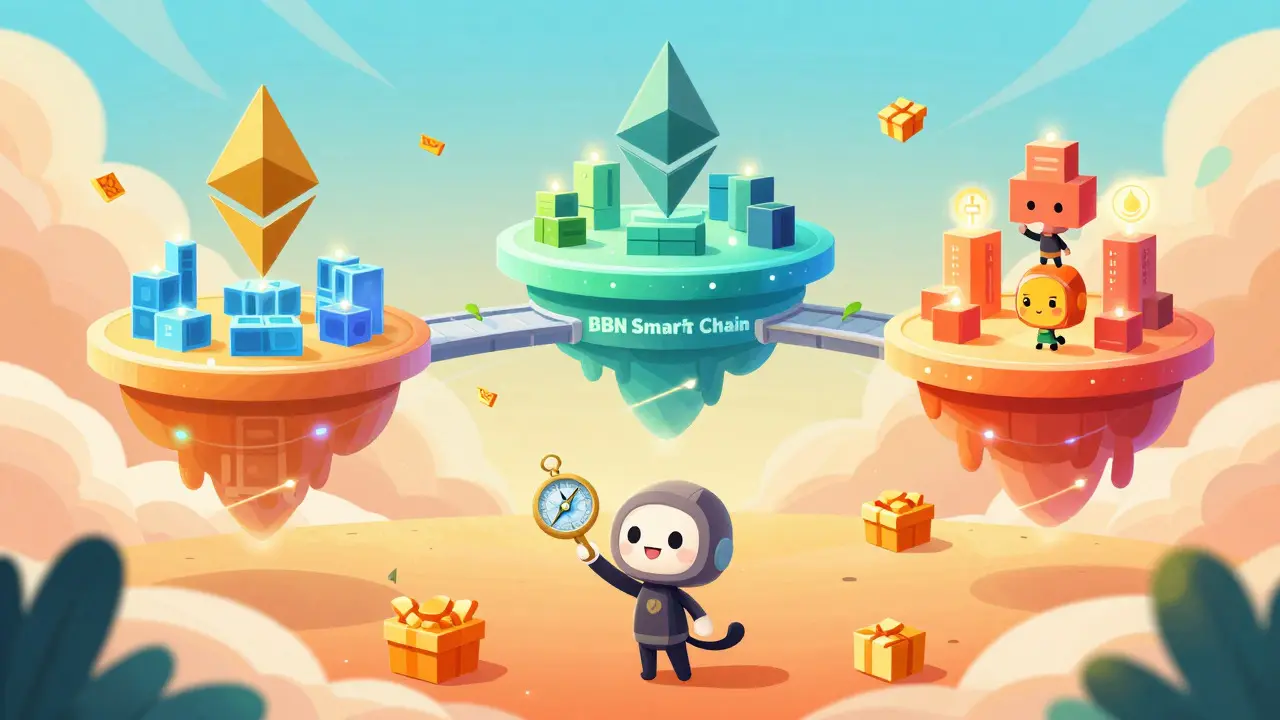
As of mid-2026, AURA supports multiple blockchain networks, including Ethereum, BNB Smart Chain (BSC), and Mantle. This multi-chain support is crucial because airdrops rarely stay confined to one ecosystem. By monitoring cross-chain activity, AURA ensures you don’t miss opportunities happening on alternative Layer 1s or Layer 2s.
Ecosystem Growth: Hackathons and Developer Integration
Token distributions are only half the story. The other half is building tools that make the ecosystem useful. In late 2025, AdEx ran a month-long hackathon from September 22 to October 22, offering $12,000 in prizes across four categories. The goal was to attract developers to build on top of the AURA framework.
Winners didn’t just get cash; they got a pathway to integration. The hackathon encouraged developers to create new SDK modules, governance strategies, and MCP connections. This matters for you as a user because it means more integrations are coming. If a popular wallet or portfolio tracker integrates AURA, you get AI-driven insights without leaving your favorite app.
The Market component of the network also plays a role here. Hosted by AdEx Network OÜ, the Market operates as a RESTful service that monitors campaign health. It ensures that at least two-thirds of validators remain online for accurate state updates. This technical rigor provides enhanced privacy and exclusivity options for publishers and advertisers, but for end-users, it translates to a stable and reliable backend for any AI-driven services built on top of it.
Comparison: Traditional vs. AURA-Assisted Airdrop Strategies
| Feature | Manual Hunting | AURA-Assisted Strategy |
|---|---|---|
| Discovery Method | Twitter threads, Discord announcements | Automated API integration (Bankless) |
| Eligibility Tracking | Manual spreadsheet management | On-chain activity analysis |
| Yield Optimization | Rarely considered alongside airdrops | Identifies "double-dip" yield + airdrop combos |
| Time Commitment | High (hours per week) | Low (review notifications) |
| Risk Assessment | User-dependent | AI-based risk profile matching |
| Chain Support | Varies by user attention | Ethereum, BSC, Mantle (expanding) |
Frequently Asked Questions
Can I still claim the 2021 AdEx airdrop?
No. The CoinMarketCap partnership concluded in August 2021. All 30,000 ADX tokens were distributed to the 300 selected winners by August 10, 2021. Any claims appearing after this date are likely scams or unrelated promotions.
What is the current use case for the ADX token?
ADX is primarily used for staking within the AURA ecosystem to boost project visibility and for powering the underlying decentralized advertising infrastructure via OUTPACE channels. It also serves as the gas/utility token for various dApps built on the AdEx network.
How does AURA identify airdrop opportunities?
AURA uses the Bankless API to surface known airdrop events and analyzes your on-chain wallet activity to determine if you meet eligibility criteria. It also predicts future airdrops based on protocol behavior and historical data patterns.
Is AURA available on all blockchains?
As of 2026, AURA supports Ethereum, BNB Smart Chain, and Mantle. The team continues to expand support for other networks, so check the latest documentation for the most up-to-date list of supported chains.
Do I need to hold ADX to use AURA?
Not necessarily for basic usage, as the demo allows wallet address inputs. However, staking ADX may be required for certain premium features or to influence the recommendation algorithm for specific project categories. Always verify current requirements in the AURA dashboard.