You might have seen ads for Mars Exchange promising high returns on your crypto holdings. It sounds exciting, right? A new platform with cosmic potential. But here is the harsh reality as of late 2025 and early 2026: there is no single, reputable entity known simply as "Mars Exchange" that dominates the market like Binance or Coinbase. Instead, you are likely looking at a fragmented landscape of Mars-branded platforms, several of which regulators have flagged as scams.
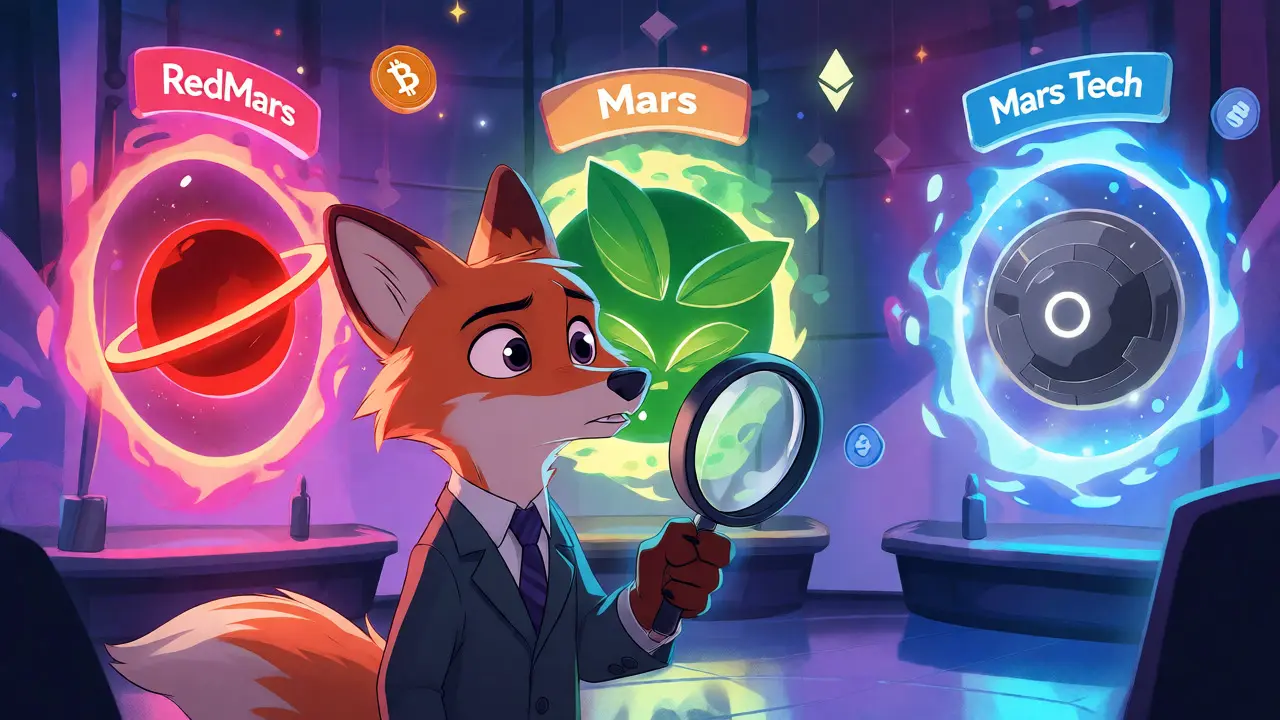
If you are thinking about depositing money, stop. Before you click "deposit," you need to understand who is actually behind these sites. Are they legitimate brokers struggling with branding, or are they sophisticated traps designed to take your capital? This review breaks down the three main players using the Mars name: RedMars, Mars Ecosystem, and Mars Tech Limited. We will look at their features, regulatory status, and why most experts recommend keeping your distance from this specific brand cluster.
The Confusion Behind the Name
The first hurdle is identity. In the crypto world, clarity is safety. When you search for "Mars Exchange," you don't get one clear result. You get a mess of similar names. This isn't just bad marketing; it's a red flag. Legitimate exchanges usually own their trademark and maintain a consistent digital footprint. Mars-branded platforms often change domains, tweak logos, and shift company registrations while keeping the same basic website template.
This fragmentation creates risk. If you sign up for "Mars Exchange," which one are you actually signing up for? Is it the forex broker RedMars? The low-traffic crypto site Mars Ecosystem? Or the recently warned-about Mars Tech Limited? Each has different risks. Mixing them up could mean sending Bitcoin to a scammer instead of a regulated broker. Always check the URL and the company registration number before transferring any funds.
Regulatory Warnings: The Red Flags
Let’s talk about the elephant in the room: regulation. As of April 2025, the New Zealand Financial Markets Authority (FMA) added Mars Tech Limited to its official warning list. Why? Because they operate as a fake investment platform. They claim to be regulated by the UK’s Financial Conduct Authority (FCA) and Cyprus’ CySEC. But when investigators checked those databases? Nothing. No record. That is a classic scam tactic-claiming licenses you don’t have to build false trust.
Another entity, "The Big Mars," appears on DataVisor’s list of known fake crypto exchanges. This isn't a minor oversight. It means automated systems and human analysts alike see patterns typical of fraud: aggressive sales tactics, unrealistic promises, and opaque ownership structures. If a platform cannot prove its license with a verifiable certificate from a major regulator like the FCA, SEC, or ASIC, treat it with extreme caution.
| Feature | RedMars | Mars Ecosystem | Mars Tech Ltd | Top Tier Exchanges |
|---|---|---|---|---|
| Regulatory Status | Limited/Forex focused | Unregulated | Flagged as Scam | Fully Licensed |
| Traffic Volume | Moderate | Extremely Low (~81 visits/mo) | Unknown/Opaque | Millions of visits |
| Asset Variety | ~50 Forex Pairs | Limited Crypto Assets | N/A (Fake) | Hundreds of Coins |
| User Trust | Mixed Reviews | Low Engagement | Negative/Warning | High Community Trust |

Deep Dive: RedMars Broker
RedMars is arguably the most "legitimate" of the bunch, but only if you view it through the lens of traditional forex trading, not modern crypto speculation. It operates primarily as a forex broker using the MetaTrader 5 (MT5) platform. MT5 is a solid choice for day traders who love technical analysis. It offers 21 timeframes and algorithmic trading capabilities, which is great for pros.
However, RedMars falls short for beginners. DayTrading.com’s 2025 review highlighted significant gaps. There is little educational content. The minimum deposit requirements are steep compared to competitors like IC Markets. And customer support? Testers reported inadequate responses during critical times. While they accept crypto deposits, their core business is currency pairs, not token diversity. If you want to trade altcoins or NFTs, RedMars won’t serve you well. It’s a niche tool, not a comprehensive crypto hub.
Mars Ecosystem: Ghost Town Traffic
Then there is Mars Ecosystem, founded in 2021. On paper, it looks like a standard crypto exchange. In practice, the data tells a worrying story. SimilarWeb analytics show only about 81 monthly visits. Let that sink in. Eighty-one people visit this entire exchange per month. Compare that to Kraken or Coinbase, which get millions. With such low traffic, liquidity is virtually non-existent. You might buy a coin easily, but selling it without crashing the price or waiting days for a buyer becomes a nightmare.
The bounce rate sits at 40%, and average visit duration is near zero. This suggests users land on the site, realize it lacks depth or trust signals, and leave immediately. Without regulation by any government authority, your assets are unprotected. If the site goes down tomorrow, who do you call? Likely no one.

Security and User Experience Pitfalls
Security isn't just about encryption; it's about accountability. Top exchanges offer cold storage, two-factor authentication (2FA), and insurance funds. Mars-branded platforms rarely advertise robust security protocols transparently. More importantly, they lack the community feedback loop. Search Reddit or Trustpilot for "Mars Exchange." You won't find thousands of user stories. You’ll find warnings about scams and silence. Silence in crypto is dangerous. It usually means either nobody uses it, or the users who did lost money and stopped talking.
Furthermore, KYC (Know Your Customer) processes are often inconsistent. Some Mars sites skip verification entirely to attract quick sign-ups, which sounds appealing until you try to withdraw large sums and hit arbitrary limits. Legitimate exchanges verify identities to comply with anti-money laundering laws. Skipping this step saves them hassle but increases your risk of account freezes.
Why Experts Recommend Avoiding Mars Brands
The consensus among financial watchdogs and expert reviewers is clear: avoid Mars-branded platforms unless you have a very specific reason not to. The combination of unverified claims, low traffic, and explicit scam warnings creates a toxic environment for investors. The reputational damage from associated scams makes even the slightly more legitimate options like RedMars risky for casual users.
If you are serious about crypto trading, stick to established names with proven track records. The peace of mind knowing your funds are insured and accessible outweighs the novelty of a "Mars" branded interface. Don't let clever marketing cloud your judgment. Verify, then invest.
Is Mars Exchange a legitimate crypto platform?
Generally, no. There is no single dominant "Mars Exchange." Most entities using this name, particularly Mars Tech Limited, have been flagged by regulators like the NZ FMA as fraudulent. RedMars is a forex broker with mixed reviews, and Mars Ecosystem has negligible traffic and no regulation. Caution is strongly advised.
What are the main risks of using Mars-branded exchanges?
Key risks include lack of regulatory protection, potential for total loss of funds due to scam operations, extremely low liquidity making withdrawals difficult, and misleading claims about licensing. Users also face poor customer support and limited asset variety.
Does RedMars support cryptocurrency trading?
RedMars accepts cryptocurrency for deposits and withdrawals, but it primarily functions as a forex broker offering currency pairs on the MetaTrader 5 platform. It is not a dedicated crypto exchange with a wide range of altcoins or tokens.
How can I verify if a Mars platform is regulated?
Check the footer of the website for a license number. Then, visit the official website of the claimed regulator (e.g., FCA, CySEC, ASIC) and search for that number. If the name doesn't match exactly or the status is inactive, the claim is likely false.
What should I use instead of Mars Exchange?
Consider established exchanges like Coinbase, Kraken, or Binance, depending on your region. These platforms offer verified regulatory compliance, high liquidity, strong security measures, and extensive educational resources for beginners and advanced traders alike.